When you click on links to various merchants on this site and make a purchase, this can result in this site earning a commission. Affiliate programs and affiliations include, but are not limited to, the eBay Partner Network.
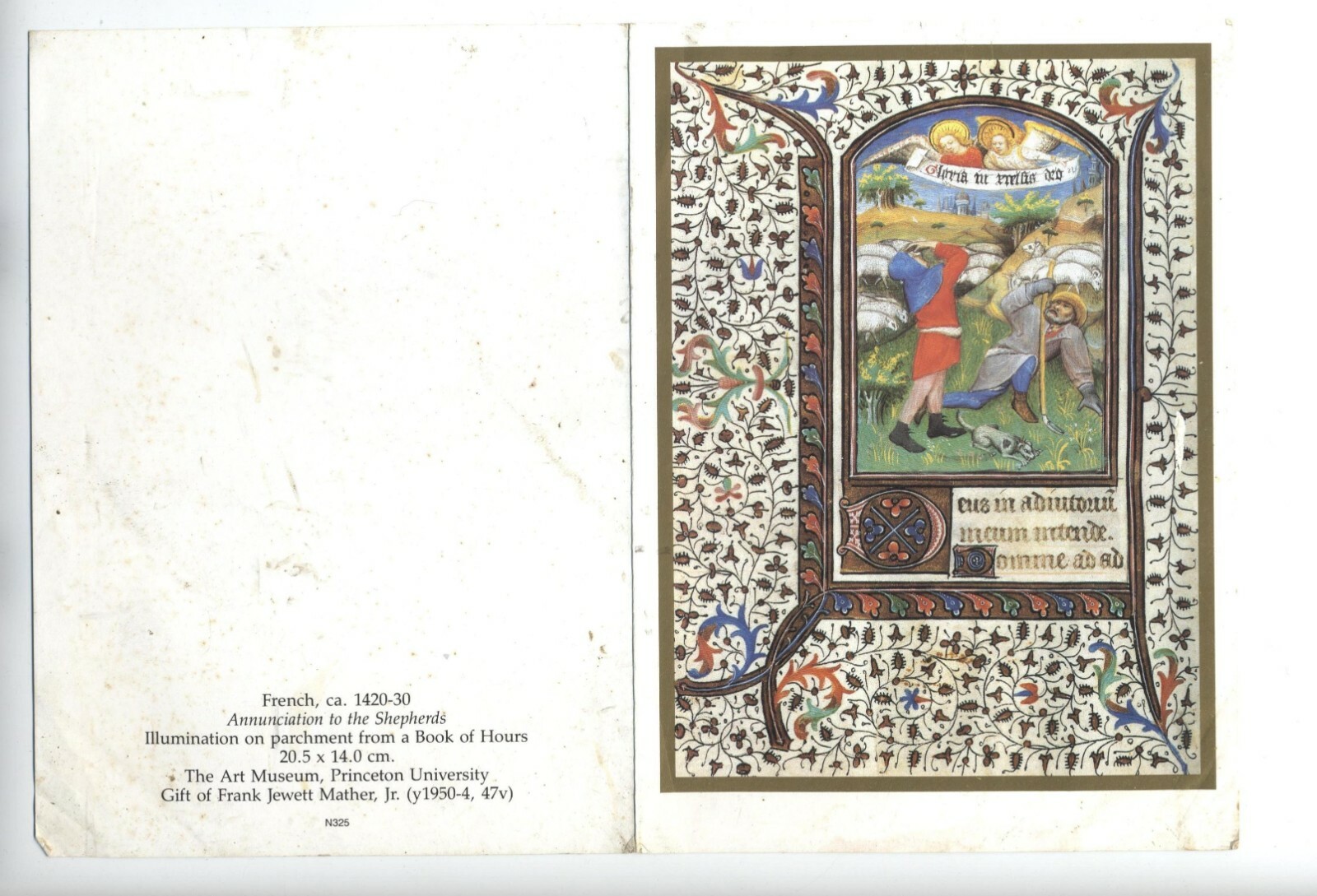
HUGHIE LEE-SMITH HOLIDAY GREETING CARD SIGNED BY BOTH HIS AFRICAN AMERICAN ARTIST HUGHIE LEE-SMITH AND HIS WIFE (PATRICIA THOMAS-FERRY). ACCOMPANIED BY 2 UNIQUE PHOTOS OF HUGHIE LEE-SMITHS HOME WITH HIS WRITING ON THE BACK OF EACH PHOTOLee-Smith, Hughie. (Eustis, FL, 1915-Albuquerque, NM, 1999)Bibliography and ExhibitionsMONOGRAPHS AND SOLO EXHIBITIONS:
Albuquerque (NM). University Art Museum, University of New Mexico-Albuquerque.Stages of influence: The Universal Theater of HUGHIE LEE-SMITH.2001.24 pp. exhib. cat., color and b&w illus., checklist of 27 works in all media. Text by Sara L. Marion. 4to, pictorial wraps. First ed.
Ann Arbor (MI). Forsyth Gallery.HUGHIE LEE-SMITH.1966.Solo exhibition.
Battle Creek (MI). Battle Creek Art Center.HUGHIE LEE-SMITH.1986.Solo exhibition.
BEARDEN, ROMARE.Black Art: What Is It?.1970.In: The Art Gallery 3 (April 1970):32-35. Includes statements by Tom Lloyd, Hughie Lee-Smith and Faith Ringgold.
Blacksburg (VA). Armory Art Gallery, Virginia Polytechnic Institute and State University.HUGHIE LEE-SMITH.1989.Solo exhibition.
Chicago (IL). Bergman Galleries.HUGHIE LEE-SMITH.1969.Solo exhibition.
Chicago (IL). Isobel Neal Gallery.HUGHIE LEE-SMITH.1987.Solo exhibition.
Detroit (MI). Arwin Galleries.HUGHIE LEE-SMITH.1971.Solo exhibition.
Detroit (MI). Detroit Artists Market.HUGHIE LEE-SMITH Returns.February, 2009.Solo exhibition.
Detroit (MI). G R. N'Namdi Gallery.HUGHIE LEE-SMITH (1915-2000).Thru March 16, 2002.Solo exhibition. Included both oils on canvas and a suite of pencil drawings.
Detroit (MI). J. L. Hudson Co.HUGHIE LEE-SMITH.1971.Solo exhibition.
Flushing (NY). Council on Culture and the Arts.HUGHIE LEE-SMITH: Selected Paintings.1993.Solo exhibition.
Greenville (SC). Greenville County Museum of Art.HUGHIE LEE-SMITH.1990.Solo exhibition.
Hartford (CT). CRT's Craftery Gallery.HUGHIE LEE-SMITH.1984.Solo exhibition.
Kalamazoo (MI). Western Michigan University.HUGHIE LEE-SMITH.1977.Solo exhibition.
LaGrone, Oliver and HUGHIE LEE-SMITH (illus.).Footfalls: Poetry from America's Becoming.Detroit: The Darel Press, 1949.x, 37 pp., illus. by Hughie Lee-Smith. Biog. sketch of LaGrone (an Oklahoma-born African American poet) by Yale Soifer. 8vo (22 cm.), printed card covers, dust jacket. First ed.
Morgan, Stacy.HUGHIE LEE-SMITH and Cold War Aesthetics of Alienation.2010.In: The International Review of African American Art Vol. 23, no. 1 (Aprili 2010):16-25, 9 color illus., 1 b&w photo of artist. 4to, wraps.
Muskegon (MI). Muskegon Museum of Art.HUGHIE LEE-SMITH: Meditations.February 14-June 1, 2013.Solo exhibition of paintings, drawings, and prints, created from the 1930s-1960s.
New York (NY). Grand Central Art Galleries.HUGHIE LEE-SMITH.1968.Solo exhibition.
New York (NY). Grand Central Art Galleries.HUGHIE LEE-SMITH.1973.Solo exhibition.
New York (NY). Janet Nassler Gallery.HUGHIE LEE-SMITH.1964.Solo exhibition.
New York (NY). Janet Nassler Gallery.HUGHIE LEE-SMITH.1962.Solo exhibition.
New York (NY). Janet Nessler Gallery.HUGHIE LEE-SMITH.1960.Exhib. brochure. [Emory University, Cedric Dover Papers, 6,15.]
New York (NY). June Kelly Gallery.HUGHIE LEE-SMITH: Memorial Exhibition.September 6-October 3, 2000.Solo retrospective.
New York (NY). June Kelly Gallery.HUGHIE LEE-SMITH: New Paintings.September 19-October 17, 1987.Exhib. brochure, illus. Text by Lowery Stokes Sims. Invitation card: recto illus. Vista II 1987, Oil on canvas (24 x 32 in.). [Review: Susan Kandel, ARTnews (December 1987):156+, illus.] Brochure and invitation card.
New York (NY). June Kelly Gallery.HUGHIE LEE-SMITH: Paintings.October 5-November 5, 1991.Solo exhibition.
New York (NY). June Kelly Gallery.HUGHIE LEE-SMITH: The Presence of Something Profound and Mysterious.October 6-November 4, 1989.Solo exhibition. [Review: Vivien Raynor, "Hughie Lee-Smith. June Kelly," ARTnews 89 (March 1990):176, illus. Important review of Lee-Smith's late work with quote from artist.]
New York (NY). June Kelly Gallery.HUGHIE LEE-SMITH: The Romantic Realist.1988.Solo exhibition.
New York (NY). June Kelly Gallery.HUGHIE LEE-SMITH: Watercolors.March 3-April 5, 1994.Exhib. brochure, color cover plate.
New York (NY). Michael Rosenfeld Gallery.HUGHIE LEE-SMITH: The 1950s.November 5, 2011-January 21, 2012.Solo exhibition.
New York (NY). Summit Gallery.HUGHIE LEE-SMITH.1982.Solo exhibition.
New York (NY). The Century Association.HUGHIE LEE-SMITH.1984.Solo exhibition.
Ogunquit (ME). Ogunquit Museum of American Art.HUGHIE LEE-SMITH: A Retrospective.1997.16 pp., 11 color plates, 4 b&w illus., exhib. checklist of 49 works, chronol., colls., awards. Intro. by Leslie King-Hammond; text by Michael Culver. [Traveling exhibition.] Oblong 8vo, wraps. First ed.
Princeton (NJ). Bristol-Meyers Squibb Gallery.HUGHIE LEE-SMITH: An Overview, 1949-1995.1995.24 pp. exhib. cat., b&w illus. Oblong 8vo, stapled wraps. First ed.
Princeton (NJ). Gallery at Bristol-Myers Squibb.HUGHIE LEE-SMITH: An Overview, 1949-1995.October 15-November 26, 1995.24 pp. exhib. cat., 1 color plate, 4 b&w illus., checklist of over 34 works. Intro. by Michael Brenson. 4to (7.7 x 10 in.), wraps.
Shaker Heights (OH). Malcolm Brown Gallery.HUGHIE LEE-SMITH.1984.Solo exhibition.
Shaker Heights (OH). Malcolm Brown Gallery.HUGHIE LEE-SMITH: Cleveland Visionary.1996.Solo exhibition.
St. Joseph (OH). San Giuseppe Gallery, College of Mount St. Joseph on-the-Ohio.HUGHIE LEE-SMITH.1974.Solo exhibition.
Trenton (NJ). New Jersey State Museum.HUGHIE LEE-SMITH: Retrospective Exhibition.November 5, 1988- January 2, 1989.36 pp. exhib. cat., 8 color plates, 26 b&w illus., checklist of 57 works, colls. Text by Lowery S. Sims. [Traveled to: The Cultural Center, Chicago, IL, February 4-March 18, 1989; Butler Institute of American Art, Youngstown, OH, April 2-May 18, 1989; The Studio Museum in Harlem, New York, NY, July 2-September 24, 1989.] [Review: Sandra Conn, "Art Facts: the haunting magic of Hughie Lee-Smith," Chicago Reader (February 23, 1989), illus. Extensive advance review with much biographical information.] 4to, wraps. First ed.
Wald, Carol.The Metaphysical World of HUGHIE LEE-SMITH.1978.In: American Artist vol. 42, no. 435 (1978) 4to, wraps.
Washington (DC). Evans-Tibbs Collection.HUGHIE LEE-SMITH.1983.Solo exhibition.
Washington (DC). Howard University Gallery of Art.HUGHIE LEE-SMITH.1955.Solo exhibition. Included (among other works): Poet #4 1954 End of the Festival 1954, and Discussion on the Rooftop 1955 (Howard University).
Winston-Salem (NC). Milton Rhodes Gallery at the Sawtooth Building.Of time and space... paintings by HUGHIE LEE-SMITH.1997.Exhib. cat., illus. essay by Dr. Leo Twiggs. A presentation of Winston-Salem Delta fine Arts, Inc.
GENERAL BOOKS AND GROUP EXHIBITIONS:
ALBANY (NY). Albany Institute of History and Art.The Negro Artist Comes of Age: A National Survey of Contemporary American Artists.January 3-February 11, 1945.vii, 77 pp., 63 b&w illus., checklist of 76 works by 38 artists, with 14 others mentioned as well. A major early survey. Foreword by John Davis Hatch, Jr.; essay "Up Till Now" by Alain Locke who states that the show is both "a representative and challenging cross-section of contemporary American art and, additionally, convincing evidence of the Negro’s maturing racial and cultural self-expression in painting and sculpture." The exhibition coincided with the last months of WWII and the return of the troops. Artists mentioned or included: Charles Alston, William Artis, Henry (Mike) Bannarn, Edward M. Bannister, Richmond Barthé, Romare Bearden, Eloise Bishop, Selma Burke, William S. Carter, Elizabeth Catlett, Claude Clark, Sr., Eldzier Cortor, Ernest Crichlow, Allan Rohan Crite, Joseph Delaney, Aaron Douglas, Robert S. Duncanson, Frederick Flemister, Meta Warrick Fuller, Rex Goreleigh, William A. Harper, Palmer Hayden, James Herring, May Howard Jackson, Joshua Johnson, Malvin Gray Johnson, Sargent Johnson, William H. Johnson, Lois Mailou Jones, Ronald Joseph, Jacob Lawrence, Hughie Lee-Smith, Edmonia Lewis, Norman Lewis, Edward L. Loper, Archibald J. Motley, Frank Neal, Marion Perkins, Horace Pippin, James A. Porter, William E. Scott, Charles Sebree, Thelma Streat, Henry Ossawa Tanner, Dox Thrash, Laura Wheeler Waring, James Lesesne Wells, Charles White, Ellis Wilson, John Wilson, Vernon Winslow, Hale Woodruff. [Traveled to: Brooklyn Museum of Art.] [Locke's essay is reprinted in: The Critical Temper of Alain Locke. A Selection of His Essays on Art and Culture. New York: Garland, 191-94.] [Reviews: Carter G. Woodson, The Journal of Negro History, Vol. 30, No. 2 (April 1945):227-228; "The Negro Artist Comes of Age," ARTnews (February 1-14, 1945) reprinted in ARTnews 91 (November 1992):109-10.] 8vo (9 x 6 in.; 23 cm.), wraps. First ed.
ALTSCHULER, BRUCE, ed.Collecting the New: Museums and Contemporary Art.Princeton University Press, 2005.208 pp., illus. Unfortunately discussion of a museum collecting African or African American art is ghettoized in two essays about specialized museum collections (as if no other museum professional would consider such a purchase.) Passing mention of 70+ African American artists (only 14 women), most in the essay by Lowery Stokes Sims (Director, Studio Museum in Harlem) "Collecting the Art of African Americans at the Studio Museum in Harlem: Positioning the 'New' from the Perspective of the Past." The African artists are primarily clustered in the text by Pamela McClusky (Curator of African and Oceanic Art, Seattle Art Museum) "The Unconscious Museum: Collecting Contemporary African Art without Knowing It." 8vo (9.2 x 6.1 in.), cloth, d.j. First ed.
ATLANTA (GA). Atlanta University.Atlanta University Contemporary Art Collection.1959.38 pp., 22 b&w illus., biogs. and illus. for: Charles Alston, Jacob Lawrence, William Palmer, and Hale Woodruff; list of 186 African American artists whose works were the prize winner purchases from the annual Atlanta University shows, 1942-1959, with titles of works. Prizewinners: 1942: William Carter, Frederick C. Flemister, Edward L. Loper, Charles Alston, Lois Mailou Jones; 1943: John Wilson, Hughie Lee-Smith, Mark Hewitt, Henry W. Bannarn, Frederick D. Jones; 1944: Cecil D. Nelson, Jr., John Farrar, John Wilson, Walter W. Smith, Frank W. Neal, Vernon Winslow, William E. Artis, Selma Burke, Mark Hewitt, James Dallas Parks, John Wilson; 1945: Henry W. Bannarn, John Wilson, Frederick Flemister, John N. Robinson (as John D.), Robert Willis, Margery W. Brown (as Marjorie), William E. Artis, Richmond Barthé, Mark Hewitt, Jenelsie Walden Holloway (as Jenelse Walden), Margaret G. Burroughs (as Margaret Goss); 1946: Joseph Delaney, Charles White, Ellis Wilson, Franklin M. Shands (painting), Leonard Cooper, Franklin M. Shands (watercolor), Richmond Barthé, Elizabeth Catlett, Charles White, Wilmer Jennings, Roy DeCarava; 1947: Frank H. Alston, Jr., Frank Neal, John Wilson, Joseph D. Atkinson, Calvin Burnett, Julia Ann Fields, William Artis, Samella Sanders (Lewis), H.E. Chandler, Hayward L. Oubré, Frank A. Wyley; 1948: Henry Bannarn, Rose Piper, Jacob Lawrence, Clarence Shivers, Calvin Burnett, William E. Pajaud, Richmond Barthé, Houston E. Chandler (sculpture), Bob Blackburn, Houston E. Chandler (prints), Hayward L. Oubré; 1949: Lois Mailou Jones, Cecil D. Nelson, Jr., Frederick D. Jones, Jr., Romeyn Van Vleck Lippman, Walter A. Simon, Charles W. Stallings, Jewel Simon, Charles White, Samella Sanders (Lewis), James H. Malone; 1950: John Howard, James Reuben Reed, Merton D. Simpson, William Hayden, Warren L. Harris, Estella W. Johnson, Eddie F. Jordan, John W. Rhoden, Samella Sanders (Lewis), Bob Blackburn, John T. Biggers; 1951: Merton D. Simpson, Walter A. Simon, Hale A. Woodruff, Richard W. Dempsey, Donald H. Roberts, Gladys W. Renwick, William E. Artis, Charles W. Stallings, Charles White, Charles W. Enoch Jr., John Wilson; 1952: Harvey W. Lee, Jr., Fred Jones, Ernest Crichlow, Samuel A. Countee, Lois Mailou Jones, Donald H. Roberts, Guy L. Miller, William E. Artis, John Wilson, Elizabeth Catlett, Patricia C. Walker; 1953: Walter H. Simon, Irvin H. Turner, Thomas E. Goodwin, Charles White, Romeyn Van Vleck Lippman, Jewel Woodward (as Woodard) Simon, John T. Biggers (sculpture), Hayward L. Oubré, Leroy C. Weaver, John T. Biggers (print), Robert A. Daniel; 1954: Jean Flowers, Romeyn Van Vleck Lipmann, Frederick D. Jones, Jr., Harper T. Phillips, John Wilson (watercolor), Henry Bannarn, Jack Jordan, Margaret S. Collins, John Wilson (print), Charles W. Stallings, Samella S. Lewis; 1955: William E. Rice, John Wilson, James Yeargans, Lois Mailou Jones, Margaret T. Burroughs, Archie Taylor, Henry W. Bannarn, Jewel Woodward (as Woodard) Simon, Howard E. Lewis, Jimmie Mosely, Robert A. Daniel; 1956: Merton D. Simpson, Frederick D. Jones, Jr., Irene V. Clark, Leonard H. Jones, Lewis H. Stephens, Gerald F. Hooper, Marion Perkins, Elizabeth Catlett, Samella Sanders Lewis, Calvin Burnett, Charles W. Stallings; 1957: Thomas Jefferson Flanagan, Benjamin Britt, Geraldine McCullough, Walter Wallace, Jewel Woodard Simon, John Wilson (watercolor), Hayward L. Oubré (sculpture), Jack Jordan, John Wilson (print), Hayward L. Oubré (print), Howard E. Lewis; 1958: Irene V. Clark, James Watkins, Cullen C. Lowe, Benjamin Britt, June Hector, William S. Carter, Guy L. Miller, Gregory Ridley, Barbara L. Gallon, Tommie E. Price, Zenobia Hammonds; 1959: David C. Driskell, Mildred A. Braxton, James Yeargans, James Watkins, Vivian Williams, Leedell Moorehead, William E. Artis, Alfred Stevenson, Hubert C. Taylor, John W. (as H.) Arterbery, Anna E. Costley. 8vo, blue paper covers, lettered in brown. First ed.
ATLANTA (GA). Atlanta University.Fourth Annual Exhibition of Paintings, Sculptures and Prints by Negro Artists.1945.Group exhibition. Prize winners included: Henry W. Bannarn, John Wilson (first prize winner), Frederick Flemister, John N. Robinson (as John D.), Robert Willis, Margery W. Brown (as Marjorie), William E. Artis, Richmond Barthé, Mark Hewitt, Jenelsie Walden Holloway (as Jenelse Walden), Margaret G. Burroughs (as Margaret Goss); others included: Robert Willis, Pauline Clay, Hughie Lee-Smith, Vernon Winslow, Ellis Wilson, et al. [Review: Time magazine, April 9, 1945; and NYT review.]
ATLANTA (GA). Atlanta University.Second Annual Exhibition of Paintings, Sculptures and Prints by Negro Artists.April 4-, 1943.Group exhibition. Prize winners included: John Wilson, Hughie Lee-Smith, Mark Hewitt, Henry W. Bannarn, Frederick D. Jones, Jr. (as Fred.) Others included: William Harris Fletcher, and many more.
ATLANTA (GA). Atlanta University.Third Annual Exhibition of Paintings, Sculptures and Prints by Negro Artists: The Two Generations.April 2-30, 1944.Juried group exhibition. Artists included: Charles Alston, William E. Artis, Annabelle Baker, Mike Bannarn, Romare Bearden (Honorable Mention), John T. Biggers, Selma Burke, Calvin Burnett, William S. Carter, Claude Clark, Francis P. Conch, Ernest Crichlow, Allan Rohan Crite, Mary Tobias Daniel, Roy DeCarava, Arthur Diggs, Lillian Dorsey, John Farrar (top prize - Ferrar was 16 yrs. old), Frederick C. Flemister, Charlotte Franklin, Charles Haig, Vertis C. Hayes, Mark Hewitt, Jenelsie Holloway, John Miller Howard, Sargent Johnson, Henry Bozeman Jones, Lois Mailou Jones, Clarence Lawson, Hughie Lee-Smith, Samella Lewis, Frank Neal, Cecil D. Nelson, Jr. (winner, John Hope Purchase award, landscape painting), Allison Oglesby, James Dallas Parks, Horace Pippin, James Porter, Walter W. Smith, Clyde Turner, John E. Washington, Ora Washington, Albert Wells, James Lesesne Wells, Ellis Wilson, John Wilson (Atlanta University award), Vernon Winslow, Hale Woodruff, Frank Wyley, et al. [Review: Art News, May 1, 1944:7.]
ATLANTA (GA). National Black Arts Festival.Selected Essays: Art & Artists from the Harlem Renaissance to the 1980's.July 30-August 7, 1988.Ed. Crystal A. Britton. Exhibs., biogs., bibliog. Foreword by A. Michelle Smith. Texts by Richard Long, M. Akua McDaniel, Tina M. Dunkley, Judith Wilson, Dr. Leslie King-Hammond, Gylbert Coker, Lisa Tuttle, Richard Hunt, Beverly Buchanan, Lucinda H. Gedeon, Amalia Amaki, Published to accompany the inaugural exhibition of the National Black Arts Festival. 145 featured artists include: Charles Alston, Emma Amos, William Anderson, Benny Andrews, Anna Arnold, John W. Arterbery, William Artis, Ellsworth Ausby, Herman Kofi Bailey, Henry Bannarn, Ellen Banks, Richmond Barthé, Romare Bearden, Garry Bibbs, John Biggers, Camille Billops, Robert Blackburn, Shirley Bolton, Michael D. Brathwaite, William A. Bridges, Jr., Vivian A. Browne, Beverly Buchanan, Calvin Burnett, David Butler, Carole Byard, Felix Casas, David Mora Catlett, Elizabeth Catlett, Colin Chase, Ed Clark, Kevin Cole, Larry W. Collins, Noel Copeland, Lonnie Crawford, Robert S. Duncanson, Damballah (Dolphus Smith), Alonzo Davis, Roy DeCarava, Joseph Delaney, Chuck Douglas, Sam Doyle, David C. Driskell, James E. Dupree, Melvin Edwards, Michael Ellison, Jonathan Eubanks, James Few, Thomas Jefferson Flanagan, Frederick C. Flemister, Roland L. Freeman, John W. Gaines, IV, Herbert Gentry, Eddie M. Granderson, Kevin Hamilton, Michael Harris, William Harris, Palmer Hayden, William M. Hayden, Charnelle D. Holloway, Jenelsie W. Holloway, Manuel Hughes, Margo Humphrey, Malvin G. Johnson, William H. Johnson, Frederick Jones, Lois Mailou Jones, Seitu Ken Jones, Jack Jordan, Robert W. Kelly, Gary Jackson Kirksey, Frank D. Knox, Jacob Lawrence, Spencer Lawrence, Thomas Laidman, Ron Lee, Roosevelt Lenard, Leon Leonard, Samella Lewis, Henri Linton, Romeyn Van Vleck Lippman, Juan Logan, Ulysses Marshall, Richard Mayhew, Geraldine McCullough, Juanita Miller, Gary Lewis Moore, George W. Mosely, J.B. Murry, Frank W. Neal, Otis Neals, Cecil D. Nelson, Jr., James Newton, Ronnie A. Nichols, Hayward Oubré, John Payne, Maurice Pennington, K. Joy Ballard-Peters, Howardena Pindell, John Pinderhughes, Gary Porter, Hugh Lawrence Potter, Richard J. Powell, Leslie K. Price, Mavis Pusey, Patricia Ravarra, James Reuben Reed, Calvin Reid, Patricia Richardson, Gregory D. Ridley, Jr., Faith Ringgold, Malkia Roberts, Christopher Wade Robinson, John D. Robertson, Sandra Rowe, Mahler B. Ryder, Martysses Rushin, JoeSam, Jewel W. Simon, Karl Sinclair, William G. Slack, Dolores S. Smith, Hughie Lee-Smith, Mary T. Smith, Mei Tei-Sing Smith, Henry Spiller, Freddie L. Styles, Henry O. Tanner, James 'Son' Thomas, Phyllis Thompson, Chris Walker, King Walker, Larry Walker, Delores West, Charles White, Charlotte Riley-Webb, Emmett Wigglesworth, Carleton F. Wilkinson, Michael Kelly Williams, William T. Williams, Ellis Wilson, Stanley C. Wilson, John Wilson, Hale Woodruff, Richard Yarde. Oblong 4to, wraps. First ed.
ATLANTA (GA). Woodruff Arts Center, Atlanta College of Art.Lasting Impressions: Master Artists and Master Printmakers at The Experimental Printmaking Institute.July 16-25, 2004.Exhibition of a portfolio created by 16 artists and master printmakers and additional works. Curated by Curlee Raven Holton, founder and director of Lafayette College's Experimental Printmaking Institute (EPI), Lafayette College, Eaton, PA. African American artists include Emma Amos, Berrisford Boothe, Barbara Bullock, Greg Coates, Alan Rohan Crite, Roy Crosse, Dexter Davis, David Driskell, Wanda Ewing, Sam Gilliam, Curlee Raven Holton, Kofi Kayiga, Paul Keene, Hughie Lee-Smith, Lynn Linnemeier, Al Loving, Lois Mailou Jones, Ulysses Marshall, Carlton Parker, Faith Ringgold, and Charles Sallee. [Traveled to Heights Arts, Cleveland Heights, OH, October 9-November 7, 2004, but the exhibition seems to have been substantially reduced at this venue.]
AUZENNE, VALLIERE RICHARD, ed.The Catalogue of the Barnett-Aden Collection.Tampa: The Museum of African American Art, 1995.144 pp., 80 illus. Including approx. 60 full-page color plates, 13 b&w illus., notes, bibliog., inventory list of 120 works by 44 African American artists and numerous white artists, plus a small collection of African art. Full text about each artist. Pref. by Israel Tribble, commentary by Adolphus Ealing, texts by Carroll Greene. Important record of a significant collection of major works. Igoe notes that of the 79 images reproduced in this catalog, only 57 images are found among the 120 works pictured in the 1974 Anacostia Museum catalogue of the collection. 4to, gilt lettered black cloth, pictorial d.j. First ed.
BALTIMORE (MD). Murphy Fine Arts Center, Morgan State College.Salute to the Barnett Aden Gallery.November 24-December 20, 1968.Exhib. cat., illus. Includes: A. B. Jackson, James C. McMillan, David Driskell, James V. Herring, James L. Wells, William H. Johnson, Sue Jane Mitchell Smock, Charles White, Samuel Brown, Hughie Lee-Smith; drawings: Norman Lewis, Adolphus Ealey, James Porter, Carroll Sockwell; oil paintings: Henry Ossawa Tanner, Aaron Douglas, Laura Wheeler Waring, Elizabeth Catlett, Lee-Smith, Edward M. Bannister, Ellis Wilson, Merton Simpson, Lois Mailou Jones, Aaron Douglas, Charles Sebree, Eldzier Cortor, John Farrar, Norman Lewis, David Driskell, Hale Woodruff, Archibald Motley, Romare Bearden, William E. Scott, Charles Davis, Charles White; watercolors: W. H. Johnson, Alma Thomas, Jacob Lawrence, Samuel Brown; sculpture: Elizabeth Catlett, Selma Burke.
BARNWELL, ANDREA D.The Walter O. Evans Collection of African American Art.Seattle: University of Washington Press, 2000.163 pp., 90 excellent color plates, b&w text illus., notes, exhib. checklist, artists' biogs. Critical essays by Tritobia Hayes Benjamin, Walter O. Evans, Kirsten P. Buick, Amy M. Mooney, Andrea D. Barnwell. A substantial traditional collection of paintings, sculpture, prints, mixed-media work, and drawings: including: Charles Alston, Edward M. Bannister, Richmond Barthé, Romare Bearden, Bob Blackburn, Margaret Burroughs, Elizabeth Catlett, Eldzier Cortor, Beauford Delaney, Aaron Douglas, Robert S. Duncanson, Edwin A. Harleston, William A. Harper, Richard Hunt, Clementine Hunter, Sargent Johnson, Jacob Lawrence, Hughie Lee-Smith, Edmonia Lewis, Norman Lewis, Archibald Motley, Jr., Marion Perkins, Horace Pippin, James Porter, Nelson A. Primus, Charles Sebree, Henry Ossawa Tanner, Alma Thomas, Robert Thompson, Dox Thrash, James Lesesne Wells, Charles White. 4to, cloth, d.j. First ed.
BATTLE CREEK (MI). Battle Creek Art Center.American Black Art: Black Belt to Hill Country: the Known and the New.January 9-February 13, 1977.Unpag. (20 pp) exhib. cat., 15 b&w illus., checklist of 63 items. Text by J. Kline Hobbs. Includes: Benny Andrews, Steve Ashby, Richmond Barthé, Romare Bearden, Bruce Brice, Bernie Casey, Nathaniel Choate, Paul Collins, John E. Dowell, Robert S. Duncanson, Reginald Gammon, Sam Gilliam, Russell T. Gordon, Ray Hamilton, David Hammons, Rufus Hinton, Jenelsie Holloway, Richard Hunt, Clementine Hunter, Lester L. Johnson, Sargent Johnson, W. H. Johnson, Jacob Lawrence, Hughie Lee-Smith, Al Loving, Charles McGee, Allie McGhee, Richard Mayhew, Robert Merriweather, Keith Morrison, Archibald Motley, Jr., Robert Murray, Inez Nathaniel, Leslie Payne, Elijah Pierce, Robert Reid (as Reed), Mahler Ryder, Betye Saar, William Edouard Scott, Charles Sebree, Henry O. Tanner, Wilson E. Thompson, Charles White, Walter J. Williams, Hale Woodruff, Joseph Yoakum. Small oblong 8vo, stapled black paper covers lettered in white. First ed.
BEACHWOOD (OH). Maltz Museum of Jewish Heritage.Hardship to Hope: African American Art from the Karamu Workshop.September 13, 2011-January 1, 2012.Group exhibition of 65 works. Artists included: Richard R. Beatty, Elmer W. Brown, Fred Carlo, Zell Ingram, Charles Sallee, Hughie Lee-Smith, William E. Smith and Curtis E. Tann.
BEARDEN, ROMARE and HARRY HENDERSON.A History of African-American Artists from 1792 to the Present.New York: Pantheon Books, 1993.xvii, 341 pp., 420 b&w, 61 color plates, extensive bibliog.; section on Alain Leroy Locke, Charles Christopher Seifert, Mary Beattie Brady. Artists include: Moses Williams, Joshua Johnston, Robert S. Duncanson, Edward M. Bannister, Grafton T. Brown, Edmonia Lewis, Henry Ossawa Tanner, Aaron Douglas, Richmond Barthé, Archibald J. Motley Jr., Palmer C. Hayden, Augusta Savage, Malvin Gray Johnson, William H. Johnson, Hale A. Woodruff, Sargent Johnson, Charles H. Alston, Edzier Cortor, Beauford Delaney, Joseph Delaney, Alvin C. Hollingsworth, Jacob Lawrence, Norman Lewis, Hughie Lee-Smith, Ellis Wilson, William Edmondson, Elijah Pierce, Horace Pippin, James A. Porter, Lois Mailou Jones, James Lesesne Wells, Charles White, Elizabeth Catlett, John T. Biggers, Carrol H. Simms, Alma W. Thomas, Ed Wilson, James W. Washington, Jr., Richard Mayhew. Large 4to (31 cm.), cloth, dust jacket. First ed.
BEAUMONT (TX). Art Museum of Southeast Texas.African-American Art: Highlights from the Dr. Hervy Hiner Collection.January 23-April 11, 2010.Group exhibition of 30 works in a variety of media. Curated by Sarah Hamilton. Included: Robert Duncanson, John Biggers, Jacob Lawrence, Elizabeth Catlett, Henry Ossawa Tanner, Romare Bearden, Charles Alston, Hughie Lee-Smith, Benny Andrews, Norman Lewis, and Dean Mitchell.
BELLEVUE (WA). Bellevue Art Museum.Hidden Heritage: Afro-American Art, 1800-1950.1985.104 pp., 59 illus. (18 color plates including cover plates), checklist of 84 works by 42 artists, notes, bibliography. Driskell's essay is an excellent general survey including numerous artists not in the exhibition. Artists in exhibition in chronological order include: Joshua Johnson, William Simpson, David Bowser, Robert Duncanson, Edward Bannister, Grafton T. Brown, Edmonia Lewis, Henry Ossawa Tanner, William A. Harper, William E. Scott. Sargent Johnson, Horace Pippin, Elizabeth Prophet, Archibald Motley, Augusta Savage, Palmer Hayden, Malvin G. Johnson, Aaron Douglas, Meta Warrick Fuller, Ellis Wilson, Hale Woodruff, Richmond Barthé, Selma Burke, Beauford Delaney, William H. Johnson, James L. Wells, Joseph Delaney, Lois Mailou Jones, James Porter, Charles Alston, Marion Perkins, Norman Lewis, Romare Bearden, Ernest Crichlow, Charles Sebree, Hughie-Lee Smith, Claude Clark, Eldzier Cortor, Jacob Lawrence, Charles White, Elizabeth Catlett, James Lewis. [Traveling exhibition.] 4to, wraps. First ed.
BEVERLY HILLS (CA). Steve Turner Gallery.American Art Past and Present.March 13-April 24, 2004.Group exhibition. Work by 29 artists including a dozen African American artists: Grafton Tyler Brown, Elizabeth Catlett, Herbert Gentry, Mark Steven Greenfield, Sargent Johnson, William H. Johnson, William Edouard Scott, Hughie Lee Smith, Henry Ossawa Tanner, Charles White, Richard Wyatt.
BEVERLY HILLS (CA). Steve Turner Gallery.Not Just February: Works by African American Artists 1817-2002.April 5-May 11, 2002.Exhib. cat. Group exhibition. Included: Grafton Tyler Brown, William H. Johnson, Merton Simpson, Hughie Lee-Smith, Artis Lane, John Outterbridge, Michael Ray Charles, et al.
BIRMINGHAM (MI). G.R. N'Namdi Gallery.African American Artists. 1940 through 1960.January 21-March 6, 1994.Group exhibition. Included: Charles Alston, Romare Bearden, Robert Blackburn, Edward Clark, Beauford Delaney, Aaron Douglas, Herbert Gentry, Hughie Lee-Smith, Norman Lewis, William Edouard Scott, Vincent Smith, Robert Thompson.
BOLDEN, TONYA.Wake up our Souls: A Celebration of Black American Artists.New York: Abrams in association with Smithsonian American Art Museum, 2004.128 pp., photo of each artist and 1-3 color illustrations for each, notes, glossary of art terms, bibliog., suggested reading, index. Written for young adults. Includes 32 artists illustrated with art from the Smithsonian's collection: Edward Mitchell Bannister, Romare Bearden, John Biggers, Roy DeCarava, Beauford Delaney, Joseph Delaney, Robert S. Duncanson, Melvin Edwards, James Hampton, Palmer Hayden, Felrath Hines, Earlie Hudnall, Jr., William H. Johnson, Joshua Johnson, Lois Mailou Jones, Malvin Gray Johnson, Jacob Lawrence, Edmonia Lewis, Norman Lewis, Sister Gertrude Morgan, Winnie Owens-Hart, Gordon Parks, James Porter, Faith Ringgold, Betye Saar, Augusta Savage, Renée Stout, Hughie Lee-Smith, Henry Ossawa Tanner, Alma Thomas, James VanDerZee, Hale Woodruff. 4to (27 cm.; 10 x 8 in), cloth, d.j. First ed.
BOSTON (MA). Boston University Art Gallery.Syncopated Rhythms: 20th-Century African American Art from the George and Joyce Wein Collection.November 18, 2005-January 22, 2006.100 pp. exhib. cat., 64 color illus. Curated with text by Patricia Hills and catalogue entries by Hills and Melissa Renn; foreword by Ed Bradley. Includes 60 works (paintings, sculpture, drawings and a painted story quilt.) Exhibition of a range of works done in the late 1920s through the 1990s and is particularly strong in works of the 1940s-'70s. Artists include: Charles Alston, Benny Andrews, Ernie Barnes, Richmond Barthé, Romare Bearden, John Biggers, Bruce Brice, Elizabeth Catlett, Eldzier Cortor, Allan Rohan Crite, Miles Davis, Beauford Delaney, Joseph Delaney, Aaron Douglas, Minnie Evans, Palmer Hayden, Oliver Johnson, William H. Johnson, Lois Mailou Jones, Wifredo Lam, Jacob Lawrence, Hughie Lee-Smith, Norman Lewis, Sister Gertrude Morgan, Faith Ringgold, Betye Saar, Augusta Savage, Bob Thompson, Charles White, Michael Kelly Williams, William T. Williams, Ellis Wilson, John Wilson, Hale Woodruff and Richard Yarde. 4to (28 x 22 cm.), wraps.
BOSTON (MA). Museum of Fine Arts.Afro-American Artists: New York and Boston.May 19-June 23, 1970.92 pp. exhib. cat, 67 b&w illus. of work by 69 artists, exhib. checklist. Co-curated by Edmund Barry Gaither and artist Barnet Rubinstein. Intro. by Edmund B. Gaither. Important early exhibition. Includes: Emma Amos, Benny Andrews, Ellsworth Ausby, Malcolm Bailey, Ellen Banks, Romare Bearden, Robert Blackburn, Betty Blayton, Ronald Boutte, Lynn Bowers, Frank Bowling, Marvin Brown, Calvin Burnett, Dana C. Chandler, John Chandler, Barbara Chase-Riboud, Ed Clark, Eldzier Cortor, Ernest Crichlow, Emilio Cruz, Avel DeKnight, Henry DeLeon, Milton Derr (as Milton Johnson), Stanley Pinckney, James Denmark, Reginald Gammon, Felrath Hines, Alvin C. Hollingsworth, Bill Howell, Zell Ingram, Gerald Jackson, Daniel L. Johnson, Ben Jones, Lois Mailou Jones, Tonnie O. Jones, Cliff Joseph, Harriet Kennedy, Hughie Lee-Smith, Norman Lewis, Tom Lloyd, Al Loving, Richard Mayhew, Edward McCluney, Jr., Algernon Miller, Joe Overstreet, Louise Parks, Stanley Pinckney, Jerry Pinkney, John W. Rhoden, Bill Rivers, Mahler Ryder, Raymond Saunders, Thomas Sills, Alfred J. Smith, Vincent D. Smith, Richard Stroud, Alma Thomas, Bob Thompson, Lovett Thompson, Russ Thompson, Lloyd Toone, Luther Vann, Paul Waters, Richard Waters, Jack White, Yvonne Williams, John Wilson, Hale Woodruff, Richard Yarde. Sq. 4to (26 cm.), pictorial self-wraps. First ed.
BOSTON (MA). Museum of the National Center of Afro-American Artists.Hughie Lee-Smith, Eldzier Cortor, Rex Goreleigh.1973.Group exhibition.
BRONX (NY). Lehman College Art Gallery, CUNY.Black Printmakers and the WPA.February 23-June 6, 1989.35 pp. exhib. cat., 19 illus., biogs. of 19 artists, checklist of 52 works, bibliog. Text by Leslie King-Hammond. Small but useful reference work. Includes: Charles Alston, Robert Blackburn, Elmer Brown, Samuel Brown, Fred Carlo, Claude Clark, Ernest Crichlow, Wilmer Jennings, Sargent Johnson, William H. Johnson, Ronald Joseph, Norman Lewis, Richard Lindsey, Charles Sallee, Hughie Lee-Smith, Raymond Steth, Dox Thrash, Hale Woodruff (and white artist Riva Helfond.) 8vo (7 x 10 in.), oblong stapled wraps. First ed.
CATTELL, JACQUES, ed.Who's Who in American Art 16.New York: Bowker, 1984.Curators who are not also artists are included in this bibliographic entry but are not otherwise listed in the database: We are NOT going to go through all of these volumes over the decades; this one is catalogued simply to record the degree to which living African American artists had entered the conciousness of the mainstream American art world as of 1984. [Should be consulted along with Falk's Who Was Who in American Art (1985) to complete the "awareness list" as of the mid-1980s.] 160 artists are included here along with 1000 pages of far more obscure white artists: p. 21, Benny Andrews, 33, Ellsworth Ausby, 50, Richmond Barthé; 57, Romare Bearden, 76, John Biggers, 83, Betty Blayton, 98, Frank Bowling, 108, Arthur Britt, 112, Wendell Brooks, 116, Marvin Brown, 117-18, Vivian Browne, 121, Linda Goode Bryant, 128, Calvin Burnett, 129, Margaret Burroughs, 132, Carole Byard, 133, Walter Cade, 148, Yvonne Pickering Carter, 168, Claude Clark, 178-79, Floyd Coleman, 179, Robert Colescott, 181, Paul Collins, 184, James Conlon, 188-89, Arthur Coppedge; 191, Eldzier Cortor, Averille Costley-Jacobs, 198, Allan Crite; 210, D'Ashnash-Tosi [Barbara Chase-Riboud], 213-14, Alonzo Davis, 219-20, Roy DeCarava, 222, Avel DeKnight, 226, Richard Dempsey, 228, Murry DePillars, 237, Raymond Dobard, 239, Jeff Donaldson, 243, John Dowell, 246, David Driskell, 256, Allan Edmunds, 256-57, James Edwards, 260, David Elder, 265, Whitney John Engeran, 267, Marion Epting, 270, Burford Evans, 271, Minnie Evans, 271-72, Frederick Eversley, 277, Elton Fax, 304, Charlotte Franklin, 315, Edmund Barry Gaither (curator), 317, Reginald Gammon, 325, Herbert Gentry, 326, Joseph Geran, 328, Henri Ghent (curator), 332, Sam Gilliam, 346, Russell Gordon, 354, Rex Goreleigh, 361, Eugene Grigsby, 375, Robert Hall, 380, Leslie King-Hammond (curator), 381, Grace Hampton, 385, Marvin Harden, 406, Barkley Hendricks, 418, Leon Hicks, 414, Freida High-Wasikhongo, 424-25, Al Hollingsworth, 428, Earl Hooks, 433, Humbert Howard, 439, Richard Hunt, 450, A. B. Jackson, Oliver Jackson; 451, Suzanne Jackson, 454, Catti James, Frederick James, 464, Lester L. Johnson; 467, Ben Jones, 467-68, Calvin Jones, 469, James Edward Jones, Lois Jones, 471, Theodore Jones, 489, Paul Keene; 492, James Kennedy, 495-96, Virginia Kiah, 535, Raymond Lark, 540-41, Jacob Lawrence, 546, Hughie Lee-Smith, 557, Samella Lewis, 586, Cheryl Ilene McClenney (arts admin.), 595, Anderson Macklin, 620, Philip Lindsay Mason, 625, Richard Mayhew, 597, Oscar McNary, 598, Kynaston McShine (curator), 610, 637, Marianne Miles a.k.a. Marianne; 638, Earl Miller, 640-41, Lev Mills, 649, Evangeline Montgomery; 653, Norma Morgan, 655, Keith Morrison, 657, Dewey Mosby (curator), 671, Otto Neals, 693, Ademola Olugebefola, 700, Hayward Oubré, John Outterbridge, Wallace Owens, 702, William Pajaud, 706, James Parks, 710, Curtis Patterson, 711, Sharon Patton (curator), 711-12, John Payne, 720, Regenia Perry (curator), 724, Bertrand Phillips; 727, Delilah Pierce, 728, Vergniaud Pierre-Noël, 729, Stanley Pinckney, Howardena Pindell, 744, Leslie Price, Arnold Prince, 747, Mavis Pusey, 752, Bob Ragland, 759, Roscoe Reddix, 763, Robert Reid, 768, John Rhoden, 772, John Riddle, Gregory Ridley, 774, Faith Ringgold, 778, Lucille Roberts, 803, Mahler Ryder, 804, Betye Saar, 815, Raymond Saunders, 834, John Scott, 841, James Sepyo, 857, Thomas Sills, 859, Jewel Simon, 861, Merton Simpson, Lowery Sims (curator); 865, Van Slater, 869, Dolph Smith, 873, Vincent Smith, 886, Francis Sprout, 890-91, Shirley Stark, 898, Nelson Stevens, 920, Luther Stovall, 909, Robert Stull, 920, Ann Tanksley, James Tanner, 924, Rod Taylor, 922, William Bradley Taylor [Bill Taylor], 929, Elaine Thomas, 946, Curtis Tucker, 949, Leo Twiggs, 970, Larry Walker, 977, James Washington, 979, Howard Watson, 994, Amos White, 995, Franklin White, 996 Tim Whiten, 1001-2, Chester Williams, 1003, Randolph Williams, Todd Williams, Walter Williams, William T. Williams, 1005, Edward Wilson, George Wilson, 1005-6, John Wilson, 1007, Frank Wimberley, 1016, Rip Woods, 1017, Shirley Woodson, 1019, Bernard Wright, 1025, Charles Young, 1026, Kenneth Young, Milton Young.
CHARLESTON (SC). Gibbes Art Gallery.Reflections of a Southern Heritage: 20th Century Black Artists of the Southeast.September 6-October 28, 1979.Unpag. (52 pp.) exhib. cat., annotated b&w illus. throughout with biographical information on each artist. Intro. by Leo F. Twiggs. Artists listed are Charles Alston, Benny Andrews, William Artis, Richmond Barthé, Romare Bearden, John Biggers, Arthur L. Britt, Benjamin Britt, Francis H. (Sonny) Brown, Yvonne Pickering Carter, Claude Clark, Eldzier Cortor, David C. Driskell, Adolphus Ealey, Minnie Evans, Thomas Jefferson Flanagan, Fred Flemister, Edwin Augustus Harleston, Palmer Hayden, James V. Herring, Terry Hunter, Wilmer Jennings, Jesse Jeter, Malvin Gray Johnson, William H. Johnson, Larry Francis Lebby, Henri Linton, Lev Mills, Jimmie Mosley, Archibald Motley, James A. Porter, Lee Ransaw, James Reuben Reed, Gregory Ridley, Arthur Rose, Augusta Savage, Merton Simpson, Hughie Lee-Smith, Alma Thomas, Leo F. Twiggs, James Watkins, Edward B. Webster, James Lesesne Wells. An additional film series featured: "Two Centuries of Black American Art," "Made in Mississippi: Black Folk Art and Crafts" and "Black Art of the U.S.A." [Traveled to: Greenville County Museum of Art, November 9-December 6, 1979; Columbia Museum of Art, Columbia, SC, January 13-February 17, 1980.] [Review: Lynne Langley, "Charleston Black Arts Festival Focuses on Twentieth Century Work," The News and Courier (Charleston), September 7, 1979: 11 artists mentioned by name (with several misspellings); no illus.] 8vo (24 x 16 cm.), wraps. First ed.
CHARLOTTE (NC). Bank of America Gallery and Mint Museum of Art.Celebration and Vision: The Hewitt Collection of African-American Art.Charlotte: Bank of America, 1999.ix, 101 pp., illus., bibliog. Text by Todd D. Smith. The Hewitt Collection was purchased by the Bank of America as a gift for the Afro-American Cultural Center. Includes 55 works by 20 artists: Charles Alston, Romare Bearden, John T. Biggers, Margaret Burroughs, Elizabeth Catlett, Ernest Crichlow, James Denmark, Jonathan Green, J. Eugene Grigsby, Earl Hill, Alvin C. Hollingsworth, Ronald Joseph, Jacob Lawrence, Hughie Lee-Smith, Virginia Evans Smit, Ann Tanksley, Henry Ossawa Tanner, Ellis Wilson, Frank Wimberley, Hale Woodruff. 4to (28 x 23 cm.), wraps. First ed.
CHICAGO (IL). Chicago Public Library.WPA and the Black Artist: Chicago and New York.1978.16 pp., color cover illus., 17 b&w illus. Checklist of 62 works by 13 New York artists and 21 Chicago artists. Intro. by Ruth Ann Stewart. Artists included: Charles Alston, Robert Blackburn, Selma Burke, Margaret Burroughs, Eldzier Cortor, Ernest Crichlow, Joseph Delaney, Aaron Douglas, Rex Goreleigh, Vertis Hayes, Jacob Lawrence, Hughie Lee-Smith, Norman Lewis, Archibald Motley, Gordon Parks, Augusta Savage, Charles White, Henry Avery, Richmond Barthé, William Carter, Charles Dawson, Walter W. Ellison, Ramon Gabriel, Bernard Goss, Fred Hollingsworth, Joseph Kersey, William McBride, Frank Neal, Marion Perkins, Charles Sebree, Dox Thrash, Vernon Winslow. Biographies mention Alonzo Aden, James Porter, Hale Woodruff. [Traveled to: Studio Museum in Harlem, New York, NY.] 8vo, stapled stiff wraps.
CHICAGO (IL). Illinois Art Gallery, Illinois State Museum.The Flowering: African-American Artists and Friends in 1940s Chicago: A Look at the South Side Community Art Center.April 7-May 28, 1993.Exhib. cat., checlist of works. Curated by Judith Burson Lloyd and Anna Tyler. Group exhibition. Included: Ernest Alexander, Henry Avery, Richmond Barthé, Katherine Bell, Sylvester Britton, Margaret Burroughs, William Carter, Elizabeth Catlett, Irene Clark, Eldzier Cortor, Robert Tyler Crump, Charles Vincent Davis, Walter Ellison, William McKnight Farrow, Ramon Gabriel, Bernard Goss, Fred Hollingsworth, Richard Hunt, Frederick D. Jones (as Fred), Joe Kersey, Clarence Lawson, Hughie Lee-Smith, William McBride, Archibald Motley, Frank Neal, George Neal, Gordon Parks, Marion Perkins, Ramon Price, Walter Sanford, William Edouard Scott, Allen Stringfellow, Earl M. Walker, William (Bill) Weaver, Charles White. [Review: Garrett Holg, "Recalling a Cultural Oasis on South Side," Chicago Sun-Times, (May 9, 1993):9.]
CHICAGO (IL). Isobel Neal Gallery.10th Year Retrospective.Thru December 16, 1995.Group exhibition. Included: Benny Andrews, Phoebe Beasley, Elizabeth Catlett, Jacob Lawrence, Hughie Lee-Smith, Betty Murchison.
CHICAGO (IL). Isobel Neal Gallery.Hughie Lee-Smith and John Rozelle.December 4, 1987-January 9, 1988.Two-person exhibition.
CHICAGO (IL). Robert Henry Adams Fine Art.African American Art in Chicago, 1900-1950.September 17-October 30, 1999.20 pp. exhib. cat., 15 full-page color plates, checklist of 26 works by 18 artists, biogs., exhibs. for each artist. Includes: Margaret Burroughs, William Carter, Elizabeth Catlett, Irene Clark, Eldzier Cortor, Walter Ellison, William M. Farrow, Ramon Gabriel, William A. Harper, Frederick D. Jones (as Fred), Joseph Kersey, Hughie Lee-Smith, Archibald Motley, Jr., James Bolivar Needham, Marion Perkins, William E. Scott, Charles Sebree, Charles White. [Review: Alan G. Artner, Chicago Tribune, September 23, 1999: "The majority of the artists will be unknown to viewers, despite such celebrities as William Edouard Scott, Archibald J. Motley Jr., Elizabeth Catlett and Margaret Burroughs. Earlier works are indistinguishable in subject matter from pieces done by Caucasian artists, and once black experience begins to be chronicled, it comes in time-honored categories such as the nude study and portrait. / The exception is Walter Ellison's 1940 "House Rent Party," a hybrid of elements from symbolic and fool-the-eye painting, with a glance toward decorative and commercial illustration, particularly caricature. Its keyhole viewpoint turns the spectator into a voyeur, casting some doubt on the innocence of the actions depicted. / Only a "Seated Boy" watercolor by Ramon Gabriel plus some anonymous designs for posters are as winningly individual. 4to, wraps. First ed.
CINCINNATI (OH). ArtWorks.Ben Allen Collection of American Art.April 7-May 12, 2006.Primarily a collection of African American art including: Minnie Evans, Hughie Lee Smith, Sam Gilliam, John Biggers, James Biggers, David Driskell, Sam Middleton, Al Loving, and Charles Sallee, along with Cincinnati area artists: Joyce Young, Thom Shaw, Gilbert Young, Velma Morris, Tarrance D. Corbin, among others.
CINCINNATI (OH). Taft Museum of Art.The Great Migration: The Evolution of African American Art, 1790-1945.June 16-October 22, 2000.25 pp. exhib. cat., 35 illus. including cover plates (27 in color), bibliog., checklist of 49 works. Text by R. Kumasi Hampton. Many lesser-known works from Ohio and Kentucky collections, including numerous women artists. Georgia E. Beasley, Rozelle (Zell) Ingram, Vera Jackson, Mary Edmonia Lewis, Geneva Higgins McGee, James Presley Ball, Jr., Edward Bannister, Romare Bearden, Elmer W. Brown, Fred Carlo, Eldzier Cortor, Allan Rohan Crite, Joseph Delaney, Robert S. Duncanson, John Wesley Hardrick, Sargent Claude Johnson, William Henry Johnson, Joshua Johnston, Fredrick Douglas Jones, Jr., Jacob Lawrence, Hughie Lee-Smith, Norman Lewis, Gordon Parks, Marion Perkins, Elijah Pierce, Horace Pippin, Charles E. Porter, James A. Porter, Patrick Reason, Charles Sallee, William E. Scott, Charles Sebree, Marvin and Morgan Smith, William E. Smith, Henry Ossawa Tanner, Dox Thrash, James VanDerZee, James Lesesne Wells, Hale Woodruff. Oblong 4to (22 x 28 cm.), stapled wraps. First ed.
CLEVELAND (OH). Cleveland Artists Foundation.Prints and Drawings from the Karamu Workshop, 1929-1941.January 17-March 7, 2009.Group exhibition of WPA prints from the Russell and Rowena Jelliffe Collection as well as from the Cleveland Artists Foundation collection. Included: Elmer Brown, Fred Carlo, Hughie Lee-Smith, Charles Sallee, William E. Smith, Thomas Usher, Richard Beatty, Zell Ingram, and Frank Lee.
CLEVELAND (OH). Cleveland Institute of Art.From Here to Infinity.September 7-October 27, 2007.Group exhibition. Curated by Bruce Checefsky. Included: William A Harper, Hughie Lee-Smith.
CLEVELAND (OH). Cleveland Museum of Art.Our Stories: African American Prints and Drawings.January 28-May 18, 2014.Group exhibition. Included: Romare Bearden, Willie Cole, Dexter Davis, Ellen Gallagher, Jacob Lawrence, Hughie Lee-Smith, Glenn Ligon, Martin Puryear, Charles Sallée, Lorna Simpson, William Smith, Kara Walker.
CLEVELAND (OH). Cleveland Museum of Art.The Annual Exhibition.1940.In: Bulletin of the Cleveland Museum of Art 27 (May 1940):55-57. See also "Awards by the Jury," (63-64+) mentions prize for lithograph to Hughie Lee-Smith.
CLEVELAND (OH). Cleveland State University Art Gallery.The Russell and Rowena Jelliffe Collection: Prints and Drawings from the Karamu Workshop 1929-1941.1994.(13 pp.) exhib. cat., 6 b&w illus., biogs., bibliog. Text by John Hunter; biographies by Ellen Schulz. This unique collection consists of work by 8 African American artists: Richard R. Beatty, Elmer W. Brown, Fred Carlo, Zell Ingram, John Lear (no biog), Hughie Lee-Smith, Charles Sallee, Curtis E. Tann. [Traveling exhibition.] 4to, wraps. First ed.
CLEVELAND (OH). Cleveland State University Art Gallery.Yet Still we Rise: African American Art in Cleveland 1920-1970.March 15-April 20, 1996.93 pp., 108 illus. (including 19 color plates), bibliog., important biogs. of artists (many from authors' interviews with the artists), notes on contributors. Foreword by Leslie King-Hammond; texts by Samuel W. Black, Alfred L. Bright, Pamela McKee. Work by 28 artists including: Edith Brown, Elmer W. Brown, Malcolm M. Brown, James Brown, George Bryant, Fred Carlo, Lewis and Andrew Chesnutt, Allen E. Cole, William W. Crawford, Matthew Dunlop, Harold L. Golden, James Gayle, Charles E. Harris (a.k.a. Beni Kosh), Josephus Franklin Hicks, Calvin Ingram, Zell Ingram, Hughie Lee-Smith, Virgie Patton-Ezelle, Clarence Perkins, Douglas Phillips, Charles Pinkney, Charles Sallee, William E. Smith, Curtis Tann, Ernest W. Trotter, Henry Williamson, and W. Hal Workman. [Traveled to The Butler Institute of American Art, Youngstown, OH, December22, 1996-January 26, 1997; Riffe Gallery, Columbus, OH, April 24, 1997-July 12, 1997.] 4to (26 cm.), stiff pictorial wraps. First ed.
CLEVELAND (OH). Crossroad.Crossroad.1939.Number 1 (April 1939); Number 2 (Summer 1939). 32 pp. ea. Literary magazine. Issues contain early writings by Chester Himes and others. Illus. by Hughie Lee-Smith.
COLEMAN, FLOYD WILLIS.Persistence and Discontinuity of Traditional Perception in Afro-American Art.Athens: University of Georgia, 1975.Focus on African heritage and on artists whose work is influenced by African art and culture. Artists include: William Artis, Edward Bannister, Richmond Barthé, Romare Bearden, John Biggers, Skunder Boghossian, Ed Clark, James Cooper, Eldzier Cortor, Aaron Douglas, Robert Douglass, Robert Duncanson, William Edmondson, Meta Warrick Fuller, Henry Gudgell, Edwin Harleston, William Harper, Palmer Hayden, Rosalind Jeffries, Malvin Gray Johnson, Sargent Johnson, Joshua Johnston, Ben Jones, Lois Jones, Jacob Lawrence, Jim Lee, Hughie Lee-Smith, Edmonia Lewis, Samella Lewis, McLean's Slave, Evangeline Montgomery, Scipio Moorhead [as Morehead], Archibald Motley, J. W. C. Pennington, James Phillips, Gary Rickson, Augusta Savage, William E. Scott, Charles Sebree, William Simpson, Henry O. Tanner, Lovett Thompson, Jack Thurman, Neptune Thurston, William Walker, Eugene Warburg, Charles White, Hale Woodruff. Ph.D. Dissertation.
COLLEGE PARK (MD). University of Maryland Art Gallery.Successions: Prints by African-American Artists from the Jean and Robert Steele Collection.April 1-29, 2002.48 pp. exhib. cat., 26 color & b&w illus., checklist of 62 works by 45 artists, glossary of terms. Intro. by David C. Driskell; statement by the collectors, text by Adrienne L. Childs. Includes: Emma Amos, Benny Andrews, Romare Bearden, Camille Billops, Robert Blackburn, Moe Brooker, Calvin Burnett, Nora Mae Carmichael, Elizabeth Catlett, Kevin Cole, Robert Colescott, Allan Rohan Crite, Louis Delsarte, David Driskell, Allan Edmunds, Melvin Edwards, Sam Gilliam, Varnette Honeywood, Margo Humphrey, Paul Keene, Wadsworth Jarrell, Lois Mailou Jones, Gwendolyn Knight, Jacob Lawrence, Hughie Lee-Smith, Samella Lewis, Percy B. Martin, Tom Miller, Evangeline Montgomery, Keith Morrison, Joseph Norman, Mary Lovelace O'Neal, Anita Philyaw, Stephanie Pogue, John T. Riddle, Faith Ringgold, Alison Saar, Betye Saar, Preston Sampson, Frank Smith, Vincent Smith, Lou Stovall, James L. Wells, William T. Williams, John Wilson. [Traveled to: Mobile Museum of Art, Mobile, AL; David Driskell Center, University of Maryland.] 4to (11 x 8.5 in.), pictorial wraps. First ed.
DAVIS (CA). Nelson Gallery, University of California-Davis.Shared Histories: African American Art from Local Collections.July 12-August 17, 2007.Group exhibition. Includes painting, sculpture and drawing by 35 artists: Ernie Barnes, Romare Bearden, Charles Bibbs, Lynda E. Bibbs, Ella Mae Bolton, Milton Bowens, Manuelita Brown, Selma Burke, Margaret Burroughs, Elizabeth Catlett, Betty Davies, Aaron Douglas, David Driskell, Ed Dwight, Frank Frazier, Jonathan Green, Mike Henderson, Oliver Jackson, Charles Joyner, Jacob Lawrence, Edna McIver, Mamie McKinstry, Betye Saar, John T. Scott, Sir Shadow, Bernice Sims, Hughie Lee-Smith, Jimmie Lee Sudduth, Milan Tiff, Mose Tolliver, Charles White, Fred Wilson, Hale Woodruff, Joseph Yoakum.
DETROIT (MI). Community Arts Gallery, Wayne State University.Best of the Best: Works by WSU Arts Achievement Award Recipients, 1975-2007.2007.Group exhibition. Included: Richard Kinney, Jr., Hughie Lee-Smith, Carey Loren and Larry Walker.
DETROIT (MI). Detroit Institute of Arts.44th Annual Exhibition for Michigan Artists.November-December, 1953.Exhib. cat., b&w illus., checklist of participants and title of work. Hughie Lee-Smith was the winner of the Detroit Museum of Art Founders Society Prize.
DETROIT (MI). Detroit Institute of Arts.47th Annual Exhibition for Michigan Artists.November 13-December 23, 1956.Exhib. cat., b&w illus., checklist of participants and title of work. Included under Paintings no. 81. Hughie Lee-Smith "Animus Perdus."
DETROIT (MI). Detroit Institute of Arts.48th Annual Exhibition for Michigan Artists.November 19-December 22, 1957.Exhib. cat., b&w illus., checklist of participants and title of work. Included under Paintings no. 84. Hughie Lee-Smith "Festival's End No. 2." 12mo, stapled wraps.
DETROIT (MI). Detroit Institute of Arts.A Cultural Heritage: Selected Works of African American Art from the DIA's Collection.February 1-April 30, 2001.Exhibition of more than 20 paintings and prints by nationally and internationally known artists: Romare Bearden, Hale Woodruff, Benny Andrews, Jacob Lawrence (selections from the John Brown series), Charles McGee, Hughie Lee-Smith, Allie McGhee and Lester L. Johnson Jr.
DETROIT (MI). Detroit Institute of Arts.African American Artists: Affirmation Today.February, 2001.Group exhibition. Included: Hale Woodruff, Benny Andrews, Hughie Lee-Smith, Allie McGhee, Jacob Lawrence, Romare Bearden, and others. [The 29 min. video produced at the time of this exhibition includes sculptor Frederick Brown and painters Leroy Almon, Sam Gilliam, Lois Mailou Jones and Keith Morrison talking about their work. Available to educators through the Sullivan Video Library at the Speed Art Museum.]
DETROIT (MI). Detroit Institute of Arts.Then and Now, A Selection of 19th and 20th Century Art by African-American Artists.March-Summer, 2003.Group exhibition drawn from the DIA collection. Curated by Valerie J. Mercer. The inaugural exhibition of the General Motors Center for African-American Art at the Detroit Institute of Arts. Included: pantheon artists such as Joshua Johnson, Robert S. Duncanson, Henry Ossawa Tanner, Augusta Savage, but mostly focused on work of the past 4 decades: Benny Andrews, Naomi Dickerson, Sam Gilliam, Richard Hunt, Hughie Lee-Smith, Charles McGee, Allie McGhee, Betye Saar, Lorna Simpson, Shirley Woodson, et al.
DETROIT (MI). Flint Institute of Arts.Promises of Freedom: Selections from the Arthur Primas Collection.February 27-April 17, 2011.Group exhibition. Included: Charles Alston, Benny Andrews, Edward M. Bannister, Richmond Barthé, Romare Bearden, John Biggers, Larry Brown, Elizabeth Catlett, Robert Colescott, Bryan Collier, Beauford Delaney, Aaron Douglas, Curtis E. James, Jacob Lawrence, Hughie Lee-Smith, Al Loving, Richard Mayhew, Howardena Pindell, Mario Robinson, Charles Searles, Bob Thompson, Charles White, Hale Woodruff, et al. [Traveled to: California African American Museum, Los Angeles, CA, April 19-September 2, 2012.]
DOVER, CEDRIC.American Negro Art.New York: New York Graphic Society, 1960.186 pp., over 300 illus., 8 color plates, bibliog. by Maureen Dover, index of artists and works, general index. Ground-breaking study, still extremely important for illustrations of work by artists not illustrated elsewhere, and many others mentioned as well. Includes (some with only brief mention): John Henry Adams, Jr., Alonzo Aden, William Artis, Henry Bannarn, Edward Bannister, Richmond Barthé, Romare Bearden, John Biggers, Robert Blackburn, Elizabeth Catlett, Barbara Chase, Irene Clark, Claude Clark, Eldzier Cortor, Charles C. Davis, Beauford Delaney, Richard Dempsey, Aaron Douglas, Robert Duncanson, Elton Fax, Meta Warrick Fuller, Rex Goreleigh, Eugene Grigsby, Jr., Phillip Hampton, Edwin A. Harleston, William M. Hayden, Vertis Hayes, G. W. Hobbs (now known to be white), Alvin Hollingsworth, Earl Hooks, Humbert Howard, Julien Hudson, Richard Hunt, May Howard Jackson, Wilmer Jennings, Malvin Gray Johnson, William H. Johnson, Sargent Johnson, Joshua Johnston, Lois Mailou Jones, Jack Jordan, Joseph Kersey, Jacob Lawrence, Hughie Lee-Smith, Edmonia Lewis, Norman Lewis, Edward Loper, Scipio Moorhead, Archibald Motley, Haywood Oubré, Marion Perkins, Harper Phillips, Horace Pippin, James Porter, Patrick Reason, John Rhoden, John Robinson, Walter Sanford, Augusta Savage, Charles Sebree, Carroll Simms, Merton Simpson, William Simpson, Henry O. Tanner, Alma Thomas, Dox Thrash, Eugene Warburg, James Wells, Charles White, Walter Williams, Stan Williamson, Ed Wilson, Edwin E. Wilson, Ellis Wilson, John Wilson, Hale Woodruff. [Reviews: Margaret Burroughs, Freedomways 1 (Spring 1961):107-110; Romare Bearden, Leonardo [Oxford, England] 3 (Apr. 1970):241-243; Numa J. Roussève, Interracial Review [St. Louis, MO] 34 (May 1961):140-141.] 8vo (25 cm.), cloth, d.j. First ed.
DRISKELL, DAVID C.The Other Side of Color: African American Art in the Collection of Camille O. and William H. Cosby, Jr.San Francisco: Pomegranate, 2001.240 pp., 105 b&w and color illus., excellent quality color plates throughout, biogs. of 47 artists, bibliog., index. Texts by David C. Driskell, Camille O. Cosby and William H. Cosby, Jr., Rene Hanks (biogs.) An astounding collection of over 300 major works of African American painting, sculpture, graphics, etc. that is not truly represented in this publication. Large 4to (34 cm.), cloth, d.j. First ed.
DRISKELL, DAVID C.Two Centuries of Black American Art.Los Angeles: Museum of Art, 1976.221 pp. exhib. cat., 205 illus., 32 in color, bibliog., index. Groundbreaking survey exhibition of African American art. Texts by Driskell; catalogue notes by Leonard Simon. Includes Dave the Potter, Charles H. Alston, William E. Artis, Edward M. Bannister, Richmond Barthé, Romare Bearden, John Biggers, Grafton Tyler Brown, David Butler, Selma Burke, Calvin Burnett, Margaret Burroughs, Elizabeth Catlett, Claude Clark, Eldzier Cortor, Allan Rohan Crite, Thomas Day, Joseph Delaney, Aaron Douglas, Robert S. Duncanson, William Edmondson, Minnie Evans, Edwin A. Harleston, Palmer Hayden, Felrath Hines, Earl J. Hooks, Julien Hudson, Clementine Hunter, Wilmer Jennings, James Butler Johnson, Joshua Johnson, Malvin Gray Johnson, Sargent Johnson, William H. Johnson, Lois Mailou Jones, Jacob Lawrence, Hughie Lee-Smith, Edmonia Lewis, Norman Lewis, Richard Mayhew, Sam Middleton, Leo Moss, Archibald J. Motley, Jr., Marion Perkins, Horace Pippin, James A. Porter, Patrick Reason, John Rhoden, Gregory Ridley, Jr., William E. Scott, Charles Sebree, Henry Ossawa Tanner, William (Bill) Taylor, Alma Thomas, Dox Thrash, Laura Wheeler Waring, Edward Webster, James Lesesne Wells, Charles White, Walter Williams, Ed Wilson, Ellis Wilson, John Wilson, Hale Woodruff. Additional artists mentioned in the text: James Allen, Leslie Bolling, John Kane (?), Jules Lion, James Vanderzee, many more. [Traveled to Los Angeles County Museum of Art, Los Angeles, CA; High Museum of Art, Atlanta, GA; Museum of Fine Arts, Dallas, TX; and the Brooklyn Museum, NY.] 4to, wraps. First ed.
EDMUNDS, ALLAN L. and LOUISE D. STONE.Three Decades of American Printmaking: The Brandywine Workshop Collection.Manchester: Hudson Hills, 2004.240 pp., 126 color plates, 21 b&w illus., bibliog., index. Texts by Halima Taha, Lois H. Johnson and Patricia Smith, Keith A. Morrison, and Claude Elliott. Among the artists who have had prints made at Brandywine are: Candida Alvarez, Emma Amos, Akili Ron Anderson, Benny Andrews, Roland Ayers, Belkis Ayon, Romare Bearden, Ron Bechet, John T. Biggers, Camille Billops, Willie Birch, Terry Boddie, Berrisford Boothe, James Brantley, Moe Brooker, Marvin P. Brown, Samuel J. Brown, Weldon Butler, Selma Burke, Nanette Carter, Elizabeth Catlett, Ed Clark, Kevin E. Cole, William Cordova, Adger Cowans, Alonzo Davis, Louis Delsarte, John E. Dowell, David Driskell, James Dupree, Walter Edmonds, Allen Edmunds, Melvin Edwards, Rodney Ewing, Agbo Folarin, Reginald Gammon, Sam Gilliam, Simon Gouverneur, Leamon Green, Eugene Grigsby, Maren Hassinger, Barkley L. Hendricks, Leon Hicks, Vandorn Hinnant, Margo Humphrey, Curlee Raven Holton, Richard Hunt, Bill Hutson, Martha Jackson-Jarvis, Wadsworth Jarrell, Paul F. Keene, Jr., Lois Mailou Jones, Napoleon Jones-Henderson, Souleymane Keita, Gwendolyn Knight, Jacob Lawrence, Hughie Lee-Smith, Samella Lewis, Arturo Lindsay, Alvin Loving, Deryl Mackie, Jimmy Mance, Percy Martin, Valerie Maynard, Donna Meeks, Charles Mills, Ibrahim Miranda, Quentin Morris, Keith Morrison, Evangeline Montgomery, Quentin Morris, Abdouleye Ndoye, Floyd Newsum, Magdalene Odundo, Ademola Olugebefola, Mary Lovelace O'Neal, Laurie Ourlicht, Joe Overstreet, William Pajaud, Howardena Pindell, James Phillips, Michael Platt, Eric Pryor, Leo Robinson, Alison Saar, Betye Saar, Juan Sanchez, John T. Scott, Charles Searles, AJ Smith, Frank Smith, George Smith, Vincent Smith, Sylvia Snowden, Edgar Sorrells-Adewale, David Stephens, Hubert Taylor, Evelyn Terry, Phyllis Thompson, Kaylynn Sullivan Twotrees, Larry Walker, John Wade, Richard Watson, James Lesesne Wells, Stanley Whitney, Carl Joe Williams, Michael Kelly Williams, Pat Ward Williams, Gilberto Wilson, Clarence Wood, Shirley Woodson, and Barbara Chase-Riboud. [Also issued in a limited numbered edition of 396 copies, including three offset lithographs by Sam Gilliam, each signed and numbered in pencil, bound in red cloth, in matching cloth covered slipcase.] 4to (12.4 x 9.2 in.), cloth, d.j. First ed.
ESTELL, KENNETH.African America: Portrait of a People.Detroit: Visible Ink, 1994.Section on Fine and Applied Arts pp. 593-655 mentions a sizeable number of artists (with many misspellings): Scipio Moorhead, Eugene Warburg, Bill Day [presumably Thomas Day], Charles Alston, Benny Andrews, Henry Bannarn, Edward M. Bannister, Richmond Barthé (photo), Jean-Michel Basquiat, Romare Bearden, John Biggers, Camille Billops, Robert Blackburn, curator Horace Brockington, Elmer Brown, Eugene Brown, Kay Brown, Linda Bryant, Selma Burke, Margaret Burroughs, E. Simms Campbell, Elizabeth Catlett, Cathy Chance, Dana Chandler, Gylbert Coker, Robert Colescott, Houston Conwill, Michael Cummings, Ernest Crichlow, Emilio Cruz, Roy DeCarava (with photo), Beauford Delaney, Aaron Douglas, David Driskell, Robert Duncanson, William Edmondson, Elton Fax, (with photo), Meta Warrick Fuller, Sam Gilliam, David Hammons, Philip Hampton, Florence Harding (as Harney), Palmer Hayden, James V. Herring, George Hulsinger, Richard Hunt, Clementine Hunter, Zell Ingram, Venola Jennings, Larry Johnson, Lester L. Johnson, Malvin Gray Johnson, Sargent Johnson, William H. Johnson, Joshua Johnston, Ben Jones, Emeline King, Jacob Lawrence (with photo); Hughie Lee-Smith, Edmonia Lewis, Norman Lewis, Samella Lewis, Ionis Bracy Martin, Cheryl McClenny, Geraldine McCullough, Evangeline J. Montgomery, Jimmy Mosely, Juanita Moulon, Archibald Motley (with photo), Otto Neals, Senga Nengudi, Ademola Olugebefola, Hayward Oubré, John Outterbridge, Gordon Parks, Marion Perkins, Delilah Pierce, Howardena Pindell, Jerry Pinkney, Horace Pippin, James Porter, Florence Purviance, Martin Puryear, Faith Ringgold, Betye Saar, Charles Sallee, Augusta Savage, William E. Scott, Charles Searles, Lorna Simpson, Willi Smith (with photo), William E. Smith, Edward Spriggs, F. [Doc] Spellmon, Nelson Stevens, Henry Ossawa Tanner, Jean Taylor, Alma Thomas, Bob Thompson, Dox Thrash, James VanDerZee, Laura Waring, Faith Weaver, Edward T. P. Welburn, Charles White, Randy Williams, William T. Williams (with photo), John Wilson, Hale Woodruff, Dolores Wright, Richard Yarde, and George Washington Carver. Also mentions fashion designers Stephen Burrows (photo), Gordon Henderson, Willi Smith. 4to, cloth.
FAILING, PATRICIA.Black Artists Today: A Case of Exclusion.1989.In: ARTnews 88, no. 3 (March 1989):124-31, illus. Mentions: Charles Abramson, Benny Andrews, Jean-Michel Basquiat, Romare Bearden, Frederick Brown, Beverly Buchanan, Elizabeth Catlett, Ed Clark, Robert Colescott, Robert Dilworth, Melvin Edwards, Sam Gilliam, David Hammons, Maren Hassinger, Candace Hill, Richard Hunt, Oliver Jackson, Martha Jackson-Jarvis, Calvin Jones, Ken Jones, Lisa Jones, Jacob Lawrence, Hughie Lee-Smith, Joe Lewis, James Little, Al Loving, Geraldine McCullough, Senga Nengudi, Lorraine O'Grady, John Outterbridge, Howardena Pindell, Adrian Piper, Charles Ethan Porter, Leslie Price, Martin Puryear, Faith Ringgold, Alison Saar, Betye Saar, Joyce Scott, Lorna Simpson, Raymond Saunders, Kaylynn Sullivan Twotrees. 4to, wraps.
FALK, PETER HASTINGS, ed.Who Was Who in American Art, 1564-1975.Madison, CT: Sound View Press, 1999.3 Vols. 3724 pp. The 1985 publication is a summary compiled from the original 34 volumes of American Art Annual: Who's Who in Art, no new entries. It is in some ways an account of the spotty knowledge that the white art world had acquired about black artists during the decades after WWII. Many glaring omissions. The 1999 edition seems to have substantial additions. Included: Alonzo Aden, Frank Herman Alston, Jr., Frederick Cornelius Alston, Dorothy Austin, Henry Avery, Henry Bannarn, Edward Bannister, Richmond Barthé, John Biggers, James Bland, Leslie Bolling, William E. Braxton, Wendell T. Brooks, Elmer William Brown, Eugene J. Brown, Samuel Joseph Brown, Selma Burke, Calvin Burnett, Margaret Taylor Goss Burroughs, Elmer Simms Campbell, John Carlis, Jr., William S. Carter, Dana C. Chandler, Jr., Samuel O. Collins, Eldzier Cortor, Norma Criss, Allan Crite, Charles C. Dawson, Beauford Delaney, Joseph Delaney, Arthur Diggs, Frank J. Dillon, Aaron Douglas, Charles Early, Walter W. Ellison, Annette Ensley, William M. Farrow, Allan Freelon, Meta Fuller, Robert Gates, Rex Goreleigh, Donald O. Greene, Samuel P. Greene, Charles E. Haines, John Wesley Hardrick, William A. Harper, John Taylor Harris, Palmer Hayden, Dion Henderson, James V. Herring, Clifton Thompson Hill, Hector Hill, Raymond Howell, Bill Hutson, May Howard Jackson, Oliver Jackson, Wilmer Jennings, George H. Benjamin Johnson, Malvin Gray Johnson, Sargent Johnson, William H. Johnson, Frederick D. Jones, Jr., Henry B. Jones, Lois Mailou Jones, Joseph Kersey, Vivian Schuyler Key, Jacob Lawrence, Bertina B. Lee, Hughie Lee-Smith, Edmonia Lewis, Elba Lightfoot, Ed Loper, John Lutz, William McBride, Sr., Archibald J. Motley, Jr., Robert L. Neal, John B. Payne, Horace Pippin, James A. Porter, Nancy Prophet, Oliver Richard Reid, Earl Richardson, Marion Sampler, Augusta Savage, William E. Scott, Charles Sebree, Albert Alexander Smith, Teressa Staats, Thelma J. Streat, Henry O. Tanner, Dox Thrash, Laura Waring, James Lesesne Wells, Charles White, Benjamin L. Wigfall, Ellis Wilson, John W. Wilson, Hale Woodruff, Terrance Yancey. 4to, cloth.
FAYETTEVILLE (NC). Arts Council of Fayetteville and Cumberland County.Distinguished Visions, Timeless Tradition.January 23-March 21, 2009.Group exhibition of African American work in Fayetteville collections. Included: Elizabeth Catlett, Ernie Barnes, John Biggers, Betye Saar, Hughie Lee-Smith, Mima McMillan, Dwight Smith, and many others.
FINE, ELSA HONIG.The Afro-American Artist: A Search for Identity.New York: Holt Rinehart and Winston, 1973.x, 310 pp., 342 b&w illus., 38 color plates, bibliography and notes, index. Survey of work from the colonial period through the 1970s. Approx. 100 artists represented. An important reference work with many women artists included: Charles Alston, Benny Andrews, Malcolm Bailey, Edward Bannister, Amiri Baraka, Richmond Barthé, Romare Bearden, Henry Bibb, Betty Blayton, Grafton Tyler Brown, Kay Brown, Dana Chandler, Barbara Chase-Riboud, Eldzier Cortor, Ernest Crichlow, Emilio Cruz, Thomas Day, Beauford Delaney, Joseph Delaney, Jeff Donaldson, Aaron Douglas, Robert M. Douglass, Jr., Robert S. Duncanson, Melvin Edwards, Frederick J. Eversley, Allan Freelon, Meta Vaux Warrick Fuller, Reginald Gammon, Sam Gilliam, Henry Gudgell, David Hammons, Marvin Harden, William A. Harper, Palmer Hayden, Felrath Hines, Alvin C. Hollingsworth, Julien Hudson, Richard Hunt, Bill Hutson, Walter C. Jackson, Daniel Larue Johnson, Malvin Gray Johnson, Marie Johnson, Milton Derr (as Milton Johnson), Joshua Johnston, Ben Jones, Lois Mailou Jones, Cliff Joseph, Jacob Lawrence, Hughie Lee-Smith, Edmonia Lewis, James Lewis, Norman Lewis, Tom Lloyd, Al Loving, Richard Mayhew, Donald McIlvaine, Scipio Moorhead, Norma Morgan, Archibald Motley, George Neal, Joe Overstreet, Horace Pippin, James A. Porter, Patrick Reason, Robert Reid, Gary Rickson, Faith Ringgold, Raymond Saunders, William E. Scott, Christopher Shelton, Thomas Sills, Merton Simpson, William H. Simpson, John H. Smith, Tony Smith, Henry Ossawa Tanner, Alma Thomas, Bob Thompson, Lovett Thompson, Neptune Thurston, Ulysses Vidal, Bill Walker, Eugene Warburg, Charles White, William T. Williams, A. B. Wilson, Hale Woodruff. [Excellent quality reprint in sturdy cloth binding with all original color plates was issued by Hacker, NY, 1982.] Small, 4to, black cloth with silver lettering, d.j. First ed.
FLINT (MI). Flint Community Schools.Black Reflections: Seven Black Artists.1969.Unpag. (8 pp.) exhib. cat., illus., portraits of artists. Included: Benny Andrews, Lester Johnson, Hughie Lee-Smith, Merriweather, Betye Saar, Wilson E. Thompson, Charles White. 4to (22 x 28 cm.), wraps.
FOLLEY-COOPER, MARQUETTE.Seeing Jazz: Artists and Writers on Jazz.San Francisco: Chronicle Books, 1997.144 pp., 95 color and b&w illus., list of plates. Foreword by Clark Terry; afterword by Milt Hinton. Published in association with the traveling exhibition organized by the Smithsonian Institution, Washington, DC. Writers and visual artists include (among others): James Baldwin, Gwendolyn Brooks, Count Basie, Smokey Robinson; artists: Terry Adkins, Jean-Michel Basquiat, Amiri Baraka, Anthony Barboza, Romare Bearden, Miles Davis, David Driskell, Jarvis Grant, Roland Jean, Hughie Lee-Smith, Norman Lewis, Ed Love, Archibald J. Motley, Jr., Ademola Olugebefola, Gordon Parks, James Phillips, Raymond Saunders, Charles Searles, Vincent Smith, Renée Stout, Ann Tanksley, Denise Ward-Brown, William T. Williams, and dozens more. [Traveled to: Bass Museum of Art, Miami Beach, FL; Jazz Gallery, New York, NY; Western Gallery, Bellingham, WA; Middlebury College Museum of Art, Middlebury, VT; Munson-Williams-Proctor Institute of Art, Utica, NY; Hunter Museum of American Art, Chattanooga, TN; Huntington Museum of Art, Huntington, WV; Museum of the Southwest, Midland, TX.] Sq. 4to, cloth, d.j. First ed.
GATES, HENRY LOUIS and EVELYN BROOKS HIGGINBOTHAM, eds.African American National Biography.2009.Originally published in 8 volumes, the set has grown to 12 vollumes with the addition of 1000 new entries. Also available as online database of biographies, accessible only to paid subscribers (well-endowed institutions and research libraries.) As per update of February 2, 2009, the following artists were included in the 8-volume set, plus addenda. A very poor showing for such an important reference work. Hopefully there are many more artists in the new entries: Jesse Aaron, Julien Abele (architect), John H. Adams, Jr., Ron Adams, Salimah Ali, James Latimer Allen, Charles H. Alston, Amalia Amaki, Emma Amos, Benny Andrews, William E. Artis, Herman "Kofi" Bailey, Walter T. Bailey (architect), James Presley Ball, Edward M. Bannister, Anthony Barboza, Ernie Barnes, Richmond Barthé, Jean-Michel Basquiat, Cornelius Marion Battey, Romare Bearden, Phoebe Beasley, Arthur Bedou, Mary A. Bell, Cuesta Ray Benberry, John Biggers, Camille Billops, Howard Bingham, Alpha Blackburn, Robert H. Blackburn, Walter Scott Blackburn, Melvin R. Bolden, David Bustill Bowser, Wallace Branch, Barbara Brandon, Grafton Tyler Brown, Richard Lonsdale Brown, Barbara Bullock, Selma Hortense Burke, Calvin Burnett, Margaret Taylor Goss Burroughs, John Bush, Elmer Simms Campbell, Elizabeth Catlett, David C. Chandler, Jr., Raven Chanticleer, Ed Clark, Allen Eugene Cole, Robert H. Colescott, Eldzier Cortor, Ernest T. Crichlow, Michael Cummings, Dave the Potter [David Drake], Griffith J. Davis, Thomas Day, Beauford Delaney, Joseph Delaney, Thornton Dial, Sr., Joseph Eldridge Dodd, Jeff Donaldson, Aaron Douglas, Sam Doyle, David Clyde Driskell, Robert S. Duncanson, Ed Dwight (listed as military, not as artist); Mel Edwards, Minnie Jones Evans, William McNight Farrow, Elton Fax, Daniel Freeman, Meta Warrick Fuller, Reginald Gammon, King Daniel Ganaway, the Goodridge Brothers, Rex Goreleigh, Tyree Guyton, James Hampton, Della Brown Taylor (Hardman), Edwin Augustus Harleston, Charles "Teenie" Harris, Lyle Ashton Harris, Bessie Harvey, Isaac Scott Hathaway, Palmer Hayden, Nestor Hernandez, George Joseph Herriman, Varnette Honeywood, Walter Hood, Richard L. Hunster, Richard Hunt, Clementine Hunter, Bill Hutson, Joshua Johnson, Sargent Claude Johnson, William H. Johnson, Lois Mailou Jones, Ann Keesee, Gwendolyn Knight, Jacob Lawrence, Hughie Lee-Smith, Edmonia Lewis, Samella Lewis, Glenn Ligon, Jules Lion, Edward Love, Estella Conwill Majozo, Ellen Littlejohn, Kerry James Marshall, Lynn Marshall-Linnemeier, Richard Mayhew, Carolyn Mazloomi, Aaron Vincent McGruder, Robert H. McNeill, Scipio Moorhead, Archibald H. Motley, Jr., Jeanne Moutoussamy-Ashe, Mr. Imagination (Gregory Warmack), Lorraine O'Grady, Jackie Ormes, Joe Overstreet, Carl Owens, Gordon Parks, Sr., Gordon Parks, Jr., C. Edgar Patience, Howardena Pindell, Adrian Margaret Smith Piper, Rose Piper, Horace Pippin, William Sidney Pittman, Stephanie Pogue, Prentiss Herman Polk (as Prentice), James Amos Porter, Harriet Powers, Elizabeth Prophet, Martin Puryear, Patrick Henry Reason, Michael Richards, Arthur Rose, Alison Saar, Betye Saar, Raymond Saunders, Augusta Savage, Joyce J. Scott, Addison Scurlock, George Scurlock, Willie Brown Seals, Charles Sebree, Joe Selby, Lorna Simpson, Norma Merrick Sklarek, Clarissa Sligh, Albert Alexander Smith, Damballah Smith, Marvin and Morgan Smith, Maurice B. Sorrell, Simon Sparrow, Rozzell Sykes, Henry Ossawa Tanner, Alma Thomas, J.J. Thomas, Robert Louis (Bob) Thompson, Mildred Jean Thompson, Dox Thrash, William Tolliver, Bill Traylor, Leo F. Twiggs, James Augustus Joseph Vanderzee, Kara Walker, William Onikwa Wallace, Laura Wheeler Waring, Augustus Washington, James W. Washington, Jr., Carrie Mae Weems, James Lesesne Wells, Charles White, John H. White, Jack Whitten, Carla Williams, Daniel S. Williams, Paul Revere Williams (architect), Deborah Willis, Ed Wilson, Ellis Wilson, Fred Wilson, John Woodrow Wilson, Ernest C. Withers, Beulah Ecton Woodard, Hale Aspacio Woodruff.
GIBANS, NINA FREEDLANDER.Creative Essence: Cleveland's Sense of Place.Kent State University Press, 2005.158 pp., illus. Publication arising out of the Cleveland Artists Foundation's Dialogue Series, a 22-hour-long collection of forums held in cultural institutions and broadcast on National Public Radio. Brief mention of Karamu artists Elmer Brown, Hughie Lee-Smith, Charles Sallee. 4to (10.7 x 8.8 in.), wraps, plus CD-ROM.
GRIGSBY, J. EUGENE.Art and Ethnics: Background for Teaching Youth in a Pluralistic Society.Dubuque (IA): Wm. C. Brown Company, 1977.147 pp., illus. Includes: Charles Alston, Emma Amos, Benny Andrews, William Artis, Malcolm Bailey, Mike Bannarn, Edward M. Bannister, Richmond Barthé, Romare Bearden, John Biggers, Bob Blackburn, Betty Blayton, Selma Burke, George Washington Carver, Elizabeth Catlett, Dana Chandler, Barbara Chase-Riboud, Dan R. Concholar, Eldzier Cortor, Ernest Crichlow, Dale Brockman Davis, Beauford Delaney, James T. Diggs, Jeff Donaldson, Aaron Douglas, Robert S. Duncanson, William M. Farrow, Perry Ferguson, Elton Fax, Doyle Foreman, Meta Vaux Fuller, Reginald Gammon, Sam Gilliam, Joseph W. Gilliard, Manuel Gomez, Rex Goreleigh, Ethel Guest, Edwin A Harleston, Palmer Hayden, Esther P. Hill, Felrath Hines, Alvin C. Hollingsworth, Richard, Hunt, Bob Jefferson, Joshua Johnson, Sargent Johnson, Lois Mailou Jones, Cliff Joseph, Edward Judie, Jacob Lawrence, Edmonia Lewis, Norman Lewis, Samella Lewis, Tom Lloyd, Hughie Lee-Smith, William Majors, Richard Mayhew, Earl B. Miller, E.J. Montgomery, Scipio Moorhead, Archibald J. Motley, Robert L. Neal, John Outterbridge, Joe Overstreet, Horace Pippin, James A. Porter, Patrick Reason, Gary Rickson, Augusta Savage, Merton D. Simpson, Albert A. Smith, Vincent D. Smith, Henry Ossawa Tanner, Alma Thomas, Neptune Thurston, Ruth Waddy, Laura Wheeler Waring, James Lesesne Wells, Charles White, John Wilson, Hale Woodruff, Rip Woods, Hartwell Yeargans.
HAMPTON (VA). Hampton University.The International Review of African American Art Vol. 16, no. 1 (1998).1998.64 pp., color and b&w illus. Articles on Hughie Lee-Smith, Aaron Douglas, Palmer Hayden, and Paul Keene. Artwork by: Palmer Hayden (cover), Hughie Lee-Smith, Edwin Harleston, Aaron Douglas, Paul Keene, Renée Stout, Charles White, Charlotte Hill O'Neal, Frederick Flemister, and Ed Love. 4to, wraps.
HAMPTON (VA). Hampton University.The International Review of African American Art Vol. 17, no. 3 (1998).2000.This issue focuses on collectors, including former and current NBA players and musicians who are art collectors. Obituary for John T. Biggers. Images of wrok by: Phoebe Beasley (cover), Jacob Lawrence, John Biggers, Norman Lewis, Benny Andrews, Elizabeth Catlett, Charles White, Luther Hampton, Robert Colescott, John Wesley Hardrick, Kevin Cole, Charles Alston, Sam Gilliam, Vincent Smith, Alvin Loving; Jr., Edward Clark, Nanette Carter, Leroy Campbell, Dewey Crumpler, Mildred Howard, José Bedia, Edgar Arceneaux, David Newton, Whitfield Lovell, Hughie Lee-Smith, Robert Tomlin, John Henry Adams, Laura W. Waring, Clementine Hunter, Charles E. Porter, Aaron Douglas, Philemonia Williamson, Hale Woodruff, Ann Tanksley, Jonathan Green, Romare Bearden, Ernie Barnes, Tom Miller, Faith Ringgold, Ernest Crichlow, Ayokunle Odeleye, Amalia Amaki, Mary Jane McKnight, Howardena Pindell, William Carter, Margaret Burroughs, white artist Charles Cullen, J. Clinton Devillis, Meta Vaux Fuller, Samuel O. Collins, Nina Buxenbaum, Larry Walker; photographs listed by an unidentifiable artist listed as "Van Dyke Brown"(?) which is a photo process; plus documentary photographs of collectors and artists. 4to, wraps.
HAMPTON (VA). Hampton University Museum.Faithful Voices: Four Decades of African-American Art.October, 1998.Group exhibition of nine artists. Included: Claude Clark, Paul Keene, Reginald Gammon, James Brantley, Samella Lewis, Hughie Lee-Smith, Allan Rohan Crite, Calvin Burnett, and John Wilson. [Feature review by Jeanne Zeidler, The International Review of African American Art Vol. 15, no. 3 (1998):2-10.] 4to, wraps.
HARLEY, RALPH L., JR.Checklist of Afro-American Art and Artists.Kent State University Libraries, 1970.In: Serif 7 (December 1970):3-63. What could have been the solid foundation of future scholarship is unfortunately marred by errors of all kinds and the inclusion of numerous white artists. All Black artists are cross-referenced.
HARTFORD (CT). Wadsworth Atheneum.Fresh Faces.June 15, 2002-January 19, 2003.Group exhibition. Included: Augusta Savage, Laura Wheeling Waring, Hughie Lee-Smith, Alan Crite, Charles White, Coreen Simpson, and Dawoud Bey.
HARTFORD (CT). Wadsworth Atheneum.Fresh Faces of Youth: African-American Art in Motion.November 4-30, 2007.Group exhibition of vintage photographs, advertising art, book and magazine illustrations, prints, paintings and sculpture from the late 1800s to the present that trace African American childhood through adolescence. Contemporary artists included: Charles White, Hughie Lee-Smith, Emma Amos, Allan Rohan Crite, Robert Tomlin, and Archibald Motley, Jr, et al. [Traveled to New Rochelle Public Library, New Rochelle, NY.]
HILDEBRANDT, LORRAINE and RICHARD S. AIKEN, eds.A Bibliography of Afro-American Print and Non-Print Resources in Libraries of Pierce County, Washington.Tacoma Community College Library, 1969.Artists include: Charles Alston, William Artis, Henry Avery, Henry Bannarn, Edward Bannister, Richmond Barthé, Carter Bazile, Romare Bearden, Rigaud Bénoit, Charles Bible, John Biggers, Wilson Bigaud, Eloise Bishop, Robert Blackburn, Ramos Blanco (Uruguayan), James Bland, Leslie Bolling, Seymour Bottex, Elmer Brown, Fred Brown, Samuel Brown, Selma Burke, Calvin Burnett, E. Simms Campbell, William Carter, Elizabeth Catlett, Barbara Chase, Ernest Crichlow, Claude Clark, William Arthur Cooper, Eldzier Cortor, Ernest Crichlow, Allan Crite, Harvey Cropper, Charles Dawson, Joseph Delaney, Richard Dempsey, Lillian A. Dorsey, Aaron Douglas, Glanton Dowdell, Robert S. Duncanson, William Edmondson, William Farrow, Elton Fax, Fred Flemister, Allan Freelon, Meta Fuller, Rex Goreleigh [as Gorleigh], Bernard Goss, Eugene Grigsby, John Hardrick, Edwin Harleston, William Harper, Isaac Hathaway, Palmer Hayden, William Hayden, Vertis Hayes, Geoffrey Holder, Al Hollingsworth, Humbert Howard, Richard Hunt, May Jackson, Daniel Larue Johnson, Malvin Gray Johnson, Sargent C. Johnson, William H. Johnson, Joshua Johnston, Henry B. Jones, Lois Jones, Ronald Joseph, Paul Keene, Joseph Kersey, Oliver LaGrone, Jacob Lawrence, Clarence Lawson, Hughie Lee-Smith, Edmonia Lewis, Norman Lewis, Edward Loper, John C. Lutz, Geraldine McCullough, Charles McGee, Lloyd McNeil, William Majors, Sam Middleton, Ronald C. Moody, Scipio Moorhead, Norma Morgan, Archibald Motley, Robert L. Neal, Hayward L. Oubré, Joe Overstreet, Pastor Argudin y Pedroso [as Argudin (Pastor) Pedrosa], Marion Perkins, Harper Phillips, Delilah Pierce, Horace Pippin, Robert Pious, James Porter, Elizabeth Prophet, Florence Purviance, John Robinson, Leo Robinson, Augusta Savage, William Edouard Scott, Georgette Seabrooke, Charles Sebree, Merton Simpson, William H. Simpson, Albert Alexander Smith, Marvin Smith, Thelma Johnson Streat, Henry O. Tanner, Bob Thompson, Dox Thrash [as Thrasher], Laura Waring, James Washington, James Wells [see also Lesesne Wells], Charles White, Jack Whitten, Walter Williams, Ellis Wilson, John Wilson, Hale Woodruff.
HINE, DARLENE CLARK and JOHN McCLUSKEY, JR., eds.The Black Chicago Renaissance.Urbana: University of Illinois Press, 2012.272 pp., text illus., notes, index. Notable for Chapter 8 "Who Are You America, But Me?" The American Negro Exposition by Jeffrey Helgeson; Chapter 9 "Chicago's Native Black Son: Charles White and the Laboring of the Black Renaissance" by Erik S. Gellman; Chapter 10 "Chicago's African American Visual Arts Renaissance" by Murray N. DePillars (which includes passing mention of dozens of later artists.) 4to (11 x 8.7 in.), cloth. No dustjacket. First ed.
HOLMES, OAKLEY N., JR.Black artists in America. Part one [Film].(1970), 1991.Artists in this segment include: Charles Alston, Sam Gilliam, Jr., Norman Lewis, Romare Bearden, Hughie Lee-Smith, Merton Simpson, Ernest Crichlow. Re-release on video (transfer from original 16mm. film.) VHS-NTSC: Sd., col. 20 min.
HOLMES, OAKLEY N., JR.The Complete Annotated Resource Guide to Black American art: Books, doctoral dissertations, exhibition catalogs, periodicals, films, slides, large prints, speakers, filmstrips, video tapes, Black museums, art galleries, and much more.Spring Valley, NY: Black Artists in America, 1978.iii, 275 pp. A bibliographical reference superceded by Igoe who incorporated all of this information. AAVAD has not yet consulted or copied this information into the database, except where the reference appeared through other sources. Note: numerous misspellings of artists' names. 8vo (23 cm.), glossy printed wraps; text mimeographed. First ed.
HOUSTON (TX). O'Kane Gallery, University of Houston-Downtown College.Highlights from the Collection of Corrine Jennings and Joe Overstreet.January 19-March 23, 2006.Group exhibition of twenty-four works by African American master and contemporary artists. Included: Edward M. Bannister, Camille Billops, Bob Blackburn, Margaret Burroughs, Eldzier Cortor, Robert S. Duncanson, Lawrence Finney, Palmer Hayden, Linda Hiwot, Wilmer Jennings, Oliver Johnson, Lois Mailou Jones, Charlotte Ka, Hughie Lee-Smith, Norman Lewis, Joe Overstreet, Howardena Pindell, Rose Piper, Debra Priestly, Henry Ossawa Tanner, Dox Thrash.
HOUSTON (TX). University Museum, Texas Southern University.Converging Voices, Transforming Dialogue: Selections from the Elliot and Kimberly Perry Collection.May 6-August 21, 2011.Group exhibition. Included: Nina Chanel Abney, Mequitta Ahuja, Charles H. Alston, Benny Andrews, Radcliffe Bailey, Ernie Barnes, John T. Biggers, Chakaia Booker, Michael Britto, iona brown, Elizabeth Catlett, Michael Ray Charles, Eldzier Cortor, Renee Cox, Ernest Crichlow, Beauford Delaney, Theaster Gates, Jr., Sam Gilliam, Jr., Deborah Grant, Luther Hampton, Lyle Ashton Harris, Palmer Hayden, Leslie Hewitt, Ann Johnson, Rashid Johnson, Lois Mailou Jones, Lauren Kelly, Jacob Lawrence, Hughie Lee-Smith, Norman Lewis, Glenn Ligon, Whitfield Lovell, Kerry James Marshall, Richard Mayhew, Wardell Milan, II, Wangechi Mutu, Kermit Oliver, Robert A. Pruitt, William E. Scott, Charles Sebree, Xaviera Simmons, Shinique Smith, Jeff Sonhouse, Henry Ossawa Tanner, Alma Thomas, Hank Willis Thomas, Mickalene Thomas, Kara Walker, Carrie Mae Weems, Charles White, Kehinde Wiley, John Wilson, Lynette Yiadom-Boakye, and Brenna Youngblood.
HUNTSVILLE (AL). Huntsville Museum of Art.Black Artists / South.April 1-July 29, 1979.64 pp., illus., bibliog. Dedicated to Aaron Douglas. One of the most substantial exhibitions of Black artists of the '70s, curated by Ralph M. Hudson. 150 artists included: Charles H. Alston, Frederick C. Alston, Emma Amos, William Anderson, Benny Andrews, Emmanuel V. Asihene, William E. Artis, Richmond Barthé, Romare Bearden, Herman Beasley, John T. Biggers, Betty Blayton, Shirley Bolton, Arthur L. Britt, Sr., Wendell T. Brooks, Arthur Carraway, George Washington Carver, Yvonne Parks Catchings, Elizabeth Catlett, Don Cincone, Claude Clark, Claude Lockhart Clark, Benny Cole, Tarrence Corbin, G. C. Coxe, Ernest Crichlow, Ernest J. Davidson, Jr., Joseph Delaney, James Denmark, Murry N. Depillars, Hayward R. Dinsmore, Sr., Jeff R. Donaldson, Aaron Douglas, David Driskell, William Edmondson, Marion Epting, Burford E. Evans, Minnie Evans, Elton Fax, Sam Gilliam, J. Eugene Grigsby, Robert Hall, Phillip Hampton, Isaac Hathaway, Wilbur Haynie, Alfred Hinton, Fannie Holman, Earl J. Hooks, John W. Howard, Jean Paul Hubbard, Earnestine Huff, James Huff, Clementine Hunter, A.B. Jackson, Wilmer Jennings, Bill Johnson, Harvey L. Johnson, Joshua Johnson, Malvin Gray Johnson, William H. Johnson, William E. Johnston, James Edward Jones, Lawrence A. Jones, Lois Mailou Jones, Ted Jones, Jack Jordan, James E. Kennedy, Virginia Jackson Kiah, Simmie L. Knox, Lawrence Compton Kolawole, Jean Lacy, Larry Francis Lebby, Hughie Lee-Smith, Samella Lewis, Henri Linton, Oscar Logan, Jesse Lott, Nina Lovelace, Edward McCluney, Jr., Phillip L. Mason, Steve Matthews, Grady Garfield Miles, Minnie Marianne Miles, Lev Mills, Clifford Mitchell, Corinne Mitchell, Sister Gertrude Morgan, Jimmie Mosely, Jr., Archibald J. Motley, Jr., Otto Neals, Trudell Mimms Obey, Hayward L. Oubré, John Outterbridge, Joe Overstreet, Roderick Owens, William Pajaud, Curtis Patterson, John Payne, Clifton Pearson, Marion Perkins, Harper Phillips, Robert Pious, Stephanie Pogue, P.H. Polk, Nancy Elizabeth Prophet, Roscoe C. Reddix, Robert Reid, Leon Renfro, John W. Rhoden, John T. Riddle, Jr., Gregory D. Ridley, Jr., Haywood Rivers, Arthur Rose, John T. Scott, Thomas Sills, Carroll H. Simms, Jewel Woodard Simon, Merton D. Simpson, Van E. Slater, Maurice Strider, Clarence Talley, James Tanner, Alma Thomas, Elaine F. Thomas, Bob Thompson, Mose Tolliver, Dox Thrash, Leo F. Twiggs, Harry Vital, Larry Walker, James W. Washington, Jr., James Watkins, Clifton G. Webb, James Lesesne Wells, Amos White, Charles White, Jessie Whitehead, Claudia Widdiss, Chester Williams, Walter J. Williams, William T. Williams, Ed Wilson, Ellis Wilson, Everett L. Winrow, Viola Wood, Hale Woodruff, Doris Woodson, Charles A. Young, Kenneth Young, Milton Young. 4to (29 cm.), felt-covered wraps. First ed.
IRVING (TX). Irving Arts Center.200 Years of African American Art: The Arthur Primas Collection.January 30-March 28, 2010.Exhib. cat., illus. Text by Stephen Hardy. Group exhibition of 69 works by 27 African American, 1 African, and several white artists. The exhibition also featured a selection of art and artifacts from the Schomburg Center for Research in Black Culture, New York. Items included: paintings by Aaron Douglas, Charles Alston, Palmer Hayden, Malvin Gray Johnson and Archibald Motley along with sculptures by Selma Burke, Meta Warrick Fuller and Augusta Savage.Artists include: Charles Alston, Benny Andrews, Edward M. Bannister, Richmond Barthé, Romare Bearden, John T. Biggers, Howard L. Bingham, William S. Carter, Elizabeth Catlett, Ed Clark, Bryan Collier, Beauford Delaney, Aaron Douglas, Curtis James, Jacob Lawrence, Hughie Lee-Smith, Alvin D. Loving, Richard Mayhew, Kermit Oliver, Howardena Pindell, James A. Porter, Mario Robinson, TAFA, Bob Thompson, Charles White, Hale Woodruff, Richard Wyatt. [Traveled to: Dayton Art Institute, Dayton, OH, November 6, 2010-January 30, 2011; Flint Institute of the Arts, February 15-April 15, 2011; Jule Collins Smith Museum of Art, Auburn University, Auburn, AL, December 10, 2011-March 10, 2012.]
Ivoryton (CT). ART Gallery Magazine.The ART Gallery Magazine: Afro-American issue (Vol. 11, no. 7, April 1968).1968.Special Afro-American issue. Approx. 100 pp., b&w and color illus. Includes: Alonzo J. Aden, Charles Alston, Emma Amos, Eric Anderson, Benny Andrews, William E. Artis, Edward M. Bannister, Richmond Barthé, Romare Bearden, Sheman Beck, Ed Bereal, John T. Biggers, Betty Blayton, Sylvester Britton, Calvin Burnett, Margaret Burroughs, William S. Carter, Bernie Casey, Elizabeth Catlett, Barbara Chase-Riboud, Edward Christmas, Claude Clark, Eldzier Cortor, Ernest Crichlow, Allan Rohan Crite, Emilio Cruz, Mary Reed Daniel, Charles C. Dawson, Beauford Delaney, Joseph Delaney, Avel DeKnight, Richard Dempsey, Jeff Donaldson, Aaron Douglas, David C. Driskell, Robert S. Duncanson, Eugene Eda, William Edmondson, Melvin Edwards, John Farrar, Frederick C. Flemister, Meta Warrick Fuller, Reginald Gammon, Sam Gilliam, Robert Glover, Russell T. Gordon, Bernard Goss, Phillip Hampton, Marvin Harden, Romaine Harris, Eugene Hawkins, Palmer Hayden, Wilbur Haynie, Reginald Helm, James Herring, Leon Hicks, Vivian Hieber (?), Felrath Hines, Alvin Hollingsworth, Humbert Howard, Richard Hunt, A.B. Jackson, Hiram E. Jackson, Daniel LaRue Johnson, Joshua Johnson, Malvin Gray Johnson, Sargent Johnson, William H. Johnson, Frederic Jones (presumably Frederick D. Jones, Jr.), Lois Mailou Jones, Robert Edmond Jones, Jack Jordan, Sr., Louis Joseph Jordan, Ronald Joseph (as Joseph Ronald), Paul Keene, Joseph Kersey, Herman King, Sidney Kumalo, Jacob Lawrence, Clarence Lawson, Clifford Lee, Hughie Lee-Smith, James Edward Lewis, Jr., Edmonia Lewis, Norman Lewis, Tom Lloyd, Alvin Loving, William Majors, Howard Mallory, Jr., David Mann, Richard Mayhew, Anna McCullough, Geraldine McCullough, Charles W. McGee, Lloyd McNeill, Jr., Earl Miller, Norma Morgan, Jimmie Mosely, Archibald J. Motley, Jr., Texeira Nash, Frank W. Neal, George E. Neal, Hayward L. Oubre, Jr., James D. Parks, Marion Perkins, Robert S. Pious, Horace Pippin, James A. Porter, Judson Powell, Ramon Price, Nancy Elizabeth Prophet, Noah Purifoy, Mavis Pusey, Robert D. Reid, John W. Rhoden, Haywood "Bill" Rivers, Henry C. Rollins, Mahler Ryder, Betye Saar, Raymond Saunders, William E. Scott, Charles Sebree, Jewel Simon, Merton D. Simpson, Van Slater, Carroll Sockwell, John Stevens, Henry Ossawa Tanner, Ralph M. Tate, Lawrence Taylor, John Torres, Jr., Alfred J. Tyler, Ruth G. Waddy, William Walker, Eugene Warburg, Howard N. Watson, James Lesesne Wells, Charles White, Jack H. White, Jack Whitten, Garrett Whyte, Sam William, Douglas R. Williams, Jose Williams, Todd Williams, Walter H. Williams, Stan Williamson, Ed Wilson, Ellis Wilson, John W. Wilson, Roger Wilson, Hale A. Woodruff, James E. Woods, Roosevelt (Rip) Woods, Charles Yates, Hartwell Yeargans, et al. 8vo (24 cm.; 9 x 6 in.), wraps.
JACOBS, JAY.Two Afro-American Artists.1968.In: Art Gallery (April 1968):26-31 (illus.). Interviews with Romare Bearden and Hughie Lee-Smith. 12mo, wraps.
JAMAICA (NY). Jamaica Arts Center.Masters and Pupils: The Education of the Black Artist in New York: 1900-1980.December 13, 1986-February 28, 1987.Recto: Color poster, exhibition announcement and list of artists; verso: exhib. brochure. (8 pp.) text, 8 b&w illus. Foreword by William P. Miller, Jr.; important text by Kellie Jones, synopsizing the 'artists' history' of studio education, passed from artist to artist. Discussion of the educational role of the National Academy of Design, Cooper Union, the Harlem Art Center, Art Students League, City College, and other educational venues. Artists include: Charles Abramson, Charles Alston, Candida Alvarez, Emma Amos, Romare Bearden, Camille Billops, Robert Blackburn, Elizabeth Catlett, Ernest Crichlow, Beauford Delaney, Joseph Delaney, Aaron Douglas, Rex Goreleigh, William H. Johnson, Jacob Lawrence, Joe Lewis, Norman Lewis, Hughie Lee-Smith, Whitfield Lovell, Tyrone Mitchell, Sana Musasama, Faith Ringgold, Augusta Savage, Vincent Smith, Charles White, Jack Whitten, Randy Williams, William T. Williams, Hale Woodruff and important white instructors such as Charles Hawthorne, Robert Gwathmey, Carl Holty, George Negroponte, Winold Reiss, Vaclav Vytlacil, and others. [Traveled to: Metropolitan Life Gallery, NY, March 10-April 24, 1987.] Single folded sheet poster-catalogue, printed on both sides.
JEFFERSON, LOUISE E.Contemporary Art by Afro-Americans.New York: Friendship Press, 1978.Pamphlet with unbound prints, brief biogs. Includes: Charles Alston, Richmond Barthé, Romare Bearden, Aaron Douglas, Lois Mailou Jones, Jacob Lawrence, Hughie Lee-Smith, Norman Louis, Robert Pious, Charles White, Ellis Wilson. 8vo, wraps.
JOHNSTON, ROBERT P.Six Major Figures in Afro-American Art.1971.In: Michigan Academician (Ann Arbor) 3 (Spring 1971):51-58, illus. Includes: Robert Duncanson, Edmonia Lewis, Jacob Lawrence, Hughie Lee-Smith, William Artis, Romare Bearden; brief mention of Joshua Johnston.
JORDAN, JUNE.Who Look At Me.New York: Crowell, 1968.A volume of poetry illustrated with 27 paintings by Charles Alston, Romare Bearden, Hughie Lee-Smith, John Wilson (and the Thomas Eakins portrait of Henry Ossawa Tanner.)
KALAMAZOO (MI). Kalamazoo Institute of the Arts.Embracing Diverse Voices: African-American Art in the Collection.October 3-November 29, 2009.Group exhibition of over sixty works of art. Artists included: Al Harris, Murphy Darden, James M. Watkins, Maria Scott and James Palmore along with nationally known artists Robert S. Duncanson, Henry Ossawa Tanner, Romare Bearden, Elizabeth Catlett, Jacob Lawrence, Lorna Simpson, Hughie Lee-Smith, Charles White, photographs by James Van Der Zee and Ernest C. Withers. [Traveled to: Thorne-Sagendorph Art Gallery, Keene State College, Keene, NH, September 19-November 16, 2014.]
KATONAH (NY). Katonah Museum of Art.Revisiting American Art: Works from the Collections of Historically Black Colleges and Universities.1997.36 pp. exhib. cat., 18 color plates (including covers), checklist of painting and sculpture by 40 African American artists from the 1930s through the 1970s. Curated and text by Debra Spencer; additional essay by Edmund Barry Gaither. Includes Charles Alston, Benny Andrews, Richmond Barthé, Romare Bearden, John Biggers, Elizabeth Catlett, Claude Clark, Eldzier Cortor, Beauford Delaney, David Driskell, Elton Fax, Edwin Harleston, Sargent Johnson, William H. Johnson, Lois Mailou Jones, Jacob Lawrence, Norman Lewis, Sam Middleton, Norma Morgan, Hughie Lee-Smith, Horace Pippin, James Porter, Augusta Savage, Charles Sebree, Alma Thomas, Charles White, Walter Williams, Hale Woodruff and many more. Sq. 8vo (8.5 x 8.5 in.), pictorial wraps. First ed.
LAKE FOREST (IL). Community Gallery of Art, College of Lake County.The Dr. Robert H. Derden Collection: A Black Collector's Odyssey in Contemporary Art.January 12-February 25, 1990.Unpag. (9) pp. exhibition catalogue, illus., checklist of 47 works by 39 artists, addendum list of 52 artists in Derden'sLEWIS, SAMELLA.African American Art & Artists.Berkeley: University of California Press, 1990.302 pp., 204 illus., many in color, substantial bibliog. A history of African American art from the seventeenth-century to the '90s. Revised and updated from Lewis's original publication Art: African American (1978). [See also entry on expanded edition, 2003]. Foreword by Floyd Coleman. Artists include: the slaves of Thomas Fleet, Boston,.Scipio Moorhead, Neptune Thurston, G.W.Hobbs (white artist), Joshua Johnston, Julien Hudson, Robert M. Douglass, Jr., Patrick Henry Reason, David Bustill Bowser, William Simpson, Robert S. Duncanson, Eugene Warburg, Edward Mitchell Bannister, Grafton Tyler Brown, Nelson A. Primus, Charles Ethan Porter, (Mary) Edmonia Lewis, Henry Ossawa Tanner, Meta Vaux Warrick (Fuller), William Edouard Scott, Laura Wheeler Waring, Aaron Douglas, Hale Woodruff, Palmer Hayden, Archibald Motley, Jr., Malvin Gray Johnson, Ellis Wilson, Sargent Claude Johnson, Augusta Savage, Richmond Barthé, William H. Johnson, James Lesesne Wells, Beauford Delaney, Selma Burke, Lois Mailou Jones, Alma Thomas, James A. Porter, William E. Artis, William Edmondson, Horace Pippin, Clementine Hunter, David Butler, Charles Alston, Norman Lewis, Romare Bearden, Hughie Lee-Smith, Eldzier Cortor, Jacob Lawrence, Charles White, Elizabeth Catlett, John Wilson, John Biggers, Ademola Olugebefola, Herman Kofi Bailey, Raymond Saunders, Lucille Malkia Roberts, David Driskell, Floyd Coleman, Paul Keene, Arthur Carraway, Mikelle Fletcher, Varnette Honeywood, Phoebe Beasley, Benny Andrews, Reginald Gammon, Faith Ringgold, Cliff Joseph, David Bradford, Bertrand Phillips, Manuel Hughes, Phillip Lindsay Mason, Dana Chandler, Malaika Favorite, Bob Thompson, Emilio Cruz, Leslie Price, Irene Clark, Al Hollingsworth, William Pajaud, Richard Mayhew, Bernie Casey, Floyd Newsum, Frank Williams, Louis Delsarte, William Henderson, Daniel LaRue Johnson, Joe Overstreet, Adrienne W. Hoard, Sam Gilliam, Mahler Ryder, Oliver Jackson, Eugene Coles, Vincent Smith, Calvin Jones, Pheoris West, Noah Purifoy, Ed Bereal, Betye Saar, Ron Griffin, John Outterbridge, Marie Johnson, Ibibio Fundi, John Stevens, Juan Logan, John Riddle, Richard Hunt, Mel Edwards, Allie Anderson, Ed Love, Plla Mills, Doyle Foreman, Barbara Chase-Riboud, Artis Lane, John Scott, William Anderson, Martin Puryear, Thomas Miller, Fred Eversley, Larry Urbina, Ben Hazard, Sargent Johnson, Doyle Lane, Willis (Bing) Davis, Curtis Tucker, Yvonne Tucker, Bill Maxwell, Camille Billops, James Tatum, Douglas Phillips, Art Smith, Bob Jefferson, Evangeline Montgomery, Manuel Gomez, Joanna Lee, Allen Fannin, Leo Twiggs, James Tanner, Therman Statom, Marion Sampler, Arthur Monroe, James Lawrence, Marvin Harden, Raymond Lark, Murray DePillars, Donald Coles, Joseph Geran, Ron Adams, Kenneth Falana, Ruth Waddy, Van Slater, Joyce Wellman, William E. Smith, Leon Hicks, Marion Epting, Russell Gordon, Stephanie Pogue, Devoice Berry, Margo Humphrey, Howard Smith, Jeff Donaldson, Lev Mills, Carol Ward, David Hammons, Michael Kelly Williams, Laurie Ourlicht, Gary Bibbs, Houston Conwill, Mildred Howard, Martha Jackson-Jarvis, Alison Saar, Lorenzo Pace. 4to (28 cm.), wraps. 2nd edition (Revised). Reprinted 1994.
LEWIS, SAMELLA.Art: African American.Los Angeles: Hancraft, 1990.x (ii), 298 pp., 294 illus. (104 in color), bibliog. Excellent survey of African American art as of the mid-70s, with a discriminating selection of plates. Unfortunately very poor quality reproductions. [All 169 artists are cross-referenced, although not separately listed here.) 4to, wraps. Second revised ed. 1990
Lewis, Samella, ed.Black Art: an international quarterly Vol. 1, No. 2 (Winter 1976).1976.68 pp., b&w and color illus. Articles include: Interview: Howard Smith; Profiles: Lev Mills, Bobby Walls, Joseph Geran, Art Smith; Yinka Adeyemi; The Golden State Mutual Afro-American Art Collection; Art Smith, Jeweler; Art education overview (by Eugene Grigsby); Book review of Black Photographer's Annual. Power of Place: Public Art Commemorates An African-American Midwife; Irmandade de Boa Morte. Artwork by: Howard Smith, William Smith, John Biggers, Ablade, Daniel Johnson, Romare Bearden, Herbert Bennet, Osira Olatunde, John Riddle, Charles White, Henry O. Tanner, Hughie Lee-Smith, William Pajaud, Elizabeth Catlett, Jacob Lawrence, Aaron Douglas, Richmond Barthé, Lev Mills, Bobby Walls, Joseph Geran, Yinka Adeyemi, Walker Foster. Augusta Savage, James Porter, Paul Keene, Ernest Crichlow. 4to, wraps.
LEWISBURG (PA). Center Gallery, Bucknell University.Since the Harlem Renaissance: 50 Years of Afro-American Art.April 13-June 6, 1984.124 pp. exhib. cat., 96 illus. (19 in color), exhib. checklist of 133 works by 77 artists, bibliog. Text includes interviews with 12 of the artists: Benny Andrews, Romare Bearden, David Driskell, Sam Gilliam, Lois Mailou Jones, James Little, Al Loving, Howardena Pindell, Faith Ringgold, Frank E. Smith, Jack Whitten, William T. Williams. Intro. mentions the following artist interviews which were not used but which are on deposit with the Hatch-Billops Collection: Jeff Donaldson, Mel Edwards, Bill Hutson, Richard Mayhew, Joe Overstreet. Excellent survey with many dozens of additional artists mentioned in passing. [Traveled to: SUNY, Old Westbury, November 1-December 9; Munson-Williams- Proctor Institute, Utica , NY, January 11-March 3, 1985; University of Maryland, College Park, MD, March 27-May 3; Museum of Art, Pennsylvania State University, July 19-September 1, 1985; The Chrysler Museum, Norfolk, VA, September 22-November 1, 1985.] 4to (31 cm.; 12 x 9 in.), wraps. First ed.
LOCKE, ALAIN, ed.The Negro in Art: A Pictorial Record of The Negro Artist and of The Negro Theme In Art.Washington, DC: Associates in Negro Folk education, 1940.224 pp., leaf of plates, illus. (1 in color), selected bibliography. Reprinted by Hacker Books, 1968, 1968, 1971, 1979 (0878170138). 4to (31 cm.), green gilt-lettered cloth. First printing, December 1940.
LOS ANGELES (CA). California African American Museum.In the Hands of African American Collectors: The Personal Treasures of Bernard and Shirley Kinsey.September 28, 2006-March 11, 2007.112 pp. exhib. cat., full-page color illus., biogs. of most artists. Curated by Evelyn Carter, Jill Moniz and Christopher D. Jimenez y West; texts by Gary Nash and Rita Roberts; reflections as collectors, Bernard and Shirley Kinsey. Group exhibition of work collected by the Kinseys in Los Angeles for the past 35 years. Includes some 90 paintings, sculptures, prints, books, documents, manuscripts and vintage photographs. Artists include: Ron Adams, Tina Allen, Charles Alston, Edward M. Bannister, Ernie Barnes, Richmond Barthé, Romare Bearden, Phoebe Beasley, John Biggers, Bob Blackburn, Grafton Tyler Brown, Margaret Burroughs, Elizabeth Catlett, Claude Clark, Allan Rohan Crite, Bill Dallas, Robert S. Duncanson, Samuel L. Dunson Jr., Ed Dwight, Sam Gilliam, Jonathan Green, Palmer Hayden, Richard Hunt, William H. Johnson, Lois Mailou Jones, Artis Lane, Jacob Lawrence, Hughie Lee-Smith, Norman Lewis, Lionel Lofton, Richard Mayhew, William Pajaud, James Porter, Edward Pratt, Sue Jane Mitchell Smock, Henry Ossawa Tanner, Alma Thomas, Matthew Thomas, William Tolliver, James Lesesne Wells. [Traveled to: South Side Community Art Center, Chicago, July 13, 2007-March 2, 2008; Norton Museum of Art, West Palm Beach, FL, May 1-July 20, 2008.] 4to (28 cm.), wraps.
LOS ANGELES (CA). California African American Museum.Place of Validation: Art and Progression.September 29, 2011-April 1, 2012.Group exhibition of work by over 84 artists. Funded as part of the Getty's Pacific Standard Time exhibitions, but without funding for a catalogue.
LOS ANGELES (CA). California African American Museum.The Portrayal of the Black Musician in American Art.March 7-August 14, 1987.40 pp. exhib. cat., 29 b&w illus. 5 color plates, notes, bibliog., checklist of works. Texts by Lizzetta LeFalle-Collins and Leonard Simon. Artists mentioned include: Robert Duncanson, Romare Bearden, William H. Johnson, Betye Saar, Edward Bannister, Palmer Hayden, Archibald Motley, Charles Alston, Aaron Douglas, Sargent Johnson, Augusta Savage, Hale Woodruff, Norman Lewis, Horace Pippin, Jacob Lawrence, Hughie Lee-Smith, Charles White, Ernest Crichlow, Elizabeth Catlett, Margo Humphrey, Dana Chandler. Exhibition checklist: Pippin, Douglas, White, B. Andrews, Ashby, B. Saar, Humphrey, Chandler, Crichlow, Bearden, Duncanson, Albert Smith, W. H. Johnson, Motley, S. Johnson, Lewis, Catlett, Lawrence, Woodruff, Motley, Lee-Smith, Bearden, Pajaud, Brice. [Traveled to: Studio Museum in Harlem; Afro-American Historical and Cultural Museum in Philadelphia, January 8-March 15, 1988.] [Review: Raoul Abdul, "Reading the Score," NYT Amsterdam News (August 6, 1988:):30. 4to (26 cm.;10 x 8 in.), wraps. First ed.
LOS ANGELES (CA). Golden State Mutual Life Insurance Co.Selected Pieces from the Golden State Mutual Life Insurance Co. Afro-American Art Collection.Los Angeles: 1969.Unpag. exhib. cat., 10 illus. including work by: Hughie Lee-Smith, Daniel Larue Johnson, Richard Hunt. Ron Adams, Charles White, Richmond Barthé, Beulah Woodard, P'lla Mills, Rose Green, Jack Jordan. 13 artist biogs. of Charles Alston, Richmond Barthé, William Carter, Alice Gafford, Rose Green, Richard Hunt, Daniel L. Johnson, Jack Jordan, Hughie Lee-Smith, P'lla Mills, Charles White, Beulah Woodard, Hale Woodruff. [The revised edition of 1972 includes somewhat different illustrations and biographies, including Herman Kofi Bailey, John Biggers, Betye Saar, Henry Ossawa Tanner.]
LOS ANGELES (CA). Golden State Mutual Life Insurance Company.Golden State Mutual Negro Art Collection.Los Angeles: 1965.Pocket folder containing: a 15 pp. stapled booklet entitled "Historical Murals" on the Hale Woodruff and Charles Alston murals and Richmond Barthé's bust of William Nickerson, Jr. (the company founder) and 27 loose leaves, each with a b&w illustration of other works in the collection. Artists included: William Carter, Alice Gafford (as Gatford), Daniel Johnson, Jack Jordan, Hughie Lee-Smith, P'lla Mills, Beulah Woodard, as well as two pieces of African art: an Ivory coast bronze and a carved wood Nigerian panel (both by unidentified artists.) Published in celebration of Golden State Mutual's 40th anniversary. Oblong 12mo., stapled wraps and 27 leaves, contained in gray paper folder lettered in brown, printed on both sides.
LOS ANGELES (CA). J. Paul Getty Museum.Pacific Standard Time: Crosscurrents in LA Painting and Sculpture, 1945-1970.2011.352 pp., illus. Texts by Andrew Perchuk, Katherine Taft, Lucy Bradnock, Rani Singh, Ken D. Allen, Lisa Turvey, Donna Conwell, Glenn Phillips, Jane McFadden, et al. An extraordinary near-exclusion of African American artists from a purportedly comprehensive account of the development of art in Los Angeles during a critical 25 year period. Most of the artists listed here are included in one of four sentences: Ed Bereal, Dan Concholar, Alonzo and Dale Davis, Emory Douglas, Melvin Edwards, David Hammons, Suzanne Jackson, Ulysses Jenkins, Hughie Lee-Smith, Samella Lewis, Senga Nengudi, John Outterbridge, William Pajaud, Noah Purifoy, Betye Saar, Ruth Waddy, Timothy Washington, Charles White. Information on galleries and collections (including the Golden State Mutual Collection (51 lines, no illus. of the collection or important murals by Hale Woodruff.) 4to (11.7 x 9.2 in.), boards.
McELROY, GUY C., et al.African-American Artists 1880-1987. Selections from the Evans-Tibbs Collection.Washington, DC: Smithsonian Institution, 1989.125 pp. exhib. cat., 68 illus. of work by 55 artists, most are excellent quality full-page color plates, biogs., bibliog. Texts by McElroy, Richard J. Powell, Sharon F. Patton. Intro. by David Driskell. A selection from one of the most important wide-ranging collections of African American art ever assembled. Artists include: Charles H. Alston, Elizabeth Catlett, Richard Dempsey, Palmer C. Hayden, Lois Mailou Jones, Jacob Lawrence, Hughie Lee-Smith, Delilah Pierce, Raymond Saunders, Sylvia Snowden, Henry Ossawa Tanner, Alma Thomas, Bill Traylor, et al. [Major traveling exhibition.] 4to (11.3 x 8.9 in.), pictorial stiff wraps. First ed.
MINNEAPOLIS (MN). Minneapolis Institute of Arts.30 Contemporary Black Artists.October 17-November 24, 1968.Unpag. (20 pp) exhib. cat., 2 b&w illus., list of artists with brief biog and checklist of 53 works (several works for each artist.) Intro. by Roger Mandle. A significant traveling show mounted with the assistance of Ruder & Finn. Includes: Emma Amos, Benny Andrews, Romare Bearden, Betty Blayton, Peter Bradley, Floyd Coleman, Emilio Cruz, Avel DeKnight, Melvin Edwards, Reginald Gammon, Sam Gilliam, Robert Gordon, Marvin Harden, Felrath Hines, Alvin C. Hollingsworth, Richard Hunt, Daniel Larue Johnson, Jacob Lawrence, Norman Lewis, Tom Lloyd, William Majors, Richard Mayhew, Earl Miller, Robert Reid, Mahler B. Ryder, Betye Saar, Raymond Saunders, Thomas Albert Sills, Jack White, Ed Wilson. (Note the list of artists in the traveling show seems to have been somewhat different. The same 30 were shown at the IBM Gallery, NY (April 28-May 29, 1969) but the brochure indicates that 8 smaller works were substituted for the works exhibited in Minneapolis. At the Houston Contemporary Art Museum (January 20-February 16, 1970), however, several artists were added: George Carter, Cliff Joseph, James Denmark, Hughie Lee-Smith, Russ Thompson, Lloyd Toone; others seem to have been omitted: Melvin Edwards, Daniel Larue Johnson, William Majors, Mahler B. Ryder. Small sq. 4to, stapled wraps. First ed.
MONTCLAIR (NJ). Montclair State College Art Gallery.Joining Forces: Hughie Lee-Smith and John W. Rhoden.1988.Two-person exhibition.
MONTCLAIR (NJ). Unitarian Church.Collector's Choice.May, 1993.Group exhibition of 23 artists. Curated by Edmund Pease and Wendy McNeil. Included: Benny Andrews, Romare Bearden, Victor Davson, Richard Hunt, Jacob Lawrence, Norman Lewis, Hughie Lee-Smith, Don Miller, Jack Whitten.
MORGAN, STACY I.Rethinking Social Realism: African American Art and Literature, 1930-1953.Athens: University of Georgia Press, 2004.xii, 356 pp., 21 illus., bibliog., index. A study of Black social realism and its engagement with leftist political activism and civil rights struggles. The murals of Charles White, graphics of John Wilson, poetry of Frank Marshall Davis, and novels of Willard Motley are used as centerpieces for a broader discussion of the concerns of social realism within each genre. Other artists mentioned include: Charles Alston, John T. Biggers, Bob Blackburn, Elizabeth Catlett. Ernest Crichlow, Elton Fax, Oliver Harrington, Wilmer Jennings, Jacob Lawrence, Hughie Lee-Smith, Archibald J. Motley, Jr., William E. Smith, Raymond Steth, James Lesesne Wells, Hale Woodruff. 8vo (24 x 16 cm.; 9 x 6 in.), cloth. First ed.
Myrtle Beach (SC). Franklin G. Burroughs-Simeon B. Chapin Art Museum.JONATHAN GREEN: The Artist & the Collector.June 5-October 19, 2008.Exhibition consisting of 31 paintings by Jonathan Green and 40 works from Green's own art collection, including: Romare Bearden, William Carter, Elizabeth Catlett, David Driskell, William H. Johnson, Jacob Lawrence, Hughie Lee-Smith and Charles White.
NEW BRUNSWICK (NJ). Jane Voorhees Zimmerli Art Museum, Rutgers University.Mainstream and the Margins.March 14-July 31, 2004.Group exhibition tracing the achievements of ethnically and racially well known artists who have worked in the mainstream art movements of the twentieth century with sustained recognition and popularity. Includes: Hughie Lee-Smith, Juan Sanchez, Melvin Edwards. [This announced exhibition seems to be the same exhibition mounted as Crosscurrents in the Mainstream with a different set of artists. Only Melvin Edwards is in both.]
NEW BRUNSWICK (NJ). Mason Gross School of the Arts, Rutgers University.On Their Own: Transcultural New Jersey.May-June, 2004.Exhib. cat., illus. Group exhibition. Included: Emma Amos, Melvin Edwards, Russell A. Murray, Lloyd McNeill, Hughie Lee-Smith, et al. [Exhibited as Crosscurrents in the Mainstream at The Jane Voorhees Zimmerli Museum of Art, Rutgers, the State University of New Jersey, April-July, 2004.]
NEW ORLEANS (LA). Stella Jones Gallery.Twentieth Century Works on Paper by Artists of the Diaspora.Thru December 31, 2013.Group exhibition. Included: Elizabeth Catlett, Louis Delsarte, Richard Dempsey, Eugene Grigsby, Lois Mailou Jones, Hughie Lee-Smith, and Faith Ringgold (with Charly Palmer and E. Paul Julien in side galleries.)
NEW YORK (NY)..Homage to Alain Locke.May 7-15, 1970.Exhib. brochure. Group exhibition. Curated by Richard A. Long. Included: Charles H. Alston, Romare Bearden, John Carlis, Jr., Aaron Douglas, Elton C. Fax, Palmer Hayden, Lois Mailou Jones, Jacob Lawrence, Hughie Lee-Smith, James E. Lewis, Delilah Pierce, James A. Porter, Malkia Roberts, Charles Sebree, Alma Thomas, James Lesesne Wells, Charles White, Ellis Wilson, Hale Woodruff. [Brochure: Box 7, Folder 5, Aaron Douglas papers, Fisk University. Also mentioned in: Black World, April 1970:82 and Black World, June 1970:50.]
NEW YORK (NY)..The New York Public Library African American Desk Reference.Wiley, 1999.Includes a short and dated list of the usual 110+ artists, with a considerable New York bias, and a random handful of Haitian artists, reflecting the collection at the Schomburg: architect Julian Francis Abele. Josephine Baker, Edward M. Bannister, Amiri Baraka, Richmond Barthé, Jean-Michel Basquiat, Romare Bearden, John T. Biggers, Camille Billops, Bob Blackburn, Betty Blayton, Frank Bowling, Grafton Tyler Brown, Selma Burke, Margaret Burroughs, David Butler, Elizabeth Catlett, Barbara Chase-Riboud, Edward Clark, Robert Colescott, Ernest Crichlow, Emilio Cruz, William Dawson, Roy DeCarava, Beauford Delaney, Joseph Delaney, Aaron Douglas, John Dowell, Robert S. Duncanson, John Dunkley, William Edmondson, Melvin Edwards, Minnie Evans, Meta Vaux Warrick Fuller, Sam Gilliam, Henry Gudgell, David Hammons, James Hampton, William A. Harper, Bessie Harvey, Isaac Hathaway, Albert Huie, Eugene Hyde, Jean-Baptiste Jean, Florian Jenkins, Sargent Johnson, William H. Johnson, Joshua Johnston, Lois Mailou Jones, Lou Jones, Napoleon Jones-Henderson, Ronald Joseph, Jacob Lawrence, Hughie Lee-Smith, Edmonia Lewis, Georges Liautaud, Seresier Louisjuste, Richard Mayhew, Jean Metellus, Oscar Micheaux, David Miller, Scipio Moorhead, Archibald J. Motley, Abdias do Nascimento, Philomé Obin, Joe Overstreet, Gordon Parks, David Philpot, Elijah Pierce, Howardena Pindell, Horace Pippin, James A. Porter, David Pottinger, Harriet Powers, Martin Puryear, Gregory D. Ridley, Faith Ringgold, Sultan Rogers, Leon Rucker, Alison Saar, Betye Saar, Raymond Saunders, Augusta Savage, William Edouard Scott, Senegalese filmmaker Ousmane Sembene, Ntozake Shange, Philip Simmons, Lorna Simpson, Moneta J. Sleet, Vincent D. Smith, Micius Stéphane, Renée Stout, SUN RA, Alma Thomas, Neptune Thurston, Mose Tolliver (as Moses), Bill Traylor, Gerard Valcin, James Vanderzee, Melvin Van Peebles. Derek Walcott, Kara Walker, Eugene Warburg, Laura Wheeler Waring, James W. Washington, Barrington Watson, Carrie Mae Weems, James Lesesne Wells, Charles White, Jack Whitten, Lester Willis, William T. Williams, John Wilson, Hale Woodruff, Richard Yarde. 8vo (9.1 x 7.5 in.), cloth, d.j.
NEW YORK (NY). ACA Galleries.[Negro Art from Cleveland's Karamu House].January 7-, 1942.Group exhibition of 25 artists from Karamu House, including oils, watercolors, drawings, prints, ceramics, metal, enamel, pastels, lithographs, etchings, jewelry, and sculpture. Included: Elmer Brown, Fred Carlo, George E. Halsinger, William Halsinger, Sterling Hykes (as Hyks in review), Zell Ingram, Hughie Lee-Smith, Charles Sallee, Curtis Tann, et al. [Review: "Negro Art from Cleveland's Karamu House," Art Digest 16 (January 15, 1942):19.] [Traveled to Temple University, Philadelphia.]
NEW YORK (NY). Bernice Steinbaum Gallery.American Resources: Selected Works of African American Artists.August 26-September 24, 1989.Unpag. (94 pp.) exhib. cat., 91 b&w illus., checklist. A catalogue of three exhibitions held June 18-August 18 in Nashville which were subsequently shown together at Bernice Steinbaum Gallery. Includes: 14 older masterworks, 57 works by 47 contemporary avant garde artists, and 34 works by outsider artists. Curated and text by Bernice Steinbaum. Excellent wide-ranging selection with many women artists represented. Includes: Emma Amos, Benny Andrews, Richmond Barthé [as Richard], Romare Bearden, John Biggers, Camille Billops, Bob Blackburn, Frederick J. Brown, Vivian Browne, Beverly Buchanan, David Butler, Carole Byard, Archie Byron, Kimberly Camp, Elizabeth Catlett, Catti, Albert Chong, C'love, Robert Colescott, Houston Conwill, Eldzier Cortor, Ernest Crichlow, Thornton Dial (Sr.), Jeff Donaldson, Aaron Douglas, Sam Doyle, David Driskell, William Edmondson, Minnie Evans, Sam Gilliam, Ralph Griffin, Bessie Harvey, Maren Hassinger, Gerald Hawkes, Janet Henry, Lonnie Holley (as Holly), Margo Humphrey, Richard Hunt, Noah Jemisin, Sargent Johnson, William H. Johnson, Lois Mailou Jones, Ronald Joseph, Jacob Lawrence, Hughie Lee-Smith, Norman Lewis, Joe Light, Ronald Lockett, Wini McQueen (as Winnie), J.B. Murry, Mary Lovelace O'Neal, Joe Overstreet, Howardena Pindell, Adrian Piper, Horace Pippin, James A. Porter, Martin Puryear, John Rhoden, John Riddle, Faith Ringgold, Royal Robertson, Juanita Rogers, Nellie Mae Rowe, Alison Saar, Raymond Saunders, Joyce Scott, Elizabeth Talford Scott, William E. Scott, Clarissa Sligh, Albert A. Smith (as Albert H. Smith), Mary T. Smith, Henry Speller, Jimmie Lee Sudduth, Alma Thomas, James (Son) Thomas, Bob Thompson (as Bobby), Mose Tolliver, Bill Traylor, Felix Vergous, Bisa Washington, Grace Y. Williams, Philemona Williamson, Hale Woodruff, Purvis Young. Narrow 8vo (23 cm.), grey paper wraps, lettered in black. First ed.
NEW YORK (NY). City College, CUNY.The Evolution of Afro-American Artists; 1800-1950.1967.70 pp., 47 full-page b&w illus., biogs. and checklist of works exhibited. Co-curated by Romare Bearden and Carroll Greene, Jr. Includes: 6 works of African heritage art and 54 artists: Joshua Johnson (as Johnston), Edward M. Bannister, Edmonia Lewis, Robert S. Duncanson, William Simpson, Henry Ossawa Tanner, Meta Warrick Fuller, Aaron Douglas, Richmond Barthé, Palmer Hayden, Hale Woodruff, Archibald Motley, Augusta Savage, William E. Scott, Albert Smith, James A. Porter, Allan Rohan Crite, Malvin Gray Johnson, William H. Johnson, O. Richard Reid, Laura Waring, William E. Braxton, James L. Wells, Edwin A. Harleston, Lois Mailou Jones, Hughie Lee-Smith, Fred Flemister, John T. Biggers, Jacob Lawrence, Romare Bearden, Charles Alston, Charles White, John Wilson, Elizabeth Catlett, William Artis, William Edmondson (as Edmonson), Horace Pippin, Earle Richardson (as Earl), Claude Clark, Ernest Crichlow, Ellis Wilson, Robert Blackburn, Robert S. Pious, Norman Lewis, Beauford Delaney, Joseph Delaney, Selma Burke, Eldzier Cortor, Ronald Joseph, Humbert Howard, Heywood Rivers, Richard Mayhew, Merton D. Simpson, and John Farrar.
NEW YORK (NY). Ebony editors.15 Leading Black Artists.1986.In: Ebony 41, no. 7 (May, 1986):46-54, color illus. of one work by each with photo of artist. Included: Benny Andrews, Romare Bearden, Elizabeth Catlett, Barbara Chase-Riboud, Melvin Edwards, Sam Gilliam, Richard Hunt, Oliver Jackson, Lois Mailou Jones, Jacob Lawrence, Hughie Lee-Smith, Howardena Pindell, Martin Puryear, Betye Saar, Raymond Saunders. 4to, wraps.
NEW YORK (NY). Ebony Editors.Ebony Handbook.Chicago: Johnson Publisnt Company Pub., 1974.Of historical interest only. Includes over 150 artists, more than double the number who were included in Ebony's Negro Handbook of 1966. Nonetheless, this represents a very limited selection compared with the St. Louis Index (1972) and Cederholm (1973) which had been published in the two years immediately preceeding this revision. Includes: Charles Alston, Eileen Anderson, Ralph Arnold, William E. Artis, Kwasi Asante, Richmond Barthé, Romare Bearden, Sherman Beck, Ben Bey, Michelle C. Bey, John T. Biggers, Gloria Bohanon, Lorraine Bolton, Shirley Bolton, Elmer Brown, Samuel J. Brown, Herbert Bruce, Joan Bryant, Selma Burke, Calvin Burnett, Margaret Burroughs, Nathaniel Bustion, William S. Carter, Elizabeth Catlett, Barbara Chase-Riboud, Benjamin Clark, Claude Clark, Irene V. Clark, Floyd Coleman, Eldzier Cortor, Samuel Countee, G. C. Coxe, Ernest Crichlow, Allan Rohan Crite, Alonzo J. Davis, Charles C. Dawson, Richard Dempsey, J. Brooks Dendy, Jeff Donaldson, Harold S. Dorsey, Aaron Douglas, Annette Ensley, Marion Epting, P. Fernand (listed only in this publication), Frederick C. Flemister, Ausbra Ford, Leroy Foster, Meta Vaux Fuller, Rex Goreleigh, Joseph E. Grey, J. Eugene Grigsby, John W. Hardrick, Oliver Harrington, Frank Hayden, Palmer Hayden, Vertis C. Hayes, Eselean Henderson, Alvin C. Hollingsworth, Humbert Howard, Kenneth Howard (in this publication only), Richard Hughes, Richard Hunt, J.D. Jackson, Wilmer Jennings, Lester L. Johnson, Malvin Gray Johnson, Sargent Johnson, William H. Johnson, Ben Jones, Lawrence Jones, Lois Maillou Jones, Mark Jones, Charles Keck, James E. Kennedy, Joseph Kersey, Henri Umbaji King, Omar Lama, Jacob Lawrence, Clifford Lee, Hughie Lee-Smith, Leon Leonard, Edmonia Lewis, Norman Lewis, Edward L. Loper, Anderson Macklin, William Majors, Stephen Mayo, Geraldine McCullough, Eva Hamlin Miller, Rosetta Dotson Minner, Corinne Mitchell, James Mitchell, Norma Morgan, Jimmie Mosely, Archibald J. Motley, Dindga McCannon, David Normand, Hayward Oubre, Sandra Peck, Marion Perkins, Alvin Phillips, Delilah Pierce, Horace Pippin, James A. Porter, Georgette Seabrooke Powell, Leo Twiggs, Al Tyler, Anna Tyler, Steve Walker, John Wilson, Hale Woodruff, Kenneth V. Young, et al.
NEW YORK (NY). Ebony editors.The JPC Art Collection.1973.In: Ebony 29, no. 2 (December, 1973):37-40, 42. Article on the Johnson Publishing Co. Collection of 150 artworks valued at more than $250,000; color illus, with a brief bio paragraph on each of a selection of 20 artists. Included: Charles Alston, Ralph M. Arnold, Kwasi Seitu Asante, Romare Bearden, Irene V. Clark, Eldzier Cortor, Jeff Donaldson, Harold Dorsey, Frank Hayden, Richard Hunt, Robin Hunter, Marie Johnson, Philton Latortue, Jacob Lawrence, Hughie Lee-Smith, Leon Lank Leonard, Sr., Valerie Maynard, Geraldine McCullough, Arthur Roland, Charles White, Gerald Williams, George Lewis Wilson, Hale Woodruff, et al. 4to, wraps.
NEW YORK (NY). Freedomways Associates.Freedomways: A Quarterly Review of the Freedom Movement: Vol. 16, no. 2 (Spring 1976).1976.Includes: cover illus. by Hughie Lee-Smith. 8vo, wraps.
NEW YORK (NY). Harlem Cultural Council.The Art of the American Negro.1966.Group exhibition curated by Romare Bearden. Included: Charles Alston, Emma Amos, Betty Blayton, Jacob Lawrence, Hughie Lee-Smith, Richard Nugent, Simon B. Outlaw, Faith Ringgold, Vincent D. Smith, Charles White, et al.
NEW YORK (NY). Kenkeleba House.Three Masters: Eldzier Cortor, Hughie Lee-Smith, Archibald John Motley, Jr..May 22-July 17, 1988.48 pp. exhib. cat., b&w and color illus. Excellent texts by Corinne L. Jennings, David Driskell, and Jontyle Robinson, all mentioning dozens of other artists. A major loan exhibition of work by these three artists. [Review: Michael Brenson, NYT, July 1, 1988.] 4to (30 cm.), wraps. First ed.
NEW YORK (NY). Kenkeleba House.Unbroken Circle: Exhibition of African American Artists of the 1930's and 1940's.1986.36 pp., 55 b&w illus., checklist of work by 56 artists (including 10 women artists). Intro. Corinne Jennings; text by David C. Driskell, and beautiful memoir by curator / artist Vincent D. Smith. Well-chosen examples of each artist's work. Includes: Charles Alston, Richmond Barthé, Romare Bearden, John Biggers, Robert Blackburn, William Braxton, Selma Burke, Samuel J. Brown, Elizabeth Catlett, Claude Clark, Eldzier Cortor, Ernest Crichlow, Allan Rohan Crite, Beauford Delaney, Joseph Delaney, Richard Dempsey, Reba Dickerson-Hill, Aaron Douglas, Elton Fax, Charlotte White Franklin, Meta Fuller, Herbert Gentry, Rex Goreleigh, Palmer Hayden, Humbert L. Howard, May Howard Jackson, Wilmer A. Jennings, Malvin G. Johnson, William H. Johnson, Lois Mailou Jones, Paul Keene, Jacob Lawrence, Hughie Lee-Smith, James Lewis, Norman Lewis, Joan Maynard, Archibald Motley, Delilah Pierce, Robert Pious, Georgette Powell, Daniel Pressley, Donald Reid, John Rhoden, Charles Sebree, Thomas Sills, Alma Thomas, Dox Thrash, Masood A. Warren, James Wells, Charles White, Walter Williams, Ed Wilson, Ellis Wilson, John Wilson, Hale Woodruff. Text includes discussion of some additional artists: Robert Duncanson, Edmonia Lewis, Henry Tanner, Valerie Maynard, James Porter. 4to, stapled wraps. First ed.
NEW YORK (NY). Marianne Boesky and Marlborough Chelsea Galleries.Another Look at Detroit.June 26-August 8, 2014.Group exhibition. Curated by Todd Levin. Included: Hughie Lee-Smith, McArthur Binion, Nick Cave, Robert Duncanson, Al Loving, Allie McGhee, Charles McGee, Julie Mehretu.
NEW YORK (NY). Metropolitan Museum of Art.African-American Artists, 1929-1945: Prints, Drawings and Paintings in the Metropolitan Museum of Art.New Haven: Yale University Press, 2003.91 pp., 60 b&w illus., 7 color plates, checklist of 47 works, notes. Catalogue of an exhibition held at the Metropolitan Museum of Art, January 15-July 6, 2003. The collection is discussed topically rather than in chronological order: Cultural Heritage, North, South, Religion, Labor, Recreation, War. Texts by Lisa Mintz Messinger, Lisa Gail Collins and Rachel Mustalish ("Printmaking Techniques of the WPA Printmakers.") Artists include: Charles Alston, Romare Bearden, Bob Blackburn, Elmer W. Brown, Samuel Joseph Brown, Calvin Burnett, Elizabeth Catlett, Claude Clark, Ernest Crichlow, Allan Rohan Crite, Joseph Delaney, Palmer Hayden, Carl G. Hill, Louise E. Jefferson, Wilmer Jennings, William H. Johnson, Lois Mailou Jones, Ronald Joseph, Jacob Lawrence, Hughie Lee-Smith, Norman Lewis, Horace Pippin, David Ross, Charles Sallee, Albert A. Smith, William E. Smith, Raymond Steth, Dox Thrash, Bill Traylor, James Lesesne Wells, Charles White, John Wilson, Hale Woodruff. 4to (28 cm.; 10.8 x 8.4 in.), laminated pictorial self-wraps. First ed.
NEW YORK (NY). Michael Rosenfeld Gallery.African American Art, 20th century Masterworks, VI.January 14-March 6, 1999.60 pp., 41 color plates, 36 b&w illus. Foreword by Michael Rosenfeld. Artists include: Charles Alston, Benny Andrews, Richmond Barthé, Romare Bearden, Selma Burke, Elizabeth Catlett, Eldzier Cortor, Harold Cousins, Allan Rohan Crite, Beauford Delaney, Sam Gilliam, Palmer Hayden, Richard Hunt, Malvin Gray Johnson, Sargent Johnson, William H. Johnson, Jacob Lawrence, Hughie Lee-Smith, Norman Lewis, Betye Saar, William Edouard Scott, Henry Ossawa Tanner, Bob Thompson, Bill Traylor, James VanDerZee, Charles White and Hale Woodruff. [Traveled to Flint Institute of Art, Flint, MI.] 8vo (23 cm.; 8.5 x 6 in.), pictorial stiff wraps. First ed.
NEW YORK (NY). Michael Rosenfeld Gallery.African American Art: 200 Years: 40 distinctive voices reveal the breadth of nineteenth and twentieth century art.January 11-March 15, 2008.156 pp. exhib. cat., color illus. Texts by Jonathan P. Binstock and Lowery Stokes Sims. Includes: Charles Alston, Benny Andrews, Edward Mitchell Bannister, Richmond Barthé, Romare Bearden John Biggers, Elizabeth Catlett, Eldzier Cortor, Harold Cousins, Beauford Delaney, Joseph Delaney, Aaron Douglas, Robert S. Duncanson, William Edmondson, Allan Freelon, Sam Gilliam, Palmer Hayden, Joshua Johnson, Sargent Johnson, William H. Johnson, Lois Mailou Jones, Jacob Lawrence, Hughie Lee-Smith, Edmonia Lewis, Norman Lewis, Archibald Motley Jr., Marion Perkins, Horace Pippin, Charles Ethan Porter, Betye Saar, Augusta Savage, William Edouard Scott, Charles Sebree, Henry Ossawa Tanner, Alma Thomas, Bob Thompson, Laura Wheeler Waring, Charles White, Ellis Wilson, Hale Woodruff. 4to (34 cm.), boards.
NEW YORK (NY). Michael Rosenfeld Gallery.African American Art: 20th century Masterworks, III.February 1-April 6, 1996.48 pp. exhib. cat., 49 color plates (most full-page), exhib. checklist; statements by artists and brief biogs. of each. Includes: Charles Alston, Benny Andrews, Bearden, Richmond Barthé, Eldzier Cortor, Beauford Delaney, Joseph Delaney, William Edmondson, Sam Gilliam, Palmer Hayden, Sargent Johnson, William H. Johnson, Lois. Mailou Jones, Jacob Lawrence, Hughie Lee-Smith, Norman Lewis, Richard Mayhew, Prentiss Polk, James Porter, Betye Saar, Augusta Savage, Henry O. Tanner, Alma Thomas, Bob Thompson, James Vanderzee, Charles White, Ellis Wilson, Hale Woodruff. 8vo (23 cm.; 8.5 x 6 in.), pictorial stiff wraps. First ed.
NEW YORK (NY). Michael Rosenfeld Gallery.African American Art: 20th century Masterworks, V.January 22-March 21, 1998.52 pp., checklist of 44 works, all illus. in color, plus b&w photos of artists with brief biog. notes for each. Text by Leslie King-Hammond. Includes: Charles Alston, Benny Andrews, Richmond Barthé, Romare Bearden, Elizabeth Catlett, Eldzier Cortor, Harold Cousins, Beauford Delaney, Aaron Douglas, William Edmondson, Sam Gilliam, Palmer Hayden, Richard Hunt, Sargent Johnson, William H. Johnson, Lawrence, Hughie Lee-Smith, Norman Lewis, Haywood Oubré, Marion Perkins, Horace Pippin, Betye Saar, Henry O. Tanner, Bob Thompson, Bill Traylor, VanDerZee, Charles White, Hale Woodruff. [Traveled to Newcombe Art Gallery, Tulane University, New Orleans.] 8vo (8.5 x 6 in.), pictorial stiff wraps. First ed.
NEW YORK (NY). Michael Rosenfeld Gallery.African-American Art: 20th Century Masterworks.November 18-February 12, 1994.32 pp., 29 color illus. Text by Beryl Wright. Work by 23 artists: Charles Alston, Benny Andrews, Richmond Barthé, Romare Bearden, Elizabeth Catlett, Eldzier Cortor, Alan Rohan Crite, Beauford Delaney, Joseph Delaney, Aaron Douglas, Palmer Hayden, William H. Johnson, Lois Mailou Jones, Jacob Lawrence, Hughie Lee-Smith, Norman Lewis, Archibald Motley, Jr., Hayward Oubré, Augusta Savage, Henry Ossawa Tanner, Bob Thompson, Charles White, Hale Woodruff. Sq. 8vo (8.5 x 6 in.), pictorial stiff wraps. First ed.
NEW YORK (NY). Michael Rosenfeld Gallery.African-American Art: 20th Century Masterworks, IV.January 23-March 26, 1997.48 pp. exhib. cat., 38 color illus., biogs. 30 artists included: Charles Alston, Benny Andrews, William Ellisworth Artis, Richmond Barthé, Romare Bearden, Eldzier Cortor, Beauford Delaney, William Edmondson, Sam Gilliam, William Harper, Palmer Hayden, Richard Hunt, Malvin Gray Johnson, William H. Johnson, Lois Mailou Jones, Jacob Lawrence, Hughie Lee-Smith, Norman Lewis, Richard Mayhew, Archibald J. Motley, Jr., Horace Pippin, James A. Porter, Betye Saar, Augusta Savage, William Edouard Scott, Henry Ossawa Tanner, Alma Thomas, Bob Thompson, Charles White, and Hale Woodruff. [Also exhibited at Fisk University, Nashville, April 1-June1, 1997.] 8vo (23 cm.; 8.5 x 6 in.), pictorial stiff wraps. First ed.
NEW YORK (NY). Michael Rosenfeld Gallery.African-American Art: 20th Century Masterworks, IX.January 17-March 9, 2002.64 pp. exhib. catalogue, 40 illus. (most in color), biogs., bibliog. Text by Dr. Leslie King-Hammond. Artists include: Charles Alston, Benny Andrews, William E. Artis, Romare Bearden, Eldzier Cortor, Ernest Crichlow, Beauford Delaney, Joseph Delaney, William H. Johnson, Lois Mailou Jones, Jacob Lawrence, Hughie Lee-Smith, Norman Lewis, Archibald J. Motley, Jr., Marion Perkins, Horace Pippin, Betye Saar, Augusta Savage, Charles Sebree, Henry Ossawa Tanner, Alma Thomas, Bob Thompson, Bill Traylor, James VanDerZee, Laura Wheeler Waring, Charles White, and Hale Woodruff. 8vo (23 cm.; 8.5 x 6 in.), pictorial stiff wraps. First ed.
NEW YORK (NY). Michael Rosenfeld Gallery.African-American Art: 20th Century Masterworks, VII. Educating our children.January 13-March 4, 2000.70 pp., color illus., bibliog. Charles Alston, Benny Andrews, William E. Artis, Richmond Barthé, Romare Bearden, John Biggers, Selma Burke, Elizabeth Catlett, Eldzier Cortor, Harold Cousins, Beauford Delaney, Joseph Delaney, Palmer Hayden, Sargent Johnson, William H. Johnson, Jacob Lawrence, Hughie Lee-Smith, Norman Lewis, Edward Loper, Marion Perkins, Horace Pippin, Betye Saar, Albert Alexander Smith, Henry Ossawa Tanner, Alma Thomas, Bob Thompson, Bill Traylor, James VanDerZee, Laura Wheeler Waring, Charles White, Ellis Wilson, Hale Woodruff. [Traveled to Appleton Museum, Florida State University, Ocala, FL.] 8vo (23 cm., 8.5 x 6 in.), pictorial stiff wraps. First ed.
NEW YORK (NY). Michael Rosenfeld Gallery.African-American Art: 20th Century Masterworks, VIII.January 18-March 10, 2001.68 pp. exhib. catalogue, 70 illus. (mostly in color), bibliog. Foreword by Alvia J. Wardlaw; text by hallery k harrisburg and Michael Rosenfeld. Artists include: Charles Alston, Benny Andrews, William E. Artis, Richmond Barthé, Romare Bearden, John Biggers, Elizabeth Catlett, Eldzier Cortor, Beauford Delaney, Aaron Douglas, Herbert Gentry, Palmer Hayden, William H. Johnson, Jacob Lawrence, Hughie Lee-Smith, Norman Lewis, Richard Mayhew, Archibald J. Motley, Jr., Betye Saar, Augusta Savage, Charles Sebree, Albert Alexander Smith, Henry Ossawa Tanner, Alma Thomas, Bob Thompson, Bill Traylor, James VanDerZee, Charles White, Ellis Wilson, Hale Woodruff. [Traveled to: Texas Southern University Museum, Houston, TX.] Sq. 8vo (23 cm.; 8.5 x 6 in.), pictorial stiff wraps. First ed.
NEW YORK (NY). Michael Rosenfeld Gallery.African-American art: 20th Century Masterworks, X.January 17-March 8, 2003.80 pp. exhib. cat., illus. (44 in color), bibliog. Text by Robin Kelley. 27 artists included: Charles Alston, Benny Andrews, Richmond Barthé, Romare Bearden, John Biggers, Eldzier Cortor, Beauford Delaney, Joseph Delaney, Palmer Hayden, William H. Johnson, Jacob Lawrence, Hughie Lee-Smith, Norman Lewis, Marion Perkins, Horace Pippin, Betye Saar, Augusta Savage, William Edouard Scott, Charles Sebree, Henry Ossawa Tanner, Alma Thomas, Bob Thompson, Bill Traylor, James VanderZee, Charles White, Ellis Wilson, Hale Woodruff. 8vo (23 cm.; 8.5 x 6 in.), pictorial stiff wraps. First ed.
NEW YORK (NY). Michael Rosenfeld Gallery.Building Community: The African American Scene.January 13-March 11, 2006.28 pp. exhib. cat., color illus. 19 artists included: Charles Alston, Romare Bearden, John Biggers, Eldzier Cortor, Allan Rohan Crite, Beauford Delaney, Joseph Delaney, Aaron Douglas, Robert Duncanson, Allan Freelon, Palmer Hayden, Malvin Gray Johnson, William H. Johnson, Jacob Lawrence, Norman Lewis, Hughie Lee-Smith, Horace Pippin, William Edouard Scott, Henry Ossawa Tanner, James Vanderzee, Hale Woodruff. Poem by Richard Wright "We of the Streets." 12mo (16 cm.), card wraps.
NEW YORK (NY). Michael Rosenfeld Gallery.Exultations: African American Art: 20th century Masterworks, II.February 1-April 8, 1995.48 pp., 45 color plates, 3 b&w illus., exhib. checklist of 51 works by 29 artists. Text by Richard J. Powell. Includes: Charles Alston, Benny Andrews, Ernie Barnes, Richmond Barthé, Romare Bearden, Elizabeth Catlett, Eldzier Cortor, Norman Cousins, Allan Rohan Crite, Beauford Delaney, Joseph Delaney, Aaron Douglas, Sam Gilliam, Palmer Hayden, Sargent Johnson, William H. Johnson, Lois Mailou Jones, Jacob Lawrence, Hughie Lee-Smith, Norman Lewis, Horace Pippin, Robert Pious, Prentice H. Polk, James A. Porter, Betye Saar, Augusta Savage, Henry O. Tanner, Bob Thompson, James VanDerZee, Charles White, Ellis Wilson, and Hale Woodruff. [Traveled to Flint Art Institute, Flint, MI.] Sq. 8vo (23 cm.; 8.5 x 6 in.), pictorial stiff wraps. First ed.
NEW YORK (NY). Michael Rosenfeld Gallery.Otherworldliness.November 5, 2011-January 21, 2012.Group exhibition of surrealist and magic realist paintings. Included: Eldzier Cortor and Hughie Lee-Smith.
NEW YORK (NY). National Academy Museum.Self: Portraits of Artists in their Absence.January 20-May 3, 2015.Group exhibition. Curated by Filippo Fossati, Maurizio Pellegrin, and Diana Thompson. Included: Lyle Ashton Harris, Barkley Hendricks, Titus Kaphar, Jacob Lawrence, Hughie Lee-Smith, Senga Nengudi, Toyin Odutola, Iké Udé, William Villalongo.
NEW YORK (NY). National Academy of Design.134th Annual Exhibition.1959.Exhib. cat. Group exhibition. Included: Hughie Lee-Smith (prizewinner), Richard Mayhew. 12mo, red wraps.
NEW YORK (NY). National Academy of Design.138th Annual Exhibition of Paintings in Oil, Sculpture, Graphic Art.1963.128 pp. exhib. cat., illus. Included: Avel DeKnight, Hughie Lee-Smith. 12mo, wraps.
NEW YORK (NY). National Academy of Design.141st Annual Exhibition.1966.Group exhibition. Included: Avel DeKnight, Hughie Lee-Smith. 12mo, wraps.
NEW YORK (NY). National Academy of Design.142nd Annual Exhibition.February-March, 1967.104 pp.exhib. cat., illus. Group exhibition. Included: Avel DeKnight, Hughie Lee-Smith. 12mo, wraps.
NEW YORK (NY). National Academy of Design.143rd Annual Exhibition: Oil Painting, Sculpture, Graphic Arts, Watercolor.February 22-March 19, 1968.105 + [23] pp. exhib. cat., 29 b&w illus., catalogue of 340 works, index of exhibitors, list of prizewinners, directory of Academicians and Associates and list of all past members. Foreword by Academy President Alfred Easton Poor. Exhibition includes: Avel DeKnight, Jacob Lawrence, Hughie Lee-Smith. 12mo, wraps.
NEW YORK (NY). National Academy of Design.144th Annual Exhibition: Oil Painting, Sculpture, Architecture, Graphic Arts.February 22-March 23, 1969.100 + [20] pp. exhib. cat., 26 b&w illus., checklist of 305 works (152 oil paintings, 44 sculptures, 51 graphic arts, and 58 watercolors), index of exhibitors, list of prizewinners, directory of Academicians and Associates and list of all past members. Group exhibition. Included: Al Hollingsworth, Lois Mailou Jones, Jacob Lawrence, Hughie Lee-Smith, Richard Mayhew. 12mo, wraps.
NEW YORK (NY). National Academy of Design.145th Annual Exhibition: Oil Paintings, Sculpture, Graphic Arts, Watercolor.February 26-March 22, 1970.100 + [20] pp. exhib. cat., 28 b&w illus., checklist of 300 works exhibited (134 oil paintings, 57 watercolors, 66 graphic arts, 43 sculptures), index of exhibitors, list of prizewinners, directory of Academicians and Associates and list of all past members. Group exhibition. Included: Avel DeKnight, Jacob Lawrence, Hughie Lee-Smith, Richard Mayhew. 12mo, orange wraps.
NEW YORK (NY). National Academy of Design.146th Annual Exhibition: Oil Painting, Sculpture, Graphic Arts, Watercolor.February 25-March 21, 1971.100 + [20] pp. exhib. cat., 28 b&w illus., catalogue of 306 works exhibited (140 oil paintings, 59 watercolors, 46 graphic arts entries, 61 sculptures), with index of exhibitors, list of prizewinners, directory of Academicians and Associates and list of all past members. Foreword by Academy President Alfred Easton Poor. Included: Avel DeKnight, Sam Gilliam, Jacob Lawrence, Hughie Lee-Smith, Richard Mayhew, Charles White, William T. Williams. 12mo, white wraps.
NEW YORK (NY). National Academy of Design.148th Annual Exhibition: Oil Painting, Sculpture, Graphic Arts, Watercolor.February 24-March 19, 1973.102 + [22] pp. exhib. cat., 24 b&w illus., checklist of 316 works exhibited (146 oil paintings, 62 watercolors, 57 graphic arts, 51 sculptures, and 21 entries in the architectural section), index of exhibitors, list of prizewinners, directory of Academicians and Associates and list of all past members. Group exhibition. Included: Avel DeKnight, Jacob Lawrence, Hughie Lee-Smith. 12mo, yellow wraps.
NEW YORK (NY). National Academy of Design.149th Annual Exhibition.February 23-March 16, 1974.Exhib. cat. Group exhibition. Included: Benny Andrews, Avel DeKnight, Jacob Lawrence, Hughie Lee-Smith, Norman Lewis, Richard Mayhew, Vincent Smith (prize), Henry Ossawa Tanner. 12mo, stapled blue wraps.
NEW YORK (NY). National Academy of Design.151st Annual Exhibition: Oils, Sculpture, Graphics, Watercolor.February 28-March 21, 1976.89 + [19] pp. exhib. cat., 24 b&w illus., checklist of 329 works (148 paintings, 48 sculptures, 59 graphic arts entries, 74 watercolors), index of exhibitors, list of prizewinners, directory of Academicians and Associates and list of all past members. Group exhibition. Included: Benny Andrews, Avel DeKnight, Jacob Lawrence, Hughie Lee-Smith, Richard Mayhew, Charles White. 12mo, wraps.
NEW YORK (NY). National Academy of Design.A Century and a Half of American Art 1825-1975.1975.262 pp. exhib. cat., b&w illus. Foreword by Academy president Afred Easton Poor. Includes: Avel DeKnight, Jacob Lawrence, Hughie Lee-Smith, Henry Ossawa Tanner. 8vo, ivory wraps, lettered in brown.
NEW YORK (NY). Schomburg Center for Research in Black Culture.Black New York Artists of the 20th Century: Selections from the Schomburg Center Collections.November 19, 1998-March 31, 1999.96 pp. exhib. cat., 127 illus. (36 in color), bibliog. Ed. and text by curator Victor N. Smythe. Includes 125 artists: Tina Allen, Charles Alston, Emma Amos, Benny Andrews, Ellsworth Ausby, Abdullah Aziz, Xenobia Bailey, Ellen Banks, Richmond Barthé, Romare Bearden, Camille Billops, Bob Blackburn, Kabuya Bowens, William E. Braxton, Kay Brown, Selma Burke, Carole Byard, Elmer Simms Campbell, Nanette Carter, Elizabeth Catlett, Violet Chandler, Colin Chase, Schroeder Cherry, Ed Clark, Houston Conwill, Eldzier Cortor, Ernest Crichlow, Emilio Cruz, Michael Cummings, Diane Davis, Lisa Corinne Davis, Francks Francois Deceus, Avel C. DeKnight, Beauford Delaney, Joseph Delaney, Louis Delsarte, James Denmark, Aaron Douglas, Taiwo Duvall, Melvin Edwards, Elton Fax, Tom Feelings, Robert T. Freeman, Herbert Gentry, Rex Goreleigh, Theodore Gunn, Inge Hardison, Oliver Harrington, Verna Hart, Palmer Hayden, Carl E. Hazlewood, Alvin C. Hollingsworth, Manuel Hughes, Bill Hutson, Harlan Jackson, Laura James, Wadsworth Jarrell, Jamillah Jennings, M.L.J. Johnson, Malvin Gray Johnson, Oliver Johnson, Gwen Knight, Jacob Lawrence, Cecil Lee, Hughie Lee-Smith, Richard Leonard, Norman Lewis, Bell Earl Looney, Valerie Maynard, Dindga McCannon, Sam Middleton, Onaway K. Millar, Louis E. Mimms, Tyrone Mitchell, Mark Keith Morse, George J.A. Murray, Sr., Sana Musasama, Otto Neals, Jide Ojo, Ademola Olugebefola, James Phillips, Anderson Pigatt, Robert S. Pious, Rose Piper, Georgette Seabrooke Powell, Debra Priestly, Ronald Okoe Pyatt, Abdur-Rahman, Patrick Reason, Donald A. Reid, Earle Richardson, Faith Ringgold, Winfred J. Russell, Alison Saar, Augusta Savage, Charles Searles, Charles Sebree, James Sepyo, Milton Sherrill, Danny Simmons, Deborah Singletary, Albert Alexander Smith, Mei Tei Sing-Smith, Vincent Smith, Tesfaye Tessema, Dox Thrash, Haileyesus Tilahun, Bo Walker, Arlington Weithers, James Lesesne Wells, Charles White, Emmett Wigglesworth, Billy Doe Williams, Grace Williams, Michael Kelly Williams, Walter H. Williams, William T. Williams, Ellis Wilison, George Wilson, Ron and Addelle Witherspoon, Hale Woodruff. as well as work by members of the collectives Spiral and Weusi and the early '70s exhibit by black women artists called Where We At, and dozens more. 4to (28 x 22 cm.), pictorial wraps. First ed.
NEW YORK (NY). Schomburg Center for Research in Black Culture.Recent Acquisitions of the Schomburg Collection.June 15-July 23, 1982.(8 pp.) exhib. brochure, Romare Bearden cover illus., brief biogs. of all artists. Group exhibition. Included: Jules Allen, Charles Alston, Emma Amos, Anthony Barboza, Romare Bearden, Dawoud Bey, Samuel Ellis Blount, Vivian Browne, Edward Clark, Ernest Crichlow, Beauford Delaney, Aaron Douglas, Tom Feelings, Herbert Genry, Adrienne Hoard, Jacob Lawrence, Hughie Lee-Smith, Norman Lewis, Jeanne Moutoussamy-Ashe, Ademola Olugebefola, Robert Pious, Horace Pippin, Coreen Simpson, Vincent Smith, Frank Stewart, Bill Traylor, William T. Williams. 12mo, single tan double-folded sheet (11 x 17 in.), printed on both sides.
NEW YORK (NY). Studio Museum in Harlem.Impressions/Expressions: Black American Graphics.October 7, 1979-January 6, 1980.56 pp. exhib. cat., illus., brief biogs., bibliog. Substantial intro. by curator Richard Powell. Includes: Emma Amos, Casper Banjo, Cleveland Bellow, Bob Blackburn, Elmer Brown, Grafton Tyler Brown, Sam Brown, Calvin Burnett, Margaret Burroughs, Carole Byard, Elizabeth Catlett, Claude Clark, Sr., Dan Concholar, Alonzo Davis, John Dowell, Allan Edmunds, Marion Epting, Kenneth Falana, Russell Gordon, Raymond Grist, David Hammons, Leon Hicks, Raymond Holbert, Jacqui Holmes, Margo Humphrey, Wilmer Jennings, Sargent Johnson, William H. Johnson, Barbara Jones-Hogu, Winston Kennedy, Hughie Lee-Smith, Samella Lewis, Jules Lion, Percy Martin, Valerie Maynard, Lev Mills, Jay Moon, Scipio Moorhead, Norma Morgan, Nefertiti, Ademola Olugebefola, Patrick Reason, Joe Ross (presumably Joseph B. Ross, Jr.), Betye Saar, Charles Sallee, A. J. Smith, Albert A. Smith, Frank Smith, George Smith, William Smith, Raymond Steth, Lou Stovall, Sharon Sutton, Henry Ossawa Tanner, Mildred Thompson; Phyllis Thompson, Dox Thrash, Ruth Waddy, Bobby Walls, James Lesesne Wells, Charles White, Walter H. Williams, John Wilson, Hale Woodruff, Stephanie Pogue, Calvin Reid. [Traveled to: Gallery of Art, Howard University, Washington, DC, February 10-March 28, 1980.] 8vo (23 cm.), wraps. Errata slip.
NEW YORK (NY). Studio Museum in Harlem.Ritual and Myth: A Survey of African American Art.June 20-November 1, 1982.52 pp., 8 color plates (including cover), 18 b&w illus., checklist of 70 works, bibliog. Intro. David C. Driskell; text by Leslie King Hammond. Includes 9 African sculptures; 11 early works by Edmonia Lewis, Meta Warrick Fuller, Henry Ossawa Tanner, Richmond Barthé, Aaron Douglas, and Allan Rohan Crite; 15 works by seven artists grouped as Intuitives and Visionaries: Harriet Powers, William H. Johnson, Horace Pippin, Elijah Pierce, Nellie Mae Rowe, Sister Gertrude Morgan, Elizabeth Caldwell Scott; six Caribbean artists: Wifredo Lam, Leroy Clarke, Luis Flores, Murat Brierre, Edgar Brierre, Georges Liautaud; and 28 works by fourteen contemporary African American artists under the category Contemporary Mythmakers: Melvin Edwards, Romare Bearden, Beverly Buchanan, Houston Conwill, Eldzier Cortor, Hughie Lee Smith, Lorenzo Pace, Noah Jemisin, Joyce Scott, Betye Saar, Ben Jones, George Smith, Ademola Olugebefola, Edgar H. Sorrells-Adewale. Sq. 8vo (21 cm.), pictorial stapled wraps. First ed.
NEW YORK (NY). Whitney Museum of American Art.Contemporary Black Artists in America.April 6-May 16, 1971.64 pp. exhib. catalogue of 84 works by 58 artists. 48 illus., 6 in color, excellent bibliog. by Libby W. Seaberg. Text by Robert Doty. Includes: Ralph Arnold, Edward A. Ausby, Roland Ayers, Frank Bowling, James Brantley, Marvin Brown, Walter Cade III, Catti, John E. Chandler, Barbara Chase-Riboud, Walter Davis, Avel DeKinight, Murry N. DePillars, David Driskell, Frederick J. Eversley, Ernest Frazier, Russell T. Gordon, William H. Henderson, Barkley Hendricks, Alvin Hollingsworth, Manuel Hughes, Nathaniel Hunter, Jr., Lester L. Johnson, Jr., B. Nathaniel Knight, Jacob Lawrence, James Lee, Hughie Lee-Smith, Tom Lloyd, Alvin Loving, Phillip L. Mason, Charles W. McGee, Lloyd G. McNeill, Algernon Miller, Norma Morgan, Howardena Pindell, Stephanie Pogue, Noah Purifoy, Mavis Pusey, Robert Reid, John Rhoden, Henry Rollins, Joseph B. Ross, Jr., Mahler B. Ryder, Betye Saar, Raymond Saunders, Charles Searles, Frank Sharpe, Thomas Sills, Vincent Smith, Evelyn P. Terry, Alma Thomas, John Torres, Charles White, Franklin A. White, Jr., Reginald Wickham, Todd Williams, Hartwell Yeargans, Elyn Zimmerman. Highly controversial exhibition from which 16 artists withdrew, including Romare Bearden, John Dowell, Melvin Edwards, Sam Gilliam, Richard Hunt, Daniel Johnson, Joe Overstreet, and William T. Williams. [Reviews included: John Canaday, "Black Artists on View in Two Exhibitions," NYT, April 7, 1971:52; Lawrence Alloway, "Art," The Nation 212, May 10, 1971:604-5; Grace Glueck, "Black Show Under Fire at the Whitney," NYT, January 31, 1971, D25; and Glueck's follow-up article: "15 of 75 Artists Leave as Whitney Exhibition Opens," NYT, April 6, 1971:50.] Small sq. 4to (25 cm.), cloth, d.j. First ed.
NEWARK (NJ). Newark Museum.Alone in a Crowd: Prints of the 1930s-40s by African-American Artists. Collection Reba and Dave Williams.December 10, 1992-February 28, 1993.58 pp. exhib. cat., 35 illus. (8 in color), exhib. checklist of 105 prints with biogs. of all artists by Diane Cochrane, index. Excellent texts by Dougherty, Lowery S. Sims, Leslie King Hammond on Black Printmakers and the W.P.A., and Reba and Dave Williams. Includes: Charles Alston, John Biggers, Robert Blackburn, Elmer W. Brown, Samuel J. Brown, Jr., Hilda Wilkinson Brown, Calvin Burnett, Margaret Burroughs, Elizabeth Catlett, Claude Clark, Eldzier Cortor, Ernest Crichlow, Allan Crite, Charles C. Dawson, Aaron Douglas, Carl Hill, Louise Jefferson, Wilmer Jennings, William H. Johnson, Sargent Johnson, Henry Bozeman Jones, Lawrence Arthur Jones, Lois Mailou Jones, Ronald Joseph, Hughie Lee-Smith, James E. Lewis, Norman Lewis, Samella Lewis, Richard W. Lindsey, William McBride, Hayward Oubré, Georgette Seabrooke Powell, David Ross, Charles Sallee, William E. Smith, Raymond Steth, Dox Thrash, James Lesesne Wells, Charles White, Clarence Williams, Hale Woodruff, John Wilson. [Traveled to 17 other locations.] Oblong 4to (23 x 28 cm.; 9 x 11 in.), wraps. First ed.
NEWARK (NJ). Russell Aldo Murray Gallery.Grand Opening.April, 2010.Group exhibition. Included: Alonzo Adams, Benny Andrews, Barbet, Phoebe Beasley, Terry Boddie, Nolan Bowie, Kimmy Cantrell, Leroy Campbell, Elizabeth Catlett, Arthur Coles, Jacqueline Collier, Chris Cumberbatch, Yasmin DeJesus (college student), Najee Dorsey, Margaret El, Hicoup, Benjamin Hollis, Darnell Jones-Bey, Norman Lewis, Russell Aldo Murray, Rosalind Vaughn Nichol, Hughie Lee-Smith, Sandra Smith, Janet Taylor Pickett, Gwen Verner, Wahala Temi (Adejoke Tugbiyele), Bisa Washington, India Webster, Charles White, Deborah Willis.
NEWARK (NJ). Rutgers Center for Innovative Print and Paper, Mason Gross School of the Arts.The Legacy and Influence of Artist/Educators from of the Arts New Jersey’s Multiple Ethnic & Racial Communities 1950-1980.May 1-June 30, 2004.Group exhibition of work by multicultural and multi-ethnic artist/teachers and examination of their influence on the subsequent generations of artists in New Jersey. Artists include: Emma Amos, Mel Edwards, Lloyd McNeil, Billie Pritchard, Vivian Browne, Camille Billops, Ben Jones, Wendell T. Brooks, Gladys Grauer, Hughie Lee-Smith, Rex Goreleigh.
NORMAN (OK). University of Oklahoma Museum of Art.Paintings by Contemporary Afro-American Artists.1969.Group exhibition. Included: Romare Bearden, Alfred Cochran, Wallace Owens, Jacob Lawrence, Hughie Lee-Smith, Raymond Saunders, Henry Ossawa Tanner. [Art Digest Newsletter 4 (Feb. 15, 1969):10]
OCALA (FL). Appleton Museum of Art.Florida Journeys: African American Artists from the Sunshine State.April 17-May 30, 2010.Group exhibition of 55 paintings, sculpture and works on paper by Florida-based artists. Included: Kenneth Falana, Valerie Goodwin, Mary Proctor, O. L Samuels, Chester L. Williams, Harris Wiltsher, Purvis Young, Joseph Roache, along with Jacob Lawrence, Romare Bearden, Elizabeth Catlett and Hughie Lee-Smith. [Review: Debbie Mannis, "Exhibits showcases works by African-American artists," Orlando Sentinel, April 12, 2010.]
OCALA (FL). Appleton Museum, and other venues.Southern Journeys: African American Artists of the South.April, 2010.Group exhibition of 55 paintings, sculptures and works on paper that examine the work of African American artists who have chronicled the history of Southern culture in their art through memory of place, rather than their current place of work. Seemingly an offshoot of the exhibition by the same title organized by the Alexandria Museum of Art and Stella Jones gallery. Artists include: Sarah Albritton, Leroy Allen, Benny Andrews, Radcliffe Bailey, John Barnes, Richmond Barthé, Romare Bearden, Ron Bechet, John Biggers, Willie Birch, Beverly Buchanan, Claire Foster Burnett, Margaret Burroughs, Elizabeth Catlett, Claude Clark, Sr., Jeffrey Cook, Ernest Crichlow, Alonzo Davis, Louis Delsarte, James Denmark, David Driskell, Malaika Favorite, Reginald Gammon, Gharles Gilliam, Sr., Eugene Grigsby, Frank Hayden, Randall Henry, Lester Holt, Jr., Clementine Hunter, Wadsworth Jarrell, Lawrence Jones, Lois Mailou Jones, Mapo Kinnard-Payton, Jacob Lawrence, Hughie Lee-Smith, Samella Lewis, Ruth Mae McCrane, William Pajaud, Martin Payton, Joseph Pearson, Alvin Roy, John T. Scott, Morris Taft Thomas, Mose Tolliver, Charles White, Lorna Williams, Michele Wood. [Traveling exhibition circulated by Exhibits USA.]
OGUNQUIT (ME). Ogunquit Museum of American Art.The Figure in American Painting and Drawing 1985-2005.August 27-October 31, 2006.Group exhibition. Curated by Mike Culver. Included: Diane Edison, Faith Ringgold, Hughie Lee-Smith.
OTFINOSKI, STEVEN.African Americans in the Visual Arts.New York: Facts on File, 2003.x, 262 pp., 50 b&w photos of some artists, brief 2-page bibliog., index. Part of the A to Z of African Americans series. Lists over 170 visual artists (including 18 photographers) and 22 filmmakers with brief biographies and token bibliog. for each. An erratic selection, far less complete than the St. James Guide to Black Artists, and inexplicably leaving out over 250 artists of obvious historic importance (for ex.: Edwin A. Harleston, Grafton Tyler Brown, Charles Ethan Porter, Wadsworth Jarrell, John Outterbridge, Noah Purifoy, William Majors, Camille Billops, Whitfield Lovell, Al Loving, Ed Clark, John T. Scott, Maren Hassinger, Lorraine O'Grady, Winnie Owens-Hart, Adrienne Hoard, Oliver Jackson, Frederick Eversley, Glenn Ligon, Sam Middleton, Ed Hamilton, Pat Ward Williams, etc. and omitting a generation of well-established contemporary artists who emerged during the late 70s-90s. [Note: a newly revised edition of 2012 (ten pages longer) has not rendered it a worthy reference work on this topic.] 8vo (25 com), laminated papered boards.
PATTON, SHARON F.African American Art.New York: Oxford University Press, 1998.319 pp., illus. throughout in color and b&w, notes, list of illus., timeline, index. Excellent new survey covering approximately 108 artists from Scipio Moorhead to Dawoud Bey, including 22 women artists: Charles Alston, Emma Amos, Benny Andrews, Malcolm Bailey, James Presley Ball, Henry (Mike) Bannarn, Edward Bannister, Dutreuil Barjon, Jean-Michel Basquiat, Romare Bearden, Peter Bentzon, Dawoud Bey, Bob Blackburn, Grafton Tyler Brown, Vivian E. Browne, Jacob (Jacoba) Bunel, Elizabeth Catlett, Dana Chandler, Ed Clark, Barbara Chase-Riboud, Houston Conwill, Eldzier Cortor, Ernest Crichlow, Dave (the Potter), Thomas Day, Beauford Delaney, Jean-Louis Dolliole, Jeff Donaldson, Aaron Douglas, Robert M. Douglass, Robert S. Duncanson, William Edmondson, Melvin Edwards, Minnie Evans. Frederick J. Eversley, John Frances, Meta Fuller, Reginald Gammon, Herbert Gentry, Sam Gilliam, Célestin Glapion, Thomas Goss, Jr., Henry Gudgell, David Hammons, James Hampton, Maren Hassinger, Palmer Hayden, Alvin C. Hollingsworth, Richard Hunt, Bill Hutson, Clifford L. Jackson, May Howard Jackson, Martha Jackson-Jarvis, Oliver Jackson, Wadsworth A. Jarrell, Daniel Larue Johnson, Malvin Gray Johnson, Sargent Johnson, William H. Johnson, Joshua Johnston, Ben Jones, Jacob Lawrence, Hughie Lee-Smith, Edmonia Lewis, Norman Lewis, Jules Lion, Tom Lloyd, Al Loving, Richard Mayhew, Sam Middleton, Scipio Moorhead, Keith Morrison, Archibald Motley, Ademola Olugebefola, Mary Lovelace O'Neal, Howardena Pindell, Adrian Piper, Rose Piper, Horace Pippin, Harriet Powers, Noah Purifoy, Martin Puryear, Patrick Reason, Faith Ringgold, Jean Rousseau, Alison Saar, Betye Saar, Raymond Saunders, Augusta Savage, Addison Scurlock, Lorna Simpson, Merton D. Simpson, Vincent D. Smith, Thelma Streat, Henry Ossawa Tanner, Alma Thomas, Bob Thompson, Dox Thrash, James Vanderzee, Christian Walker, William W. Walker, Eugene Warburg, Charles White, Pat Ward Williams, Walter J. Williams, Hale Woodruff. 4to, cloth, d.j. First ed
PHILADELPHIA (PA). African American Museum in Philadelphia.Beyond the Lines: Prints From the Collection.2003-April 24, 2004.Group exhibition. features serigraphs, silkscreens, woodcuts, linocuts, lithographs, etchings and carborundum prints by Benny Andrews, Romare Bearden, John Biggers, Selma Burke, Elizabeth Catlett, Kerry Coppin, Allan Rohan Crite, John E. Dowell, Jr., James Dupree, Allan Freelon, Rex Goreleigh, Curlee Raven Holton, Hughie Lee-Smith, Nefertiti, John Rozelle, Dox Thrash, Ellen Powell Tiberino, Andrew Turner, James Lesesne Wells, Gilberto Wilson, and Hale Woodruff.
PHILADELPHIA (PA). Philadelphia Museum of Art.Full Spectrum: Prints from the Brandywine Workshop.September 7-November 25, 2012.80 pp. exhib. cat., color illus. Curated from the Museum's collection by Shelley R. Langdale. Text by Ruth Fine and Shelley Langdale. The exhibition included 54 prints whose subject ranged from cultural identity, political and social issues to portraiture, landscape, patterning, and pure abstraction. Note: The catalogue extends the scope of the exhibition to include a total of 100 prints by 89 artists (the majority are African American artists), donated by the Brandywine Workshop to the Philadelphia Museum of Art. Artists included: Danny Alvarez, Emma Amos, Akili Ron Anderson, Benny Andrews, John Biggers, Camille Billops, Willie Birch, James Brantley, Moe Brooker, Barbara Chase-Riboud, Nanette Clark, Louis Delsarte, John Dowell, James Dupree, Alan Edmunds, Rodney Ewing, Sam Gilliam, Michael D. Harris, Barkeley Hendricks, Curlee Holton, Ed Hughes, Richard Hunt, Wadsworth Jarrell, Martina Johnson-Allen, Paul Keene, Hughie Lee-Smith, Samella Lewis, Alvin Loving, Valerie Maynard, Ibrahim Miranda, Evangeline Montgomery, Keith Morrison, Howardena Pindell, Dwight Pogue, Alison Saar, Betye Saar, Clarissa Sligh, Vincent Smith, Edgar Sorrells-Adewale, Vuyile Voyiya, Larry Walker, James Lesesne Wells, William T. Williams. 4to (27.9 x 21.6 cm.), wraps.
PHILADELPHIA (PA). School District and Museum of the Philadelphia Civic Center.Afro-American Artists, 1800-1969.December 5-29, 1969.40 pp., list of over 100 artists. Important exhibition juried by Al Hollingsworth, Reginald Gammon and Louis Sloan. Intro. by curator Randall J. Craig mentions many artists not in the exhibition. Exhibition includes: Emma Amos, Benny Andrews, Ralph Arnold, James Ayers, Frederick Bacon, Joseph C. Bailey, Janette Banks, Edward M. Bannister, Richmond Barthé, Harry W. Bayton, Romare Bearden, Betty Blayton, James Brantley, Arthur Britt, Charles E. Brown, Samuel J. Brown, Reginald Bryant, Barbara Bullock, Selma Burke, Calvin Burnett, Margaret Burroughs, Frederick Campbell, Barbara Chase-Riboud, LeRoy Clarke, Louise Clement, Eldzier Cortor, R. J. Craig, Nicholas Davis, William Day, Avel DeKnight, J. Brooks Dendy, James Denmark, Reba Dickerson (a.k.a. Reba Dickerson-Hill), Thomas Dickerson Jr., Robert Duncanson, Walter Edmonds, Cliff Eubanks Jr., Charlotte White Franklin, Allan Freelon, Reginald Gammon, Charles W. Gavin, Ranson Z. Gaymon, Walter S. Gilliam, Marvin Hardin, Bernard Harmon, Palmer Hayden, Barkley Hendricks, Alvin Hollingsworth, Humbert Howard, Alfonzo Hudson, Leroy Johnson, Malvin Gray Johnson, Sargent Johnson, William H. Johnson, Joshua Johnson, Lois M. Jones, Cliff Joseph, Paul Keene, Columbus P. Knox, Jacob Lawrence, Hughie Lee-Smith, Edmonia Lewis, James Lewis, Norman Lewis, Tom Lloyd, Geraldine McCullough, Charles McGee, Thomas A. McKinney, Lloyd McNeill, Juanita Miller, Robert C. Moore, Jimmie Mosely, Horace Pippin, James Porter, Simon D. Prioleau, Nancy Elizabeth Prophet, Ed J. Purnell, Percy Ricks, Anita B. Riley, Faith Ringgold, Raymond Saunders, Charles Searles, Michael Shelton, Thomas Sills, John Simpson, Merton Simpson, Louis Sloan, Carl R. Smith, Dolphus Smith, Philippe Smith, Frank Stephens, Mary L. Stuckey, Eldridge Suggs III, Henry Ossawa Tanner, Mary Alice Taylor, Russ Thompson, Dox Thrash, Ellen Powell Tiberino, Lloyd Toone, John Wade, Cranston Oliver Walker, Laura Wheeler Waring, Howard Watson, John Brantley Wilder, Earl A. Wilkie, Ed Wilson, Hale Woodruff, Charles E. Yates, Hartwell Yeargans. 4to (26 cm.), wraps. First ed.
PHILADELPHIA (PA). Woodmere Art Museum.In Search of Missing Masters: The Lewis Tanner Moore Collection of African American Art.September 28, 2008-February 22, 2009.119 pp. exhib. cat., 133 color plates (most full-page) and several b&w illus., checklist of 135 paintings, sculptures, and works on paper by 92 artists. Texts by Lewis Tanner Moore, Curlee Raven Holton, Margaret Rose Vendryes; brief biogs. by W. Douglas, Paschall. Includes: Henry Ossawa Tanner, Amelia Amaki, Emma Amos, James Atkins, Edward M. Bannister, Richmond Barthé, Romare Bearden, Cleveland Bellow, Bob Blackburn, Berrisford Boothe, James Brantley, Benjamin Britt, Moe Brooker, Samuel Joseph Brown, Barbara Bullock, Selma urke, Calvin Burnett, Margaret Burroughs, Charles Burwell, Donald Camp, James Camp, William S. Carter, Elizabeth Catlett, Barbara Chase-Riboud, Claude Clark, Irene V. Clark, Nanette Clark, Kevin Cole, Eldzier Cortor, Ernest Crichlow, Allan Rohan Crite, Roy Crosse, Joseph Delaney, Marita Dingus, David C. Driskell, James Dupree, Walter Edmonds, Allan Edmunds, James Edwards, Melvin Edwards, Allan Freelon, Reginald Gammon, Herbert Gentry, Sam Gilliam, Rex Goreleigh, Barkley Hendricks, Curley Holton, Humbert Howard, Edward Ellis Hughes, Bill Hutson, Leroy Johnson, Martina Joshnson-Allen, Lois Mailou Jones, Ron H. Jones, Paul Keene, Glenn F. Kellum, Columbus Knox, Jacob Lawrence, Hughie Lee-Smith, Ed Loper, Al Loving, Deryl Daniel Mackie, Ulysses Marshall, Richard Mayhew, John McDaniel, Thaddeus G. Mosley, Frank Neal, George Neal, Hayward Oubre, Carlton Parker, Janet Taylor Pickett, Howardena Pindell, Charles Pridgen, Faith Ringgold, Leo Robinson, Qaaim Salik, Raymond Saunders, Charles Searles, Charles Sebree, Sterling Shaw, Louis Sloan, Raymond Steth, Phil Sumpter, Dox Thrash, Ellen Powell Tiberino, Andrew Turner, Howard Watson, Richard Watson, James Lesesne Wells, William T. Williams, Ellis Wilson, John Wilson, and Hale Woodruff. 4to, self-wraps. First ed.
PLOSKI, HARRY A. and ERNEST KAISER, eds.AFRO USA: A Reference Wok on the Black Experience.New York: Bellwether Co., 1971.[x], 1110 pp., 14 b&w illus. of art and visual artists, bibliog., index. Massive encyclopedic reference work with small section (pp. 702-723) devoted to visual art. Includes entries on Charles Alston, Robert Bannister, Richmond Barthe, Romare Bearden, John Biggers, William Carter, Dana Chandler, Ernest Crichlow, Aaron Douglas, Robert Duncanson, Meta Vaux Warrick Fuller, Alice Gafford, Sam Gilliam, Rose Green, David Hammons, William Harper, Isaac Hathaway, Hector Hill, Richard Hunt, May Howard Jackson, Jack Jordan, Jacob Lawrence, Hughie Lee Smith, Edmonia Lewis, Geraldine McCullough, Earl Miller, P'lla Mills, Joseph Overstreet, Horace Pippin, Augusta Savage, Vincent Smith, Henry Ossawa Tanner, Bob Thompson, Laura Wheeler Waring, Charles White, Jack Whitten, Beulah Woodard, and Hale Woodruff. The list of "Other Noted Negro Painters and Sculptors" includes: Benny Andrews, William E. Artis, Henry W. Bannarn, Eloise Bishop, Betty Blayton, Selma H. Burke, E. Simms Campbell, Elizabeth Catlett, Eldzier Cortor, Charles C. Dawson, Avel DeKnight, Joseph Delaney, William McKnight Farrow, Fred C. Flemister, Allan R. Freelon, Reginald Gammon, William Giles (?), Rex Gorleigh, Stephen Greene (white artist?), Edward A. Harleston, Palmer Hayden, Felrath Hines, Al Hollingsworth, Sargent C. Johnson, William H. Johnson, Ben Jones, Henry B. Jones, Lois Mailou Jones, Larry Lewis, Norman Lewis, Tom Lloyd, Edward L. Loper, Leon Meeks, Archibald Motley, Marion Perkins, James A. Porter, Elizabeth Prophet, William Edouard Scott, Charles Sebree, Thelma Johnson Streat, James L. Wells, Jack White and John Wilson. Scipio Moorhead and Malcolm Bailey mentioned in passing. Large stout 4to, cloth. (First revised enlarged edition. (Previously pub. as Negro Almanac).
PLOSKI, HARRY A., ed.The Negro Almanac: A Reference Work on the Afro-American.New York: A Wiley-Interscience Publication, 1983.1550 pp. Includes essay on The Black Artist. Gylbert Coker cited as art consultant. Many misspellings. Artists mentioned include: Scipio Moorhead, James Porter, Eugene Warburg, Robert Duncanson, William H. Simpson, Edward M. Bannister, Joshua Johnston, Robert Douglass, David Bowser, Edmonia Lewis, Henry O. Tanner, William Harper, Dorothy Fannin, Meta Fuller, Archibald Motley, Palmer Hayden. Malvin Gray Johnson, Laura Waring, William E. Scott, Hughie Lee-Smith, Zell Ingram, Charles Sallee, Elmer Brown, William E. Smith, George Hulsinger, James Herring, Aaron Douglas, Augusta Savage, Charles Alston, Hale Woodruff, Charles White, Richmond Barthé, Malvin Gray Johnson, Henry Bannarn, Florence Purviance, Dox Thrash, Robert Blackburn, James Denmark, Dindga McCannon, Frank Wimberly, Ann Tanksley, Don Robertson, Lloyd Toones, Lois Jones, Jo Butler, Robert Threadgill, Faith Ringgold, Romare Bearden, Ernest Crichlow, Norman Lewis, Jimmy Mosley, Samella Lewis, F. L. Spellmon, Phillip Hampton, Venola Seals Jennings, Juanita Moulon, Eugene Jesse Brown, Hayward Oubré, Ademola Olugebefola, Otto Neals, Kay Brown, Jean Taylor, Genesis II, David Hammons, Senga Nengudi, Randy Williams, Howardena Pindell, Edward Spriggs, Beauford Delaney, James Vanderzee, Melvin Edwards, Vincent Smith, Alonzo Davis, Dale Davis, Margaret Burroughs, Elizabeth Catlett, Gordon Parks, Rex Goreleigh, William McBride, Jr., Eldzier Cortor, James Gittens, Joan Maynard. Kynaston McShine, Coker, Cheryl McClenney, Faith Weaver, Randy Williams, Florence Hardney, Dolores Wright, Cathy Chance, Lowery Sims, Richard Hunt, Roland Ayers, Frank Bowling, Marvin Brown, Walter Cade, Catti, Barbara Chase-Riboud, Manuel Hughes, Barkley Hendricks, Juan Logan, Alvin Loving, Tom Lloyd, Lloyd McNeill, Algernon Miller, Norma Morgan, Mavis Pusey, Betye Saar, Raymond Saunders, Thomas Sills, Thelma Johnson Streat, Alma Thomas, John Torres, Todd Williams, Mahler Ryder, Minnie Evans, Jacob Lawrence, Haywood Rivers, Edward Clark, Camille Billops, Joe Overstreet, Louise Parks, Herbert Gentry, William Edmondson, James Parks, Marion Perkins, Bernard Goss, Reginald Gammon, Emma Amos, Charles Alston, Richard Mayhew, Al Hollingsworth, Calvin Douglass, Merton Simpson, Earl Miller, Felrath Hines, Perry Ferguson, William Majors, James Yeargans. Ruth Waddy; Evangeline Montgomery, Jeff Donaldson, Wadsworth Jarrell, Gerald Williams, Carolyn Lawrence, Barbara Jones-Hogu, Frank Smith, Howard Mallory, Napoleon Jones-Henderson, Nelson Stevens, Vivian Browne, Kay Brown, William Harper, Isaac Hathaway, Julien Hudson, May Howard Jackson, Edmonia Lewis, Patrick Reason, William Simpson, A. B. Wilson, William Braxton, Allan Crite, Alice Gafford, Sargent Johnson, William H. Johnson, William Artis, John Biggers, William Carter, Joseph Delaney, Elton Fax, Frederick Flemister, Ronald Joseph, Horace Pippin, Charles Sebree, Bill Traylor, Ellis Wilson, John Wilson, Starmanda Bullock, Dana Chandler, Raven Chanticleer, Roy DeCarava, John Dowell, Sam Gilliam, David Hammons, Daniel Johnson, Geraldine McCullough, Earl Miller, Clarence Morgan, Norma Morgan, Skunder Boghossian, Bob Thompson, Clifton Webb, Jack Whitten. 4to, cloth. 4th ed.
PORTER, JAMES A.Modern Negro Art.New York: Dryden Press, 1943.200 pp. text and indices, bibliog, index of names, plus 76 pp. illus. (4 colorplates.) Foundation reference work from which many others still take their information. Includes: John Henry Adams, Jr., Charles Alston, William E. Artis, Henry A. Avery, Henry (Mike) Bannarn, Edward Mitchell Bannister, Richmond Barthé, Romare Bearden, Gwendolyn Bennett, Edmund Bereal, Bob Blackburn, Leslie G. Bolling, David Bustill Bowser, William Ernest Braxton, Elmer Brown, Hilda Brown (also listed as Hilda Wilkerson), Richard L. Brown, Samuel J. Brown, Selma Burke, John P. Burr, E. Simms Campbell, John Carlis, Jr., Fred Carlo, William S. Carter, Elizabeth Catlett, John G. Chaplin, Samuel O. Collins, William Arthur Cooper, Eldzier Cortor, Ernest Crichlow, Allan Rohan Crite, Robert Crump, Charles Davis, Thomas Day, Charles C. Davis, Beauford Delaney, Joseph Delaney, Elba Lightfoot DeReyes, Joseph C. DeVillis, Frank J. Dillon, Aaron Douglas, Robert S. Duncanson, William Edmondson, William M. Farrow, Slave of Thomas Fleet, Frederick C. Flemister, B.E. Fountaine (as Fontaine), Allan Freelon, Meta Vaux Warrick Fuller, John W. Gore, Rex Goreleigh, Bernard Goss, Henry Gudgell, John Hailstalk, Clark Hampton, John W. Hardrick, John T. Hailstalk, Edwin A. Harleston, William A. Harper, Oliver Harrington (as Henry), Marcellus Hawkins, Palmer Hayden, Vertis Hayes, James V. Herring, G. W. Hobbs (now known to have been a white artist), Charles F. Holland, Fred Hollingsworth, Julien Hudson, George Hulsinger, Thomas W. Hunster, Sterling V. Hykes, Zell Ingram, John Spencer Jackson, May Howard Jackson, Wilmer Jennings, Everett Johnson, Malvin Gray Johnson, Sargent Johnson, William H. Johnson, Joshua Johnston, Allen Jones, Henry B. Jones, Lois Mailou Jones, Ronald Joseph, Joseph Kersey, Jacob Lawrence, Clarence Lawson, Bertina Lee, Hughie Lee-Smith, Edmonia Lewis, Norman Lewis, Robert H. Lewis, Gerrit Loguen, Edward Loper, Scipio Moorhead, Lenwood Morris, Lottie E. Moss, Archibald J. Motley, Jr., George E. Neal, Robert L. Neal, Alexandre Pickhil, Horace Pippin, Georgette Seabrooke Powell, Pauline Powell, Nelson A. Primus, Elizabeth Prophet, Patrick Reason, Earle W. Richardson, William Ross, Winfred Russell, Charles L. Sallee, Augusta Savage, William E. Scott, Charles Sebree, William Simpson, Albert A. Smith, William E. Smith, Ella Spencer, Teresa Staats, Edward Stidum, Curtis E. Tann, Henry Ossawa Tanner, Dox Thrash, W.O. Thompson, Neptune Thurston, Thurmond Townsend, Vidal, Earl Walker, Daniel Warburg, Eugene Warburg, Laura Wheeler Waring, James Lesesne Wells, Aedina White, Charles White, James Williams, A.B. Wilson, Hale Woodruff. [Reprinted in 1969 with a new preface by Porter; and in 1992 in an important scholarly edition by Howard University Press with new introduction by David Driskell, a James A. Porter chronology by Constance Porter Uzelac, and including the prefaces to all prior editions.] 8vo, wraps. Reprint ed.
POWELL, RICHARD.African American Art.2005.Entry in AFRICANA: The Encyclopeida of the African and African American Experience (Ed. Henry Louis Gates Jr. and Kwame Anthony Appiah. Oxford University Press; April 2005.) Includes mention of: Scipio Moorhead, Joshua Johnson, Patrick Reason, William Simpson, Robert Douglass, Daniel and Eugene Warburg, Edmonia Lewis, Robert S. Duncanson, Edward M. Bannister, William Harper, Henry Ossawa Tanner, Harriet Powers, Edwin A. Harleston, Isaac Scott Hathaway, May Howard Jackson, John Henry Adams, Jr., Meta Warrick Fuller, Palmer C. Hayden, Malvin Gray Johnson, Laura Wheeler Waring, Richmond Barthé, Sargent Johnson, Augusta Savage, Archibald J. Motley, Jr., Allan Rohan Crite, Ernest Crichlow, Dox Thrash, William Edmondson, Jacob Lawrence, Horace Pippin, William H. Johnson, Charles Sebree, Eldzier Cortor, Hughie-Lee Smith, Charles White, Minnie Evans, James Hampton, Bob Thompson, Romare Bearden, Murry N. DePillars, Ben Jones, Dana Chandler, Jeff Donaldson, Lois Mailou Jones, John T. Biggers, Elizabeth Catlett, Frank Bowling, Sam Gilliam, Richard Hunt, Barbara Chase-Riboud, Raymond Saunders, Alma Thomas, Al Loving, Ed Clark, Joe Overstreet, Jack Whitten, William T. Williams, Clementine Hunter, Sister Gertrude Morgan, Barkley L. Hendricks, Ernie Barnes, Benny Andrews, Betye Saar, (David Driskell, Samella Lewis and Ruth Waddy - as curators), David Hammons, Robert Colescott, Houston Conwill, Alison Saar, Renée Stout, Albert Chong, Lyle Ashton Harris, Jean-Michel Basquiat, Glenn Ligon, Lorna Simpson, Dawoud Bey, Renée Cox, Lorraine O'Grady, Kerry James Marshall, Howardena Pindell, Gary Simmons, Kara Walker, and Fred Wilson.
POWELL, RICHARD J.Cutting a Figure: Fashioning Black Portraiture.Chicago: University of Chicago Press, 2008.292 pp., 116 illus. (43 in color), notes, bibliog., index. Substantial chapter devoted to Barkley L. Hendricks; discussion of the self-portrait photographs of Lyle Ashton Harris and Renée Cox; extensive discussion of African American fashion model Donyale Luna, and brief mention of nearly 70 other African and African American artists. 8vo (25 x 23 cm.), cloth, d.j. First ed.
PRINCETON (NJ). Bristol-Myers Squibb.The Expanding Circle: A Selection of African American Art.January 15-February 23, 1992.32 pp. exhib. cat., 12 color illus., checklist of 32 works. Text by Pamela V. Sherin; intro. by Melvin Edwards. Exhibition centered on artists living and working in New Jersey: Emma Amos, James Andrew Brown, Vivian Browne, Nanette Carter, Victor Davson, Melvin Edwards, Ben Jones, Hughie Lee-Smtih, Lloyd McNeill, Don Miller, Lorenzo Pace, Janet Taylor Pickett, et al. Sq. 8vo (9 x 9 in.; 23 cm.), wraps.
PRINCETON (NJ). Princeton University Art Museum.Fragments of American Life: An Exhibition of Paintings.January 25-March 28, 1976.75 pp. exhib. cat., 35 illus. Text by John Ralph Willis; biographies and bibliographies compiled by Anne Jones Willis. Group exhibition of 7 artists. Included: Romare Bearden, Joseph Delaney, Rex Gorleigh, Lois Mailou Jones, Jacob Lawrence, Hughie Lee-Smith, Hale Woodruff. 8vo (21 x 25 cm), wraps.
PROVIDENCE (RI). Museum of Art, Rhode Island School of Design.Contemporary Black Artists.July 1-31, 1969.Unpag. (40 pp.), 33 b&w illus., checklist of 52 works, brief biogs., exhibs., colls., and exhib. checklist for each of the 34 artists. Introductions by Nina Kaiden Wright and Caroline S. Lerner. Includes: Emma Amos, Benny Andrews, Romare Bearden, Betty Blayton, Peter A. Bradley, George C. Carter, Floyd Coleman, Emilio Cruz, James Denmark, Avel DeKnight, Melvin Edwards, Reginald Gammon, Sam Gilliam, Robert Gordon, Marvin Harden, Felrath Hines, Al Hollingsworth, Richard Hunt, Cliff Joseph, Jacob Lawrence, Hughie Lee-Smith, Norman Lewis, Tom Lloyd, Richard Mayhew, Earl Miller, Robert Reid, Mahler B. Ryder, Betye Saar, Ray Saunders, Thomas Albert Sills, Russ Thompson, Lloyd Toone, Jack White, Ed Wilson. [A traveling exhibition that was very similar to the traveling show entitled 30 Contemporary Black Artists, 1968-69, with several artists omitted and approx. six artists added.) [Review: Alvin Hollingsworth, "Wealth of Expression in Black Artists", Rhode Island School of Design exhibition, Providence Sunday Journal, June 29, 1969.] 4to (11 x 8.5 in.), stapled black wraps, white lettering front and back covers. First ed.
RIGGS, THOMAS, ed.St. James Guide to Black Artists.Detroit: St. James Press, 1997.xxiv, 625 pp., illus. A highly selective reference work listing only approximately 400 artists of African descent worldwide (including around 300 African American artists, approximately 20% women artists.) Illus. of work or photos of many artists, brief descriptive texts by well-known scholars, with selected list of exhibitions for each, plus many artists' statements. A noticeable absence of many artists under 45, most photographers, and many women artists. Far fewer artists listed here than in Igoe, Cederholm, or other sources. Stout 4to (29 cm.), laminated yellow papered boards. First ed.
ROBINSON, WILLIAM H., et al.A Brush With Light Watercolor Painters of Northeast Ohio.Cleveland: The Cleveland Artists Foundation, 1998.87 pp., color and b&w illus., biogs. of each artist, bibliog. Texts about watercolor and the history of artists in Cleveland and Northern Ohio by William H. Robinson, Nannette V. Maciejunes, Ruth Dancyger, Frank N. Wilcox, Helen C. Biehle, Patricia Brigotti, Ann Caywood Brown, Jay Ferrari, Amy L. Markowitz, Sheila N. Markowitz, Christine Fowler Shearer. Includes only one African American artist: Hughie Lee-Smith. 4to, wraps.
ROCHELLE, BELINDA.Words with Wings: A Treasury of African-American poetry and art.New York: Amistad/ HarperCollins, 2001.Unpag. (48 pp.), 20 color plates. Twenty works of art by 16 African American artists paired with twenty poems by twenty poets such as Gwendolyn Brooks, Alice Walker, Langston Hughes, Nikki Giovanni, Maya Angelou. Designed as a juvenile audience book. Artists include: Jacob Lawrence, Lev Mills, Charles Dawson, Robert Duncanson, William H. Johnson, Henry Ossawa Tanner, Hughie Lee-Smith, Romare Bearden, Charles Searles, Elizabeth Catlett, Beauford Delaney, Allan Rohan Crite, Horace Pippin, Augusta Savage, Aaron Douglas, Emilio Cruz. 8vo, cloth.
SACRAMENTO (CA). 40 Acres Art Gallery.Black: A Celebration of African American Art in Sacramento-Area Collections.July 12-September 13, 2008.65 pp. exhib. cat., color illus. Intro. by Felicenne Ramey, essay by Kim Curry-Evans. Co-curated by Kim Curry-Evans and Felicenne Ramey. Included: John Bankston, Ernie Barnes, Romare Bearden, Milton Bowens, Marie Johnson Calloway, Elizabeth Catlett, Robert Colescott, Aaron Douglas, David Driskell, Marion Epting, Harry Evans, Kevin Hellon, Mike Henderson, Oliver Jackson, Lois Mailou Jones, Charles Joyner, Brenda Joysmith, Akinsanya Kambon, Wosene Kosrof, Jacob Lawrence, Peter Wayne Lewis, Larry Love, Clarence Major, Richard Mayhew, Shonna McDaniels, Beverly McIver, Mary Lovelace O’Neal, William Pajaud, Erika Ranee, Donald Regusters, Faith Ringgold, Betye Saar, Raymond Saunders, John Scott, Dexter Sessoms, Gerald GOS Simpson, Hughie Lee Smith, Tafa, TWIN (Jerry and Terry Lynn), Horace Washington, Carrie Mae Weems, Jessica Wimbley, Purvis Young.
SALZMAN, JACK, CORNEL WEST and DAVID LIONEL SMITH, eds.Encyclopedia of African American Culture and History.University of Michigan, 1996.3203 pp.
SAN ANTONIO (TX). San Antonio Museum of Art.The Harmon and Harriet Kelley Collection of African American Art.February 4-April 3, 1994.68 pp. exhib. cat., 59 illus., 23 color plates, checklist of 124 works, bibliog. Essays by Gylbert Coker and Corinne Jennings. Artists in the exhibition: Charles Alston, Benny Andrews, John W. Banks, Edward Bannister, Basquiat, Romare Bearden, John Biggers, Grafton Tyler Brown, Samuel J. Brown, William Carter, Elizabeth Catlett, Claude Clark, Sr., John Coleman, Eldzier Cortor, Ernest Crichlow, Allan Crite, Mary R. Daniel, Alonzo Davis, Joseph Delaney, Thornton Dial, Aaron Douglas, Robert S. Duncanson, Minnie Evans, William Farrow, Rex Goreleigh, John W. Hardrick, William A. Harper, Palmer Hayden, Clementine Hunter, J. Johnson, William H. Johnson, Frank Jones, Lois Mailou Jones, Jacob Lawrence, Hughie Lee-Smith, Norman Lewis, Samella Lewis, Lionel Lofton, Edward L. Loper, Ulysses Marshall, Sam Middleton, Sister Gertrude Morgan, Ike Morgan, Emma Lee Moss, Archibald Motley, Marion Perkins, Charles Ethan Porter, Patrick Reason, Charles Sallee, Raymond Saunders, William E. Scott, Charles Sebree, William E. Smith, Henry Ossawa Tanner, Alma Thomas, Dox Thrash, William Tolliver, Bill Traylor, James Vanderzee, Laura Wheeler Waring, James Lesesne Wells, Charles White, Ellis Wilson, John Wilson, Hale Woodruff, and Joseph Yoakum. [Traveled to: El Paso Museum of Art, El Paso, TX; Michael C. Carlos Museum, Emory University, Atlanta, GA; Butler Institute of American Art, Youngstown, OH; Hunter Museum of Art, Chattanooga, TN.] 4to (28 cm.), pictorial wraps. First ed.
SCOTT, THOMAS J., ed.Greater New York Art Directory.New York: Center for Urban Education, 1968.Includes: Charles Alston, Benny Andrews, Eldzier Cortor, Al Hollingsworth, Hughie Lee-Smith, Norman Lewis, Faith Ringgold, Betty Blayton Taylor, Hale Woodruff, Vivian E. Browne, Jacob Lawrence, Richard Mayhew, John Rhoden. 8vo, wraps.
SHEPHERD, ROBERT D., ed.Grace Abounding: The Core Knowledge Anthology of African-American Literature, Music, and Art.Charlottesville (VA): Core Knowledge Foundation, 2006.910 pp., illus. A neo-conservative multi-cultural add-on. Designed for homeschoolers and teachers of Grades 4-10 with lesson plans, tests and answer keys, not priced as affordable text for students. Said to provide "insight into every facet of the African-American literary and arts tradition, tracing its development from African roots, through Emancipation, Reconstruction, the Harlem Renaissance, and the Black Arts Movement of the 1970s, all the way to the emergent voices of the twenty-first century." 36 artists are included, each with biog. blurb, illus., brief commentary on illus., several sample questions. includes: Charles Alston, William Artis, Edward M. Bannister, Romare Bearden, John Biggers, Frederick Brown, Hilda Wilkinson Brown, Elizabeth Catlett, Irene Clark, Beauford Delaney, Louis J. Delsarte, Richard Dempsey, Aaron Douglas, David C. Driskell, Sam Gilliam, Rex Goreleigh, James Hampton, Sargent Johnson, Lois Mailou Jones, Jacob Lawrence, Edmonia Lewis, Hughie Lee-Smith, Richard Mayhew, Lev T. Mills. Scipio Moorhead, Gordon Parks, Horace Pippin, James A. Porter, Charles Sallee, Augusta Savage, William E. Smith, Henry Ossawa Tanner, Alma W. Thomas, James Vanderzee, Charles White, Hale Woodruff. 2nd ed. with CD
SOUTHAMPTON (NY). Parrish Art Museum.As American As: 100 Works from the Collection of the Parrish Art Museum.August 1-September 19, 1999.Group exhibition. Curated by Klaus Kertess. Included: Dawoud Bey, Hughie Lee-Smith. [Review: Phyllis Braff, NYT, August 22, 1999.]
SPRADLING, MARY MACE.In Black and White: Afro-Americans in Print.Kalamazoo: Kalamazoo Public Library, 1980.2 vols. 1089 pp. Includes: John H. Adams, Ron Adams, Alonzo Aden, Muhammad Ali, Baba Alabi Alinya, Charles Alston, Charlotte Amevor, Benny Andrews, Ralph Arnold, William Artis, Ellsworth Ausby, Jacqueline Ayer, Calvin Bailey, Jene Ballentine, Casper Banjo, Henry Bannarn, Edward Bannister, Dutreuil Barjon, Ernie Barnes, Carolyn Plaskett Barrow, Richmond Barthé, Beatrice Bassette, Ad Bates, Romare Bearden, Phoebe Beasley, Roberta Bell, Cleveland Bellow, Ed Bereal, Arthur Berry, DeVoice Berry, Cynthia Bethune, Charles Bible, John Biggers, Camille Billops, Bob Blackburn, Irving Blaney, Bessie Blount, Gloria Bohanon, Leslie Bolling, Shirley Bolton, Charles Bonner, Michael Borders, John Borican, Earl Bostic, Augustus Bowen, David Bowser, David Bradford, Edward Brandford, Brumsic Brandon, William Braxton, Arthur Britt Sr., Benjamin Britt, Sylvester Britton, Elmer Brown, Fred Brown, Kay Brown, Margery Brown, Richard L. Brown, Samuel Brown, Vivian E. Browne, Henry Brownlee, Linda Bryant, Starmanda Bullock, Juana Burke, Selma Burke, Eugene Burkes, Viola Burley, Calvin Burnett, John Burr, Margaret Burroughs, Nathaniel Bustion, Sheryle Butler, Elmer Simms Campbell, Thomas Cannon, Nick Canyon, Edward Carr, Art Carraway, Ted Carroll, Joseph S. Carter, William Carter, Catti, George Washington Carver, Yvonne Catchings, Elizabeth Catlett, Mitchell Caton, Dana Chandler, Kitty Chavis, George Clack, Claude Clark, Ed Clark, J. Henrik Clarke, Leroy Clarke, Ladybird Cleveland, Floyd Coleman, Donald Coles, Margaret Collins, Paul Collins, Sam Collins, Dan Concholar, Arthur Coppedge, Wallace X. Conway, Leonard Cooper, William A. Cooper, Art Coppedge, Eldzier Cortor, Samuel Countee, Harold Cousins, William Craft, Cleo Crawford, Marva Cremer, Ernest Crichlow, Allan Crite, Jerrolyn Crooks, Harvey Cropper, Doris Crudup, Robert Crump, Dewey Crumpler, Frank E. Cummings, William Curtis, Mary Reed Daniel, Alonzo Davis, Charles Davis, Willis "Bing" Davis, Dale Davis, Charles C. Dawson, Juette Day, Thomas Day, Roy DeCarava, Paul DeCroom, Avel DeKnight, Beauford Delaney, Joseph Delaney, Richard Dempsey, Murry DePillars, Robert D'Hue, Kenneth Dickerson, Leo Dillon, Raymond Dobard, Vernon Dobard, Jeff Donaldson, Aaron Douglas, Emory Douglas, Robert Douglass, Glanton Dowdell, David Driskell, Yolande Du Bois, Robert Duncanson, Eugenia Dunn, John Dunn, Adolphus Ealey, Eugene Eda, Melvin Edwards, Gaye Elliington, Annette Ensley, Marion Epting, Minnie Evans, Frederick Eversley, James Fairfax, Kenneth Falana, Allen Fannin, John Farrar, William Farrow, Elton Fax, Muriel Feelings, Tom Feelings, Frederick Flemister, Mikelle Fletcher, Curt Flood, Thomas Floyd, Doyle Foreman, Mozelle Forte (costume and fabric designer), Amos Fortune, Mrs. C.R. Foster, Inez Fourcard (as Fourchard), John Francis, Miriam Francis, Allan Freelon, Meta Warrick Fuller, Stephany Fuller, Gale Fulton-Ross, Ibibio Fundi, Alice Gafford, Otis Galbreath, West Gale, Reginald Gammon, Jim Gary, Herbert Gentry, Joseph Geran, Jimmy Gibbez, Sam Gilliam, Robert Glover, Manuel Gomez, Russell Gordon, Rex Goreleigh, Bernard Goss, Samuel Green, William Green, Donald Greene, Joseph Grey, Ron Griffin, Eugene Grigsby, Henry Gudgell, Charles Haines, Clifford Hall, Horathel Hall, Wesley Hall, David Hammons, James Hampton, Phillip Hampton, Lorraine Hansberry, Marvin Harden, Arthur Hardie, Inge Hardison, John Hardrick, Edwin Harleston, William A. Harper, Gilbert Harris, John Harris, Maren Hassinger, Isaac Hathaway, Frank Hayden, Kitty Hayden, Palmer Hayden, Vertis Hayes, Wilbur Haynie, Dion Henderson, Ernest Herbert, Leon Hicks, Hector Hill, Tony Hill, Geoffrey Holder, Al Hollingsworth, Varnette Honeywood, Earl Hooks, Humbert Howard, James Howard, Raymond Howell, Julien Hudson, Manuel Hughes, Margo Humphrey, Thomas Hunster, Richard Hunt, Clementine Hunter, Norman Hunter, Orville Hurt, Bill Hutson, Nell Ingram, Tanya Izanhour, Ambrose Jackson, Earl Jackson, May Jackson, Nigel Jackson, Suzanne Jackson, Walter Jackson, Louise Jefferson, Ted Joans, Daniel Johnson, Lester L. Johnson, Jr., Malvin Gray Johnson, Marie Johnson, Sargent Johnson, William H. Johnson, Joshua Johnston, Barbara Jones, Ben Jones, Calvin Jones, Frederick D. Jones Jr., James Arlington Jones, Lawrence Jones, Lois Mailou Jones, Eddie Jack Jordan, Ronald Joseph, Lemuel Joyner, Paul Keene, Elyse J. Kennart, Joseph Kersey, Gwendolyn Knight, Lawrence Compton Kolawole, Oliver LaGrone, Artis Lane, Doyle Lane, Raymond Lark, Lewis H. Latimer, Jacob Lawrence, Clarence Lawson, Bertina Lee, Joanna Lee, Peter Lee, Hughie Lee-Smith, Leon Leonard, Curtis Lewis, Edmonia Lewis, James Edward Lewis, Norman Lewis, Samella Lewis, Charles Lilly, Henri Linton, Jules Lion, Romeyn Lippman, Tom Lloyd, Jon Lockard, Juan Logan, Willie Longshore, Ed Loper, Ed Love, Al Loving, Geraldine McCullough, Lawrence McGaugh, Charles McGee, Donald McIlvaine, James McMillan, William McNeil, Lloyd McNeill, David Mann, William Marshall, Helen Mason, Philip Mason, Winifred Mason, Calvin Massey, Lester (Nathan) Mathews, William Maxwell, Richard Mayhew, Valerie Maynard, Yvonne Meo, Sam Middleton, Onnie Millar, Aaron Miller, Eva Miller, Lev Mills, P'lla Mills, Evangeline J. Montgomery, Arthur Monroe, Frank Moore, Ron Moore, Scipio Moorhead, Norma Morgan, Ken Morris, Calvin Morrison, Jimmie Mosely, Leo Moss, Lottie Moss, Archibald Motley, Hugh Mulzac, Frank Neal, George Neal, Otto Neals, Shirley Nero, Effie Newsome, Nommo, George Norman, Georg Olden, Ademola Olugebefola, Conora O'Neal (fashion designer), Cora O'Neal, Lula O'Neal, Pearl O'Neal, Ron O'Neal, Hayward Oubré, John Outterbridge, Carl Owens, Lorenzo Pace, Alvin Paige, Robert Paige, William Pajaud, Denise Palm, Norman Parish, Jules Parker, James Parks, Edgar Patience, Angela Perkins, Marion Perkins, Michael Perry, Jacqueline Peters, Douglas Phillips, Harper Phillips, Delilah Pierce, Howardena Pindell, Horace Pippin, Julie Ponceau, James Porter, Leslie Price, Ramon Price, Nelson Primus, Nancy Prophet, Noah Purifoy, Teodoro Ramos Blanco y Penita, Otis Rathel, Patrick Reason, William Reid, John Rhoden, Barbara Chase-Riboud, William Richmond, Percy Ricks, Gary Rickson, John Riddle, Gregory Ridley, Faith Ringgold, Malkia Roberts, Brenda Rogers, Charles Rogers, George Rogers, Arthur Rose, Nancy Rowland, Winfred Russell, Mahler Ryder, Betye Saar, Charles Sallee, Marion Sampler, John Sanders, Walter Sanford, Raymond Saunders, Augusta Savage, William E. Scott, Charles Sebree, Thomas Sills, Carroll Simms, Jewel Simon, Walter Simon, Merton Simpson, William H. Simpson, Louis Slaughter, Gwen Small, Albert A. Smith, Alvin Smith, Hughie Lee-Smith, John Henry Smith, Jacob Lawrence, John Steptoe, Nelson Stevens, Edward Stidum, Elmer C. Stoner, Lou Stovall, Henry O. Tanner, Ralph Tate, Betty Blayton Taylor, Della Taylor, Bernita Temple, Herbert Temple, Alma Thomas, Elaine Thomas, Larry Thomas, Carolyn Thompson, Lovett Thompson, Mildred Thompson, Mozelle Thompson, Robert (Bob) Thompson, Dox Thrash, Neptune Thurston, John Torres, Nat Turner, Leo Twiggs, Bernard Upshur, Royce Vaughn, Ruth Waddy, Anthony Walker, Earl Walker, Larry Walker, William Walker, Daniel Warburg, Eugene Warburg, Carole Ward, Laura Waring, Mary P. Washington, James Watkins, Lawrence Watson, Edward Webster, Allen A. Weeks, Robert Weil, James Wells, Pheoris West, Sarah West, John Weston, Delores Wharton, Amos White, Charles White, Garrett Whyte, Alfredus Williams, Chester Williams, Douglas R. Williams, Laura Williams, Matthew Williams, Morris Williams, Peter Williams, Rosetta Williams (as Rosita), Walter Williams, William T. Williams, Ed Wilson, Ellis Wilson, Fred Wilson, John Wilson, Stanley Wilson, Vincent Wilson, Hale Woodruff, Bernard Wright, Charles Young, Kenneth Young, Milton Young. [Note the 3rd edition consists of two volumes published by Gale Research in 1980, with a third supplemental volume issued in 1985.] Large stout 4tos, red cloth. 3rd revised expanded edition.
ST LOUIS (MO). St. Louis Public Library.An index to Black American artists.St. Louis: St. Louis Public Library, 1972.50 pp. Also includes art historians such as Henri Ghent. In this database, only artists are cross-referenced. 4to (28 cm.)
STONY BROOK (NY). Long Island Museum.The Palette Reveals the Artist: Grumbacher Palette Collection.October 30, 2004-January 30, 2005.Group exhibition. Included: Hughie Lee-Smith. [Traveled to The Butler Institute of American Art, March 13-May 1, 2005, Art Students League of New York, June 1-27, 2005.]
TAMPA (FL). Museum of African American Art.1992 Mailou Art Fest: Living Legends: Lois Mailou Jones, Sam Brown and Hughie Lee Smith.October 16-18, 1992.Included an exhibition Living Legends: Lois Mailou Jones, Sam Brown and Hughie Lee Smith - 18 works by three artists who were among the first to exhibit at the Barnett Aden Collection. Accompanying the exhibition was the Mailou Art Fest International which featured work of Florida artists including: Toni Lawson Chipenda, Arthur Dawson, Eleanor Merritt, Brian Owens, Deborah Rodriguez, James Vann and Derek Washington. Stapled sheets.
TAMPA (FL). Tampa Museum of Art.At the Water's Edge: 19th & 20th Century American Beach Scenes.1989.Exhib. cat., illus. Group exhibition. Included: Hughie Lee-Smith.
THOMISON, DENNIS.The Black Artist in America: An Index to Reproductions.Metuchen: Scarecrow Press, 1991.Includes: index to Black artists, bibliography (including doctoral dissertations and audiovisual materials.) Many of the dozens of spelling errors and incomplete names have been corrected in this entry and names of known white artists omitted from our entry, but errors may still exist in this entry, so beware: Jesse Aaron, Charles Abramson, Maria Adair, Lauren Adam, Ovid P. Adams, Ron Adams, Terry Adkins, (Jonathan) Ta Coumba T. Aiken, Jacques Akins, Lawrence E. Alexander, Tina Allen, Pauline Alley-Barnes, Charles Alston, Frank Alston, Charlotte Amevor, Emma Amos (Levine), Allie Anderson, Benny Andrews, Edmund Minor Archer, Pastor Argudin y Pedroso [as Y. Pedroso Argudin], Anna Arnold, Ralph Arnold, William Artis, Kwasi Seitu Asante [as Kwai Seitu Asantey], Steve Ashby, Rose Auld, Ellsworth Ausby, Henry Avery, Charles Axt, Roland Ayers, Annabelle Bacot, Calvin Bailey, Herman Kofi Bailey, Malcolm Bailey, Annabelle Baker, E. Loretta Ballard, Jene Ballentine, Casper Banjo, Bill Banks, Ellen Banks, John W. Banks, Henry Bannarn, Edward Bannister, Curtis R. Barnes, Ernie Barnes, James MacDonald Barnsley, Richmond Barthé, Jean-Michel Basquiat, Daniel Carter Beard, Romare Bearden, Phoebe Beasley, Falcon Beazer, Arthello Beck, Sherman Beck, Cleveland Bellow, Gwendolyn Bennett, Herbert Bennett, Ed Bereal, Arthur Berry, Devoice Berry, Ben Bey, John Biggers, Camille Billops, Willie Birch, Eloise Bishop, Robert Blackburn, Tarleton Blackwell, Lamont K. Bland, Betty Blayton, Gloria Bohanon, Hawkins Bolden, Leslie Bolling, Shirley Bolton, Higgins Bond, Erma Booker, Michael Borders, Ronald Boutte, Siras Bowens, Lynn Bowers, Frank Bowling, David Bustill Bowser, David Patterson Boyd, David Bradford, Harold Bradford, Peter Bradley, Fred Bragg, Winston Branch, Brumsic Brandon, James Brantley, William Braxton, Bruce Brice, Arthur Britt, James Britton, Sylvester Britton, Moe Brooker, Bernard Brooks, Mable Brooks, Oraston Brooks-el, David Scott Brown, Elmer Brown, Fred Brown, Frederick Brown, Grafton Brown, James Andrew Brown, Joshua Brown, Kay Brown, Marvin Brown, Richard Brown, Samuel Brown, Vivian Browne, Henry Brownlee, Beverly Buchanan, Selma Burke, Arlene Burke-Morgan, Calvin Burnett, Margaret Burroughs, Cecil Burton, Charles Burwell, Nathaniel Bustion, David Butler, Carole Byard, Albert Byrd, Walter Cade, Joyce Cadoo, Bernard Cameron, Simms Campbell, Frederick Campbell, Thomas Cannon (as Canon), Nicholas Canyon, John Carlis, Arthur Carraway, Albert Carter, Allen Carter, George Carter, Grant Carter, Ivy Carter, Keithen Carter, Robert Carter, William Carter, Yvonne Carter, George Washington Carver, Bernard Casey, Yvonne Catchings, Elizabeth Catlett, Frances Catlett, Mitchell Caton, Catti, Charlotte Chambless, Dana Chandler, John Chandler, Robin Chandler, Barbara Chase-Riboud, Kitty Chavis, Edward Christmas, Petra Cintron, George Clack, Claude Clark Sr., Claude Lockhart Clark, Edward Clark, Irene Clark, LeRoy Clarke, Pauline Clay, Denise Cobb, Gylbert Coker, Marion Elizabeth Cole, Archie Coleman, Floyd Coleman, Donald Coles, Robert Colescott, Carolyn Collins, Paul Collins, Richard Collins, Samuel Collins, Don Concholar, Wallace Conway, Houston Conwill, William A. Cooper, Arthur Coppedge, Jean Cornwell, Eldzier Cortor, Samuel Countee, Harold Cousins, Cleo Crawford, Marva Cremer, Ernest Crichlow, Norma Criss, Allan Rohan Crite, Harvey Cropper, Geraldine Crossland, Rushie Croxton, Doris Crudup, Dewey Crumpler, Emilio Cruz, Charles Cullen (White artist), Vince Cullers, Michael Cummings, Urania Cummings, DeVon Cunningham, Samuel Curtis, William Curtis, Artis Dameron, Mary Reed Daniel, Aaron Darling, Alonzo Davis, Bing Davis, Charles Davis, Dale Davis, Rachel Davis, Theresa Davis, Ulysses Davis, Walter Lewis Davis, Charles C. Davis, William Dawson, Juette Day, Roy DeCarava, Avel DeKnight, Beauford Delaney, Joseph Delaney, Nadine Delawrence, Louis Delsarte, Richard Dempsey, J. Brooks Dendy, III (as Brooks Dendy), James Denmark, Murry DePillars, Joseph DeVillis, Robert D'Hue, Kenneth Dickerson, Voris Dickerson, Charles Dickson, Frank Dillon, Leo Dillon, Robert Dilworth, James Donaldson, Jeff Donaldson, Lillian Dorsey, William Dorsey, Aaron Douglas, Emory Douglas, Calvin Douglass, Glanton Dowdell, John Dowell, Sam Doyle, David Driskell, Ulric S. Dunbar, Robert Duncanson, Eugenia Dunn, John Morris Dunn, Edward Dwight, Adolphus Ealey, Lawrence Edelin, William Edmondson, Anthony Edwards, Melvin Edwards, Eugene Eda [as Edy], John Elder, Maurice Ellison, Walter Ellison, Mae Engron, Annette Easley, Marion Epting, Melvyn Ettrick (as Melvin), Clifford Eubanks, Minnie Evans, Darrell Evers, Frederick Eversley, Cyril Fabio, James Fairfax, Kenneth Falana, Josephus Farmer, John Farrar, William Farrow, Malaika Favorite, Elton Fax, Tom Feelings, Claude Ferguson, Violet Fields, Lawrence Fisher, Thomas Flanagan, Walter Flax, Frederick Flemister, Mikelle Fletcher, Curt Flood, Batunde Folayemi, George Ford, Doyle Foreman, Leroy Foster, Walker Foster, John Francis, Richard Franklin, Ernest Frazier, Allan Freelon, Gloria Freeman, Pam Friday, John Fudge, Meta Fuller, Ibibio Fundi, Ramon Gabriel, Alice Gafford, West Gale, George Gamble, Reginald Gammon, Christine Gant, Jim Gary, Adolphus Garrett, Leroy Gaskin, Lamerol A. Gatewood, Herbert Gentry, Joseph Geran, Ezekiel Gibbs, William Giles, Sam Gilliam, Robert Glover, William Golding, Paul Goodnight, Erma Gordon, L. T. Gordon, Robert Gordon, Russell Gordon, Rex Goreleigh, Bernard Goss, Joe Grant, Oscar Graves, Todd Gray, Annabelle Green, James Green, Jonathan Green, Robert Green, Donald Greene, Michael Greene, Joseph Grey, Charles Ron Griffin, Eugene Grigsby, Raymond Grist, Michael Gude, Ethel Guest, John Hailstalk, Charles Haines, Horathel Hall, Karl Hall, Wesley Hall, Edward Hamilton, Eva Hamlin-Miller, David Hammons, James Hampton, Phillip Hampton, Marvin Harden, Inge Hardison, John Hardrick, Edwin Harleston, William Harper, Hugh Harrell, Oliver Harrington, Gilbert Harris, Hollon Harris, John Harris, Scotland J. B. Harris, Warren Harris, Bessie Harvey, Maren Hassinger, Cynthia Hawkins (as Thelma), William Hawkins, Frank Hayden, Kitty Hayden, Palmer Hayden, William Hayden, Vertis Hayes, Anthony Haynes, Wilbur Haynie, Benjamin Hazard, June Hector, Dion Henderson, Napoleon Jones-Henderson, William Henderson, Barkley Hendricks, Gregory A. Henry, Robert Henry, Ernest Herbert, James Herring, Mark Hewitt, Leon Hicks, Renalda Higgins, Hector Hill, Felrath Hines, Alfred Hinton, Tim Hinton, Adrienne Hoard, Irwin Hoffman, Raymond Holbert, Geoffrey Holder, Robin Holder, Lonnie Holley, Alvin Hollingsworth, Eddie Holmes, Varnette Honeywood, Earl J. Hooks, Ray Horner, Paul Houzell, Helena Howard, Humbert Howard, John Howard, Mildred Howard, Raymond Howell, William Howell, Calvin Hubbard, Henry Hudson, Julien Hudson, James Huff, Manuel Hughes, Margo Humphrey, Raymond Hunt, Richard Hunt, Clementine Hunter, Elliott Hunter, Arnold Hurley, Bill Hutson, Zell Ingram, Sue Irons, A. B. Jackson, Gerald Jackson, Harlan Jackson, Hiram Jackson, May Jackson, Oliver Jackson, Robert Jackson, Suzanne Jackson, Walter Jackson, Martha Jackson-Jarvis, Bob James, Wadsworth Jarrell, Jasmin Joseph [as Joseph Jasmin], Archie Jefferson, Rosalind Jeffries, Noah Jemison, Barbara Fudge Jenkins, Florian Jenkins, Chester Jennings, Venola Jennings, Wilmer Jennings, Georgia Jessup, Johana, Daniel Johnson, Edith Johnson, Harvey Johnson, Herbert Johnson, Jeanne Johnson, Malvin Gray Johnson, Marie Johnson-Calloway, Milton Derr (as Milton Johnson), Sargent Johnson, William H. Johnson, Joshua Johnston, Ben Jones, Calvin Jones, Dorcas Jones, Frank A. Jones, Frederick D. Jones, Jr. (as Frederic Jones), Henry B. Jones, Johnny Jones, Lawrence Arthur Jones, Leon Jones, Lois Mailou Jones, Nathan Jones, Tonnie Jones, Napoleon Jones-Henderson, Barbara Jones-Hogu, Jack Jordan, Cliff Joseph, Ronald Joseph, Lemuel Joyner, Edward Judie, Michael Kabu, Arthur Kaufman, Charles Keck, Paul Keene, John Kendrick, Harriet Kennedy, Leon Kennedy, Joseph Kersey; Virginia Kiah, Henri King, James King, Gwendolyn Knight, Robert Knight, Lawrence Kolawole, Brenda Lacy, (Laura) Jean Lacy, Roy LaGrone, Artis Lane, Doyle Lane, Raymond Lark, Carolyn Lawrence, Jacob Lawrence, James Lawrence, Clarence Lawson, Louis LeBlanc, James Lee, Hughie Lee-Smith, Lizetta LeFalle-Collins, Leon Leonard, Bruce LeVert, Edmonia Lewis, Edwin E. Lewis, Flora Lewis, James E. Lewis, Norman Lewis, Roy Lewis, Samella Lewis, Elba Lightfoot, Charles Lilly [as Lily], Arturo Lindsay, Henry Linton, Jules Lion, James Little, Marcia Lloyd, Tom Lloyd, Jon Lockard, Donald Locke, Lionel Lofton, Juan Logan, Bert Long, Willie Longshore, Edward Loper, Francisco Lord, Jesse Lott, Edward Love, Nina Lovelace, Whitfield Lovell, Alvin Loving, Ramon Loy, William Luckett, John Lutz, Don McAllister, Theadius McCall, Dindga McCannon, Edward McCluney, Jesse McCowan, Sam McCrary, Geraldine McCullough, Lawrence McGaugh, Charles McGee, Donald McIlvaine, Karl McIntosh, Joseph Mack, Edward McKay, Thomas McKinney, Alexander McMath, Robert McMillon, William McNeil, Lloyd McNeill, Clarence Major, William Majors, David Mann, Ulysses Marshall, Phillip Lindsay Mason, Lester Mathews, Sharon Matthews, William (Bill) Maxwell, Gordon Mayes, Marietta Mayes, Richard Mayhew, Valerie Maynard, Victoria Meek, Leon Meeks, Yvonne Meo, Helga Meyer, Gaston Micheaux, Charles Mickens, Samuel Middleton, Onnie Millar, Aaron Miller, Algernon Miller, Don Miller, Earl Miller, Eva Hamlin Miller, Guy Miller, Julia Miller, Charles Milles, Armsted Mills, Edward Mills, Lev Mills, Priscilla Mills (P'lla), Carol Mitchell, Corinne Mitchell, Tyrone Mitchell, Arthur Monroe, Elizabeth Montgomery, Ronald Moody, Ted Moody, Frank Moore, Ron Moore, Sabra Moore, Theophilus Moore, William Moore, Leedell Moorehead, Scipio Moorhead, Clarence Morgan, Norma Morgan, Sister Gertrude Morgan, Patricia Morris, Keith Morrison, Lee Jack Morton, Jimmie Mosely, David Mosley, Lottie Moss, Archibald Motley, Hugh Mulzac, Betty Murchison, J. B. Murry, Teixera Nash, Inez Nathaniel, Frank Neal, George Neal, Jerome Neal, Robert Neal, Otto Neals, Robert Newsome, James Newton, Rochelle Nicholas, John Nichols, Isaac Nommo, Oliver Nowlin, Trudell Obey, Constance Okwumabua, Osira Olatunde, Kermit Oliver, Yaounde Olu, Ademola Olugebefola, Mary O'Neal, Haywood Oubré, Simon Outlaw, John Outterbridge, Joseph Overstreet, Carl Owens, Winnie Owens-Hart, Lorenzo Pace, William Pajaud, Denise Palm, James Pappas, Christopher Parks, James Parks, Louise Parks, Vera Parks, Oliver Parson, James Pate, Edgar Patience, John Payne, Leslie Payne, Sandra Peck, Alberto Pena, Angela Perkins, Marion Perkins, Michael Perry, Bertrand Phillips, Charles James Phillips, Harper Phillips, Ted Phillips, Delilah Pierce, Elijah Pierce, Harold Pierce, Anderson Pigatt, Stanley Pinckney, Howardena Pindell, Elliott Pinkney, Jerry Pinkney, Robert Pious, Adrian Piper, Horace Pippin, Betty Pitts, Stephanie Pogue, Naomi Polk, Charles Porter, James Porter, Georgette Powell, Judson Powell, Richard Powell, Daniel Pressley, Leslie Price, Ramon Price, Nelson Primus, Arnold Prince, E. (Evelyn?) Proctor, Nancy Prophet, Ronnie Prosser, William Pryor, Noah Purifoy, Florence Purviance, Martin Puryear, Mavis Pusey, Teodoro Ramos Blanco y Penita, Helen Ramsaran, Joseph Randolph; Thomas Range, Frank Rawlings, Jennifer Ray, Maxine Raysor, Patrick Reason, Roscoe Reddix, Junius Redwood, James Reed, Jerry Reed, Donald Reid, O. Richard Reid, Robert Reid, Leon Renfro, John Rhoden, Ben Richardson, Earle Richardson, Enid Richardson, Gary Rickson, John Riddle, Gregory Ridley, Faith Ringgold, Haywood Rivers, Arthur Roach, Malkia Roberts, Royal Robertson, Aminah Robinson, Charles Robinson, John N. Robinson, Peter L. Robinson, Brenda Rogers, Charles Rogers, Herbert Rogers, Juanita Rogers, Sultan Rogers, Bernard Rollins, Henry Rollins, Arthur Rose, Charles Ross, James Ross, Nellie Mae Rowe, Sandra Rowe, Nancy Rowland, Winfred Russsell, Mahler Ryder, Alison Saar, Betye Saar, Charles Sallee, JoeSam., Marion Sampler, Bert Samples, Juan Sanchez, Eve Sandler, Walter Sanford, Floyd Sapp, Raymond Saunders, Augusta Savage, Ann Sawyer, Sydney Schenck, Vivian Schuyler Key, John Scott (Johnny) , John Tarrell Scott, Joyce Scott, William Scott, Charles Searles, Charles Sebree, Bernard Sepyo, Bennie Settles, Franklin Shands, Frank Sharpe, Christopher Shelton, Milton Sherrill, Thomas Sills, Gloria Simmons, Carroll Simms, Jewell Simon, Walter Simon, Coreen Simpson, Ken Simpson, Merton Simpson, William Simpson, Michael Singletary (as Singletry), Nathaniel Sirles, Margaret Slade (Kelley), Van Slater, Louis Sloan, Albert A. Smith, Alfred J. Smith, Alvin Smith, Arenzo Smith, Damballah Dolphus Smith, Floyd Smith, Frank Smith, George Smith, Howard Smith, John Henry Smith, Marvin Smith, Mary T. Smith, Sue Jane Smith, Vincent Smith, William Smith, Zenobia Smith, Rufus Snoddy, Sylvia Snowden, Carroll Sockwell, Ben Solowey, Edgar Sorrells, Georgia Speller, Henry Speller, Shirley Stark, David Stephens, Lewis Stephens, Walter Stephens, Erik Stephenson, Nelson Stevens, Mary Stewart, Renée Stout, Edith Strange, Thelma Streat, Richard Stroud, Dennis Stroy, Charles Suggs, Sharon Sulton, Johnnie Swearingen, Earle Sweeting, Roderick Sykes, Clarence Talley, Ann Tanksley, Henry O. Tanner, James Tanner, Ralph Tate, Carlton Taylor, Cecil Taylor, Janet Taylor Pickett, Lawrence Taylor, William (Bill) Taylor, Herbert Temple, Emerson Terry, Evelyn Terry, Freida Tesfagiorgis, Alma Thomas, Charles Thomas, James "Son Ford" Thomas, Larry Erskine Thomas, Matthew Thomas, Roy Thomas, William Thomas (a.k.a. Juba Solo), Conrad Thompson, Lovett Thompson, Mildred Thompson, Phyllis Thompson, Bob Thompson, Russ Thompson, Dox Thrash, Mose Tolliver, William Tolliver, Lloyd Toone, John Torres, Elaine Towns, Bill Traylor, Charles Tucker, Clive Tucker, Yvonne Edwards Tucker, Charlene Tull, Donald Turner, Leo Twiggs, Alfred Tyler, Anna Tyler, Barbara Tyson Mosley, Bernard Upshur, Jon Urquhart, Florestee Vance, Ernest Varner, Royce Vaughn, George Victory, Harry Vital, Ruth Waddy, Annie Walker, Charles Walker, Clinton Walker, Earl Walker, Lawrence Walker, Raymond Walker [a.k.a. Bo Walker], William Walker, Bobby Walls, Daniel Warburg, Eugene Warburg, Denise Ward-Brown, Evelyn Ware, Laura Waring, Masood Ali Warren, Horace Washington, James Washington, Mary Washington, Timothy Washington, Richard Waters, James Watkins, Curtis Watson, Howard Watson, Willard Watson, Richard Waytt, Claude Weaver, Stephanie Weaver, Clifton Webb, Derek Webster, Edward Webster, Albert Wells, James Wells, Roland Welton, Barbara Wesson, Pheoris West, Lamonte Westmoreland, Charles White, Cynthia White, Franklin White, George White, J. Philip White, Jack White (sculptor), Jack White (painter), John Whitmore, Jack Whitten, Garrett Whyte, Benjamin Wigfall, Bertie Wiggs, Deborah Wilkins, Timothy Wilkins, Billy Dee Williams, Chester Williams, Douglas Williams, Frank Williams, George Williams, Gerald Williams, Jerome Williams, Jose Williams, Laura Williams, Matthew Williams, Michael K. Williams, Pat Ward Williams, Randy Williams, Roy Lee Williams, Todd Williams, Walter Williams, William T. Williams, Yvonne Williams, Philemona Williamson, Stan Williamson, Luster Willis, A. B. Wilson, Edward Wilson, Ellis Wilson, Fred Wilson, George Wilson, Henry Wilson, John Wilson, Stanley C. Wilson, Linda Windle, Eugene Winslow, Vernon Winslow, Cedric Winters, Viola Wood, Hale Woodruff, Roosevelt Woods, Shirley Woodson, Beulah Woodard, Bernard Wright, Dmitri Wright, Estella Viola Wright, George Wright, Richard Wyatt, Frank Wyley, Richard Yarde, James Yeargans, Joseph Yoakum, Bernard Young, Charles Young, Clarence Young, Kenneth Young, Milton Young.
TOKYO (Japan). Terada Warehouse Exhibition Hall/International Cultural Exchange Association, Shintomi, Chuo-Ku.The Art of Black America in Japan: Afro-American Modernism, 1937-1993.September 17-27, 1987.Exhib. cat., illus. Curated by David Driskell. Included: Romare Bearden, John Biggers, Ed Clark, Tom Feelings, Margo Humphrey, Bill Hutson, Lois Mailou Jones, Jacob Lawrence, Hughie Lee-Smith, Al Loving, Keith Morrison, Howardena Pindell, Stephanie Pogue, Faith Ringgold, Vincent Smith, Sylvia Snowden, Pheoris West, Charles White, Stanley Whitney, Michael Kelly Williams, William T. Williams, Richard Yarde. [Traveled to Chiba, Japan October 5-15, 1987.]
TRENTON (NJ). New Jersey State Museum.Selected Works: Art by African Americans in the Museum's Collection.September 22, 2007-March 20, 2008.Group exhibition. Among the works included in this exhibition are paintings by Frank Bowling, Alma Thomas, Hale Woodruff, Benny Andrews, Rex Goreleigh and Hughie Lee-Smith; prints by Jacob Lawrence and Emma Amos; collages by Romare Bearden; photographs by Gordon Parks, Milton J. Hinton and Chuck Stewart; and sculpture by Mel Edwards and Selma Hortense Burke.
WARDLAW, ALVIA J., ed.Something All Our Own: The Grant Hill Collection of African American Art.Durham: Duke University Press, 2003.179 pp., color illus., exhibition catalogue of 46 works, bibliog. Texts by Wardlaw, et al. with separate essays on Bearden by Elizabeth Alexander and on Catlett by Beverly Guy-Sheftall. The collection includes: 13 Beardens, sculpture and prints by Elizabeth Catlett, Phoebe Beasley, Arthello Beck, Jr., John Biggers, Malcolm Brown, John Coleman, Edward Jackson, and Hughie Lee Smith. [Traveled to: Orlando, FL; New Orleans Museum of Art, New Orleans, LA; Texas Southern University, Houston, TX; Dallas Museum of Art, Dallas, TX; Nasher Museum of Art, Duke University, Durham, NC.] 4to (11.8 x 8.5 in.; 31 cm.), cloth, d.j. First ed.
WASHINGTON (DC). American Art Museum, Smithsonian Institution.African American Art: Harlem Renaissance, Civil Rights Era and Beyond.April 27-September 3, 2012.256 pp. exhib. cat., color and b&w illus. Text by Richard J. Powell, with catalogue entries by Virginia Mecklenburg, Theresa Slowik and Maricia Battle. Curated by Virginia Mecklenburg. A selection of paintings, sculpture, prints, and photographs by forty-three black artists who explored the African American experience from the Harlem Renaissance through the Civil Rights era and the decades beyond. [Traveling to: Muscarelle Museum of Art, The College of William and Mary, Williamsburg, VA, September 28, 2012-January 6, 2013; Mennello Museum of American Art, Orlando, FL, February 1-April 28, 2013; Peabody Essex Museum, Salem, MA, June 1-September 2, 2013; Hunter Museum of American Art, Chattanooga, TN, February 14-May 25, 2014; Crocker Art Museum, Sacramento, CA, June 28-September 21, 2014; Everson Museum of Art, Syracuse, NY, October 18, 2014-January 4, 2015.] 4to (12.3 x 10.3 in.), cloth, d.j. First ed.
WASHINGTON (DC). Archives of American Art, Smithsonian Institution.A Checklist of the Collection.Washington, DC: Smithsonian, 1977.Description of holdings as of 1977, including materials by: Charles Alston, Benny Andrews, Romare Bearden, Cinque Gallery, Eldzier Cortor, Ernest Crichlow, Roy DeCarava, Avel DeKnight, Joseph Delaney, Melvin Edwards, Allen Fannin and Dorothy Fannin [as Farmen], Dakar Festival, Harmon Foundation, Palmer Hayden, Al Hollingsworth, Sargent Johnson, Cliff Joseph, Jacob Lawrence, Hughie Lee-Smith, Norman Lewis, Edward Loper, Al Loving, Charles McGee, John Outterbridge, Howardena Pindell, Horace Pippin, John Rhoden, Faith Ringgold, Bill Rivers, Thomas Sills, Merton Simpson, Edward Spriggs, Henry Tanner, James Washington, Weusi Gallery, Charles White, Ellis Wilson, John Wilson, Hale Woodruff
WASHINGTON (DC). Evans-Tibbs Collection.Surrealism and the Afro-American Artist.1983.Unpag. (17 pp.), 15 b&w illus., exhib. checklist of 26 works, brief biogs., exhibs. for all artists. Text by Thurlow E. Tibbs, Jr. 11 artists included: Irene Clark, Gail Shaw-Clemons, Eldzier Cortor, Raymond Dobard, Hector Hyppolite, Frederick Jones, Hughie Lee-Smith, Archibald Motley, Jr., Sidney Schenck, Curtis Tucker, Yvonne Tucker, Charles White. 4to, wraps. First ed.
WASHINGTON (DC). Frederick Douglas House.American Visions: Afro-American Art 1986.1987.60 pp., 72 illus., most in color. Ed. by Carroll Greene, Jr. 15 texts by Kellie Jones, Keith Morrison, Richard A. Long, Madeline Rabb, Jontyle Robinson, Adolphus Ealey, and many others, statements by collectors. Artists illustrated include: Benny Andrews, Muneer Bahauddeen, Romare Bearden, Elizabeth Catlett, Houston Conwill, Eldzier Cortor, Emilio Cruz, Tina Dunkley, James Dupree, Frederick Flemister, Reginald Gammon, Jonathan Green, Laurence Hurst, Joseph Geran, Sam Gilliam, Paul Goodnight, Gerald W. Hawkes, Samuel Felrath Hines, William H. Johnson, Hughie Lee-Smith, Al Loving, Richard Mayhew, Lev Mills, P'lla Mills, Archibald Motley, Jr., Howardena Pindell, Martin Puryear, John Riddle, Joyce J. Scott, Simon Sparrow, Freddie Styles, Henry O. Tanner, Matthew Thomas, Denise Ward-Brown, Laura Wheeler Waring, Fan Warren, René Westbrook, Charles White, Maurice Wilson, Hale Woodruff. 4to (28 cm.), pictorial wraps. First ed.
WASHINGTON (DC). Howard University Gallery of Art.American Art from the Howard University Collection.Howard University, 2000.Narration by Tritobia Benjamin. A selection from the collection at Howard University of over 4500 works. Includes primarily 19th and 20th-century (pre-1950) African American art. The works selected address one or more of the following themes: Forever Free: Emancipation Visualized, The First Americans, Training the Head, Hand and the Heart, The American Portrait Gallery, American Expressionism, and Modern Lives, Modern Impulses. A production on CD-ROM by Howard University Television (WHUT-TV), Howard University Radio (WHUR-FM) and Information Systems and Services. Black artists include: William Artis, Edward M. Bannister, Richmond Barthé, Romare Bearden, Skunder Boghossian, Hilda Wilkinson Brown, Samuel J. Brown, Selma Burke, Elizabeth Catlett, Eldzier Cortor, Allan Rohan Crite, Charles C. Davis, Aaron Douglas, David Driskell, Robert Duncanson, Sam Gilliam, Isaac Hathaway, May Howard Jackson, Malvin Johnson, William H. Johnson, Lois Mailou Jones, Jacob Lawrence, Hughie Lee-Smith, Edmonia Lewis, Archibald J. Motley, Lenwood Morris, Horace Pippin, James Porter, Faith Ringgold, John Robinson, Charles Sallee, Augusta Savage, Charles Sebree, William H. Simpson, Albert A. Smith, William E. Smith, Henry Ossawa Tanner, Dox Thrash, Laura Wheeler Waring, James Weeks, James Lesesne Wells, Charles White, Franklin White, Walter J. Williams, George L. Wilson, Hale Woodruff. CD-ROM
WASHINGTON (DC). Howard University Gallery of Art.New Vistas in American Art.March-April, 1961.24 pp., 25 b&w plates, 3 photos (of the prize-winning artists Selma Burke, Meta Fuller, John Rhoden), cover illus., checklist of 117 works. Text by James A. Porter. Jury includes Hughie Lee-Smith and James Lesesne Wells. Painters in exhibition include: Frank Allison, Margaret Burroughs, Ernest Crichlow, Richard Dempsey, David Driskell, Eugenia Dunn, Rex Goreleigh, Phillip J. Hampton, Humbert Howard, Harlan Jackson, Lois Mailou Jones, Alan Junier, Paul Keene, Hughie Lee-Smith, Edward Loper, Charles McGee, Jimmie Mosely, J. Dallas Parks, Delilah Pierce, Harper Phillips, James Porter, Percy Ricks, Jewel Simon, Alma Thomas, Mildred Thompson, James Watkins, James Wells, Ellis Wilson, William White; sculptors include: William Artis, Elizabeth Catlett, Earl Hooks, Sargent Johnson, Jack Jordan, James E. Lewis, Marion Perkins, Gregory Ridley, Charles Stallings, William (Bill) Taylor. Graphic artists included A. B. Jackson, James E. Lewis, Norma Morgan, Harper T. Phillips, Charles Stallings, James Lesesne Wells, Charles White. 8vo, stapled pictorial wraps.
WASHINGTON (DC). Sixth District Police Headquarters.The Evans-Tibbs Collection: Selections from the Permanent Holdings. 19th and 20th Century American Art.August 25-31, 1985.Unpag., 18 b&w illus., checklist of 40 works by 41 artists. Text by Thurlow E. Tibbs, Jr. An exhibition sponsored by the Far East Community Services, Inc. and the D.C. Commission on the Arts and Humanities. Artists included: Charles Alston, Edward M. Bannister, Richmond Barthé, Romare Bearden, Hilda Brown, Margaret Burroughs, Elizabeth Catlett, Mary Reed Daniel, Beauford Delaney, Louis Delsarte, Richard Dempsey, Aaron Douglas, David Driskell, Clementine Hunter, Joshua Johnson, Lois Mailou Jones, Jacob Lawrence, Hughie Lee-Smith, Norman Lewis, Gerald McCain, Lev Mills, Marion Perkins, Delilah Pierce, Patrick Reason, Betye Saar, William E. Scott, Addison Scurlock, Charles Sebree, Sharon Sutton, Henry O. Tanner, Alma W. Thomas, Bill Traylor, Curtis Tucker, Yvonne Tucker, James Vanderzee, Joyce Wellman, James L. Wells, Charles White, Hale Woodruff. 4to (28 cm.), wraps. First ed.
WASHINGTON (DC). Smithsonian Museum of American Art.African American Art: Harlem Renaissance, Civil Rights Era, and Beyond.April 27-September 3, 2012.252 pp. exhib. cat., illus. Text by Richard J. Powell, Virginia Mecklenburg, Theresa Slowik. Curated by Virginia Mecklenburg. Paintings, sculpture, prints, and photographs by 43 black artists, a total of 100 works drawn entirely from the Smithsonian American Art Museum collection, including new acquisitions. [Will travel to: Muscarelle Museum of Art, The College of William and Mary, Williamsburg, VA, September 28, 2012-January 6, 2013; Mennello Museum of American Art, Orlando, FL, February 1-April 28, 2013; Peabody Essex Museum, Salem, MA, June 1-September 2, 2013; Albuquerque Museum of Art, Albuquerque, NM, September 29, 2013-January 19, 2014; Hunter Museum of American Art, Chattanooga, TN, February 14-May 25, 2014; Crocker Art Museum, Sacramento, CA, June 28-September 21, 2014; Everson Museum of Art, Syracuse, NY, October 18, 2014-January 4, 2015.] 4to (12 x 10 in.), cloth, d.j. First ed.
WASHINGTON (DC). Washington Project for the Arts.Art in Washington and Its Afro-American Presence 1940-1970.April 2-May 11, 1985.110 pp. exhib. cat., 42 illus. and photos (incl. 11 color plates), bibliog., artists' biogs., checklist of 108 American works plus 44 comparative African and European works, bibliog. Text by Keith Morrison. Includes: Richmond Barthé, Romare Bearden, Elizabeth Catlett, Eldzier Cortor, Bernice Cross, Richard Dempsey, Jeff Donaldson, Aaron Douglas, David C. Driskell, Robert Gates, Sam Gilliam, James Herring, Earl Hooks, Jasmin Joseph, Edward Jerimiah, Sargent Johnson, William H. Johnson, Jacob Lawrence, Hughie Lee-Smith, Edward L. Loper, Norman Lewis, Ed Love, Lloyd McNeill, Keith Morrison, Delilah Pierce, Teodoro Ramos Blanco y Penita, Malkia Roberts, John Robinson, Raymond Saunders, Charles Sebree, Merton D. Simpson, Frank E. Smith, Carroll Sockwell, Nelson Stevens, Lou Stovall, white French artist Celene Tabary, Bill Taylor, Alma Thomas, James Lesesne Wells, Charles White, Gerald Williams, Ellis Wilson, Hale Woodruff, Kenneth Young, and others. 4to (28 cm.), wraps.
WELD, ALISON, ed.Art by African Americans in the Collection of the New Jersey State Museum.Trenton: The New Jersey State Museum, 1998.159 pp., b&w and color illus., chronology of Black America (by Larry Greene), selected general bibliog., checklist of 170 works. Foreword by David C. Driskell; individual biographical texts (some with footnotes) and full-page color plate for each of the 60 artists by Alison Weld (curator), Sharon Patton, Margaret Rose Vendryes, Tritobia H. Benjamin, James Smalls, Carl E. Hazlewood, Calvin Reid, and Ronne Hartfield. Artists included in this selection: Uthman Ibn Abdur-Rahmen, Terry Adkins, Emma Amos, Benny Andrews, Edward Mitchell Bannister, Anthony Barboza, Romare Bearden, Frank Bowling, Wendell T. Brooks, James Andrew Brown, Selma Burke, Willie Cole, Allan Rohan Crite, Victor Davson, Roy DeCarava, Nadine DeLawrence, Thornton Dial, Sr., Robert S. Duncanson, William Edmondson, Melvin Edwards, Minnie Evans, Sam Gilliam, Rex Goreleigh, Gladys Grauer, Renée Green, Larry Hilton, Milton Hinton, Lonnie Holley, Diane Horn, Manuel Hughes, Richard Hunt, Joshua Johnson, Ben Jones, Jacob Lawrence, Hughie Lee-Smith, Norman Lewis, James Little, Tom Lloyd, Al Loving, Thomas Malloy, John Moore, Sister Gertrude Morgan, Joe Overstreet, Lorenzo Pace, Gordon Parks, Janet T. Pickett, Horace Pippin, P.H. Polk, Alison Saar, Betye Saar, Mei Tei-Sing Smith, Chuck Stewart, Alma Thomas, Bob Thompson, Dox Thrash, Bill Traylor, James VanDerZee, Shawn Walker, Charles White, and Hale Woodruff. An exhibition of the same name (September 19-December 31, 1998) was organized to accompany publication of the catalogue. 4to (28 cm.), wraps. First ed.
WEST NYACK (NY). Rockland Center for the Arts.African-American Printmaking, 1838 to the Present.October 8-November 19, 1995.26 pp. exhib. cat., 9 b&w illus., brief but substantial biogs. of each artist, full exhib. checklist. Text by Harry Henderson. Group exhibition. Co-curated by Cynthia Hawkins and Lena Hyun. Included 74 works by 46 artists: Benny Andrews, Romare Bearden, John T. Biggers, Camille Billops, Bob Blackburn, Marvin Brown, Vivian E. Browne, Selma Burke, Margaret Burroughs, Nanette Carter, Elizabeth Catlett, Eldzier Cortor, Ernest Crichlow, Allan Rohan Crite, Melvin Edwards, Elton Fax, Allan R. Freelon, Robin Holder, Margo Humphrey, Wilmer Jennings, Sargent Johnson, William H. Johnson, Ronald Joseph, Mohammad Omer Khalil, Jacob Lawrence, Hughie Lee-Smith, Norman Lewis, Alvin D. Loving, William Majors, Richard Mayhew, Stephanie Pogue, Patrick Reason, Faith Ringgold, Aminah Brenda L. Robinson, Albert A. Smith, Vincent D. Smith, Raymond Steth, Henry Ossawa Tanner, Mildred Thompson, Dox Thrash, James Lesesne Wells, Charles White, Michael Kelly Williams, William T. Williams, John Wilson, and Hale Woodruff. Oblong 8vo, stapled pictorial wraps. First ed.
WILLIAMS, JOHN.Re-Creating Their Media Image: Two Generations of Black Women Filmmakers.1995.Reprinted from Cineaste 20, no. 3 (1994) in: Black Scholar 25 (Spring 1995):47-53. Mentions: filmmaker Camille Billops (Finding Christa); Monica J. Freeman's film on Valerie Maynard (Valerie: A Woman, an Artist, a Philosophy of Life); Carroll Blue's film on Varnette Honeywood (Varnette's World: A Study of a Young Artist); Carol Munday-Lawrence's film (Portrait of Two Artists: Hughie Lee-Smith and Jacob Lawrence).
WINSTON-SALEM (NC). Benton Convention Center.Reflections: the Afro-American artist: an exhibit of paintings, sculpture, and graphics.October 8-15, 1972.Unpag. (14 pp.) exhib. cat., illus. Group exhibition. Presented by the Winston-Salem Alumnae Chapter, Delta Sigma Theta, Inc. Included: Charles Alston, William E. Artis, Edward Bannister, Richmond Barthé, Romare Bearden, John T. Biggers, Ann Brewer, Francis H. Brown, Samuel J. Brown, Selma Burke, Elizabeth Catlett, Claude Clark, Sr., Eldzier Cortor, Barbara Collins-Eure, James Diggs, Aaron Douglas, David Driskell, Robert S. Duncanson, Adolphus Ealey, John Farrar, Elton Fax, Frederick C. Flemister, James Everette Funches, Jefferson Grigsby, Ethel D. Guest, Edwin A. Harleston, William A. Harper, Janie R. Harrington, Palmer C. Hayden, Esther Page Hill, Earl J. Hooks, Rennick C. Hoyle, Richard Hunt, Joshua Johnson, Lemuel L. Johnson, Malvin Gray Johnson, Robert H. Johnson, William H. Johnson, Lemuel L. Johnson, Lois Mailou Jones, Joseph Kersey, Jacob Lawrence, Hughie Lee-Smith, Edmonia Lewis, Sam Middleton, Eva Hamlin Miller, Scipio Moorhead, Archibald J. Motley, Hayward Oubre, Delilah Pierce, Stephanie Pogue, James A. Porter, John Rhoden, Gregory D. Ridley, Irvin Riley, Charles D. Rogers, Arthur Rose, Augusta Savage, William E. Scott, Charles Sebree, Thomas Sills, Henry Ossawa Tanner, Alma Thomas, Mercedes Thompson, Leo Twiggs, Laura Wheeler Waring, Roland S. Watts, James Lesesne Wells, Glenda Wharton-Little, Charles White, Walter H. Williams, Ellis Wilson, John Wilson, Hale Woodruff, Alpha Worthy, Gilbert E. Young. 4to (11 x 8 in.), wraps.
WINTER PARK (FL). Cornell Museum of Art & American Culture, Rollins College.Beyond the Veil: Art of African American Artists at Century's End.January 16-February 28, 1999.64 pp. exhib. cat., 39 color plates (mostly full-page), biogs. of artists. Text by Mary Jane Hewitt. Artists include: Benny Andrews, Phoebe Beasley, John Biggers, Nanette Carter, Elizabeth Catlett, Eldzier Cortor, Sam Gilliam, Mildred Howard, Richard Hunt, Oliver Jackson, Artis Lane, Jacob Lawrence, Hughie Lee-Smith, Samella Lewis, Kerry James Marshall, Richard Mayhew, Gordon Parks, Faith Ringgold, Alison Saar, Betye Saar, John T. Scott. 4to (26 cm.), wraps. Ed. of 1500.
WINTER PARK (FL). George D. and Harriet W. Cornell Fine Arts Museum, Rollins College.Crossing the Line: African American Artists in the Jacqueline Bradley and Clarence Otis, Jr. Collection.January 19-May 20, 2007.84 pp. exhib. cat., 69 illus. (63 in color), bibliog. Ed. by E. Luanne McKinnon; text by Franklin Sirmans. Included: Candida Alvarez, Benny Andrews, Romare Bearden, Bob Blackburn, Elizabeth Catlett, Colin Chase, Albert Chong, Renée Cox, Xiomara de Oliver, Sam Gilliam, Lyle Ashton Harris, Maren Hassinger, Chantal James, William H. Johnson, Hughie Lee-Smith, Norman Lewis, Arturo Lindsay, Whitfield Lovell, Al Loving, Christine Matuschek, Demetrius Oliver, Howardena Pindell, Adrian Piper, Larry Potter, Faith Ringgold, Nadine Robinson, Betye Saar, Raymond Saunders, Shinique Smith, Hank Willis Thomas, Bob Thompson, Carrie Mae Weems, Benjamin L. Wigfall, Kehinde Wiley, Michael Kelly Williams, Philemona Williamson, Fred Wilson, et al. 4to (28 x 18 cm.), pictorial wraps.
WINTZ, CARY D. and PAUL FINKELMAN, eds.Encyclopedia of the Harlem Renaissance.Routledge, 2004.An obvious inadequate allowance of space for the visual arts in the general subject entries. Only those artists allotted a biography entry receive any serious attention at all. Includes: Charles Alston, Richmond Barthé, Romare Bearden, William E. Braxton, Samuel Countee, Allan Rohan Crite, Beauford Delaney, Aaron Douglas, William McKnight Farrow, Meta Vaux Warrick Fuller, Edwin A. Harleston, Palmer Hayden, Malvin Gray Johnson, Sargent Johnson, William H. Johnson, Lois Mailou Jones, Jacob Lawrence, Archibald J. Motley, Jr., Nancy Elizabeth Prophet, Augusta Savage, William Edouard Scott, Frank Sheinall, Albert A. Smith, Henry Ossawa Tanner, James Vanderzee, Hale Woodruff.
YONKERS (NY). Temple Emanu-El.Festival of Arts.1965.Group exhibition of Spiral members and others: Charles Alston, Emma Amos, Romare Bearden, Vivian E. Browne, Ernest Crichlow, Fred Eure, Inge Hardison, Alvin Hollingsworth, Jacob Lawrence, Hughie Lee-Smith, Norman Lewis, William Majors, Bruce Nugent, Billie Pickard-Pritchard, Arnold Prince, Vincent Smith, Bob Thompson, Jack Whitten, Hale Woodruff. [Courtesy Emma Amos.]Hughie Lee-Smith (September 20, 1915 – February 23, 1999) was an American artist and teacher whose surreal paintings often featured distant figures under vast skies, and desolate urban settings.Contents1 Life2 Notes3 References4 External linksLifeLee-Smith was born in Eustis, Florida to Luther and Alice Williams Smith; in art school he altered his last name to sound more distinguished.[1] Shortly after his birth, Lee’s parents divorced and his mother moved to Cleveland to pursue a music career. As a child Lee-Smith moved to Atlanta to live with his grandmother, where the carnivals he attended would later provide imagery for his art.[2] At age 10 he moved to Cleveland with his mother and grandmother (once his mother established her music career), and attended classes at the Cleveland Museum of Art, and later the Cleveland Institute of Art and the John Huntington Polytechnic Institute, the Art School of the Detroit Society of Arts & Crafts (Center For Creative Studies, College of Art & Design).
Lee-Smith attended East Technical High School (where he was president of the art club and ran track with Jesse Owens) during the tenure of Harold Hunsicker as head of its art department. As a youth, he was active at Karamu as a dancer, performer, studio enrollee, and teacher trainee.
In 1938, Lee-Smith graduated with honors from the Cleveland School of Art and worked for the Federal Arts Project of the Works Progress Administration (WPA). Like many WPA artists, Lee-Smith was concerned about the contribution art could make to the struggle for social justice and racial equality, and he created a series of lithographs on this theme. Lee-Smith’s “The Artist’s Life No.1,” a 1939 lithograph, is one of his early masterpieces. It is currently featured in an exhibition called “Hardship to Hope: African American Art from the Karamu Workshop” at the Maltz Museum of Jewish Heritage, 2929 Richmond Road, Beachwood, Ohio.
Lee-Smith’s first job as an art teacher was at Claflin College in Orangeburg, S.C., in 1940. Newly married to Mabel Louise Everett, they returned to Orangeburg. The pay was so lousy for a man with a new bride that Lee-Smith gave up and moved to Detroit. He got a job as a core maker in one of Henry Ford’s factories. He worked there for about three years before joining the Navy for a 19-month stint. Stationed at the Great Lakes Naval Training Center north of Chicago, Lee-Smith was one of three African-American artists commissioned to do “morale-building paintings” of Black in the Navy. While in the Navy he painted a mural entitled History of the Negro in the U.S. Navy. He also did portraits of the first Black naval officers.
Hughie Lee-Smith and Mabel Louise Everett divorced in 1953. Although his divorce from Mabel Louise Everett, halfway through this period, was amiable, it had a “deathlike” impact on Lee-Smith.
After his long journey and hard work he received a Bachelor of Science, in Art Education (Graduated 1953) from Wayne State University in Detroit.
Many years after winning a top prize for painting from the Detroit Institute of Arts in 1953, he recalled
I was no longer called black artist, Negro artist, colored boy. When I won that prize, all of a sudden, there was no longer a racial designation.[3]
In 1958 Lee-Smith moved to New York City, and taught at the Art Students League for 15 years.[3] Later he moved to Cranbury, New Jersey.[4]
His paintings evidenced the influence of Cubism, Social realism, and Surrealism at the service of a personal expression that was poignant and enigmatic.[5] Of his characteristic work, Holland Cotter wrote in The New York Times,
Mr. Lee-Smith's paintings usually have spare settings suggestive of theater stages or bleak urban or seaside landscapes. Walls stretch out under gray skies. Men and women, as lithe as dancers, seem frozen in place. Most are dressed in street clothes; some wear exotic masks. Children frequently appear, as do props reminiscent of circuses. The work has an air of mystery associated with the paintings of Giorgio de Chirico and Edward Hopper.[3]
In 1963 Lee-Smith became an associate member of the National Academy of Design, then the second African-American to be elected to the Academy, after Henry Ossawa Tanner, and was made a full member four years later.[6] In 1994 he was commissioned to paint the official portrait of David Dinkins, former Mayor of New York City, for the New York City Hall.[7] Retrospectives of Lee-Smith's work were mounted by the New Jersey State Museum and the Studio Museum in Harlem in 1988, and Ogunquit Museum of American Art in 1997.[3] Lee-Smith's works are included in the collections of the Metropolitan Museum of Art, the Smithsonian American Art Museum, the Detroit Institute of Art, Howard University, the San Diego Museum of Art, and Schomburg Center for Research in Black Culture in Manhattan.[8][7]
Lee-Smith met Patricia Thomas-Ferry, a student at the Art Students League, in the spring of 1978. Late that year they rented an apartment near the League, and they married a few days before Christmas. This third marriage would be happy and lasting, and couple would make their home in New Jersey in 1981.
Lee-Smith died of cancer in Albuquerque, New Mexico.Work
In 1945, Lee-Smith had his first one-man exhibitions at the South Side Community Art Center and at Snowden Galleries in Chicago.
Lists of Paintings
Man Running 1965, oil on canvasEnd of Act One 1984, Oil on canvasDouble Exposure 1995, oil on canvasStranger 1957-1958, oil on canvasBouquet 1949, oil on canvasArtist’s Life No.2 1939, Lithograph
Lists of Prizes
Cleveland MuseumFreehand Drawing, 3rd Prize, 1938Linoprint, Honourable Mention, 1938Lithography, 3rd Prize, 1939Lithography, 2nd Prize, 1940Atlanta UniversityOil Painting, Purchase Prize, 1943Detroit Institute of ArtOil, Anthony Maiuello Prize, 1951EMILY LOWE AWARD, Oil, 1957Allied Artists of AmericaOil, Allied Artists Prize, 1958American Society of African CultureOil, 1st Purchase Prize 1960NotesThe African American Registry, biography[dead link][verification needed]Cotter, Holland. The New York Times, obituary, March 1, 1999[verification needed]Cotter, Holland. The New York Times, obituary, March 1, 1999Raynor, Vivien. The New York Times, review, November 12, 1995Raynor, VivienJet, obituary, March 22, 1999Jet, March 22, 1999"AAR, biography". Archived from the original on 2009-10-01. Retrieved 2010-01-26.ReferencesThe African American Registry, biographyJet, obituary, March 22, 1999Johnson, Ken. The New York Times, review, September 29, 2000Cotter, Holland. The New York Times, obituary, March 1, 1999Raynor, Vivien. The New York Times, review, November 12, 1995Raynor, Vivien. The New York Times, December 4, 1988Lebowitz, Cathy. Art In America, review, January 2001Art and Architecture of New Jersey, biographyKing-Hammond, Hughie Lee-Smith, Pomegranate Communications, Inc. 2010Hughie Lee-Smith, Biographical material, Cleveland Arts MuseumThe Russell and Rowends Jelliffe Collection: Prints and Drawings from The Karamu Workshop, 1929-1941African Americans, also known as Black Americans and formerly called Afro-Americans, or, historically, Negroes or Colored (both now considered to be pejorative), are an American racial and ethnic group who, as defined by the United States census, consists of Americans who have ancestry from "any of the Black racial groups of Africa".[3] African Americans constitute the second largest racial and ethnic group in the U.S. after White Americans.[4] The term "African American" generally denotes descendants of Africans enslaved in the United States.[5][6] According to annual estimates from the U.S. Census Bureau, as of July 1, 2024, the overall Black population was estimated at 42,951,595, representing approximately 12.63% of the total U.S. population.[7]
African-American history began in the 16th century, when mainly West African and Central African slave traders sold African artisans, farmers, and warriors to European slave traders, who transported them across the Atlantic to the Western Hemisphere. They were sold as slaves to European colonists and put to work on plantations, particularly in the southern colonies. A few were able to achieve freedom through manumission or escape, and founded independent communities before and during the American Revolution. After the United States was founded in 1783, most American Black people continued to be enslaved, primarily in the American South, with four million enslaved people only liberated after the Northern victory over the South in the Civil War of 1861 to 1865.[8]
During Reconstruction, African Americans gained citizenship and adult-males the right to vote; however, due to widespread belief in White supremacy, they were treated as second-class citizens and soon effectively disenfranchised in the South. These circumstances changed due to participation in the military conflicts of the United States, substantial migration out of the South, the elimination of legal racial segregation, and the civil rights movement which sought political and social freedom. However, racism against African Americans and racial socioeconomic disparity remain a problem into the 21st century.
In the 20th and 21st centuries, immigration has played an increasingly significant role in the African-American community. As of 2022, 10% of the U.S. Black population were immigrants, and 20% were either immigrants or the children of immigrants.[9] While some Black immigrants or their children may also come to identify as African American, the majority of first-generation immigrants do not, preferring to identify with their nation of origin.[10][11] Most African Americans are of West African and coastal Central African ancestry, with varying amounts of Western European and Native American ancestry.[12]
African-American culture has had a significant influence on worldwide culture, making numerous contributions to the English language, literature, politics, cuisine, sports, and music. The African-American contribution to popular music is so profound that most American popular music, including gospel, blues, jazz, rock and roll, R&B, soul, funk, disco, hip hop, and house has its origins either partially or entirely in the African-American community.[13][14]
HistoryMain article: African American historySee also: African immigration to the United StatesColonial eraMain article: Slavery in the colonial history of the United StatesSee also: Atlantic slave trade
Major slave trading regions of Africa, 15th?19th centuriesThe vast majority of those who were enslaved and transported in the transatlantic slave trade were people from several Central and West African ethnic groups. They had been captured directly by European slave traders in coastal raids,[15] or captured and sold by West African slave traders or by half-European "merchant princes"[16] to European slave traders, who brought them to the Americas.[17]
The first African slaves in what is now the United States arrived in the early 16th century. Africans were among Juan Ponce de León's 1513 voyage that landed in what would become Spanish Florida, and enslaved Africans arrived around the same time to Spanish Puerto Rico.[18][19]
Africans also came via Santo Domingo in the Caribbean to the San Miguel de Gualdape colony (most likely located in the Winyah Bay area of present-day South Carolina), founded by Spanish explorer Lucas Vázquez de Ayllón in 1526.[20] The ill-fated colony was almost immediately disrupted by a fight over leadership, during which the slaves revolted and fled the colony to seek refuge among local Native Americans. De Ayllón and many of the colonists died shortly afterward, due to an epidemic and the colony was abandoned. The settlers and the slaves who had not escaped returned to the Island of Hispaniola, whence they had come.[20]
The enslaved explorer Esteban arrived in Florida with the Narváez expedition in 1528, a journey that first landed in Santo Domingo and later traveled into Spanish Texas and the Southwest before ending in Mexico.[21]
The marriage between Luisa de Abrego, a free Black domestic servant from Seville, and Miguel Rodríguez, a White Segovian conquistador in 1565 in St. Augustine (Spanish Florida), is the first known and recorded Christian marriage anywhere in what is now the continental United States.[22]Slaves processing tobacco in 17th-century Virginia, illustration from 1670The first recorded Africans in English America (including most of the future United States) were "20 and odd negroes" who arrived in Jamestown, Virginia via Cape Comfort in August 1619 as indentured servants.[23] As many Virginian settlers began to die from harsh conditions, more and more Africans were brought to work as laborers.[24]
An indentured servant (who could be White or Black) would work for several years (usually four to seven) without wages. The status of indentured servants in early Virginia and Maryland was similar to slavery. Servants could be bought, sold, or leased, and they could be physically beaten for disobedience or attempting to running away. Unlike slaves, they were freed after their term of service expired or if their freedom was purchased. Their children did not inherit their status, and on their release from contract they received "a year's provision of corn, double apparel, tools necessary", and a small cash payment called "freedom dues".[25] Africans could legally raise crops and cattle to purchase their freedom.[26] They raised families, married other Africans and sometimes intermarried with Native Americans or European settlers.[27]The first slave sale at New Amsterdam in 1655; illustration from 1895 by Howard Pyle[28]By the 1640s and 1650s, several African families owned farms around Jamestown, and some became wealthy by colonial standards and purchased indentured servants of their own. In 1640, the Virginia General Court recorded the earliest documentation of lifetime slavery when they sentenced John Punch, a Negro, to lifetime servitude under his master Hugh Gwyn, for running away.[29][30]
In Spanish Florida, some Spanish married or had unions with Pensacola, Creek or African women, both enslaved and free, and their descendants created a mixed-race population of mestizos and mulattos. The Spanish encouraged slaves from the colony of Georgia to come to Florida as a refuge, promising freedom in exchange for conversion to Catholicism. King Charles II issued a royal proclamation freeing all slaves who fled to Spanish Florida and accepted conversion and baptism. Most went to the area around St. Augustine, but escaped slaves also reached Pensacola. St. Augustine had mustered an all-Black militia unit defending Spanish Florida as early as 1683.[31]Reproduction of a handbill advertising a slave sale in Charleston, South Carolina, in 1769One of the Dutch African arrivals, Anthony Johnson, would later own one of the first Black "slaves", John Casor, resulting from the court ruling of a civil case.[32][33]
The popular conception of a race-based slave system did not fully develop until the 18th century. The Dutch West India Company introduced slavery in 1625 with the importation of eleven Black slaves into New Amsterdam (present-day New York City). All the colony's slaves, however, were freed upon its surrender to the English.[34]
Massachusetts was the first English colony to legally recognize slavery in 1641. In 1662, Virginia passed a law that children of enslaved women would take the status of the mother, rather than that of the father, as was the case under common law. This legal principle was called partus sequitur ventrum.[35][36]
By an act of 1699, Virginia ordered the deportation of all free Blacks, effectively defining all people of African descent who remained in the colony as slaves.[37] In 1670, the colonial assembly passed a law prohibiting free and baptized Blacks (and Native Americans) from purchasing Christians (in this act meaning White Europeans) but allowing them to buy people "of their owne nation".[38]1774 image of a fugitive slave in a New York newspaper, offering a $10 reward (equivalent to $288 in 2024). Slave owners, including George Washington and Thomas Jefferson, placed around 200,000 runaway slave adverts in newspapers across the US before slavery ended in 1865.[39][40]In Spanish Louisiana, although there was no movement toward abolition of the African slave trade, Spanish rule introduced a new law called coartación, which allowed slaves to buy their freedom, and that of others.[41] Although some did not have the money to do so, government measures on slavery enabled the existence of many free Blacks. This caused problems to the Spaniards with the French creoles (French who had settled in New France) who had also populated Spanish Louisiana. The French creoles cited that measure as one of the system's worst elements.[42]
First established in South Carolina in 1704, groups of armed White men?slave patrols?were formed to monitor enslaved Black people.[43] Their function was to police slaves, especially fugitives. Slave owners feared that slaves might organize revolts or slave rebellions, so state militias were formed to provide a military command structure and discipline within the slave patrols. These patrols were used to detect, encounter, and crush any organized slave meetings which might lead to revolts or rebellions.[43]
The earliest African American congregations and churches were organized before 1800 in both northern and southern cities following the Great Awakening. By 1775, Africans made up 20% of the population in the American colonies, which made them the second largest ethnic group after English Americans.[44]
From the American Revolution to the Civil WarMain article: Slavery in the United States
Crispus Attucks, the first "martyr" of the American Revolution. He was of Native American and African American descent.During the 1770s, Africans, both enslaved and free, helped rebellious American colonists secure their independence by defeating the British in the American Revolutionary War.[45] Blacks played a role in both sides in the American Revolution. Activists in the Patriot cause included James Armistead, Prince Whipple, and Oliver Cromwell.[46][47] Around 15,000 Black Loyalists left with the British after the war, most of them ending up as free Black people in England[48] or its colonies, such as the Black Nova Scotians and the Sierra Leone Creole people.[49][50]
In the Spanish Louisiana, Governor Bernardo de Gálvez organized Spanish free Black men into two militia companies to defend New Orleans during the American Revolution. They fought in the 1779 battle in which Spain captured Baton Rouge from the British. Gálvez also commanded them in campaigns against the British outposts in Mobile, Alabama, and Pensacola, Florida. He recruited slaves for the militia by pledging to free anyone who was seriously wounded and promised to secure a low price for coartación (buy their freedom and that of others) for those who received lesser wounds. During the 1790s, Governor Francisco Luis Héctor, baron of Carondelet reinforced local fortifications and recruit even more free Black men for the militia. Carondelet doubled the number of free Black men who served, creating two more militia companies?one made up of Black members and the other of pardo (mixed race). Serving in the militia brought free Black men one step closer to equality with Whites, allowing them, for example, the right to carry arms and boosting their earning power. However, actually these privileges distanced free Black men from enslaved Blacks and encouraged them to identify with Whites.[42]
Slavery had been tacitly enshrined in the US Constitution through provisions such as Article I, Section 2, Clause 3, commonly known as the 3/5 compromise. Due to the restrictions of Section 9, Clause 1, Congress was unable to pass an Act Prohibiting Importation of Slaves until 1807.[51] Fugitive slave laws (derived from the Fugitive Slave Clause of the Constitution?Article IV, Section 2, Clause 3) were passed by Congress in both 1793 and 1850, guaranteeing the right of a slaveholder to recover an escaped slave anywhere within the US.[40] Slave owners, who viewed enslaved people as property, ensured that it became a federal crime to aid or assist those who had fled slavery or to interfere with their capture.[39] By that time, slavery, which almost exclusively targeted Black people, had become the most critical and contentious political issue in the Antebellum United States, repeatedly sparking crises and conflicts. Among these were the Missouri Compromise, the Compromise of 1850, the infamous Dred Scott decision, and John Brown's raid on Harpers Ferry.Frederick Douglass, c.?1850Prior to the Civil War, eight serving presidents had owned slaves, a practice that was legally protected under the US Constitution.[52] By 1860, the number of enslaved Black people in the US had grown to between 3.5 and 4.4 million, largely as a result of the Atlantic slave trade. In addition, 488,000?500,000 Black people lived free (with legislated limits)[53] across the country.[54] With legislated limits imposed upon them in addition to "unconquerable prejudice" from Whites according to Henry Clay.[55] In response to these conditions, some free Black people chose to leave the US and emigrate to Liberia in West Africa.[53] Liberia had been established in 1821 as a settlement by the American Colonization Society (ACS), with many abolitionist members of the ACS believing Black Americans would have greater opportunities for freedom and equality in Africa than they would in the US.[53]
Slaves not only represented a significant financial investment for their owners, but they also played a crucial role in producing the country's most valuable product and export: cotton. Enslaved people were instrumental in the construction of several prominent structures such as, the United States Capitol, the White House and other Washington, D.C.?based buildings.[56] Similar building projects existed in the slave states.Slaves Waiting for Sale: Richmond, Virginia, 1853. Note the new clothes. The domestic slave trade broke up many families, and individuals lost their connection to families and clans.By 1815, the domestic slave trade had become a significant and major economic activity in the United States, continuing to flourish until the 1860s.[57] Historians estimate that nearly one million individuals were subjected to this forced migration, which was often referred to as a new "Middle Passage". The historian Ira Berlin described this internal forced migration of enslaved people as the "central event" in the life of a slave during the period between the American Revolution and the Civil War. Berlin emphasized that whether enslaved individuals were directly uprooted or lived in constant fear that they or their families would be involuntarily relocated, "the massive deportation traumatized Black people" throughout the US.[58] As a result of this large-scale forced movement, countless individuals lost their connection to families and clans, and many ethnic Africans lost their knowledge of varying tribal origins in Africa.[57]
The 1863 photograph of Wilson Chinn, a branded slave from Louisiana, along with the famous image of Gordon and his scarred back, served as two of the earliest and most powerful examples of how the newborn medium of photography could be used to visually document and encapsulate the brutality and cruelty of slavery.[59]Slave trader's business on Whitehall Street Atlanta, Georgia, 1864 during the American Civil War with a Union corporal of the United States Colored Troops sitting by the doorEmigration of free Blacks to their continent of origin had been proposed since the Revolutionary war. After Haiti became independent, it tried to recruit African Americans to migrate there after it re-established trade relations with the United States. The Haitian Union was a group formed to promote relations between the countries.[60] After riots against Blacks in Cincinnati, its Black community sponsored founding of the Wilberforce Colony, an initially successful settlement of African American immigrants to Canada. The colony was one of the first such independent political entities. It lasted for a number of decades and provided a destination for about 200 Black families emigrating from a number of locations in the United States.[60]
In 1863, during the American Civil War, President Abraham Lincoln signed the Emancipation Proclamation. The proclamation declared that all slaves in Confederate-held territory were free.[61] Advancing Union troops enforced the proclamation, with Texas being the last state to be emancipated, in 1865.[62]Harriet Tubman, c.?1869Slavery in a few border states continued until the ratification of the Thirteenth Amendment in December 1865.[63] While the Naturalization Act of 1790 limited US citizenship to Whites only,[64][65] the 14th Amendment (1868) gave Black people citizenship, and the 15th Amendment (1870) gave Black men the right to vote.[66]
Reconstruction era and Jim CrowMain articles: Reconstruction era and Jim Crow lawsAfrican Americans quickly set up congregations for themselves, as well as schools and community/civic associations, to have space away from White control or oversight. While the post-war Reconstruction era was initially a time of progress for African Americans, that period ended in 1876. By the late 1890s, Southern states enacted Jim Crow laws to enforce racial segregation and disenfranchisement.[67] Segregation was now imposed with Jim Crow laws, using signs used to show Blacks where they could legally walk, talk, drink, rest, or eat.[68] For those places that were racially mixed, non-Whites had to wait until all White customers were dealt with.[68] Most African Americans obeyed the Jim Crow laws, to avoid racially motivated violence. To maintain self-esteem and dignity, African Americans such as Anthony Overton and Mary McLeod Bethune continued to build their own schools, churches, banks, social clubs, and other businesses.[69]
In the last decade of the 19th century, racially discriminatory laws and racial violence aimed at African Americans began to mushroom in the United States, a period often referred to as the "nadir of American race relations". These discriminatory acts included racial segregation?upheld by the United States Supreme Court decision in Plessy v. Ferguson in 1896?which was legally mandated by southern states and nationwide at the local level of government, voter suppression or disenfranchisement in the southern states, denial of economic opportunity or resources nationwide, and private acts of violence and mass racial violence aimed at African Americans unhindered or encouraged by government authorities.[70]
Great migration and civil rights movementMain articles: Great Migration and civil rights movement
A group of White men pose for a 1919 photograph as they stand over the Black victim, Will Brown, who had been lynched and had his body mutilated and burned during the Omaha race riot of 1919 in Omaha, Nebraska. Postcards and photographs of lynchings were popular souvenirs in the US.[71]The desperate conditions of African Americans in the South sparked the Great Migration during the first half of the 20th century which led to a growing African American community in Northern and Western United States.[72] The rapid influx of Blacks disturbed the racial balance within Northern and Western cities, exacerbating hostility between both Blacks and Whites in the two regions.[73] The Red Summer of 1919 was marked by hundreds of deaths and higher casualties across the US as a result of race riots that occurred in more than three dozen cities, such as the Chicago race riot of 1919 and the Omaha race riot of 1919. Overall, Blacks in Northern and Western cities experienced systemic discrimination in a plethora of aspects of life. Within employment, economic opportunities for Blacks were routed to the lowest-status and restrictive in potential mobility. At the 1900 Hampton Negro Conference, Reverend Matthew Anderson said: "...the lines along most of the avenues of wage earning are more rigidly drawn in the North than in the South."[74] Within the housing market, stronger discriminatory measures were used in correlation to the influx, resulting in a mix of "targeted violence, restrictive covenants, redlining and racial steering".[75] While many Whites defended their space with violence, intimidation, or legal tactics toward African Americans, many other Whites migrated to more racially homogeneous suburban or exurban regions, a process known as White flight.[76]Rosa Parks being fingerprinted after being arrested for not giving up her seat on a bus to a White personDespite discrimination, drawing cards for leaving the hopelessness in the South were the growth of African American institutions and communities in Northern cities. Institutions included Black oriented organizations (e.g., Urban League, NAACP), churches, businesses, and newspapers, as well as successes in the development in African American intellectual culture, music, and popular culture (e.g., Harlem Renaissance, Chicago Black Renaissance). The Cotton Club in Harlem was a Whites-only establishment, with Blacks (such as Duke Ellington) allowed to perform, but to a White audience.[77] Black Americans also found a new ground for political power in Northern cities, without the enforced disabilities of Jim Crow.[78][79]
By the 1950s, the civil rights movement was gaining momentum. A 1955 lynching that sparked public outrage about injustice was that of Emmett Till, a 14-year-old boy from Chicago. Spending the summer with relatives in Money, Mississippi, Till was killed for allegedly having wolf-whistled at a White woman. Till had been badly beaten, one of his eyes was gouged out, and he was shot in the head. The visceral response to his mother's decision to have an open-casket funeral mobilized the Black community throughout the US.[80] Vann Newkirk wrote "the trial of his killers became a pageant illuminating the tyranny of White supremacy".[80] The state of Mississippi tried two defendants, but they were speedily acquitted by an all-White jury.[81] One hundred days after Emmett Till's murder, Rosa Parks refused to give up her seat on the bus in Alabama?indeed, Parks told Emmett's mother Mamie Till that "the photograph of Emmett's disfigured face in the casket was set in her mind when she refused to give up her seat on the Montgomery bus."[82]March on Washington for Jobs and Freedom, August 28, 1963, shows civil rights leaders and union leaders.The March on Washington for Jobs and Freedom and the conditions which brought it into being are credited with putting pressure on presidents John F. Kennedy and Lyndon B. Johnson. Johnson put his support behind passage of the Civil Rights Act of 1964 that banned discrimination in public accommodations, employment, and labor unions, and the Voting Rights Act of 1965, which expanded federal authority over states to ensure Black political participation through protection of voter registration and elections.[83] By 1966, the emergence of the Black Power movement, which lasted from 1966 to 1975, expanded upon the aims of the civil rights movement to include economic and political self-sufficiency, and freedom from White authority.[84]
During the post-war period, many African Americans continued to be economically disadvantaged relative to other Americans. Average Black income stood at 54 percent of that of White workers in 1947, and 55 percent in 1962. In 1959, median family income for Whites was $5,600 (equivalent to $60,405 in 2024), compared with $2,900 (equivalent to $31,281 in 2024) for non-White families. In 1965, 43 percent of all Black families fell into the poverty bracket, earning under $3,000 (equivalent to $29,933 in 2024) a year. The 1960s saw improvements in the social and economic conditions of many Black Americans.[85]
From 1965 to 1969, Black family income rose from 54 to 60 percent of White family income. In 1968, 23 percent of Black families earned under $3,000 (equivalent to $27,126 in 2024) a year, compared with 41 percent in 1960. In 1965, 19 percent of Black Americans had incomes equal to the national median, a proportion that rose to 27 percent by 1967. In 1960, the median level of education for Blacks had been 10.8 years, and by the late 1960s, the figure rose to 12.2 years, half a year behind the median for Whites.[85]
Post?civil rights eraMain article: Post?civil rights era in African-American history
U.S. President Barack Obama's official photograph in the Oval Office on 6 December 2012.Politically and economically, African Americans have made substantial strides during the post?civil rights era. In 1967, Thurgood Marshall became the first African American Supreme Court Justice. In 1968, Shirley Chisholm became the first Black woman elected to the US Congress. In 1989, Douglas Wilder became the first African American elected governor in US history. Clarence Thomas succeeded Marshall to become the second African American Supreme Court Justice in 1991. In 1992, Carol Moseley-Braun of Illinois became the first African American woman elected to the US Senate. There were 8,936 Black officeholders in the United States in 2000, showing a net increase of 7,467 since 1970. In 2001, there were 484 Black mayors.[86]
In 2005, the number of Africans immigrating to the United States, in a single year, surpassed the peak number who were involuntarily brought to the United States during the Atlantic slave trade.[87] On November 4, 2008, Democratic Senator Barack Obama?the son of a White American mother and a Kenyan father?defeated Republican Senator John McCain to become the first African American to be elected president. At least 95 percent of African American voters voted for Obama.[88][89] He also received overwhelming support from young and educated Whites, a majority of Asians,[90] and Hispanics,[90] picking up a number of new states in the Democratic electoral column.[88][89] Obama lost the overall White vote, although he won a larger proportion of White votes than any previous non-incumbent Democratic presidential candidate since Jimmy Carter.[91] Obama was reelected for a second and final term, by a similar margin on November 6, 2012.[92] In 2021, Kamala Harris, the daughter of a Jamaican father and Indian mother, became the first woman, the first African American, and the first Asian American to serve as Vice President of the United States.[93][failed verification] In June 2021, Juneteenth, a day which commemorates the end of slavery in the US, became a federal holiday.[94]
DemographicsFurther information: Historical racial and ethnic demographics of the United States § Black population as a percentage of the total population by U.S. region and state (1790?2010), List of U.S. communities with African-American majority populations, List of U.S. counties with African-American majority populations, and List of U.S. states by African-American population
Black Americans (alone) population pyramid in 2020
Proportion of African Americans in each US state, Washington, D.C., and Puerto Rico as of the 2020 United States Census
Proportion of Black Americans (alone or in combination) in each county of the fifty states, Washington, D.C., and Puerto Rico as of the 2020 United States census
Majority Black American counties in the United States according to the 2020 census
US census map indicating US counties with fewer than 25 Black or African American inhabitants
Graph showing the percentage of the African American population living in the American South, 1790?2010. Note the major declines between 1910 and 1940 and 1940?1970, and the reverse trend post-1970. Nonetheless, the absolute majority of the African American population has always lived in the American South.In 1790, when the first US census was taken, Africans (including slaves and free people) numbered about 760,000?about 19.3% of the population. In 1860, at the start of the Civil War, the African American population had increased to 4.4 million, but the percentage rate dropped to 14% of the overall population of the country. The vast majority were slaves, with only 488,000 counted as "freemen". By 1900, the Black population had doubled and reached 8.8 million.[95]
In 1910, about 90% of African Americans lived in the South. Large numbers began migrating north looking for better job opportunities and living conditions, and to escape Jim Crow laws and racial violence. The Great Migration, as it was called, spanned the 1890s to the 1970s. From 1916 through the 1960s, more than 6 million Black people moved north. But in the 1970s and 1980s, that trend reversed, with more African Americans moving south to the Sun Belt than leaving it.[96]
The African American population in the United States declined over time as a percentage of the total population until 1930, and has been rising since then:
African Americans in the United States[97]Year Number % of totalpopulation % Change(10 yr) Slaves % in slavery1790 757,208 19.3% (highest) ? 697,681 92%1800 1,002,037 18.9% 32.3% 893,602 89%1810 1,377,808 19.0% 37.5% 1,191,362 86%1820 1,771,656 18.4% 28.6% 1,538,022 87%1830 2,328,642 18.1% 31.4% 2,009,043 86%1840 2,873,648 16.8% 23.4% 2,487,355 87%1850 3,638,808 15.7% 26.6% 3,204,287 88%1860 4,441,830 14.1% 22.1% 3,953,731 89%1870 4,880,009 12.7% 9.9% ? ?1880 6,580,793 13.1% 34.9% ? ?1890 7,488,788 11.9% 13.8% ? ?1900 8,833,994 11.6% 18.0% ? ?1910 9,827,763 10.7% 11.2% ? ?1920 10.5 million 9.9% 6.8% ? ?1930 11.9 million 9.7% (lowest) 13% ? ?1940 12.9 million 9.8% 8.4% ? ?1950 15.0 million 10.0% 16% ? ?1960 18.9 million 10.5% 26% ? ?1970 22.6 million 11.1% 20% ? ?1980 26.5 million 11.7% 17% ? ?1990 30.0 million 12.1% 13% ? ?2000 34.6 million 12.3% 15% ? ?2010 38.9 million 12.6% 12% ? ?2020 41.1 million 12.4% 5.6% ? ?By 1990, the African American population reached about 30 million and represented 12% of the US population, roughly the same proportion as in 1900.[98]
African American groups in the USAYears Non-Hispanic Blacks Black Hispanics Total# % # %2020 39,940,338 12.1% 1,163,862 0.3% 41,104,200At the time of the 2000 US census, 54.8% of African Americans lived in the South. In that year, 17.6% of African Americans lived in the Northeast and 18.7% in the Midwest, while only 8.9% lived in the Western states. The west does have a sizable Black population in certain areas, however. California, the nation's most populous state, has the fifth largest African American population, only behind New York, Texas, Georgia, and Florida. According to the 2000 census, approximately 2.05% of African Americans identified as Hispanic or Latino in origin,[99] many of whom may be of Brazilian, Puerto Rican, Dominican, Cuban, Haitian, or other Latin American descent. The only self-reported ancestral groups larger than African Americans are the Irish and Germans.[100]Band rehearsal on 125th Street in Harlem, the historic epicenter of African American culture. New York City is home by a significant margin to the world's largest Black population of any city outside Africa, at over 2.2 million. African immigration to New York City is now driving the growth of the city's Black population.[101]According to the 2010 census, nearly 3% of people who self-identified as Black had recent ancestors who immigrated from another country. Self-reported non-Hispanic Black immigrants from the Caribbean, mostly from Jamaica and Haiti, represented 0.9% of the US population, at 2.6 million.[102] Self-reported Black immigrants from sub-Saharan Africa also represented 0.9%, at about 2.8 million.[102] Additionally, self-identified Black Hispanics represented 0.4% of the United States population, at about 1.2 million people, largely found within the Puerto Rican and Dominican communities.[103] Self-reported Black immigrants hailing from other countries in the Americas, such as Brazil and Canada, as well as several European countries, represented less than 0.1% of the population. Mixed-race Hispanic and non-Hispanic Americans who identified as being part Black, represented 0.9% of the population. Of the 12.6% of United States residents who identified as Black, around 10.3% were "native Black American" or ethnic African Americans, who are direct descendants of West/Central Africans brought to the US as slaves. These individuals make up well over 80% of all Blacks in the country. When including people of mixed-race origin, about 13.5% of the US population self-identified as Black or "mixed with Black".[104] However, according to the US Census Bureau, evidence from the 2000 census indicates that many African and Caribbean immigrant ethnic groups do not identify as "Black, African Am., or Negro". Instead, they wrote in their own respective ethnic groups in the "Some Other Race" write-in entry. As a result, the census bureau devised a new, separate "African American" ethnic group category in 2010 for ethnic African Americans.[105] Nigerian Americans and Ethiopian Americans were the most reported sub-Saharan African groups in the United States.[106]
In the 2020 census, the African American population was undercounted at an estimated rate of 3.3%, up from 2.1% in 2010.[107]
Proportion in each countyAfrican American (Alone) population distribution over has the largest African American population by state with approximately 4 million.[108] Followed by Texas is Florida, with 3.8 million, and Georgia, with 3.6 million.[109] Mississippi is the state with the highest African American share of the population at 39%. Followed by Mississippi is Louisiana at 34%, and Georgia at 32%.[108]
US citiesFurther information: List of U.S. cities with large Black populations and List of U.S. metropolitan areas with large African-American populationsAfter 100 years of African Americans leaving the south in large numbers seeking better opportunities and treatment in the west and north, a movement known as the Great Migration, there is now a reverse trend, called the New Great Migration. As with the earlier Great Migration, the New Great Migration is primarily directed toward cities and large urban areas, such as Charlotte, Houston, Dallas, Fort Worth, Huntsville, Raleigh, Tampa, San Antonio, New Orleans, Memphis, Nashville, Jacksonville, and so forth.[110] A growing percentage of African Americans from the west and north are migrating to the southern region of the US for economic and cultural reasons. In 2020, New York City, Chicago, and Los Angeles metropolitan areas had the highest decline in African Americans, while Atlanta, Dallas, and Houston had the highest increase respectively.[111][112] Despite recent declines, as of 2020, the New York City metropolitan area still has the largest African American metropolitan population in the United States and the only to have over 3 million African Americans.[113][114]
Among cities of 100,000 or more, South Fulton, Georgia had the highest percentage of Black residents of any large US city in 2020, with 93%. Other large cities with African American majorities include Jackson, Mississippi (80%), Detroit, Michigan (80%), Birmingham, Alabama (70%), Miami Gardens, Florida (67%), Memphis, Tennessee (63%), Montgomery, Alabama (62%), Baltimore, Maryland (60%), Augusta, Georgia (59%), Shreveport, Louisiana (58%), New Orleans, Louisiana (57%), Macon, Georgia (56%), Baton Rouge, Louisiana (55%), Hampton, Virginia (53%), Newark, New Jersey (53%), Mobile, Alabama (53%), Cleveland, Ohio (52%), and Brockton, Massachusetts (51%).
Claiborne County, Mississippi is the Blackest county in the U.S. at 87% Black in 2020. Cook County, Illinois has the largest Black population in the U.S. with 1,185,601 Black residents in 2020.
The nation's most affluent community with an African American majority resides in View Park?Windsor Hills, California, with an annual median household income of $159,618 and median home price of about $1.5 million in 2025.[115][116] Other largely affluent and African American communities include Prince George's County (namely Mitchellville, Woodmore, Upper Marlboro) and Charles County in Maryland,[117] DeKalb County (namely Stonecrest, Lithonia, Smoke Rise) and South Fulton in Georgia, Charles City County in Virginia, Baldwin Hills in California, Hillcrest and Uniondale in New York, and Cedar Hill, DeSoto, and Missouri City in Texas. Additionally, there is a significant affluent Black presence in the southern Chicago suburbs of Cook County, Illinois. A report from the National Association of Real Estate Brokers (NAREB) indicated that 5 of the top 10 municipalities nationwide (with at least 500 Black households) registering the highest Black homeownership rates were in this area - including Olympia Fields, South Holland, Flossmoor, Matteson, and Lynwood.[118] In 2006, Queens County, New York was the only county with a population of 65,000 or more where African Americans had a higher median household income than White Americans.[119]
Seatack, Virginia is currently the oldest African American community in the United States.[120] It survives today with a vibrant and active civic community.[121]
EducationMain article: History of African-American education
Former slave reading, 1870During slavery, anti-literacy laws were enacted in the US that prohibited education for Black people. Slave owners saw literacy as a threat to the institution of slavery. As a North Carolina statute stated, "Teaching slaves to read and write, tends to excite dissatisfaction in their minds, and to produce insurrection and rebellion."[122]
When slavery was finally abolished in 1865, public educational systems were expanding across the country. By 1870, around seventy-four institutions in the south provided a form of advanced education for African American students. By 1900, over a hundred programs at these schools provided training for Black professionals, including teachers. Many of the students at Fisk University, including the young W. E. B. Du Bois, taught school during the summers to support their studies.[123]
African Americans were very concerned to provide quality education for their children, but White supremacy limited their ability to participate in educational policymaking on the political level. State governments soon moved to undermine their citizenship by restricting their right to vote. By the late 1870s, Blacks were disenfranchised and segregated across the American South.[124] White politicians in Mississippi and other states withheld financial resources and supplies from Black schools. Nevertheless, the presence of Black teachers, and their engagement with their communities both inside and outside the classroom, ensured that Black students had access to education despite these external constraints.[125][126]
During World War II, demands for unity and racial tolerance on the home front provided an opening for the first Black history curriculum in the country.[127] For example, during the early 1940s, Madeline Morgan, a Black teacher in the Chicago public schools, created a curriculum for students in grades one through eight highlighting the contributions of Black people to the history of the United States. At the close of the war, Chicago's Board of Education downgraded the curriculum's status from mandatory to optional.[128]
Predominantly Black schools for kindergarten through twelfth grade students were common throughout the US before the 1970s. By 1972, however, desegregation efforts meant that only 25% of Black students were in schools with more than 90% non-White students. However, since then, a trend towards re-segregation affected communities across the country: by 2011, 2.9 million African American students were in such overwhelmingly minority schools, including 53% of Black students in school districts that were formerly under desegregation orders.[129][130]
As late as 1947, about one third of African Americans over 65 were considered to lack the literacy to read and write their own names. By 1969, illiteracy as it had been traditionally defined, had been largely eradicated among younger African Americans.[131]Astrophysicist Neil deGrasse Tyson is director of New York City's Hayden Planetarium.Between 1995 and 2009, freshmen college enrollment for African Americans increased by 73 percent and only 15 percent for Whites.[132] Black women are enrolled in college more than any other race and gender group, leading all with 9.7% enrolled according to the 2011 US census.[133][134] The average high school graduation rate of Blacks in the United States has steadily increased to 71% in 2013.[135] Separating this statistic into component parts shows it varies greatly depending upon the state and the school district examined. 38% of Black males graduated in the state of New York but in Maine 97% graduated and exceeded the White male graduation rate by 11 percentage points.[136] In much of the southeastern United States and some parts of the southwestern United States the graduation rate of White males was in fact below 70% such as in Florida where 62% of White males graduated from high school. Examining specific school districts paints an even more complex picture. In the Detroit school district, the graduation rate of Black males was 20% but 7% for White males. In the New York City school district 28% of Black males graduate from high school compared to 57% of White males. In Newark County[where?] 76% of Black males graduated compared to 67% for White males. Further academic improvement has occurred in 2015. Roughly 23% of all Blacks have bachelor's degrees. In 1988, 21% of Whites had obtained a bachelor's degree versus 11% of Blacks. In 2015, 23% of Blacks had obtained a bachelor's degree versus 36% of Whites.[137] Foreign born Blacks, 9% of the Black population, made even greater strides. They exceed native born Blacks by 10 percentage points.[137]
College Board, which runs the official college-level advanced placement (AP) programs in American high schools, have has received criticism in recent years that its curricula have focused too much on Euro-centric history.[138] In 2020, College Board reshaped some curricula among history-based courses to further reflect the African diaspora.[139] In 2021, College Board announced it would be piloting an AP African American Studies course between 2022 and 2024. The course officially launched in August 2024.[140][141]
In June 2023, the Supreme Court ended race-based affirmative action at American colleges and universities. This landmark Supreme Court decision is widely believed to contribute to a decline in African American enrollment at the nation's most selective and prominent colleges and universities, where African American applicants often have, on average, lower standardized test scores and GPAs compared to the overall applicant pool. In response, many of the nation's most popular historically black colleges and universities (HBCUs) have reported a significant surge in applications and to a 2025 study, African Americans have the highest average student debt. African Americans with bachelor's degrees owe an average of $52,726 in student loans. Nearly 70% of African Americans took out a loan to fund their undergraduate education.[146]
Historically Black colleges and universitiesMain articles: Historically black colleges and universities, List of historically black colleges and universities, and African American student access to medical schoolsHistorically black colleges and universities (HBCUs), which were founded when segregated institutions of higher learning did not admit African Americans, continue to thrive and educate students of all races today. There are 107 HBCUs representing three percent of the nation's colleges and universities with the majority established in the Southeast.[147][148] HBCUs have been largely responsible for establishing and expanding the African American middle-class by providing more career opportunities for African Americans.[149][150]
Economic statusFurther information: Black-owned businessThe economic disparity between the races in the US has marginally improved since the end of slavery. In 1863, two years prior to emancipation, Black people owned 0.5 percent of the national wealth, while in 2019 it is just over 1.5 percent.[151] Racial disparity in poverty rates has narrowed since the civil rights era, with the poverty rate among African Americans decreasing from 24.7% in 2004 to 18.8% in 2020, compared to 10.5% for all Americans.[152][153] Poverty is associated with higher rates of marital stress and dissolution, physical and mental health problems, disability, cognitive deficits, low educational attainment, and crime.[154]
African Americans have a long and diverse history of business ownership. Although the first African American business is unknown, slaves captured from West Africa are believed to have established commercial enterprises as peddlers and skilled craftspeople as far back as the 17th century. Around 1900, Booker T. Washington became the most famous proponent of African American businesses. His critic and rival W. E. B. DuBois also commended business as a vehicle for African American advancement.[155]This graph shows the real median US household income by race: 1967 to 2011, in 2011 dollars.[156]African Americans had a combined buying power of over $1.6 trillion as of 2021, a 171% increase of their buying power in 2000 but lagging significantly in growth behind American Latinos and Asians in the same timer period (with 288% and 383%, respectively; for reference, US growth overall was 144% in the same period); however, African American net worth had shrunk 14% in the previous year despite strong growth in property prices and the S&P 500. In 2002, African American-owned businesses accounted for 1.2 million of the US's 23 million businesses.[157] As of 2011, African American-owned businesses account for approximately 2 million US businesses.[158] Black-owned businesses experienced the largest growth in number of businesses among minorities from 2002 to 2011.[158]
Twenty-five percent of Blacks had white-collar occupations (management, professional, and related fields) in 2000, compared with 33.6% of Americans overall.[159][160] In 2001, over half of African American households of married couples earned $50,000 or more.[160] Although in the same year African Americans were over-represented among the nation's poor, this was directly related to the disproportionate percentage of African American families headed by single women; such families are collectively poorer, regardless of ethnicity.[160]
In 2006, the median earnings of African American men was more than Black and non-Black American women overall, and in all educational levels.[161][162][163][164][165] At the same time, among American men, income disparities were significant; the median income of African American men was approximately 76 cents for every dollar of their European American counterparts, although the gap narrowed somewhat with a rise in educational level.[161][166]
Overall, the median earnings of African American men were 72 cents for every dollar earned of their Asian American counterparts, and $1.17 for every dollar earned by Hispanic men.[161][164][167] On the other hand, by 2006, among American women with post-secondary education, African American women have made significant advances; the median income of African American women was more than those of their Asian-, European- and Hispanic American counterparts with at least some college education.[162][163][168]
The US public sector is the single most important source of employment for African Americans.[169] During 2008?2010, 21.2% of all Black workers were public employees, compared with 16.3% of non-Black workers.[169] Both before and after the onset of the Great Recession, African Americans were 30% more likely than other workers to be employed in the public sector.[169] The public sector is also a critical source of decent-paying jobs for Black Americans. For both men and women, the median wage earned by Black employees is significantly higher in the public sector than in other industries.[169]
In 1999, the median income of African American families was $33,255 compared to $53,356 of European Americans. In times of economic hardship for the nation, African Americans suffer disproportionately from job loss and underemployment, with the Black underclass being hardest hit. The phrase "last hired and first fired" is reflected in the Bureau of Labor Statistics unemployment figures. Nationwide, the October 2008 unemployment rate for African Americans was 11.1%,[170] while the nationwide rate was 6.5%.[171] In 2007, the average income for African Americans was approximately $34,000, compared to $55,000 for Whites.[172] African Americans experience a higher rate of unemployment than the general population.[173]
The income gap between Black and White families is also significant. In 2005, employed Blacks earned 65% of the wages of Whites, down from 82% in 1975.[152] The New York Times reported in 2006 that in Queens, New York, the median income among African American families exceeded that of White families, which the newspaper attributed to the growth in the number of two-parent Black families. It noted that Queens was the only county with more than 65,000 residents where that was true.[119] In 2011, it was reported that 72% of Black babies were born to unwed mothers.[174] The poverty rate among single-parent Black families was 39.5% in 2005, according to Walter E. Williams, while it was 9.9% among married-couple Black families. Among White families, the respective rates were 26.4% and 6% in poverty.[175]
Collectively, African Americans are more involved in the American political process than other minority groups in the United States, indicated by the highest level of voter registration and participation in elections among these groups in 2004.[176] African Americans also have the highest level of Congressional representation of any minority group in the US.[177]
African American homeownership
The US homeownership rate according to race[178]Homeownership in the US is the strongest indicator of financial stability and the primary asset most Americans use to generate wealth. African Americans continue to lag behind other racial groups in homeownership.[179] In the first quarter of 2021, 45.1% of African Americans owned their homes, compared to 65.3% of all Americans.[180] The African American homeownership rate has remained relatively flat since the 1970s despite an increase in anti-discrimination housing laws and protections.[181] The African American homeownership rate peaked in 2004 at 49.7%.[182]
The average White high school drop-out still has a slightly better chance of owning a home than the average African American college graduate usually due to unfavorable debt-to-income ratios or credit scores among most African American college graduates.[183][184] Since 2000, fast-growing housing costs in most cities have made it even more difficult for the US African American homeownership rate to significantly grow and reach over 50% for the first time in history. From 2000 to 2022, the median home price in the US grew 160%, outpacing average annual household income growth in that same period, which only grew about 30%.[185][186][187] South Carolina is the state with the most African American homeownership, with about 55% of African Americans owning their own homes.[188][189]
Black people, who make up 12% of the total U.S. population, make up 32% of all people experiencing homelessness, according to the data.[190]
PoliticsYear Candidate ofthe plurality Politicalparty % ofBlackvote Result1980 Jimmy Carter Democratic 83% Lost1984 Walter Mondale Democratic 91% Lost1988 Michael Dukakis Democratic 89% Lost1992 Bill Clinton Democratic 83% Won1996 Bill Clinton Democratic 84% Won2000 Al Gore Democratic 90% Lost2004 John Kerry Democratic 88% Lost2008 Barack Obama Democratic 95% Won2012 Barack Obama Democratic 93% Won2016 Hillary Clinton Democratic 88% Lost2020 Joe offeren Democratic 87% Won2024 Kamala Harris Democratic 85% LostSince the mid 20th century, a large majority of African Americans support the Democratic Party. In the 2024 Presidential election, 86% of African American voters supported Democrat Kamala Harris, while 13% supported Republican Donald Trump.[191] Although there is an African American lobby in foreign policy, it has not had the impact that African American organizations have had in domestic policy.[192]
Many African Americans were excluded from electoral politics in the decades following the end of Reconstruction. For those that could participate, until the New Deal, African Americans were supporters of the Republican Party because it was Republican President Abraham Lincoln who helped in granting freedom to American slaves; at the time, the Republicans and Democrats represented the sectional interests of the North and South, respectively, rather than any specific ideology, and both conservative and liberal were represented equally in both parties.
The African American trend of voting for Democrats can be traced back to the 1930s during the Great Depression, when Franklin D. Roosevelt's New Deal program provided economic relief to African Americans. Roosevelt's New Deal coalition turned the Democratic Party into an organization of the working class and their liberal allies, regardless of region. The African American vote became even more solidly Democratic when Democratic presidents John F. Kennedy and Lyndon B. Johnson pushed for civil rights legislation during the 1960s. In 1960, nearly a third of African Americans voted for Republican Richard Nixon.[193]
Conservatism has been growing among African Americans, particularly since the 2020 Presidential election. In the 2024 election, Trump secured a slightly larger share of the African American vote compared to his 2020 performance.[194][195][196]
Black national anthem
"Lift Every Voice and Sing" being sung by the family of Barack Obama, Smokey Robinson and others in the White House in 2014"Lift Every Voice and Sing" is often referred to as the Black national anthem in the United States.[197] In 1919, the National Association for the Advancement of Colored People (NAACP) had dubbed it the "Negro national anthem" for its power in voicing a cry for liberation and affirmation for African-American people.[198]
ReligionReligious affiliation of African Americans in 2007[199]Black Protestant (59.0%)Evangelical Protestant (15.0%)Mainline Protestant (4.00%)Roman Catholic (5.00%)Jehovah's Witness (1.00%)Other Christian (1.00%)Muslim (1.00%)Other religion (1.00%)Unaffiliated (11.0%)Atheist or agnostic (2.00%)Main article: Religion of Black AmericansFurther information: Black church, Hoodoo (folk magic), and Louisiana Voodoo
Mount Zion United Methodist Church is the oldest African American congregation in Washington, D.C.
Masjid Malcolm Shabazz in Harlem, New York CityThe majority of African Americans are Protestant, many of whom follow the historically Black churches.[200] The term Black church refers to churches which minister to predominantly African American congregations. Black congregations were first established by freed slaves at the end of the 17th century, and later when slavery was abolished more African Americans were allowed to create a unique form of Christianity that was culturally influenced by African spiritual traditions.[201] One of these early African American Christian cultural traditions in the Black Church is the Watchnight service, also called Freedom's Eve, where African American congregations all over the nation come together on New Year's Eve through New Years morning in remembrance of the eve and New Year of their emancipation, sharing testimonies, being baptized and partaking in praise and worship.[202]
According to a 2007 survey, more than half of the African American population are part of the historically Black churches.[203] The largest Protestant denomination among African Americans are the Baptists,[204] distributed mainly in four denominations, the largest being the National Baptist Convention, USA and the National Baptist Convention of America.[205] The second largest are the Methodists,[206] the largest denominations are the African Methodist Episcopal Church and the African Methodist Episcopal Zion Church.[205][207]
Pentecostals are distributed among several different religious bodies, with the Church of God in Christ as the largest among them by far.[205] About 16% of African American Christians are members of White Protestant communions,[206] these denominations (which include the United Church of Christ) mostly have a 2 to 3% African American membership.[208] There are also large numbers of Catholics, constituting 5% of the African American population.[203] Of the total number of Jehovah's Witnesses, 22% are Black.[200]
Some African Americans follow Islam. Historically, between 15 and 30% of enslaved Africans brought to the Americas were Muslims, but most of these Africans were converted to Christianity during the era of American slavery.[209] During the twentieth century, some African Americans converted to Islam, mainly through the influence of Black nationalist groups that preached with distinctive Islamic practices; including the Moorish Science Temple of America, and the largest organization, the Nation of Islam, founded in the 1930s, which attracted at least 20,000 people by 1963.[210][211] Prominent members included activist Malcolm X and boxer Muhammad Ali.[212]Muhammad Ali converted to Islam in 1964.Malcolm X is considered the first person to start the movement among African Americans towards mainstream Islam, after he left the Nation and made the pilgrimage to Mecca.[213] In 1975, Warith Deen Mohammed, the son of Elijah Muhammad took control of the Nation after his father's death and guided the majority of its members to orthodox Islam.[214]
African American Muslims constitute 20% of the total US Muslim population,[215] the majority are Sunni or orthodox Muslims, some of these identify under the community of W. Deen Mohammed.[216][217] The Nation of Islam led by Louis Farrakhan has a membership ranging from 20,000 to 50,000 members.[218]
There is also a small but growing group of African American Jews, making up less than 0.5% of African Americans or about 2% of the Jewish population in the United States. The majority of African-American Jews are Ashkenazi, while smaller numbers identify as Sephardi, Mizrahi, or other.[219][220][221] Many African-American Jews are affiliated with denominations such as the Reform, Conservative, Reconstructionist, or Orthodox branches of Judaism, but the majority identify as "Jews of no religion", commonly known as secular Jews. A significant number of people who identify themselves as "Black Jews" are affiliated with syncretic religious groups, largely the Black Hebrew Israelites, whose beliefs include the claim that African Americans are descended from the Biblical Israelites.[222] Jews of all races typically do not accept Black Hebrew Israelites as Jews, in part because they are usually not Jewish according to Jewish law,[223] and in part because these groups are sometimes associated with antisemitism.[224][225] African-American Jews have criticized the Black Hebrew Israelites, regarding the movement as primarily composed of Black non-Jews who have appropriated Black-Jewish identity.[226]
Confirmed atheists are less than one half of one percent, similar to numbers for also: African-American LGBT communityAccording to a Gallup survey, 4.6% of Black or African Americans self-identified as LGBT in 2016,[230] while the total portion of American adults in all ethnic groups identifying as LGBT was 4.1% in 2016.[230] African Americans are more likely to identify themselves as lesbian, gay, bisexual, or transgender than any other racial or ethnic group in the United States.[231]
HealthFurther information: Race and health in the United States § African AmericansSee also: Impact of the COVID-19 pandemic on black people § United StatesGeneral healthSee also: Alzheimer's disease in African AmericansThe life expectancy for Black men in 2008 was 70.8 years.[232] Life expectancy for Black women was 77.5 years in 2008.[232] In 1900, when information on Black life expectancy started being collated, a Black man could expect to live to 32.5 years and a Black woman 33.5 years.[232] In 1900, White men lived an average of 46.3 years and White women lived an average of 48.3 years.[232] African American life expectancy at birth is persistently five to seven years lower than European Americans.[233] Black men have shorter lifespans than any other group in the US besides Native American men.[234]
Black people have higher rates of obesity, diabetes, and hypertension than the US average.[232] For adult Black men, the rate of obesity was 31.6% in 2010.[235] For adult Black women, the rate of obesity was 41.2% in 2010.[235] African Americans have higher rates of mortality than any other racial or ethnic group for 8 of the top 10 causes of death.[236] In 2013, among men, Black men had the highest rate of getting cancer, followed by White, Hispanic, Asian/Pacific Islander (A/PI), and American Indian/Alaska Native (AI/AN) men. Among women, White women had the highest rate of getting cancer, followed by Black, Hispanic, Asian/Pacific Islander, and American Indian/Alaska Native women.[237] African Americans also have higher prevalence and incidence of Alzheimer's disease compared to the overall average.[238][239]
Black women lead the nation in abortions. According to a 2022 report, Black women made up 40% of abortions despite making up 13% of the U.S. woman population.[240][241] African-Americans are more likely than White Americans to die due to health-related problems developed by alcoholism. Alcohol abuse is the main contributor to the top 3 causes of death among African Americans.[242]
In December 2020, African Americans were less likely to be vaccinated against COVID-19 due to mistrust in the US medical system. From 2021 to 2022, there was an increase in African Americans who became vaccinated.[243][244][245] Still, in 2022, COVID-19 complications became the third leading cause of death for African Americans.[246]
Violence is a major problem within the African American community.[247][248] A report from the US Department of Justice states "In 2005, homicide victimization rates for Blacks were 6 times higher than the rates for Whites".[249] The report also found that "94% of Black victims were killed by Blacks."[249] Of the nearly 20,000 recorded US homicides in 2022, African Americans made up the majority of offenders and victims despite making up less than 15% of the population.[250] In 2024, all of the top 5 most dangerous US cities have a significant Black population and highly concerning Black-on-Black violent crime rate.[251] Black males age 15?44 are the only race/sex category for which homicide is a top 5 cause of death.[234] Black women are 3 times more likely to be killed by an intimate partner than White women.[247] Black children are 3 times more likely to die due to parental abuse and neglect than White children.[252]
Sexual healthAccording to the Centers for Disease Control and Prevention, African Americans have higher rates of sexually transmitted infections (STIs) compared to Whites, with 5 times the rates of syphilis and chlamydia, and 7.5 times the rate of gonorrhea.[253]
The disproportionately high incidence of HIV/AIDS among African Americans has been attributed to homophobic influences, lack of condom usage, and lack of proper healthcare.[254] The prevalence of HIV/AIDS among Black men is seven times higher than the prevalence for White men, and Black men are more than nine times as likely to die from HIV/AIDS-related illness than White men.[234] The prevalence of HIV/AIDS among Black women is 20 times higher than White women, and Black women are more than 15 times as likely to die from HIV/AIDS-related illness than White women.[255][256]
Mental healthAfrican Americans have several barriers for accessing mental health services. Counseling has been frowned upon and distant in utility and proximity to many people in the African American community. In 2004, a qualitative research study explored the disconnect with African Americans and mental health. The study was conducted as a semi-structured discussion which allowed the focus group to express their opinions and life experiences. The results revealed a couple key variables that create barriers for many African American communities to seek mental health services such as the stigma, lack of four important necessities; trust, affordability, cultural understanding and impersonal services.[257]
Historically, many African American communities did not seek counseling because religion was a part of the family values.[258] African American who have a faith background are more likely to seek prayer as a coping mechanism for mental issues rather than seeking professional mental health services.[257] In 2015 a study concluded, African Americans with high value in religion are less likely to utilize mental health services compared to those who have low value in religion.[259]
In the United States, counseling approaches are based on the experience of White Americans and do not fit within the African American culture. African American families tend to resolve concerns within the family, and it is viewed by the family as a strength. On the other hand, when African Americans seek counseling, they face a social backlash and are criticized. They may be labeled "crazy", viewed as weak, and their pride is diminished.[257] Because of this, many African Americans instead seek mentorship within communities they trust.
Terminology is another barrier in relation to African Americans and mental health. There is more stigma on the term psychotherapy versus counseling. In one study, psychotherapy is associated with mental illness whereas counseling approaches problem-solving, guidance and help.[257] More African Americans seek assistance when it is called counseling and not psychotherapy because it is more welcoming within the cultural and community.[260] Counselors are encouraged to be aware of such barriers for the well-being of African American clients. Without cultural competency training in health care, many African Americans go unheard and misunderstood.[257]
In 2021, African Americans had the third highest suicide rate trailing American Indians/Alaska Natives and White Americans. However, African Americans had the second highest increase of its suicide rate from 2011 to 2021, growing 58%.[261] As of 2024, suicide is the second leading cause of death among African-Americans between the ages of 15 and 24, with Black men being four times more likely to kill themselves than Black women.[262]
GeneticsSee also: Genetic history of the African diasporaGenome-wide studies
Genetic clustering of 128 African Americans, by Zakharia et al. (2009). Each vertical bar represents an individual. The color scheme of the bar plot matches that in the PCA plot.[263]Recent studies of African Americans using genetic testing have found ancestry to vary by region and sex of ancestors. These studies found that on average, African Americans have 73.2?82.1% Sub-Saharan African, 16.7?24% European, and 0.8?1.2% Native American genetic ancestry, with large variation between individuals.[264][265][266] Commercial testing services have reported similar variation, with ranges from 0.6 to 2 percent Native American, 19 to 29 percent European, and 65 to 80 percent Sub-Saharan African ancestry.[267]
According to a genome-wide study by Bryc et al. (2009), the mixed ancestry of African Americans in varying ratios came about as the result of sexual contact between West/Central Africans (more frequently females) and Europeans (more frequently males). This can be understood as being the result of enslaved African American females being raped by White males.[268] Consequently, the 365 African Americans in their sample have a genome-wide average of 78.1% West African ancestry and 18.5% European ancestry, with large variation among individuals (ranging from 99% to 1% West African ancestry). The West African ancestral component in African Americans is most similar to that in present-day speakers from the non-Bantu branches of the Niger-Congo family.[264][note 2]
Correspondingly, Montinaro et al. (2014) observed that around 50% of the overall ancestry of African Americans traces comes from a population similar to the Niger-Congo-speaking Yoruba of southern Nigeria and southern Benin, reflecting the centrality of this West African region in the Atlantic slave trade. The next most frequent ancestral component found among African Americans was derived from Great Britain, in keeping with historical records. It constitutes a little over 10% of their overall ancestry and is most similar to the Northwest European ancestral component also carried by Barbadians.[270] Zakharia et al. (2009) found a similar proportion of Yoruba-like ancestry in their African American samples, with a minority also drawn from Mandenka and Bantu populations. Additionally, the researchers observed an average European ancestry of 21.9%, again with significant variation between individuals.[263] Bryc et al. (2009) note that populations from other parts of the continent may also constitute adequate proxies for the ancestors of some African American individuals; namely, ancestral populations from Guinea Bissau, Senegal and Sierra Leone in West Africa and Angola in Southern Africa.[264] An individual African American person can have over fifteen African ethnic groups in their genetic makeup alone due to the slave trade covering such vast areas.[271]
Altogether, genetic studies suggest that African Americans are a genetically diverse people. According to DNA analysis led in 2006 by Penn State geneticist Mark D. Shriver, around 58 percent of African Americans have at least 12.5% European ancestry (equivalent to one European great-grandparent and their forebears), 19.6 percent of African Americans have at least 25% European ancestry (equivalent to one European grandparent and their forebears), and 1 percent of African Americans have at least 50% European ancestry (equivalent to one European parent and their forebears).[272][273] According to Shriver, around 5 percent of African Americans also have at least 12.5% Native American ancestry (equivalent to one Native American great-grandparent and their forebears).[274][275] Research suggests that Native American ancestry among people who identify as African American is a result of relationships that occurred soon after slave ships arrived in the American colonies, and European ancestry is of more recent origin, often from the decades before the Civil War.[276]
Y-DNAAfricans bearing the E-V38 (E1b1a) likely traversed across the Sahara, from east to west, approximately 19,000 years ago.[277] E-M2 (E1b1a1) likely originated in West Africa or Central Africa.[278] According to a Y-DNA study by Sims et al. (2007), the majority (?60%) of African Americans belong to various subclades of the E-M2 (E1b1a1, formerly E3a) paternal haplogroup. This is the most common genetic paternal lineage found today among West/Central African males and is also a signature of the historical Bantu migrations. The next most frequent Y-DNA haplogroup observed among African Americans is the R1b clade, which around 15% of African Americans carry. This lineage is most common today among Northwestern European males. The remaining African Americans mainly belong to the paternal haplogroup I (?7%), which is also frequent in Northwestern Europe.[279]
mtDNAAccording to an mtDNA study by Salas et al. (2005), the maternal lineages of African Americans are most similar to haplogroups that are today especially common in West Africa (>55%), followed closely by West-Central Africa and Southwestern Africa (<41%). The characteristic West African haplogroups L1b, L2b,c,d, and L3b,d and West-Central African haplogroups L1c and L3e in particular occur at high frequencies among African Americans. As with the paternal DNA of African Americans, contributions from other parts of the continent to their maternal gene pool are insignificant.[280]
Racism and social statusSee also: Income inequality in the United StatesFormal political, economic and social discrimination against minorities has been present throughout American history. Leland T. Saito, Associate Professor of Sociology and American Studies & Ethnicity at the University of Southern California, writes, "Political rights have been circumscribed by race, class and gender since the founding of the United States, when the right to vote was restricted to White men of property. Throughout the history of the United States, race has been used by Whites for legitimizing and creating difference and social, economic and political exclusion."[65]
Those who economically gained the most from slavery were the planter class, owners of large-scale plantations where large numbers of enslaved Africans were held captive and forced to produce crops to create wealth for a White elite.[281] Having a prominent role in politics with eight presidents owning slaves while in office, upon the end of the Civil War the planter class kept control of their land and remained politically influential, with the London School of Economics stating, "this persistence in "de facto power" in turn allowed them to block economic reforms, disenfranchise Black voters, and restrict the mobility of workers."[282]
Although they have gained a greater degree of social equality since the civil rights movement, African Americans have remained stagnant economically, which has hindered their ability to break into the middle class and beyond. As of 2020, the racial wealth gap between Whites and Blacks remains as large as it was in 1968, with the typical net worth of a White household equivalent to that of 11.5 Black households.[283] Despite this, African Americans have increased employment rates and gained representation in the highest levels of American government in the post?civil rights era.[284] However, widespread racism remains an issue that continues to undermine the development of social status.[284][285]
Economically, of all the racially Black ethnic groups on the globe, African Americans are the wealthiest and most successful, with one in every fifty African American families being millionaires.[286] This equates in 2023 to approximately 1.79 million African American millionaires in the United States,[287][288] which is more than the number of millionaires in any racially Black country, and many other countries, around the world.
Policing and criminal justiceSee also: Race and crime in the United States and Racial profiling in the United StatesIn the US, which has the largest per-capita prison population in the world, African Americans are overrepresented as the second largest population of prison inmates (38%) in 2023, coming second to Whites who made up 57% of the prison population.[289] According to the National Registry of Exonerations, Blacks are roughly 7.5 times more likely to be wrongfully convicted of murder in the US than Whites.[290] In 2012, the New York City Police Department detained people more than 500,000 times under the city's stop-and-frisk law. Of the total detained, 55% were African-Americans, while Black people made up 20% of the city's population.[291]Al Sharpton led the Commitment March: Get Your Knee Off Our Necks protest on August 28, 2020.African American males are more likely to be killed by police when compared to other races.[292] This is one of the factors that led to the creation of the Black Lives Matter movement in 2013.[293] A historical issue in the US where women have weaponized their White privilege in the country by reporting on Black people, often instigating racial violence,[294][295] difficult White women?who have been given a different name over the centuries by African Americans?calling the police on Black people became widely publicized in 2020.[296][297] According to The Guardian, "The specter of Karen persisted as Black Lives Matter protests and civil unrest spread around the country following Floyd's murder and reckonings with racism began to roil institutions, toppling careers as well as statues".[298]
In the aftermath of the peak Black Lives Matter protests and widespread police reform efforts in the early 2020s, crime rates surged across the nation, especially in predominantly Black neighborhoods. Many cities experienced near-record or record levels of violence and other criminal activity. As a result, numerous municipalities scaled back police reform initiatives and increased funding for law enforcement.[299][300][301]
Social issuesAfter over 50 years, marriage rates for all Americans began to decline while divorce rates and out-of-wedlock births have climbed.[302] These changes have been greatest among African Americans. After more than 70 years of racial parity Black marriage rates began to fall behind Whites.[302] Single-parent households have become common, and according to US census figures released in January 2010, only 38 percent of Black children live with both their parents.[303] In 2021, statistics show that over 80 percent marriages in the African American ethnic group marry within their ethnic group.[304]Although the ban on interracial marriage ended in California in 1948, entertainer Sammy Davis Jr. faced a backlash for his involvement with a White woman in 1957.The first ever anti-miscegenation law was passed by the Maryland General Assembly in 1691, criminalizing interracial marriage.[305] In a speech in Charleston, Illinois in 1858, Abraham Lincoln stated, "I am not, nor ever have been in favor of making voters or jurors of negroes, nor of qualifying them to hold office, nor to intermarry with white people".[306] By the late 1800s, 38 US states had anti-miscegenation statutes.[305] By 1924, the ban on interracial marriage was still in force in 29 states.[305] While interracial marriage had been legal in California since 1948, in 1957 actor Sammy Davis Jr. faced a backlash for his involvement with White actress Kim Novak.[307] Harry Cohn, the president of Columbia Pictures, with whom Novak was under contract, gave in to his concerns that a racist backlash against the relationship could hurt the studio.[307] Davis briefly married Black dancer Loray White in 1958 to protect himself from mob violence.[307] Inebriated at the wedding ceremony, Davis despairingly said to his best friend, Arthur Silber Jr., "Why won't they let me live my life?" The couple never lived together, and commenced divorce proceedings in September 1958.[307] In 1958, officers in Virginia entered the home of Mildred and Richard Loving and dragged them out of bed for living together as an interracial couple, on the basis that "any white person intermarry with a colored person"?or vice versa?each party "shall be guilty of a felony" and face prison terms of five years.[305] In 1967 the law was ruled unconstitutional (via the 14th Amendment adopted in 1868) by the US Supreme Court in Loving v. Virginia.[305]
In 2008, Democrats overwhelmingly voted 70% against California Proposition 8, African Americans voted 58% in favor of it while 42% voted against Proposition 8.[308] On May 9, 2012, Barack Obama, the first Black president, became the first US president to support same-sex marriage. Since Obama's endorsement there has been a rapid growth in support for same-sex marriage among African Americans. As of 2012, 59% of African Americans support same-sex marriage, which is higher than support among the national average (53%) and White Americans (50%).[309]
Polls in North Carolina,[310] Pennsylvania,[311] Missouri,[312] Maryland,[313] Ohio,[314] Florida,[315] and Nevada[316] have also shown an increase in support for same sex marriage among African Americans. On November 6, 2012, Maryland, Maine, and Washington all voted for approve of same-sex marriage, along with Minnesota rejecting a constitutional amendment banning same-sex marriage. Exit polls in Maryland show about 50% of African Americans voted for same-sex marriage, showing a vast evolution among African Americans on the issue and was crucial in helping pass same-sex marriage in Maryland.[317]
Black Americans hold far more conservative opinions on abortion, extramarital sex, and raising children out of wedlock than Democrats as a whole.[318] On financial issues, however, African Americans are in line with Democrats, generally supporting a more progressive tax structure to provide more government spending on social services.[319]
Political legacy
Dr. Martin Luther King Jr. remains the most prominent political leader in the American civil rights movement and perhaps the most influential African American political figure in general.African Americans have fought in every war in the history of the United States.[320]
The gains made by African Americans in the civil rights movement and in the Black Power movement not only obtained certain rights for African Americans but changed American society in far-reaching and fundamentally important ways. Prior to the 1950s, Black Americans in the South were subject to de jure discrimination, or Jim Crow laws. They were often the victims of extreme cruelty and violence, sometimes resulting in deaths: by the post World War II era, African Americans became increasingly discontented with their long-standing inequality. In the words of Martin Luther King Jr., African Americans and their supporters challenged the nation to "rise up and live out the true meaning of its creed that all men are created equal ..."[321]
The civil rights movement marked an enormous change in American social, political, economic and civic life. It brought with it boycotts, sit-ins, nonviolent demonstrations and marches, court battles, bombings and other violence; prompted worldwide media coverage and intense public debate; forged enduring civic, economic and religious alliances; and disrupted and realigned the nation's two major political parties.
Over time, it has changed in fundamental ways the manner in which Blacks and Whites interact with and relate to one another. The movement resulted in the removal of codified, de jure racial segregation and discrimination from American life and law, and heavily influenced other groups and movements in struggles for civil rights and social equality within American society, including the Free Speech Movement, the disabled, the women's movement, and migrant workers. It also inspired the Native American rights movement, and in King's 1964 book Why We Can't Wait he wrote the US "was born in genocide when it embraced the doctrine that the original American, the Indian, was an inferior race."[322][323]
Media and coverageSee also: Representation of African Americans in media and African-American newspapers
BET founder Robert L. Johnson with former US President George W. BushSome activists and academics contend that American news media coverage of African American news, concerns, or dilemmas is inadequate,[324][325][326] or that the news media present distorted images of African Americans.[327]
To combat this, Robert L. Johnson founded Black Entertainment Television (BET), a network that targets young African Americans and urban audiences in the United States. Over the years, the network has aired such programming as rap and R&B music videos, urban-oriented movies and television series, and some public affairs programs. On Sunday mornings, BET would broadcast Christian programming; the network would also broadcast non-affiliated Christian programs during the early morning hours daily. According to Viacom, BET is now a global network that reaches households in the United States, Caribbean, Canada, and the United Kingdom.[328] The network has gone on to spawn several spin-off channels, including BET Her (originally launched as BET on Jazz).[329]
Another network targeting African Americans is TV One. TV One is owned by Urban One, founded and controlled by Catherine Hughes. Urban One is one of the nation's largest radio broadcasting companies and the largest African American-owned radio broadcasting company in the United States.[330]
In June 2009, NBC News launched a new website named TheGrio.[331] It is the first African American video news site that focuses on underrepresented stories in existing national news.[332]
Black-owned and oriented media outletsThe Africa Channel ? Dedicated to programming about African culture.aspireTV ? a digital cable and satellite channel owned by businessman and former basketball player Magic Johnson.ATTV ? an independent public affairs and educational channel.BET Media Group ? The most prominent multimedia outlet targeting Afro-Americans.BETBET HerVH1 ? Originally a MTV spin-off focused on light genres of music, the network's programming became slanted towards African American culture during the 2010s.[333]Bounce TV ? a digital multicast network owned by the E. W. Scripps Company.Fox Soul ? a digital television and streaming network primarily airing original talk shows and syndicated programmingOprah Winfrey Network ? a cable and satellite network founded by Oprah Winfrey and jointly owned by Warner Bros. Discovery and Harpo Studios. While not exclusively targeting African Americans, much of its original programming is geared towards a similar demographic.Revolt ? a music channel and media company founded by Sean "Puff Daddy" Combs.Soul of the South Network ? a regional broadcast network.TheGrio ? a digital multicast network focused on news and opinion-based programming.TV One ? a general entertainment network targeting adults.Cleo TV ? a sister network targeting millennial and Generation X womenWe TV ? Owned by AMC Networks, became slanted towards Black women during the 2010sCultureFurther information: African-American cultureSee also: African-American art
A traditional soul food dinner consisting of fried chicken with macaroni and cheese, collard greens, breaded fried okra, and cornbreadFrom their earliest presence in North America, African Americans have significantly contributed literature, art, agricultural skills, cuisine, clothing styles, music, language, and social and technological innovation to American culture. The cultivation and use of many agricultural products in the United States, such as yams, peanuts, rice, okra, sorghum, grits, watermelon, indigo dyes, and cotton, can be traced to West African and African American influences. Notable examples include George Washington Carver, who created nearly 500 products from peanuts, sweet potatoes, and pecans.[334] Soul food is a variety of cuisine popular among African Americans. It is closely related to the cuisine of the Southern United States. The descriptive terminology may have originated in the mid-1960s, when soul was a common definer used to describe African American culture (for example, soul music). African Americans were the first peoples in the United States to make fried chicken, along with Scottish immigrants to the South. Although the Scottish had been frying chicken before they emigrated, they lacked the spices and flavor that African Americans had used when preparing the meal. The Scottish American settlers therefore adopted the African American method of seasoning chicken.[335] However, fried chicken was generally a rare meal in the African American community and was usually reserved for special events or celebrations.[336]
LanguageMain article: African-American EnglishSee also: Black American Sign Language, Gullah language, Afro-Seminole Creole, and Louisiana CreoleAfrican-American English is a variety (dialect, ethnolect, and sociolect) of American English, commonly spoken by urban working-class and largely bi-dialectal middle-class African Americans.[337] It shares parts of its grammar and phonology with the Southern American English dialect. African American English differs from Standard American English (SAE) in certain pronunciation characteristics, tense usage, and grammatical structures, which were derived from West African languages (particularly those belonging to the Niger?Congo family).[338]
Virtually all habitual speakers of African American English can understand and communicate in Standard American English. As with all linguistic forms, AAVE's usage is influenced by various factors, including geographical, educational and socioeconomic background, as well as formality of setting.[338] Additionally, there are many literary uses of this variety of English, particularly in African American literature.[339]
Other languages are spoken by specific sub-communities. The Gullah language is an English-based creole language spoken mostly in the coastal regions of South Carolina and Georgia by the Gullah;[340] an off-shoot of this is Afro-Seminole Creole spoken by Black Seminoles mostly now in Mexico and Brackettville, Texas.[341] Louisiana Creole is a French-based creole and spoken mostly in Louisiana.[342]
Traditional namesMain article: African-American namesAfrican-American names are part of the cultural traditions of African Americans, most of these cultural names having no connection to Africa but strictly an African American cultural practice that developed in the United States during enslavement.[343] This new evidence became apparent by census records which show African Americans and White Americans, though they spoke the same language, chose to use different names even during times of enslavement, which is where and when the development of African American cultural names began.[343]
Prior to this newer information, it was only thought that before the 1950s, and 1960s, most African-American names closely resembled those used within European-American culture.[344] Babies of that era were generally given a few common names, with children using nicknames to distinguish the various people with the same name. With the rise of 1960s civil rights movement, there was a dramatic increase in names of various origins.[345]
By the 1970s, and 1980s, it had become common among African Americans to invent new names for themselves, although many of these invented names took elements from popular existing names. Prefixes such as La/Le, Da/De, Ra/Re and Ja/Je, and suffixes like -ique/iqua, -isha and -aun/-awn are common, as are inventive spellings for common names. The book Baby Names Now: From Classic to Cool?The Very Last Word on First Names places the origins of "La" names in African-American culture in New Orleans.[346]
Even with the rise of inventive names, it is still common for African Americans to use biblical, historical, or traditional European names. Daniel, Christopher, Michael, David, James, Joseph, and Matthew were thus among the most frequent names for African-American boys in 2013.[344][347][348]
The name LaKeisha is typically considered American in origin but has elements that were drawn from both French and West/Central African roots. Names such as LaTanisha, JaMarcus, DeAndre, and Shaniqua were created in the same way. Punctuation marks are seen more often within African American names than other American names, such as the names Mo'nique and D'Andre.[344]
Music
The King & Carter Jazzing Orchestra photographed in Houston, Texas, January 1921
Chuck Berry is considered a pioneer of rock and roll.African American music is one of the most pervasive African American cultural influences in the United States today and is among the most dominant in mainstream popular music. Hip hop, R&B, funk, rock and roll, soul, blues, and other contemporary American musical forms originated in Black communities and evolved from other Black forms of music, including blues, doo-wop, barbershop, ragtime, bluegrass, jazz, and gospel music.
African American-derived musical forms have also influenced and been incorporated into virtually every other popular music genre in the world, including country and techno. African American genres are the most important ethnic vernacular tradition in America, as they have developed independent of African traditions from which they arise more so than any other immigrant groups, including Europeans; make up the broadest and longest lasting range of styles in America; and have, historically, been more influential, interculturally, geographically, and economically, than other American vernacular traditions.[349]
DanceAfrican Americans have also had an important role in American dance. Bill T. Jones, a prominent modern choreographer and dancer, has included historical African American themes in his work, particularly in the piece "Last Supper at Uncle Tom's Cabin/The Promised Land". Likewise, Alvin Ailey's artistic work, including his "Revelations" based on his experience growing up as an African American in the South during the 1930s, has had a significant influence on modern dance. Another form of dance, stepping, is an African American tradition whose performance and competition has been formalized through the traditionally Black fraternities and sororities at universities.[350]
SportsThis section is an excerpt from African Americans in sports.[edit]Discussions of race and sports in the United States, where the two subjects have always been intertwined in American history, have focused to a great extent on African Americans. Depending on the type of sport and performance level, African Americans are reported to be over- or under-represented. African Americans compose the highest percentage of the minority groups active at the professional level, but are among those who show the lowest participation overall. And though the list of African Americans in professional sports remains high, it only represents a small fraction of aspiring black athletes.
Literature and academics
Toni Morrison, recipient of the Nobel Prize for literatureMany African American authors have written stories, poems, and essays influenced by their experiences as African Americans. African American literature is a major genre in American literature. Famous examples include Langston Hughes, James Baldwin, Richard Wright, Zora Neale Hurston, Ralph Ellison, Nobel Prize winner Toni Morrison, and Maya Angelou.
African American inventors have created many widely used devices in the world and have contributed to international innovation. Norbert Rillieux created the technique for converting sugar cane juice into white sugar crystals. Moreover, Rillieux left Louisiana in 1854 and went to France, where he spent ten years working with the Champollions deciphering Egyptian hieroglyphics from the Rosetta Stone.[351] Most slave inventors were nameless, such as the slave owned by the Confederate President Jefferson Davis who designed the ship propeller used by the Confederate navy.[352]
By 1913, over 1,000 inventions were patented by Black Americans. Among the most notable inventors were Jan Matzeliger, who developed the first machine to mass-produce shoes,[353] and Elijah McCoy, who invented automatic lubrication devices for steam engines.[354] Granville Woods had 35 patents to improve electric railway systems, including the first system to allow moving trains to communicate.[355] Garrett A. Morgan developed the first automatic traffic signal and gas mask.[356]
Lewis Howard Latimer invented an improvement for the incandescent light bulb.[357] More recent inventors include Frederick McKinley Jones, who invented the movable refrigeration unit for food transport in trucks and trains.[358] Lloyd Quarterman worked with six other Black scientists on the creation of the atomic bomb (code named the Manhattan Project)[359] and helped develop the first nuclear reactor.[360]
As part of the preservation of their culture, African Americans have continuously launched their own publications and publishing houses, such as Robert Sengstacke Abbott, founder of the Chicago Defender newspaper, and Carter G. Woodson, the founder of Black History Month who spent over thirty years documenting and publishing African American history in journals and books. The Johnson Publishing Company, founded by John H. Johnson in 1942, is a National Historic parade float displayed the word "Afro-Americans" in 1911.The term African American was popularized by Jesse Jackson in the 1980s,[6] although there are recorded uses from the 18th and 19th centuries,[362] for example, in post-emancipation holidays and conferences.[363][364] Earlier terms also used to describe Americans of African ancestry referred more to skin color than to ancestry. Other terms (such as colored, person of color, or negro) were included in the wording of various laws and legal decisions which some thought were being used as tools of White supremacy and oppression.[365]Michelle Obama was the First Lady of the United States; she and her husband, President Barack Obama, are the first African Americans to hold these positions.A 16-page pamphlet entitled "A Sermon on the Capture of Lord Cornwallis" is notable for the attribution of its authorship to "An African American". Published in 1782, the book's use of this phrase predates any other yet identified by more than 50 years.[366]
In the 1980s, the term African American was advanced to give descendants of American slaves, and other American Blacks who lived through the slavery era, a heritage and a cultural base.[365] The term was popularized in Black communities around the country via word of mouth and ultimately received mainstream use after Jesse Jackson's use in 1988. Subsequently, major media outlets adopted it.[365]
Surveys in the 1990s and the first decade of the 21st century showed that the majority of Black Americans had no preference for African American versus Black American,[367] although they had a slight preference for the latter in personal settings and the former in more formal settings.[368] By 2021, according to polling from Gallup, 58% of Black Americans expressed no preference for what their group should be called, with 17% each preferring Black and African-American. Among those with no preference, Gallup found a slight majority favored Black "if [they] had to choose."[369]
In 2020, the Associated Press updated its AP Stylebook to direct its writers to capitalize the first letter of Black when it is used "in a racial, ethnic or cultural sense, conveying an essential and shared sense of history, identity and community among people who identify as Black, including those in the African diaspora and within Africa."[370] The New York Times and other outlets made similar changes at the same time.[371]
In 2023, the government released a new more detailed breakdown due to the rise in racially Black immigration into the US, listing African American as a compound termed ethnicity, distinguished from other racially Black ethnicities such as Nigerian, Jamaican etc.[372]
The term African American embraces pan-Africanism as earlier enunciated by prominent African thinkers such as Marcus Garvey, W. E. B. Du Bois, and George Padmore. The term Afro-Usonian, and variations of such, are more rarely used.[373][374]
Official identity
Racially segregated Negro section of keypunch operators at the US Census BureauSince 1977, in an attempt to keep up with changing social opinion, the United States government has officially classified Black people (revised to Black or African American in 1997) as "having origins in any of the Black racial groups of Africa."[375] Other federal offices, such as the US Census Bureau, adhere to the Office of Management and Budget standards on race in their data collection and tabulation efforts.[376] In preparation for the 2010 US census, a marketing and outreach plan called 2010 Census Integrated Communications Campaign Plan (ICC) recognized and defined African Americans as Black people born in the United States. From the ICC perspective, African Americans are one of three groups of Black people in the United States.[377]
The ICC plan was to reach the three groups by acknowledging that each group has its own sense of community that is based on geography and ethnicity.[378] The best way to market the census process toward any of the three groups is to reach them through their own unique communication channels and not treat the entire Black population of the US as though they are all African Americans with a single ethnic and geographical background. The Federal Bureau of Investigation of the US Department of Justice categorizes Black or African American people as "[a] person having origins in any of the Black racial groups of Africa" through racial categories used in the UCR Program adopted from the Statistical Policy Handbook (1978) and published by the Office of Federal Statistical Policy and Standards, US Department of Commerce, derived from the 1977 Office of Management and Budget classification.[379]
AdmixtureSee also: Interracial marriage in the United States, Miscegenation § United States, Multiracial American, One-drop rule, and hypodescentHistorically, "race mixing" between Black and White people was taboo in the United States. So-called anti-miscegenation laws, barring Blacks and Whites from marrying or having sex, were established in colonial America as early as 1691,[380] and endured in many Southern states until the Supreme Court ruled them unconstitutional in Loving v. Virginia (1967). The taboo among American Whites surrounding White-Black relations is a historical consequence of the oppression and racial segregation of African Americans.[381] Historian David Brion Davis notes the racial mixing that occurred during slavery was frequently attributed by the planter class to the "lower-class white males" but Davis concludes that "there is abundant evidence that many slaveowners, sons of slaveowners, and overseers took Black mistresses or in effect raped the wives and daughters of slave families."[382] A famous example was Thomas Jefferson's mistress, Sally Hemings.[383] Although publicly opposed to race mixing, Jefferson, in his Notes on the State of Virginia published in 1785, wrote: "The improvement of the Blacks in body and mind, in the first instance of their mixture with the whites, has been observed by every one, and proves that their inferiority is not the effect merely of their condition of life".[384]
Harvard University historian Henry Louis Gates Jr. wrote in 2009 that "African Americans...are a racially mixed or mulatto people?deeply and overwhelmingly so". After the Emancipation Proclamation, Chinese American men married African American women in high proportions to their total marriage numbers due to few Chinese American women being in the United States.[385] African slaves and their descendants have also had a history of cultural exchange and intermarriage with Native Americans,[386] although they did not necessarily retain social, cultural or linguistic ties to Native peoples.[387] There are also increasing intermarriages and offspring between non-Hispanic Blacks and Hispanics of any race, especially between Puerto Ricans and African Americans.[388]
Racially mixed marriages have become increasingly accepted in the United States since the civil rights movement.[389] Approval in national opinion polls has risen from 36% in 1978, to 48% in 1991, 65% in 2002, 77% in 2007.[390] A Gallup poll conducted in 2013 found that 84% of Whites and 96% of Blacks approved of interracial marriage, and 87% overall.[391] Black men are more than twice as likely to date and marry interracially than Black women.[392]
At the end of World War II, some African American military men stationed in Japan and Germany impregnated local non-Black women, resulting in the birth of thousands of mixed-race children. Many of these families later immigrated to the United States.[393][394]
Terminology disputeAuthor Debra Dickerson has argued that the term Black should refer strictly to the descendants of Africans who were brought to America as slaves, and not to the sons and daughters of Black immigrants who lack that ancestry. Thus, under her definition, President Barack Obama, who is the son of a Kenyan, is not Black.[395][396] She makes the argument that grouping all people of African descent together regardless of their unique ancestral circumstances would inevitably deny the lingering effects of slavery within the American community of slave descendants, in addition to denying Black immigrants recognition of their own unique ancestral backgrounds. "Lumping us all together", Dickerson wrote, "erases the significance of slavery and continuing racism while giving the appearance of progress."[395] Similar comments have been made concerning Kamala Harris, the daughter of a Caribbean immigrant, who was elected vice president in 2020.[397][398][399]
Similar viewpoints to Dickerson's have been expressed by author Stanley Crouch in a New York Daily News piece, Charles Steele Jr. of the Southern Christian Leadership Conference[400] and African American columnist David Ehrenstein of the Los Angeles Times, who accused White liberals of flocking to Blacks who were Magic Negros, a term that refers to a Black person with no past who simply appears to assist the mainstream White (as cultural protagonists/drivers) agenda.[401] Ehrenstein went on to say "He's there to assuage white 'guilt' they feel over the role of slavery and racial segregation in American history."[401]
The American Descendants of Slavery (ADOS) movement coalesces around this view, arguing that Black descendants of American slavery deserve a separate ethnic category that distinguishes them from other Black groups in the United States.[402] Their terminology has gained popularity in some circles, but others have criticized the movement for a perceived bias against (especially poor and Black) immigrants, and for its often inflammatory rhetoric.[397][403][404] Politicians such as Obama and Harris have received especially pointed criticism from the movement, as neither are ADOS and have spoken out at times against policies specific to them.[398][399]
Many Pan-African movements and organizations that are ideologically Black nationalist, anti-imperialist, anti-Zionist, and Scientific socialist like The All-African People's Revolutionary Party (A-APRP), have argued that African (relating to the diaspora) or New Afrikan should be used instead of African American.[405] Most notably, Malcolm X and Kwame Ture expressed similar views that African Americans are Africans who "happen to be in America", and should not claim or identify as being American if they are fighting for Black (New Afrikan) liberation. Historically, this is due to the enslavement of Africans during the transatlantic slave trade, ongoing anti-Black violence, and structural racism in countries like the United States.[406][407]
Terms no longer in common useBefore the independence of the Thirteen Colonies until the abolition of slavery in 1865, an African American slave was commonly known as a negro. Free negro was the legal status in the territory of an African American person who was not enslaved.[408] In response to the project of the American Colonization Society to transport free Blacks to the future Liberia, a project most Blacks strongly rejected, the Blacks at the time said they were no more African than White Americans were European, and referred to themselves with what they considered a more acceptable term, "colored Americans". The term was used until the second quarter of the 20th century, when it was considered outmoded ? although it was retained in the name of the National Association for the Advancement of Colored People (NAACP) ? and generally gave way again to the exclusive use of negro,. By the 1940s, the term was commonly capitalized (Negro); but by the mid-1960s, it was considered disparaging. By the end of the 20th century, negro had come to be considered inappropriate and was rarely used and perceived as a pejorative.[409][410] The term is rarely used by younger Black people, but remained in use by many older African Americans who had grown up with the term, particularly in the Southern US.[411] The term remains in use in some contexts, such as the United Negro College Fund, an American philanthropic organization.
There are many other deliberately insulting terms, many of which were in common use (e.g., nigger), but had become unacceptable in normal discourse before the end of the 20th century. One exception is the use, among the Black community, of the slur nigger rendered as nigga, representing the pronunciation of the word in African American English. This usage has been popularized by American rap and hip-hop music cultures and is used as part of an in-group lexicon and speech. It is not necessarily derogatory and, when used among Black people, the word is often used to mean "homie" or "friend".[412] Acceptance of intra-group usage of the word nigga is still debated, although it has established a foothold among younger generations. The NAACP denounces the use of both nigga and nigger.[413]
See alsoflag United States portalAfrican-American artAfrican American cinemaAfrican-American middle classAfrican-American neighborhoodAfrican-American politics:African-American leftismAfrican-American socialismBlack anarchismBlack conservatism in the United StatesBlack liberalismBlack populismBlack women in American politicsAfrican-American upper classAfrican diaspora in the AmericasAfrophobiaAP African American StudiesBlack Belt in the American SouthBlack Hispanic and Latino AmericansBlack meccaBlack OzarkersBlack SouthernersBrown BabiesCivil rights movement (1865?1896)Civil rights movement (1896?1954)JuneteenthNational Museum of African American History and CultureNorth Africans in the United StatesSociety and Black people in the Spanish Colonial AmericasSouth African AmericansStereotypes of African AmericansTimeline of the civil rights movementAfrican immigration to the United StatesWest Indian AmericansAfrican American?Jewish relationsAfrican American?Korean American relationsDiasporaAfrican Americans in AfricaAfrican Americans in GhanaAmerico-Liberian peopleSierra Leone Creole peopleNigerian AmericansEthiopian AmericansAfro-Caribbean peopleBahamian AmericansBarbadian AmericansGrenadian AmericansHaitian AmericansJamaican AmericansTrinidadian and Tobagonian AmericansAfrican Americans in CanadaAfrican Americans in FranceAfrican Americans in IsraelBlack Nova ScotiansSamaná AmericansHaitian emigrationMerikinsListsIndex of articles related to African AmericansList of African-American neighborhoodsList of majority-Black counties in the United StatesList of African-American newspapers and media outlets