When you click on links to various merchants on this site and make a purchase, this can result in this site earning a commission. Affiliate programs and affiliations include, but are not limited to, the eBay Partner Network.
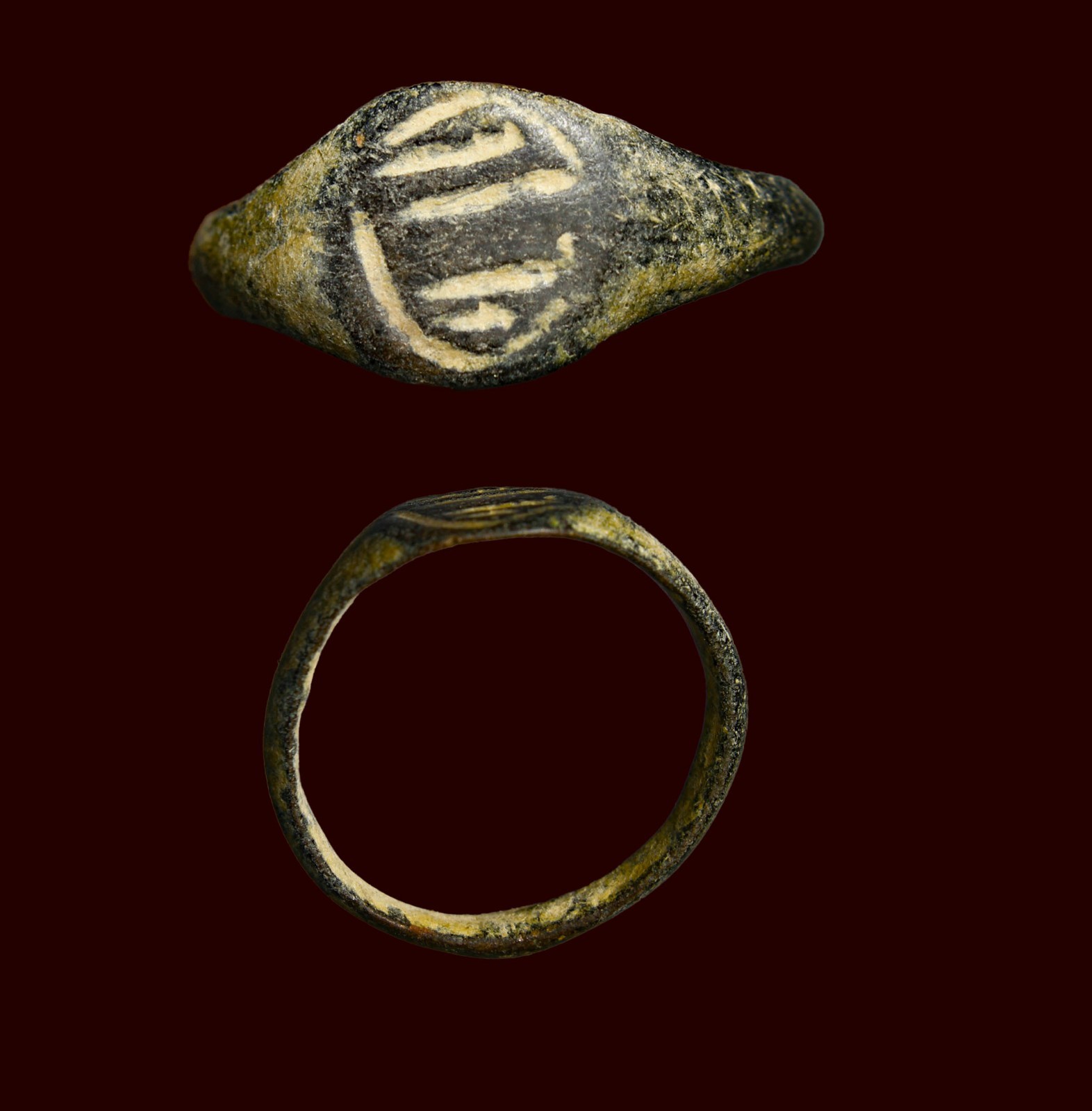
Ancient Near Eastern Bronze Signet Ring with Stylized Glyptic Symbols – Circa 1000–600 BC – Western Asiatic Adornment / US Size 4Guaranteed genuine authentic ancient artifact with a Certificate of Authenticity.Culture: Ancient Near Eastern (Western Asiatic / Iron Age)Date: Circa 1000–600 BCMaterial: Bronze (Copper Alloy)Type: Personal Signet Ring / Stamp Seal RingDesign: Pointed Oval Bezel Deeply Incised with Stylized Geometric / Zoomorphic Glyptic SymbolsSize: US Ring Size 4
DescriptionAn exceptional, museum-grade ancient bronze signet ring from the ancient Near East, originating from Western Asia during the early to mid-1st millennium BC. This deeply historic personal artifact features an elongated, pointed oval bezel seamlessly integrated into a slender, delicate hoop. As visible in the provided image 5.jpg, the primary face of the bezel is hand-engraved with bold, deeply incised linear symbols. These stylized marks form an abstract geometric or proto-glyph motif that served as the unique personal mark, signature, or protective talisman of its ancient wearer nearly three thousand years ago.
The ancient bronze has stabilized beautifully over the millennia, exhibiting an authentic, very dark olive-green and charcoal-toned mineralized patina. The deeply incised channels on the bezel face and the inner contours of the hoop retain a rock-hard, untouched tan and light-cream calcareous burial soil matrix, providing magnificent visual definition and superb three-dimensional contrast to the engraved design.
Historical & Epigraphic ContextIn the ancient Near East and broader Western Asia, personal identity, ownership, and administrative verification were inextricably linked to glyptic art. While elites and officials frequently utilized cylinder seals, compact metal signet rings served as highly practical, mobile alternatives for merchants, craftsmen, and local citizens. These rings were pressed directly into wet clay dockets, jar stoppers, or tablet envelopes to seal transactions, secure property, and witness legal agreements.
The abstract, highly stylized engraving on this specimen reflects the regional artistic transition from complex naturalistic forms to bold, efficient linear glyphs during the early Iron Age. This specific style of personal stamp jewelry is well-documented across West Asian regional excavation strata. Exact typological parallels for bronze signets of this form, material, and period are preserved in premier global institutions. Specific comparative specimens include:
The British Museum, London: Department of the Middle East / Western Asiatic Antiquities (cf. Museum Number BM 119342 / Registered No. 1927,1015.42).
The Louvre Museum, Paris: Department of Near Eastern Antiquities (cf. Inventory No. AO 21043 / Western Asiatic glyptic and personal metal stamp rings).
The Metropolitan Museum of Art, New York: Department of Ancient Near Eastern Art (cf. Accession No. 62.112.4 for ancient Near Eastern cast copper-alloy seal rings).
This incredibly well-preserved artifact represents a remarkably tangible link to the dawn of personal property administration and administrative systems in Western Asia.
Condition & AuthenticityCondition: Excellent archaeological condition. The bronze structure is completely solid, stable, and entirely intact, featuring an unbroken, delicate hoop. The hand-engraved linear symbols on the bezel remain sharp, deep, and fully legible beneath the authentic, ancient soil matrix.Authenticity: Guaranteed genuine. The ring exhibits flawless diagnostic signatures of ancient Western Asiatic open-mold casting and manual hand-tool engraving. The dense limestone soil encrustation is chemically fused to the underlying copper oxide patina from millennia of interment.
.10-1