When you click on links to various merchants on this site and make a purchase, this can result in this site earning a commission. Affiliate programs and affiliations include, but are not limited to, the eBay Partner Network.
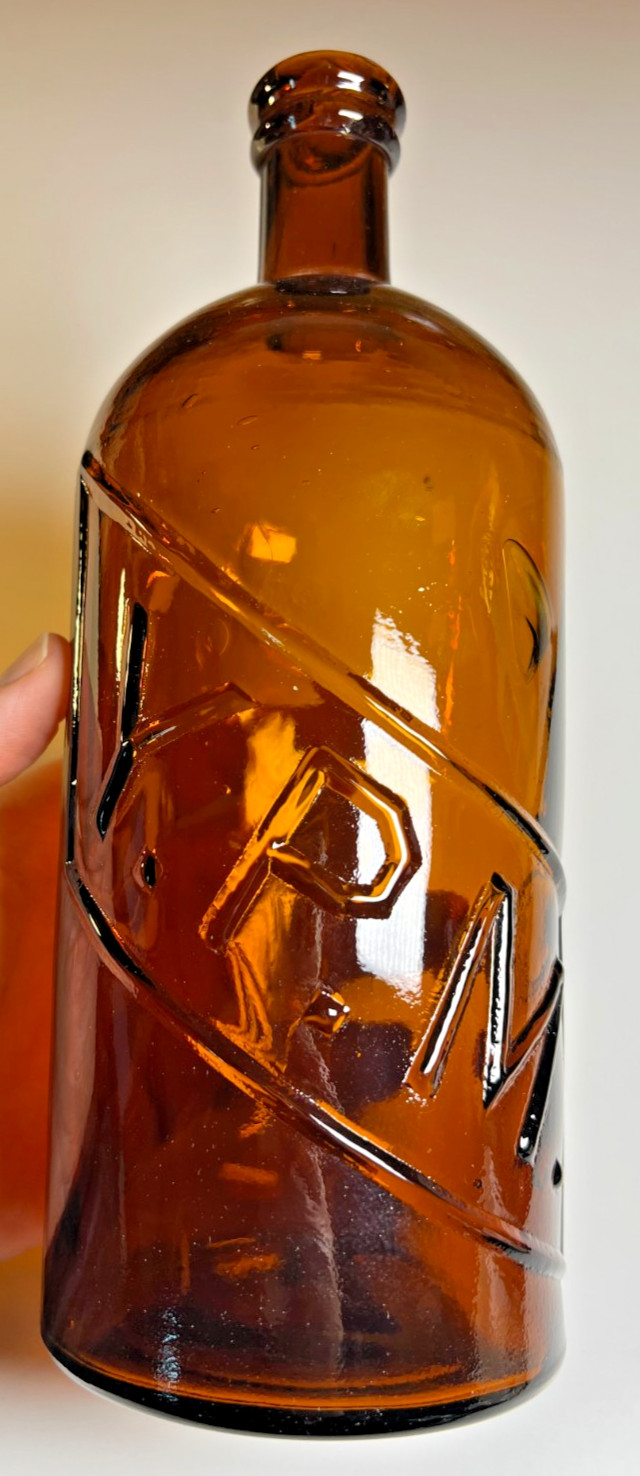
Step back into Gilded Age Philadelphia with this striking embossed YPM — Young’s Pure Malt whiskey bottle, produced for the Alex Young Distilling Company during the booming industrial 1880s. Hand-finished with a double-collar applied lip and glowing amber glass, this bottle represents the moment American whiskey transformed from barrel trade to branded identity. Likely once displayed behind a polished saloon bar or pharmacy counter, it survives today with strong embossing, clean glass, and exceptional presence — a true survivor from the era of railroads, gaslight streets, and Victorian whiskey culture.
The Alex Young Distilling Company — Philadelphia
The Alex Young Distilling Co. operated in Philadelphia during the later 1800s, when the city was one of America’s biggest whiskey distribution and rectifying centers. Philadelphia wasn’t just drinking whiskey — it was processing, blending, and branding it.
“Rectifiers” like Young’s company typically:
purchased bulk whiskey from Pennsylvania and Kentucky distillers,
aged, blended, or refined it,
then bottled it under proprietary trade names.
YPM — “Young’s Pure Malt” was a branded quality claim.
In the 1880s, embossing your name directly into glass was basically the Victorian version of anti-counterfeiting technology. If your bottle said YPM, customers knew they were getting Young’s product — not a saloon keeper’s mystery refill.
Philadelphia firms specialized in:
Your bottle reflects the era when whiskey brands were transitioning from barrel sales to consumer identity marketing — the birth of modern branding.
Condition
Excellent antique condition. No cracks, chips, bruises, or repairs observed. Double-collar applied top is clean and fully intact. Glass retains a beautiful even amber tone with strong clarity. Embossing remains bold and sharply defined throughout. Interior is clean with only light age-appropriate manufacturing bubbles and minor surface wear consistent with normal handling over 140+ years. Displays exceptionally well. It has one, large, bubble just about the embossed banner/logo.
Size / Measurements
Philadelphia in the 1880s — The World Around This Bottle
When this bottle sat behind a bar or apothecary shelf, Philadelphia was booming, noisy, smoky, and wildly modern for its time.
Industry & Daily Life
Philadelphia was the 2nd largest city in America.
Massive factories produced textiles, locomotives, iron goods, and ship components.
Horse-drawn wagons jammed cobblestone streets.
Gaslights were slowly giving way to electric lighting.
Dockworkers, immigrants, bankers, and factory hands all mixed in dense neighborhoods.
Whiskey was everywhere — saloons served as:
A bottle like yours likely lived behind a polished wooden bar surrounded by cigar smoke and brass spittoons.
Major Philadelphia Events of the 1880s
Expansion of rail networks connected Philly to Midwest grain and whiskey supply.
Growth of department stores like Wanamaker’s changed retail culture.
Labor unrest increased as industrial workers demanded better conditions.
Immigration surged, especially from Ireland, Germany, and Eastern Europe.
Electric street lighting began appearing late in the decade — a huge technological leap.
The city was transitioning from Victorian tradition into modern urban America.
Medicine in the 1880s
This is where whiskey bottles cross into your apothecary collecting world.
Doctors commonly prescribed whiskey for:
pneumonia
exhaustion
shock
digestive problems
post-surgery recovery
Alcohol was considered both stimulant and antiseptic.
Philadelphia was also a medical capital, home to:
Jefferson Medical College
University of Pennsylvania medical school
early surgical experimentation using antiseptic techniques
So your bottle might have been equally at home in:
Technology of the Era
Your bottle itself reflects the transition period:
Applied double-collar lip → hand-finished by a glassblower.
Post-mold base → improved mold technology for faster production.
Embossing → mass branding emerging with industrial molds.
Meanwhile outside:
telephones were appearing,
electric power experiments were underway,
typewriters entered offices,
railroads unified national markets.
This was the moment America started feeling fast.
Politics & Culture
The 1880s were politically intense:
Machine politics dominated cities.
Temperance movements were growing — ironically boosting bottled whiskey sales as regulation loomed.
Debates over labor rights and industrial wealth widened class divides.
Saloons — stocked with bottles like this — were unofficial political headquarters.