When you click on links to various merchants on this site and make a purchase, this can result in this site earning a commission. Affiliate programs and affiliations include, but are not limited to, the eBay Partner Network.
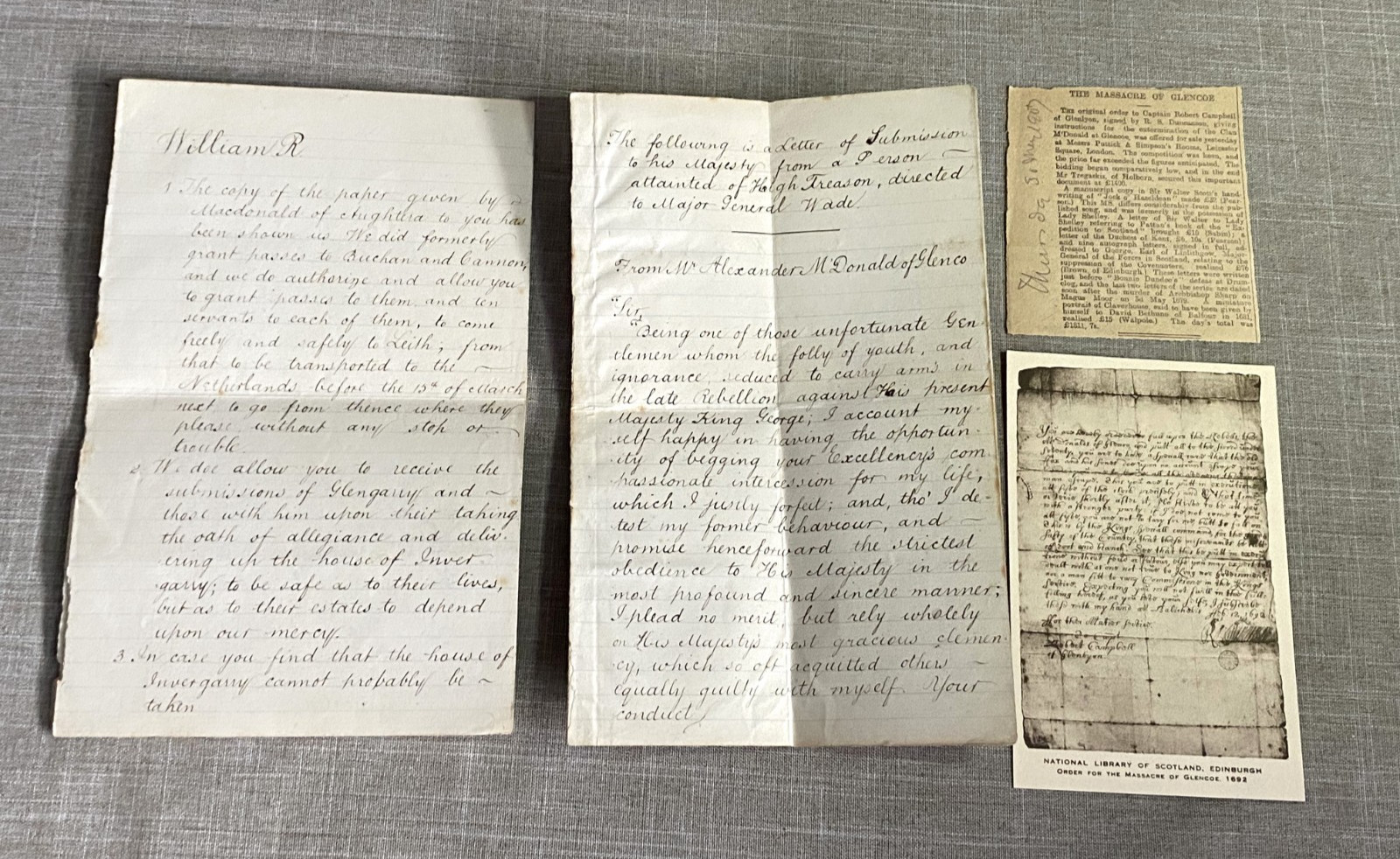
An unusual early 20th-century handwritten research archive devoted to the Massacre of Glencoe, the military orders surrounding the events of February 1692 and the later Jacobite history of Clan MacDonald.
The archive contains carefully written period transcriptions of important historical documents associated with the massacre. These include instructions issued in the name of William III, orders connected with the military operation against the MacDonalds and the notorious direction that escape routes should be secured so that neither the “old fox” nor his “cubbs” could get away.
Further handwritten material records the political aftermath of the tragedy, including a letter of submission from Alexander MacDonald of Glencoe to Major-General George Wade following the failed Jacobite Rising of 1715. Its deliberately humble language reflects the precarious position of the surviving Glencoe MacDonalds during the decades after the massacre.
The group is anchored by an original newspaper cutting dated Thursday, 30 May 1907, reporting the London sale of Robert Duncanson’s original order to Captain Robert Campbell of Glenlyon. The cutting describes intense offerding and records the remarkable sale price of £1,400, demonstrating the considerable historical importance already attached to the document during the Edwardian period.
Also included is a vintage National Library of Scotland photographic postcard reproducing the original 1692 execution order. The manuscript illustrated was presented to the Advocates’ Library by former Prime Minister J. Ramsay MacDonald in 1925, suggesting that the archive continued to be assembled or supplemented during the 1920s.
These handwritten sheets are early 20th-century historical transcriptions rather than original 17th- or 18th-century documents. Together with the dated newspaper cutting and institutional postcard, however, they form a coherent period research dossier tracing the massacre, its documentary evidence and the later survival of Clan MacDonald.
The papers show folds, handling marks, edge wear and age-related toning consistent with their age. The newspaper cutting has irregular edges, while the handwritten text remains generally clear and legible. Please study the photographs, which form part of the condition description.
A compelling piece of Scottish historical ephemera, preserving both the documentary story of Glencoe and the enduring fascination surrounding one of the most haunting episodes in Highland history.
*Please go to our shop on for other similar items, we can also look to combine postage where possible