When you click on links to various merchants on this site and make a purchase, this can result in this site earning a commission. Affiliate programs and affiliations include, but are not limited to, the eBay Partner Network.
An Exceptional Early Wapak with a Ghosted Size Number
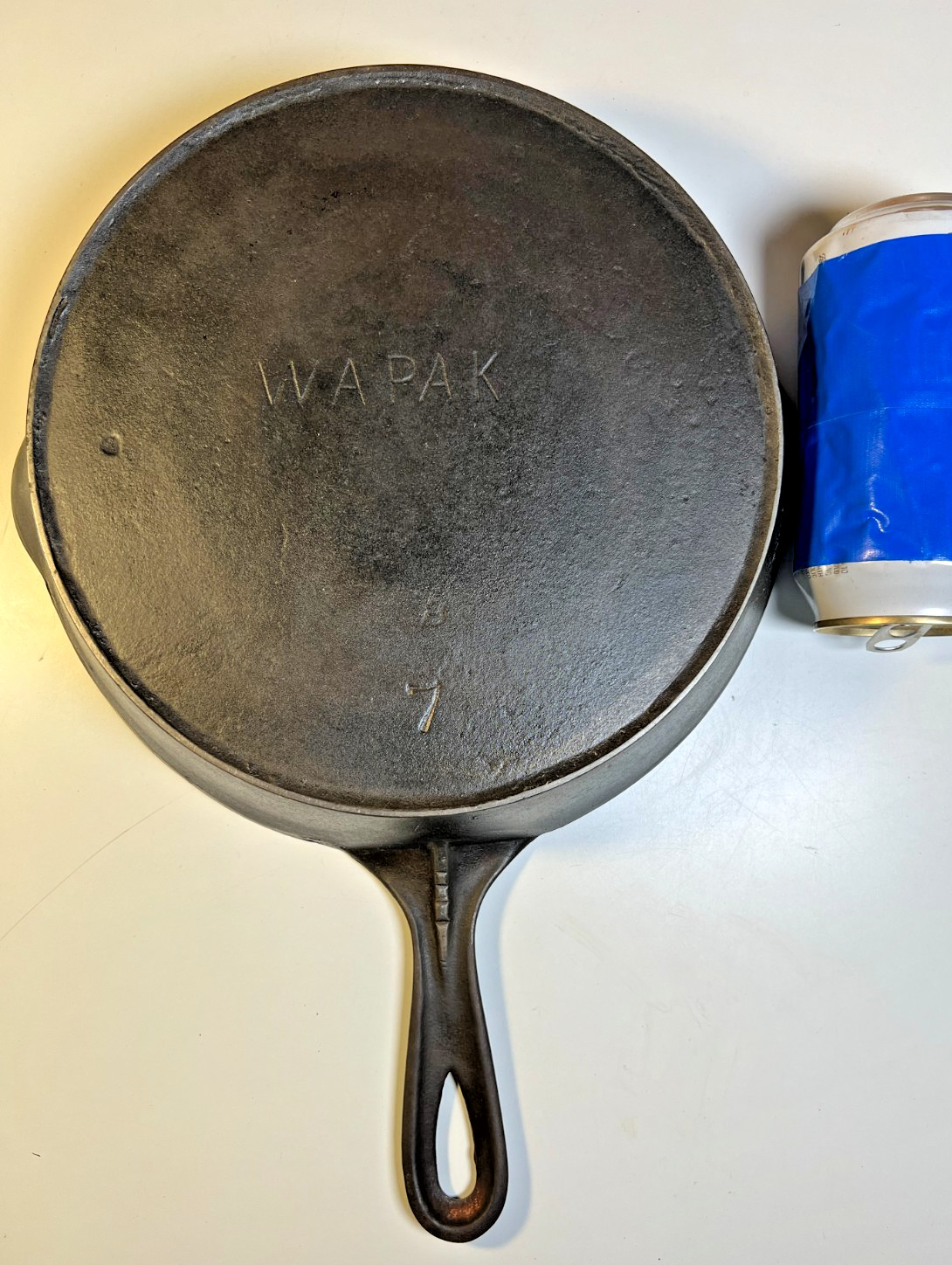
Offered here is an outstanding early Wapak No. 7 cast-iron skillet, produced by the Wapak Hollow Ware Company of Wapakoneta, Ohio, approximately circa 1903–1910.
This is far more interesting than an ordinary block-logo Wapak. Beneath the boldly cast WAPAK name is a faint but recognizable ghosted 8, while the skillet’s true size number—7—is prominently cast below it. Its approximately 9 5/8-inch diameter confirms that it is a genuine No. 7 rather than a conventional No. 8.
The ghosted 8 appears to be evidence of an altered or reused foundry pattern. The obsolete number was removed or filled, but its faint outline remained in the pattern and transferred into the finished casting. These curious remnants of the manufacturing process are known among collectors as ghost marks and give each surviving example its own foundry fingerprint.
Exceptionally Thin and Lightweight Casting
This skillet weighs only approximately 3.1 pounds, making it remarkably light for its size. Its sidewalls are exceptionally thin—only slightly thicker than a modern U.S. nickel.
That lightness is not the result of wear. It reflects the remarkable thin-wall casting for which early Wapak cookware is admired. Producing a broad, delicate skillet this thin without cracks, incomplete filling or serious distortion required considerable foundry skill.
The result was a pan that heated quickly and was much easier to lift and maneuver over an early coal or wood-burning range. More than a century later, this example remains structurally sound, beautifully balanced and entirely suitable for continued use.
Silky-Smooth Cooking Surface
The interior cooking surface is silky smooth, well seasoned and exceptionally well preserved, with no noticeable utensil marks. It has the beautifully refined feel collectors and serious cast-iron cooks seek in early American cookware.
There are only some minor cosmetic blemishes in the seasoning that resemble old water-drip lines or similar superficial marks. These affect only the appearance of the seasoning—not the iron—and should quickly blend back into the finish through ordinary use and continued seasoning.
The exceptionally smooth, unmarred cooking surface is a major advantage over the heavily scratched, pitted or uneven interiors commonly encountered on cookware of this age.
Dead Flat—No Wobble and No Spin
The skillet was tested on a marble countertop and sits completely dead flat, with:
No wobble
No spin
No rocking
No cracks
No repairs
Finding an exceptionally thin, lightweight skillet from the early twentieth century that remains completely flat is no small thing. Many early skillets developed movement or distortion after decades of repeated heating and cooling. This one has survived in unusually fine functional condition.
Molder’s Identification Mark
The underside of the handle displays distinctive chisel-like cut marks. These are believed to be an individual molder’s identification mark, rather than accidental damage.
Early foundries frequently used simple cuts, notches, letters or symbols to identify the worker responsible for preparing a mold. Such marks allowed the foundry to trace individual castings and monitor production quality.
Because these markings were utilitarian rather than decorative, they varied from worker to worker. They add another fascinating human element to this skillet—the identifying strokes of an anonymous foundry worker remain clearly visible more than a century later.
The Wapak Hollow Ware Company
The Wapak Hollow Ware Company was established in Wapakoneta, Ohio, in 1903 and remained in production until approximately 1926. Despite its relatively brief operating period, Wapak produced some of the most distinctive and desirable American cast-iron cookware of the early twentieth century.
Wapak became particularly known for lightweight, thin-walled skillets and for its fascinating use or adaptation of existing foundry patterns. Numerous Wapak pieces preserve faint earlier numbers, lettering or markings beneath their intended logos. These ghost impressions offer tangible evidence of the economical and resourceful methods used inside an early American foundry.
Today, Wapak cookware is collected not only for its cooking qualities, but also for precisely these casting peculiarities. No two examples are quite identical.
Measurements and Features
Maker: Wapak Hollow Ware Company
Location: Wapakoneta, Ohio
Date: Approximately circa 1903–1910
Actual size: No. 7
Diameter: Approximately 9 5/8 inches
Height: Approximately 2 1/4 inches
Weight: Approximately 3.1 pounds
Bold block-letter WAPAK marking
Prominent cast No. 7
Faint ghosted No. 8
Molder’s identification cuts beneath the handle
Exceptionally thin sidewalls
Raised outside heat ring
Twin pour spouts
Silky-smooth cooking surface
Well seasoned
Dead flat on marble
No wobble or antique condition, especially considering the skillet’s remarkably thin and lightweight casting.
The cooking surface is silky smooth, well seasoned and free from noticeable utensil marks. The skillet sits completely flat on a marble countertop without any wobble, rocking or spinning.
There are a few superficial water-drip-like blemishes visible in the seasoning inside the pan. These are strictly cosmetic seasoning variations—not pitting or damage to the iron—and should naturally diminish through continued use and seasoning.
No cracks, no repairs and no structural damage observed. Please examine all photographs closely, as they form an important part of the description.
This is an exceptionally fine early Wapak: lightweight, wonderfully thin, unusually smooth, completely stable and loaded with desirable foundry character.