When you click on links to various merchants on this site and make a purchase, this can result in this site earning a commission. Affiliate programs and affiliations include, but are not limited to, the eBay Partner Network.
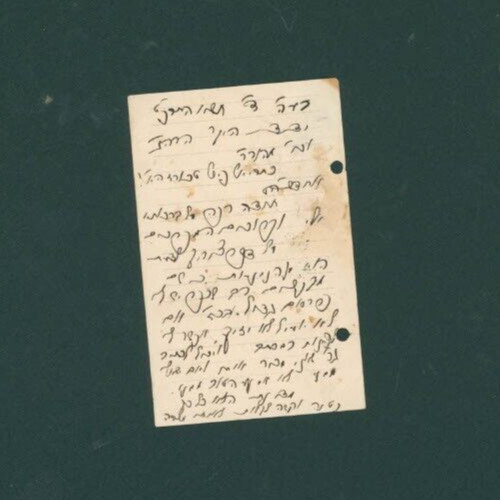
Rare Full Hebrew Handwritten & Signed Postcard by Rabbi Moshe Avigdor Amiel – Chief Rabbi of Antwerp & Tel Aviv – הרב dir=\"ltr\" style=\"margin-top:0; margin-bottom:0;\">Offered here is a fully handwritten and signed postcard in Hebrew by the renowned Rabbi Moshe Avigdor Amiel (1883–1946) – one of the foremost Orthodox rabbis and Religious Zionist thinkers of the early 20th century.
This authentic, original postcard provides a direct connection to one of the great rabbinic and ideological leaders of modern Jewish history.
---
✡️ About Rabbi Amiel:
Born in Lithuania and ordained by Torah giants including Rabbi Chaim Soloveitchik and the Rogatchover Gaon.
Served as Chief Rabbi of Antwerp, Belgium (1913–1926), known for his dynamic leadership and brilliance in drasha and halacha.
In 1936, appointed Chief Rabbi of Tel Aviv, where he helped shape the spiritual and religious tone of the growing Yishuv.
A leading figure in Religious Zionism and the Mizrachi movement.
Author of influential works including HaYahadut veHaZman, Derashot El Ami, and L\'Ne\'emanei Artzecha.
---
✉️ Item Details:
Full original postcard
Entirely handwritten in Hebrew by Rabbi Amiel himself
Personally signed with his full rabbinic signature at the end
Estimated from the 1930s or 1940s
Original postal markings enhance authenticity
Content reflects his active rabbinic leadership
---
📦 Condition:
Very good condition for its age
Clear and bold handwriting
Signature fully intact
Minor age-toning or edge wear consistent with vintage paper
---
🕍 Collectible Significance:
This is a rare primary source document from one of the most eloquent rabbinic leaders of modern Judaism. A treasure for collectors of:
Rabbinic autographs & manuscripts
Religious Zionist history
Jewish history of Antwerp and Tel Aviv
20th-century Torah leadership
Judaica and Orthodox ephemera