When you click on links to various merchants on this site and make a purchase, this can result in this site earning a commission. Affiliate programs and affiliations include, but are not limited to, the eBay Partner Network.
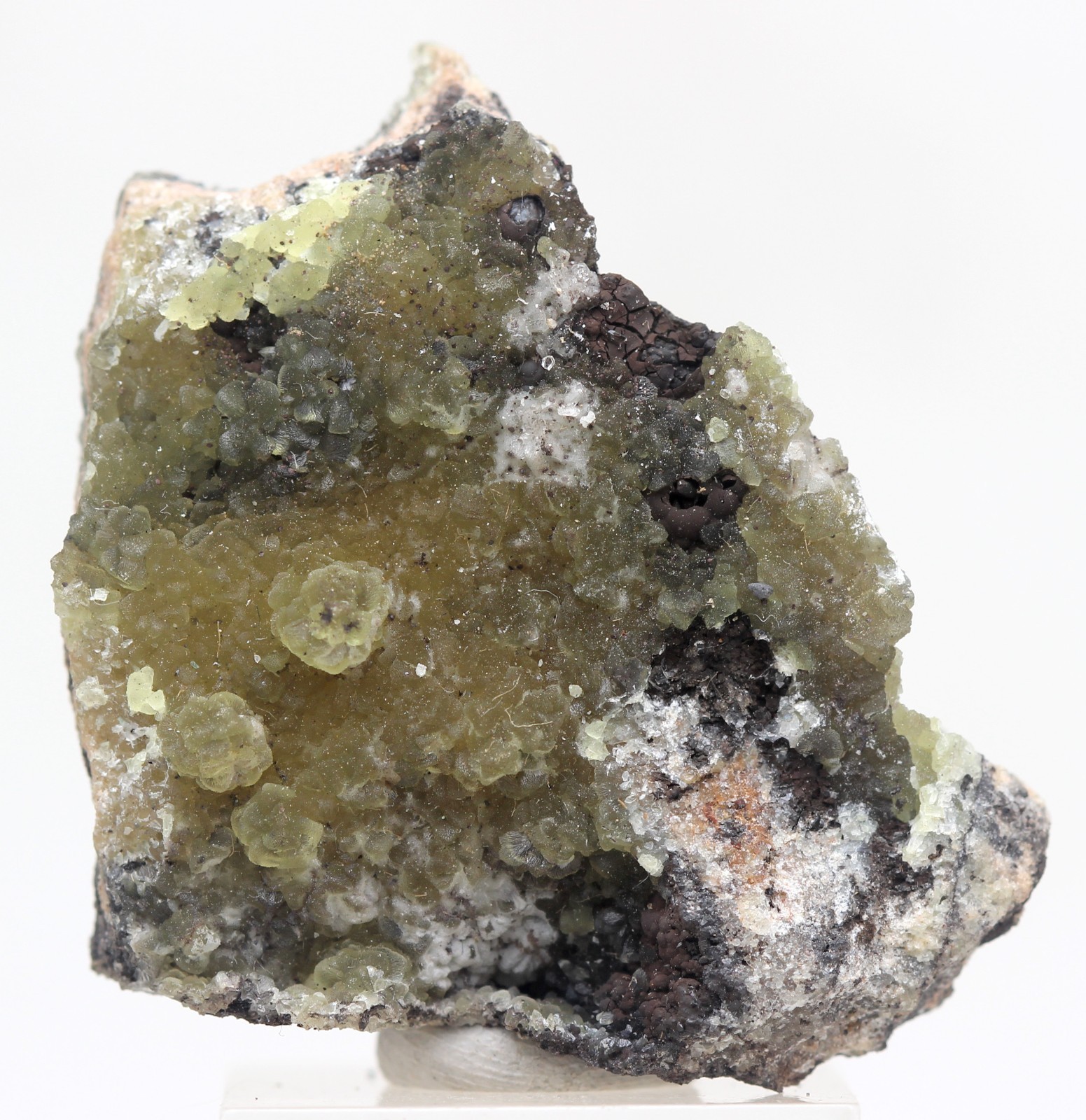
This specimen weighs 30.78 grams. It measures 40 mm x 37 mm x 15 mm.
I offer a shipping discount for customers who combine their payments for multiple purchases into one payment!
The discount is regular shipping price for the first item and just 50 cents for each additional item!
To be sure you get your shipping discount just make sure all the items you want to purchase are in your cart.
sales you win are added to your cart automatically.
For any \"buy it now\" items or second chance offers, be sure to click the \"add to cart\" button, NOT the \"buy it now\" button.
Onceall of your items are in your cart just pay for them from your cart andthe combined shipping discount should be applied automatically.I offer a money back guarantee on every item I sell.
If you are not 100% happy with your purchase just send me a message to let me know
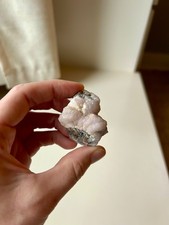
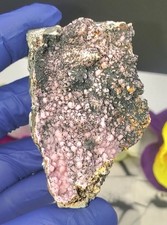
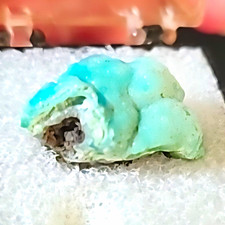
and I will buy back the item for your full purchase price.Hi there. I am selling this botryoidal smithsonite var. cuprian mineral specimen. It is from 79 Mine, Gila County, Arizona, USA. Thanks so much for visiting my store and have a great day!
The following is information about this mineral from Carbonate mineralFormula ZnCO3IMA symbol Smt[1]Strunz classification 5.AB.05Crystal system TrigonalCrystal class Hexagonal scalenohedral (3m)H-M symbol: (3 2/m)Space group R3cUnit cell a = 4.6526(7)c = 15.0257(22) [Å]; Z = 6IdentificationColor White, grey, yellow, green to apple-green, blue, pink, purple, bluish grey, and brownCrystal habit Uncommon as crystals, typically botryoidal, reniform, spherulitic; stalactitic, earthy, compact massiveTwinning None observedCleavage Perfect on [1011]Fracture Uneven, sub-conchoidalTenacity BrittleMohs scale hardness 4.5Luster Vitreous, may be pearlyStreak WhiteDiaphaneity TranslucentSpecific gravity 4.4–4.5Optical properties Uniaxial (−)Refractive index nω = 1.842 – 1.850 nε = 1.619 – 1.623Birefringence δ = 0.223 – 0.227Ultraviolet fluorescence May fluoresce pale green or pale blue under UVReferences [2][3][4]Smithsonite, also known as zinc spar, is the mineral form of zinc carbonate (ZnCO3). Historically, smithsonite was identified with hemimorphite before it was realized that they were two different minerals. The two minerals are very similar in appearance and the term calamine has been used for both, leading to some confusion. The distinct mineral smithsonite was named in 1832 by François Sulpice Beudant in honor of English scientist James Smithson (c. 1765–1829), who first identified the mineral in 1802.[3][5]
Smithsonite is a variably colored trigonal mineral which only rarely is found in well formed crystals. The typical habit is as earthy botryoidal masses. It has a Mohs hardness of 4.5 and a specific gravity of 4.4 to 4.5.
Smithsonite occurs as a secondary mineral in the weathering or oxidation zone of zinc-bearing ore deposits. It sometimes occurs as replacement bodies in carbonate rocks and as such may constitute zinc ore. It commonly occurs in association with hemimorphite, willemite, hydrozincite, cerussite, malachite, azurite, aurichalcite and anglesite. It forms two limited solid solution series, with substitution of manganese leading to rhodochrosite, and with iron, leading to siderite.[4] A bright yellow variety is sometimes called \"turkey fat ore\". The cause of the yellow colour is due to the presence of greenockite inclusions within the smithsonite crystals.[2]