

|
Site Categories |
|
Featured Items |

Poodle, Spaghetti Trim, Ucagco


|
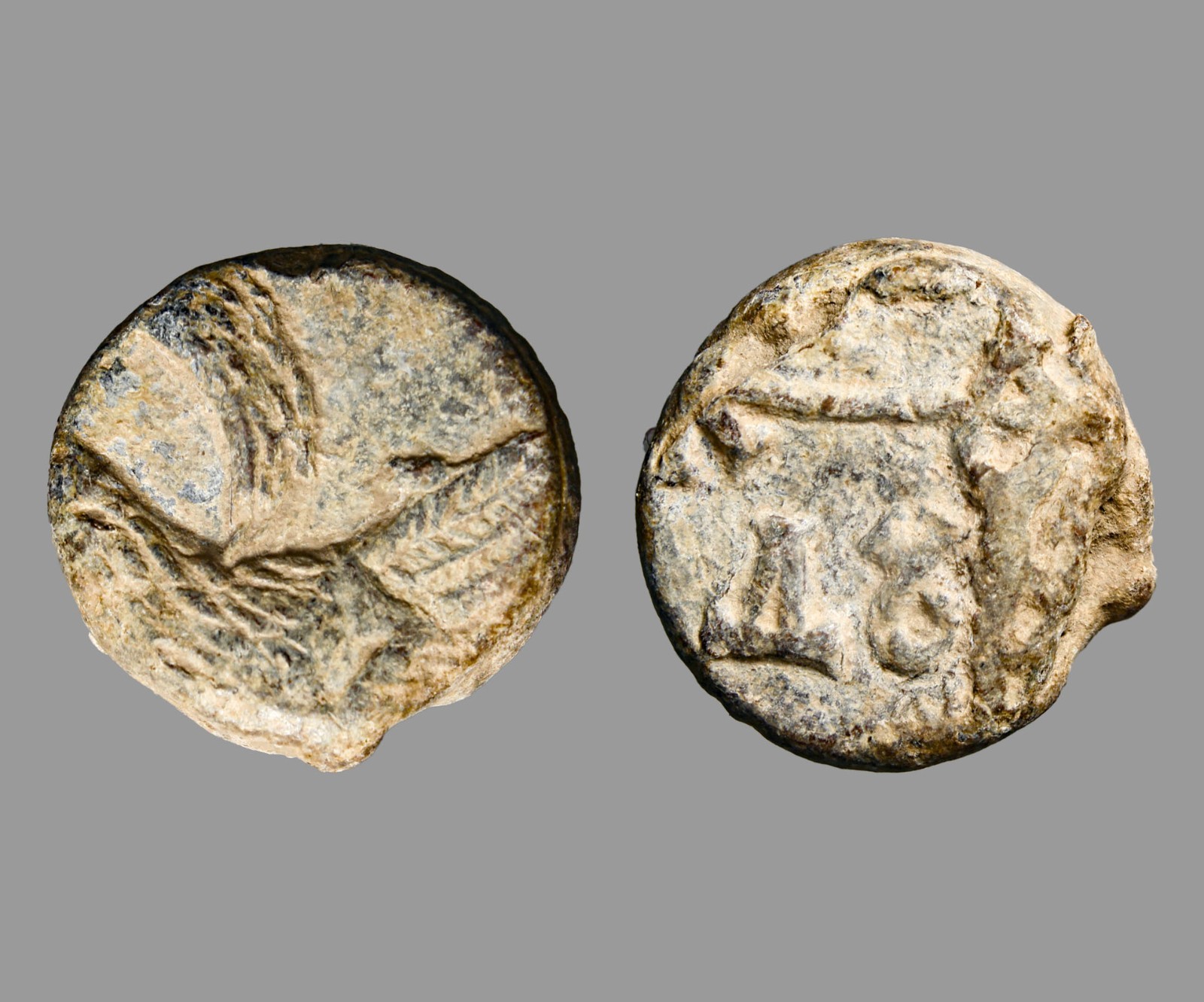
Certified Authentic Byzantine Lead (Pb) Seal with Imperial Eagle and Cruciform For Sale

When you click on links to various merchants on this site and make a purchase, this can result in this site earning a commission. Affiliate programs and affiliations include, but are not limited to, the eBay Partner Network.

Certified Authentic Byzantine Lead (Pb) Seal with Imperial Eagle and Cruciform:
$125.00
Byzantine Lead (Pb) Seal with Imperial Eagle and Cruciform Monogram (Circa 6th–8th Century AD) 16mm Authentic Authenticity NoticeThis artifact is certified authentic and will be accompanied by a Certificate of Authenticity and Provenance. Details Object: Doublesided Lead Seal (Bulla) Culture: Byzantine Empire Date: Circa 6th–8th Century AD Material: Lead (Pb) Form: Circular disc with a channel for a silk or hemp cord Size: 16mm Region: Eastern Mediterranean / Constantinople
Identification of the Symbol: The Byzantine Imperial EagleThe "eagle or something" on the obverse (left) is a stylized Byzantine Eagle in flight or mid-descent. The Wings: The deeply incised, sweeping lines represent the primary feathers of the wings. Imperial Authority: In the Early to Middle Byzantine period, the eagle remained a potent symbol of Roman continuity and the high administrative authority of the state. The Reverse (Right): The reverse features a stylized Cruciform Monogram or characters typical of Byzantine sigillography. These monograms often encoded the name or title (such as Theotokos or a specific official's name) of the sender.
Overview and Functional ContextThis 16mm bulla was an essential component of Byzantine governance and private commerce. Unlike stamp seals, these were clamped over a cord to "lock" a document or a commercial sack. The presence of the eagle suggests it may have originated from a military or high-level administrative office. Magic-wise, Byzantine seals often incorporated a "sealing prayer." The act of sealing a letter with the image of the cross or an imperial bird was believed to invoke divine protection over the contents, ensuring the message reached its destination without being tampered with by physical or spiritual adversaries. Authenticity Check The artifact displays a superb "white-grey" lead carbonate patina, characteristic of ancient lead that has reached chemical equilibrium with its environment over centuries. The strike shows the "soft" edges and slight displacement typical of a manual handheld seal-press (boulloterion). The central channel for the cord shows authentic internal mineralization. No evidence of modern casting seams, fresh metallic surfaces, or machine-engraving.
Comparable Examples Dumbarton Oaks, Washington D.C.: The world’s primary collection of Byzantine lead seals featuring imperial and zoomorphic motifs. The British Museum, London: Accession No. 1923,0512.448 (Byzantine lead seals with avian iconography). Benaki Museum, Athens: Significant holdings of Byzantine sigillography from the 6th–10th centuries.
Further Reading Zacos, G. & Veglery, A. – Byzantine Lead Seals: The foundational text for identifying Byzantine monograms and iconography. Nesbitt, J. & Oikonomides, N. – Catalogue of Byzantine Seals at Dumbarton Oaks: For administrative context of small-scale lead bullae.
7-8
|
|
Related Items:Too many requests. | |
