When you click on links to various merchants on this site and make a purchase, this can result in this site earning a commission. Affiliate programs and affiliations include, but are not limited to, the eBay Partner Network.
Before logos, before mass branding, before anyone thought to “collect” cast iron—this skillet was already doing its job. Cast in the late 19th century and built for wood and coal stoves, it carries that unmistakable early American character: hand-finished, slightly imperfect, and still completely functional well over a century later.
Date & Attribution
Circa 1870–1885
This dating comes from a combination of features:
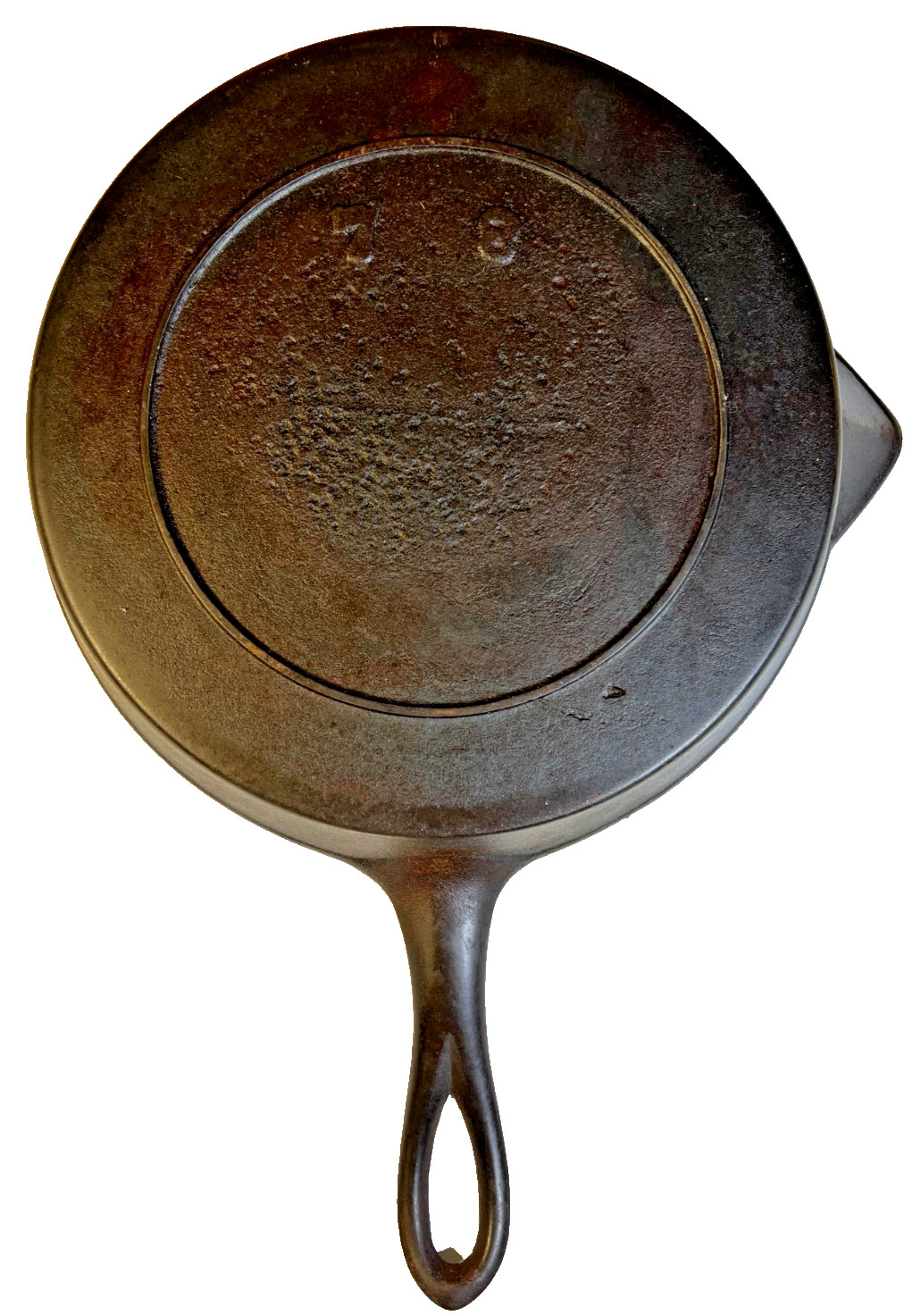
- Gate mark (obsolete by ~1890)
- Single pour spout (earlier style)
- Raised heat ring (designed for stove eyes)
- Unmarked, numeric sizing (“7–8”) typical of small regional foundries
Likely produced by a smaller American foundry, not one of the later big-name brands—back when there were hundreds of independent ironworks supplying local markets.
Specifications
- Type: Cast iron skillet
- Era: ~1870–1885
- Size: #8 class
- Diameter: 10 3/8"
- Weight: 3.13 lb (relatively light for its size)
- Handle: Early “fancy” teardrop loop handle
- Spouts: Single pour spout
- Base: Raised heat ring
- Markings: “7–8” embossed on bottom
- Casting: Gate-marked underside
Condition
- Surface: Well seasoned, ready for use
- Bottom: Moderate pitting from age/use on the bottom (non cooking side)
- Cooking surface: Minor original casting flaws - see finger point pics.
- Flatness: Very faint tick on a glass surface. Fixed with a single sheet of paper (a single business card is too thick).
- No cracks or repairs
What Life Was Like When This Was Made
When this skillet was poured:
- Technology: Most homes still cooked on wood or coal-fired stoves; electricity was experimental, and gas lighting was just becoming common in cities.
- Medicine: Doctors were only beginning to understand germs and antiseptics—surgeries were risky, and antibiotics didn’t exist.
- Politics: The U.S. was in the post–Civil War Reconstruction era, rapidly industrializing, with railroads expanding and cities growing fast.
- Daily life: Cooking was labor-intensive—fires had to be built and maintained, and a durable pan like this wasn’t just cookware, it was a daily survival tool.
This skillet would have sat directly over flame or coals, cooking everything from salt pork to cornbread.
Cooking Use Today
Thanks to its build and heat ring, this skillet is versatile and still very usable:
Safe for:
- Gas ranges
- Electric coil stoves
- Glass/ceramic cooktops (use with care—heat ring edges can scratch)
- Ovens (any temperature)
- Open fire / campfire / grill
Best performance: Gas, oven, or live fire—closest to its original environment.
Final Take
A genuine 19th-century American skillet with real working history—well seasoned, structurally sound, and still fully capable in a modern kitchen. Not just a display piece, but a functional relic from a time when tools were built to outlast the people using them.