When you click on links to various merchants on this site and make a purchase, this can result in this site earning a commission. Affiliate programs and affiliations include, but are not limited to, the eBay Partner Network.
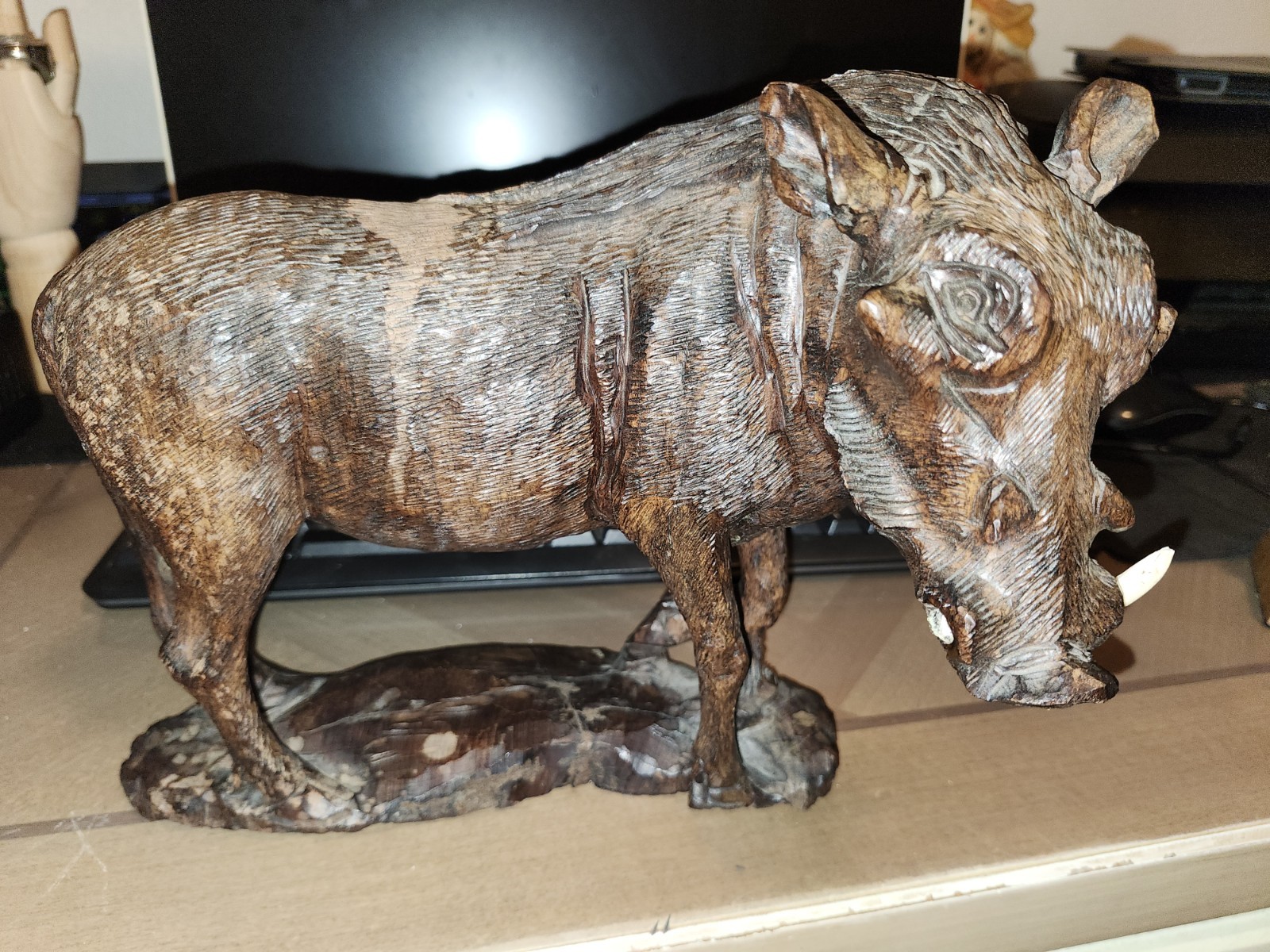
Offering a magnificent, substantial example of late 19th to early 20th-century Swiss Black Forest folk art. Hand-carved in the legendary lakeside woodworking enclave of Brienz, Switzerland, this robust 12-inch wild boar (Sanglier) captures the powerful, dynamic charging stance celebrated by European master woodcarvers of the era.
Meticulously chiseled from a dense, high-grade hardwood (likely walnut or nutwood), the sculpture features extraordinary depth of texture. The layered, coarse bristle lines across the torso, the deeply gouged charging mane, and the expressively carved wooden eyes showcase a level of artisanal craftsmanship that completely distinguishes it from modern tourist reproductions.
Significantly, the intact left tusk features a definitive organic marrow cavity under close inspection, confirming it is crafted from authentic antique bone/horn inlay rather than synthetic celluloid or resin.
• Subject: Standing/Charging Wild Boar (Sanglier)
• Origin: Brienz Region, Switzerland / Black Forest, Germany
• Estimated Period: Circa 1890 – 1910 (Late Victorian / Edwardian Era)
• Material: Hand-Carved Hardwood (Nutwood) with Genuine Bone/Antler Inlay
• Height: Approx. 9 inches (23 cm)
• Length: Approx. 13 inches (33 cm)
Historical Provenance & Background
The woodcarving tradition of Brienz, Switzerland, began in the early 1800s as a vital winter trade for local artisans. By the turn of the century, workshops like those of Johann Huggler and Peter Burri elevated these animal carvings from simple folk crafts into globally recognized fine art.
Wild boars were highly coveted by elite travelers taking the European "Grand Tour" and were predominantly purchased to decorate opulent, rustic hunting lodges, private libraries, and elite Victorian gentlemen’s smoking rooms. This medium-cabinet scale piece perfectly represents the golden era of Swiss structural animal portraiture.
Condition Report & Authenticity Notes
This sculpture is offered in honest, unaltered antique condition, proudly displaying the natural hallmarks of its 120-year history:
• The Snout: The left tusk is fully intact and original, showcasing a beautiful naturally aged cream patina. The right tusk is missing from its socket, which displays residual historic adhesive.
• The Ears: Features a historical, naturally oxidized minor chip on the outer rim of the right ear. The wood fibers inside the break have naturally softened and darkened over decades of handling, verifying its authenticity.
• The Finish: The left flank displays a rich, deep semi-gloss patina. The right flank shows classic, authentic sun-bleaching and surface dryness from decades of sitting near an interior window. The underlying wood remains structurally stable, solid, and entirely free of deep vertical cracks or splits.