When you click on links to various merchants on this site and make a purchase, this can result in this site earning a commission. Affiliate programs and affiliations include, but are not limited to, the eBay Partner Network.
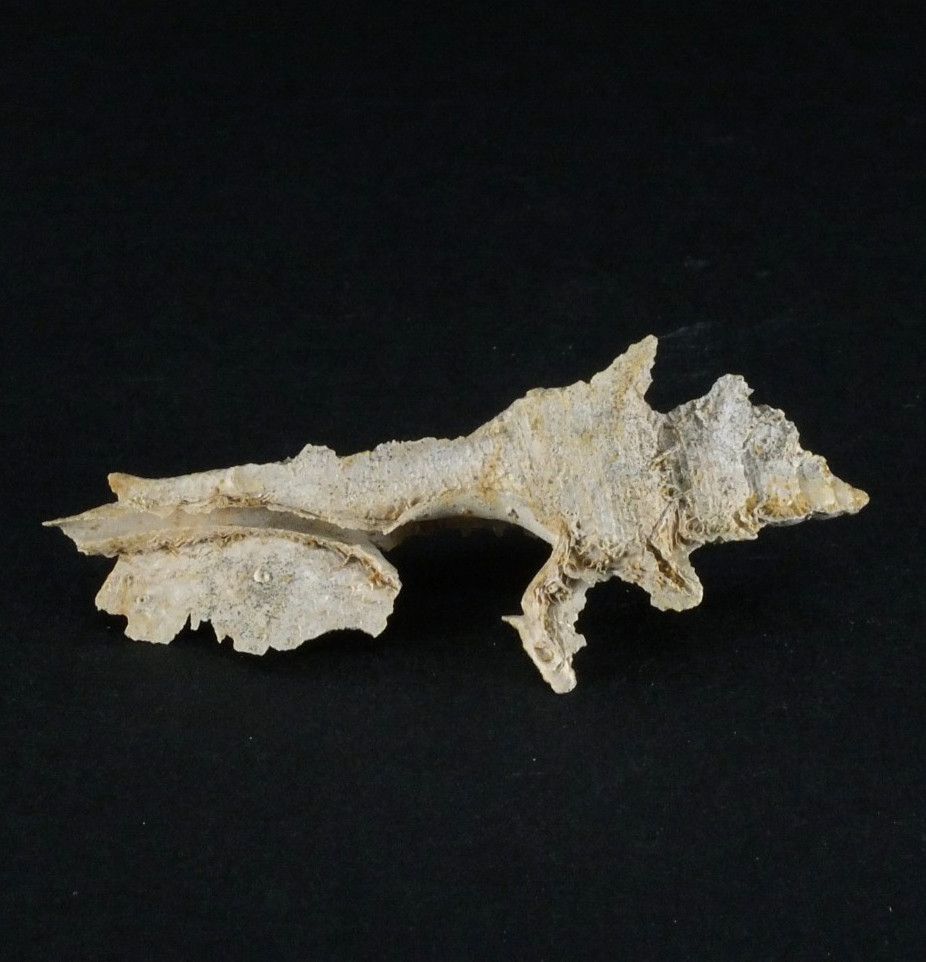
This Middle Miocene gastropod specimen represents the species Typhinellus laciniatus, an ornate member of the Muricidae family known for its strikingly frilled varices and sharply defined axial sculpture. Measuring 38 × 13 × 14 mm, the shell displays the elongated form, narrow aperture, and elaborate spination typical of the genus. Its preservation is notable, retaining clear external ornamentation that showcases the species’ distinctive morphological complexity.
Collected during the 1970s from the renowned Muddy Creek locality, approximately seven kilometres west of Hamilton in Victoria, this specimen comes from one of Australia’s most productive and scientifically valuable fossil shell deposits. The Muddy Creek Formation is internationally recognised for its exceptionally diverse Middle Miocene marine fauna, representing a warm, shallow-water environment that supported abundant molluscs, echinoids, and other invertebrates. Fossils from this site are highly sought after for their detail and consistency of preservation.
Originally described by Tate in 1888, Typhinellus laciniatus exhibits a level of ornamentation that reflects both its ecological adaptations and the evolutionary experimentation characteristic of Muricidae during the Miocene. The varices and laciniae formed protective barriers against predators while simultaneously increasing the shell’s anchoring stability in soft marine substrates. This specimen retains all major diagnostic features, making it a textbook reference for collectors and an informative example for comparative study.
Fossils from Muddy Creek have become increasingly difficult to obtain due to limited modern access and the gradual depletion of exposed fossil-bearing horizons. This well-preserved example of Typhinellus laciniatus captures both the aesthetic appeal and scientific significance of the locality. With its sharp detail and classic Miocene character, it represents an excellent addition to any Australian fossil shell collection.