When you click on links to various merchants on this site and make a purchase, this can result in this site earning a commission. Affiliate programs and affiliations include, but are not limited to, the eBay Partner Network.
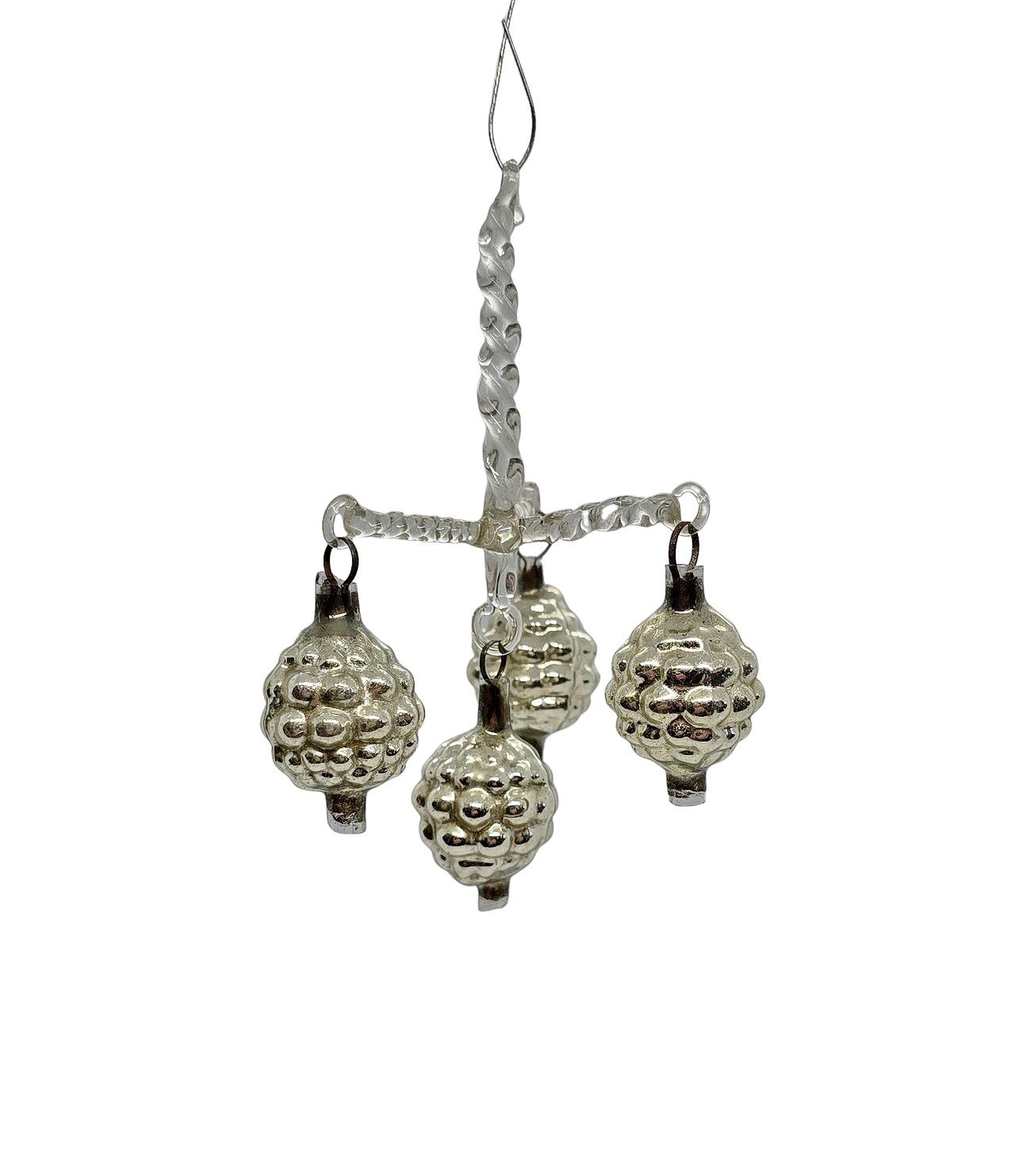
Lauscha Glass Hanging Lamp Candellabra Christmas Ornament, 1910 (# 18998)The description of this item has been automatically translated. If you have any questions, please feel free to contact us.
Ceiling lamp / candelabra
Material: Mirrored glass
Size: 10.5cm high, 7cm wide
Age: around 1910
Origin: Germany, Lauscha
Condition:
Good used condition with normal signs of age.
Description:
This extraordinary, very rare Christmas tree decoration from Lauscha shows a candelabra / ceiling light. The artistic craftsmanship and authentic design make it a unique collector\'s item. Guaranteed old, not a reproduction – a truly unique piece from around 1910. Perfect for a high-quality collection or as a special decorative piece.
Glass decorations from Lauscha / Christmas tree decorations made of glass
Glass Christmas tree decorations have been around since the middle of the 19th century. Century made mainly by home workers in Thuringia. According to legend, the idea of making colored glass balls for the Christmas tree came from a poor Lauscha glassblower who could not afford the expensive walnuts and apples in 1847. He is said to have blown up glass bottles into glass decorations for the Christmas tree. This story cannot be proven! The raw material had to be obtained from a glassworks and was certainly not free. A glassblower\'s order book has been preserved, in which an order for six dozen \"Christmas balls\" in various sizes was recorded for the first time in 1848. So they weren\'t made for your own tree. In the early days of production, glassblowers used a harmful alloy of tin and lead to mirror the glass surfaces. From 1870 onwards, the balls got their shine from silver nitrate, which is still used in mirror production today. The publishing houses from Sonneberg took over the distribution. The mass production of this new tree decoration was made possible by the construction of a gas works in Lauscha in 1867, because only a very hot gas flame made it possible to blow large and thin-walled balls. Previously, the Bunsen burners had been operated with rapeseed oil and paraffin. Family members then dipped the mirrored balls in paint and sometimes added mica particles. In 1870, Justus von Liebig managed to coat glass bodies with a silver solution and make them shine. Around 1880, the American Frank Winfield Woolworth imported the first Christmas tree baubles into the United States. As a result, production was greatly expanded.
You can find over 1,000 other items of Christmas tree decorations / Christmas decorations / nativity figures in our shop!
Total price including VATDifferential taxation according to Paragraph 25 A UStG, no VAT statement.
Glass Christmas tree decorations have been around since the middle of the 19th century. Century made mainly by home workers in Thuringia. According to legend, the idea of making colored glass balls for the Christmas tree came from a poor Lauscha glassblower who could not afford the expensive walnuts and apples in 1847. He is said to have blown up glass bottles into glass decorations for the Christmas tree. This story cannot be proven! The raw material had to be obtained from a glassworks and was certainly not free. A glassblower\'s order book has been preserved, in which an order for six dozen \"Christmas balls\" in various sizes was recorded for the first time in 1848. So they weren\'t made for your own tree. In the early days of production, glassblowers used a harmful alloy of tin and le