When you click on links to various merchants on this site and make a purchase, this can result in this site earning a commission. Affiliate programs and affiliations include, but are not limited to, the eBay Partner Network.
Canvas Wall Art - Matte Finish with Hanging Hardware
High-quality canvas wall art with a matte finish. Each canvas includes back hanging hardware for convenient display. The frame is made from radiata pine sourced from renewable forests.
- Materials: Cotton and polyester composite (canvas), pine wood (frame)
- Finish: Matte coating designed for detailed, vibrant images
- Printing: Latex inks that are non-hazardous, non-toxic, and non-flammable
- Backing: Includes pre-installed hanging hardware
- Support: Soft rubber dots on bottom back corners for stability
- Frame: Radiata pine wood sourced from FSC-certified renewable forests
- Tolerance: Slight size deviations possible within ± 1/8 in (3.2 mm)
Care Instructions
- If dust collects, gently wipe with a clean, damp cloth
- Avoid using harsh cleaners or scrubbing the surface
Shipping & Handling
Each canvas print is securely packaged with protective materials to help prevent damage in transit. Tracking is included with all orders.
International buyers: please check local import regulations for canvas art before purchase.
Keywords: canvas wall art, matte canvas print, framed canvas, pine wood frame, wall decor, hanging canvas art, durable canvas print
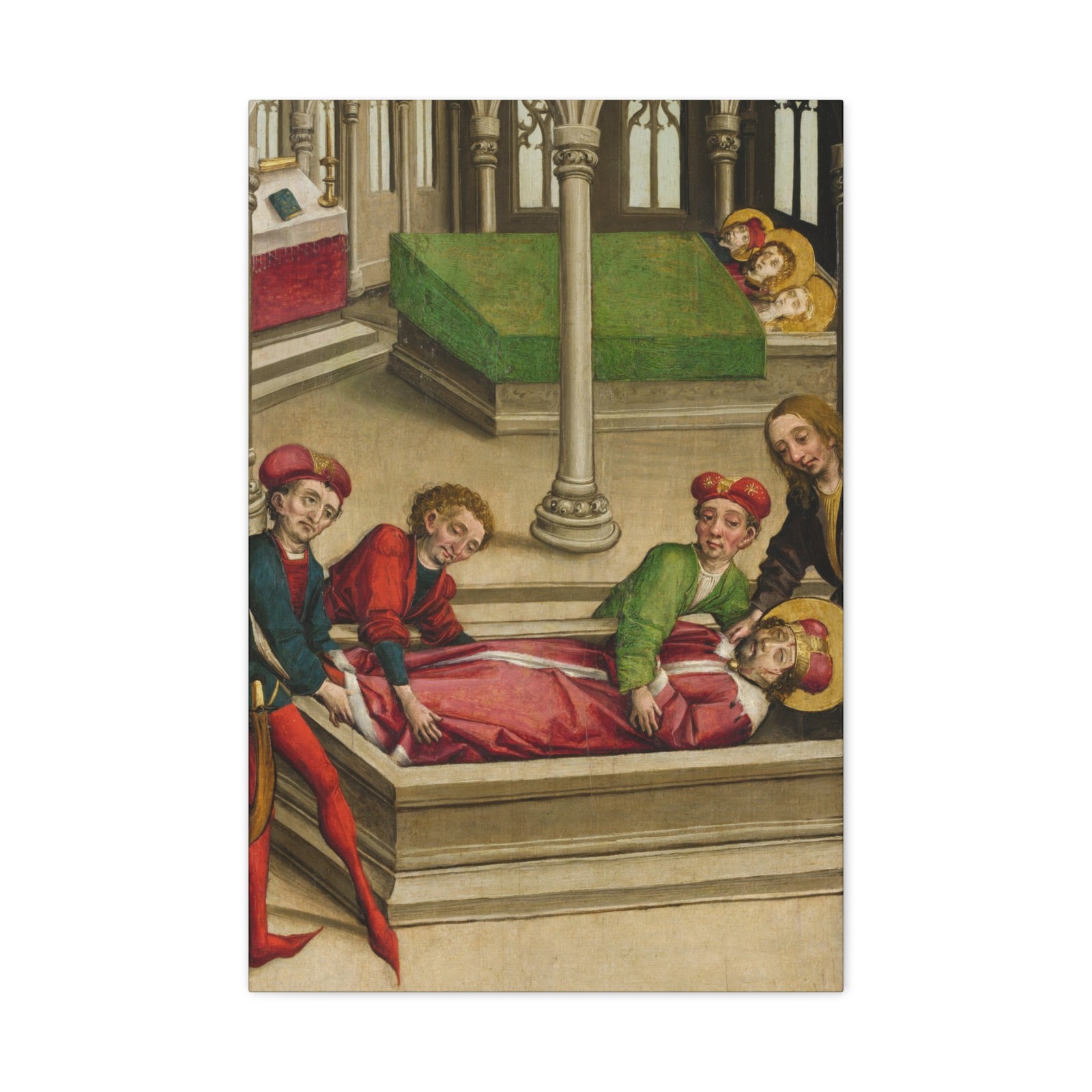
This panel portrays the burial of Saint Wenceslas, the tenth-century Duke of Bohemia who became a preeminent martyr and patron saint of his people. The scene captures the solemn final rites conducted for the royal saint, emphasizing the reverence accorded to his earthly remains. By focusing on the interment, the artist highlights the transition of the physical body into the sacred relics that would define Bohemian spiritual identity for centuries to follow.
The subject serves as a testament to the cult of Saint Wenceslas, whose legacy of faith and sacrifice was central to medieval Central European religious devotion. His burial represents not merely the end of a ruler\'s life, but the beginning of his status as a celestial intercessor. Through this narrative, the work underscores the intersection of temporal leadership and eternal spiritual authority, reflecting the complex socio-religious values of the late Middle Ages.
Attributed to the Master of Eggenburg, this work exemplifies the distinct regional styles prevalent in the late fifteenth century. Operating during a period of transition in artistic expression, the Master of Eggenburg contributed to the visual heritage of the era through commissions that bridged devotional tradition and narrative clarity.