When you click on links to various merchants on this site and make a purchase, this can result in this site earning a commission. Affiliate programs and affiliations include, but are not limited to, the eBay Partner Network.
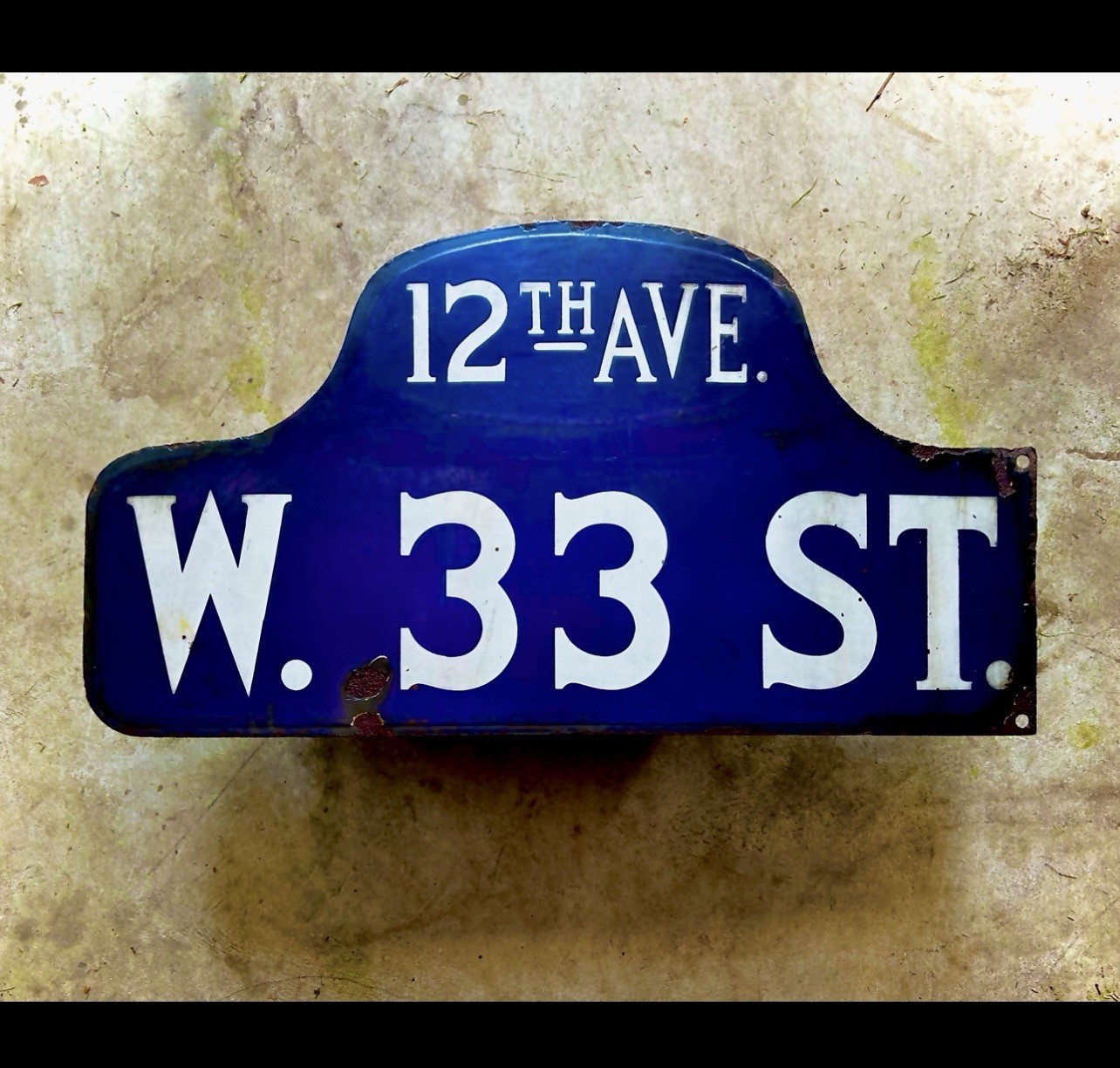
Antique 1910s New York City Porcelain Humpback Street Sign – 12th Ave & W. 33rd St (Hudson Yards Frontage). Listed here in this offering of a Premiere Authentic piece of early 20th-Century New York City infrastructure. This listing is for one (1) New York City, Authentic Vintage Porcelain Humpback Street Sign, Circa 1910-1920’s, specifically marking the intersection of West 33rd Street and 12th Avenue in Manhattan.
There’s signs of age as you would expect from a 120 year old piece of metal.
Google Artificial Intelligence describes the condition as. “Here is a brief, professional summary of the signs condition.
Overall Grade: Excellent, completely unrestored relic condition. Retains its high-gloss finish and a deep, vibrant cobalt blue porcelain glaze with highly legible, crisp white typography. Solid, heavy-gauge structural iron plate core with no warping or structural bends. Patina & Wear: Displays honest, character-rich municipal weathering, including localized porcelain chipping and superficial oxidation (rust bleed) confined primarily to the outer perimeter rims and corner mounting holes. Sold as a loose municipal plate.
Shipping is only available for the 48 Continental United States. No international shipping for this item. All sales are final and no returns or refunds.
- Local Pickup Is Always Free.
- Thank you for looking. Historical Notes:
This sign marks a prominent spot in Midtown Manhattan Far West Side. This specific corner at 12th Avenue borders the Hudson River and sits directly alongside the Hudson Yards complex and the Jacob K. Javits Convention Center. Known as humpback signs, due to their distinct arched top profile, these iconic marker signs were first introduced across NYC in the 1910s and 1920s. The design allowed drivers and pedestrians to easily read the cross-street (on the hump) and the primary street (along the bottom) simultaneously. They were manufactured using cobalt blue porcelain-enameled iron, which gave them a brilliant, glossy color resistant to harsh city weather.