When you click on links to various merchants on this site and make a purchase, this can result in this site earning a commission. Affiliate programs and affiliations include, but are not limited to, the eBay Partner Network.
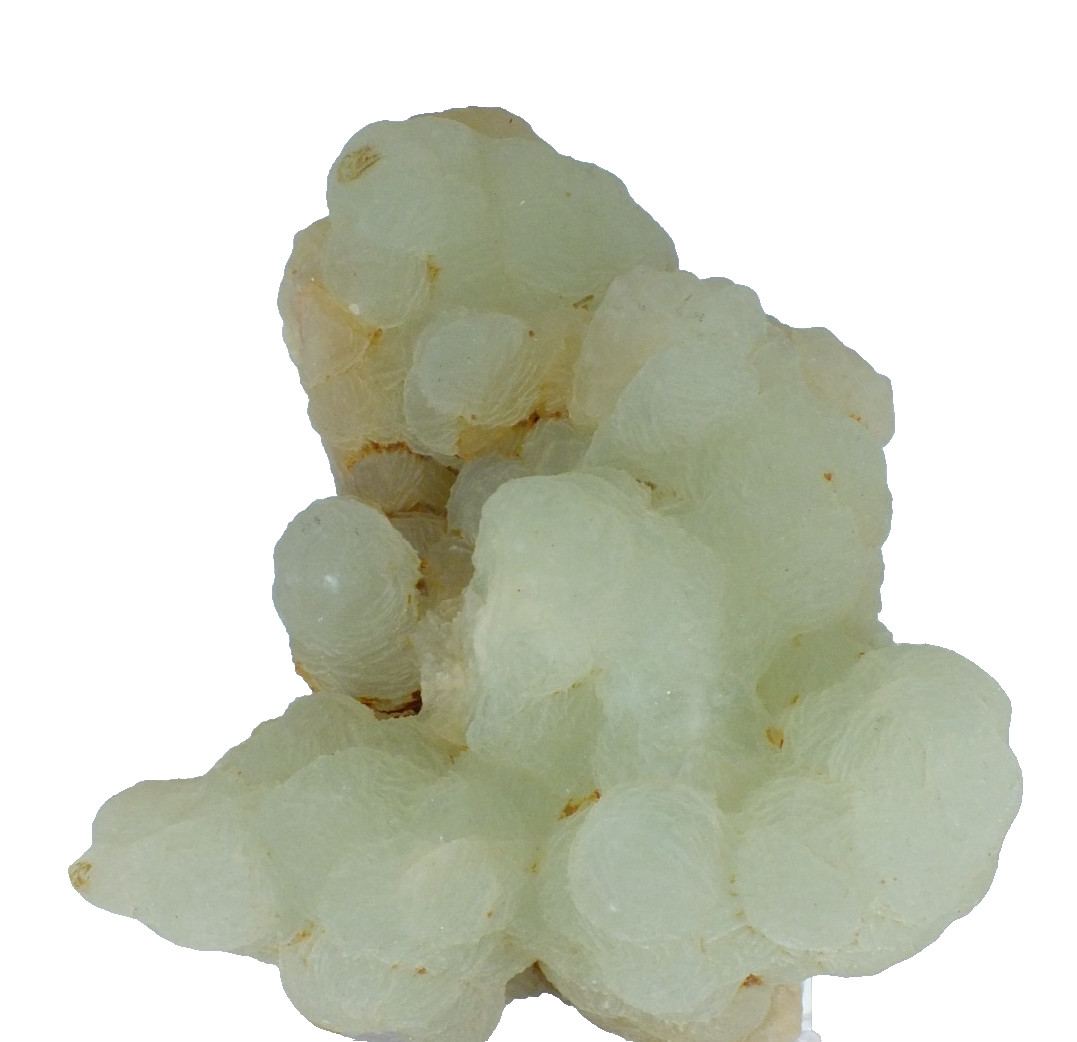
This large prehnite specimen from Mullaley, New South Wales, displays a substantial mass of pale green, botryoidal to crystalline material measuring 110 × 72 × 80 mm and weighing 695 grams. The prehnite forms gently rounded aggregates with a soft, waxy to vitreous lustre, giving the surface a smooth, sculptural appearance. Subtle translucency allows light to penetrate beneath the surface, creating a pleasing internal glow that enhances the pastel green colour. The overall form is well balanced, with excellent coverage of prehnite across the matrix and no significant surface disruptions, making it an attractive display piece.
Prehnite from the Mullaley region is associated with low-temperature hydrothermal activity within basaltic and volcaniclastic host rocks. Silica- and calcium-rich fluids circulating through fractures and cavities facilitated the crystallisation of prehnite, often forming botryoidal or radial aggregates as temperatures stabilised. The pale green hue is characteristic of trace iron within the crystal structure, and the rounded morphology reflects slow precipitation within open spaces rather than rapid growth along veins. Mullaley has produced prehnite specimens noted for their soft translucency and well-formed surfaces, attributes clearly demonstrated in this example.
The specimen’s surface texture transitions between smooth, cohesive botryoidal growth and areas showing faint crystallisation, capturing the subtle variability typical of prehnite from this locality. The lustrous exterior and internally illuminated colour contribute to a calm, uniform appearance, while the three-dimensional structure offers multiple display angles. Its mass and coverage make it an excellent representative of Australian prehnite mineralogy, particularly from the inland New South Wales volcanic belt.
Collected as old-time material and preserved in excellent condition, this piece exemplifies the characteristic qualities that have made Mullaley prehnite appreciated by collectors—soft colouration, strong formation, and substantial size. With its impressive dimensions and cohesive structure, it serves equally well as a cabinet specimen or a reference example of prehnite formed through low-temperature alteration processes in eastern Australia.