When you click on links to various merchants on this site and make a purchase, this can result in this site earning a commission. Affiliate programs and affiliations include, but are not limited to, the eBay Partner Network.
Due to their older, handmade artisan nature, these beads feature natural, non-defective variations in size, shape, and thickness. Dimensions are approximate, and items are not machine-identical.
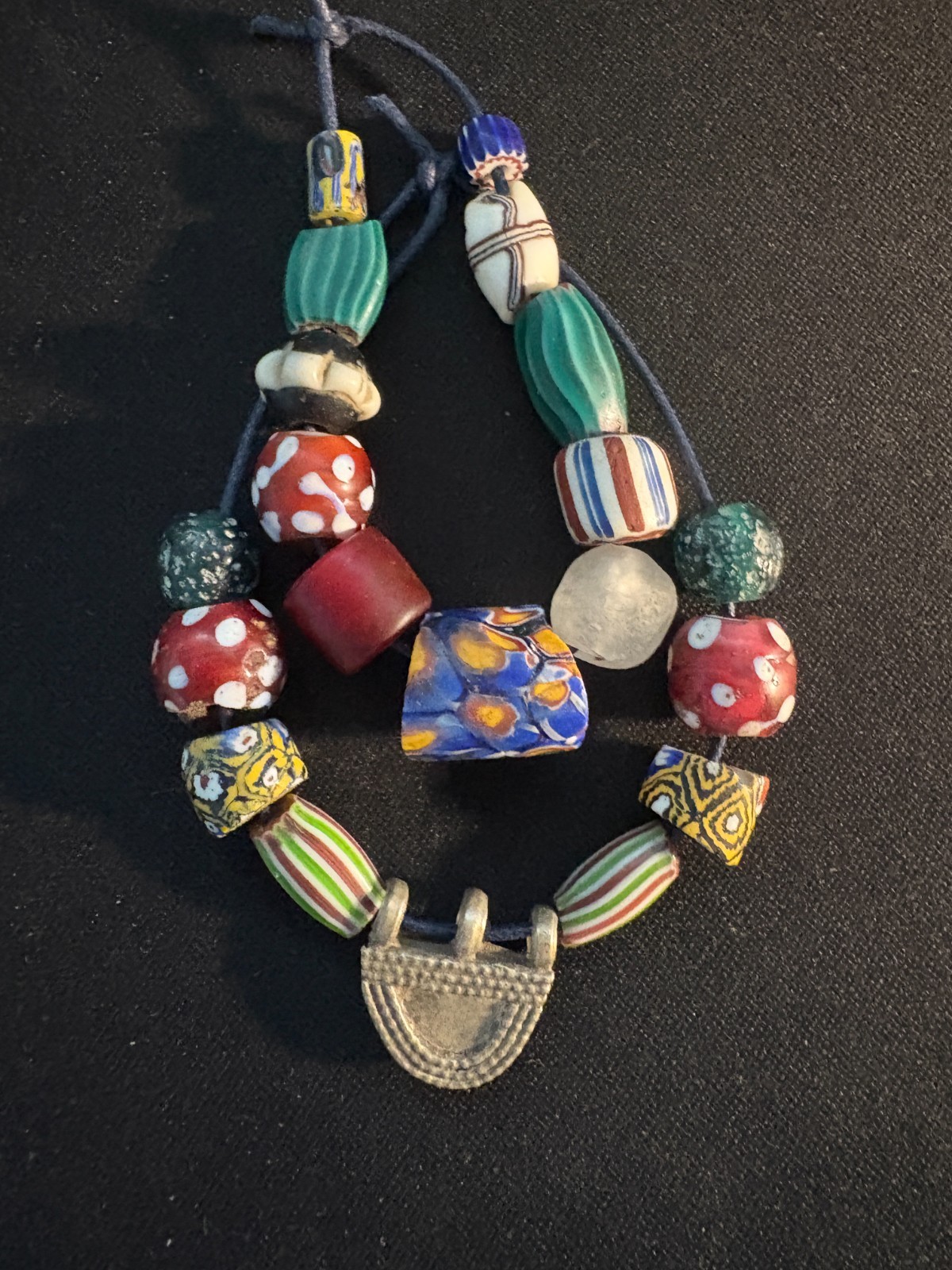
Antique Vintage Venetian/AfricanTrade Beads
Shipping: We combineshipping!When you buy two or more items and pay together we add theweight and bill you for the actual shipping cost. If you already pay for twoshipping or more on the same day or plan on offerding for more let us know and wewill wait and refund you extra shipping in the package.
History of Trade Beads: People started using trade beadswhen trade routes were established and there was a need for currency. However,most of the trade beads in the market today were used even while there wereother currencies. These were used by Europeans to trade with people who did notknow about currency such as Africans and Native American Indians.
In Africa, trade beads were used in West Africa by Europeans who got themfrom Venice, Holland, and Bohemia. They used millions of beads to trade withAfricans for slaves, services, and goods such as palm oil, gold, and ivory. Thetrade with Africans was so vital that some of the beads were made specificallyfor Africans. These includeMillefiori trade beads,Chevron tradebeads, striped melons trade beads, feather trade beads, and eye beads. Othertrade beads reached Africa from India through Arab Traders. The Venetiansdominated production oftrade beads, especially those used in Africa.
The trade was successful because Africans placed a lot of intrinsic valueon decorative items. They used these beads as a currency, as a measure ofwealth, as a store of wealth, as decorative items, and to show status insociety. Trade beads used in Africa also go by the name slave beads becausethey were exchanged for slaves. This was between the sixteenth and thetwentieth century.
One of a Kind!