When you click on links to various merchants on this site and make a purchase, this can result in this site earning a commission. Affiliate programs and affiliations include, but are not limited to, the eBay Partner Network.
✨ 1837 Missionary Letter from Madras, India to Norwich, Connecticut
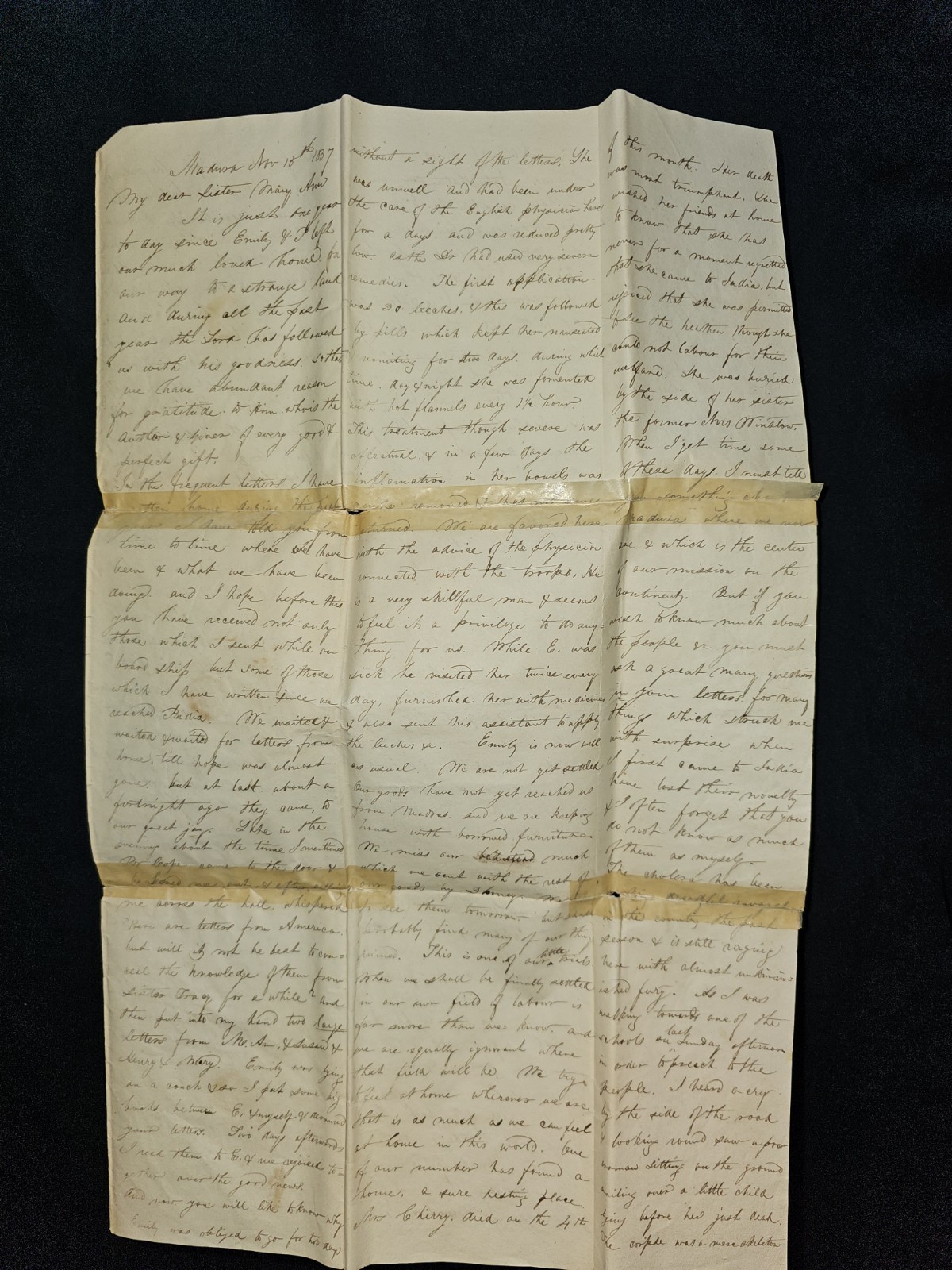
This is a powerful and historically significant 4-page folded stampless letter, written by Rev. William Tracy, D.D. from Madras (now Chennai), India on November 15–20, 1837, and addressed to his sister Mary Ann Tracy in Norwich City, Connecticut, care of C.D. Tracy, Esq.
This deeply personal letter recounts the death of William’s wife, Emily, in the mission field, while also offering a vivid account of early missionary life, spiritual reflections, and cultural observations from colonial India. It is rich in firsthand detail and preserved in its original form, complete with red Boston “SHIP” circular datestamp and manuscript “24½” rate, denoting transoceanic postage.
---
✍️ Letter Highlights & Content Summary
In this 4-page handwritten letter, Rev. Tracy:
Shares the emotional and spiritual impact of Emily Tracy’s illness and death, including her Christian resignation and burial beside her sister Mrs. Harriet Winslow.
Reflects on life in India, describing the heat, tropical diseases, monkeys, snakes, and missionary housing conditions.
Observes religious practices of the local Hindu, Muslim, and Catholic populations, referring to them in missionary language of the time as “heathen” and lamenting the challenges of conversion.
Requests practical supplies, such as “two pairs of thin black pantaloons” from home.
Urges his sister Mary Ann and other family members to continue writing, expressing deep homesickness and gratitude for their letters.
The tone blends theological certainty with grief, culture shock, and the loneliness of mission life far from home. It is a moving and illuminating document of American evangelical outreach during the height of British colonialism in India.
---
📜 Excerpts from the Letter:
> “Her death was most triumphant... She never for a moment regretted that she came to India, but rejoiced that she was permitted to die here though she could not labour for this mission. She was buried by the side of her sister, the former Mrs. Winslow.”
> “We have had a cloth put up for a ceiling to keep the squirrels, lizards, & snakes from tumbling down upon our heads.”
> “Monkeys run round the streets here... I saw a woman a few days ago with two baskets of seed upon her head. A monkey ran out of a temple, jumped upon her back, tipped the basket so as to spill part of the remainder, and was off again in the twinkling of an eye.”
> “Tell Betsey not to be afraid of writing the same thing twice. She does not know how much a letter is worth in this country.”
---
👤 Biographies of Key People Mentioned
Rev. William Tracy, D.D. (1807–1876)
Born in Norwich, CT; Yale graduate (1827); Presbyterian minister
Missionary sent by the American Board of Commissioners for Foreign Missions (ABCFM) to Madras, India in 1836
This letter was written during his first year abroad
Returned to the U.S. after his wife’s death and continued pastoral work
Emily Tracy (d. 1837)
Wife of William Tracy
Died of illness shortly after arriving in India; her death and Christian resolve are central to the letter
Buried beside her sister in Madras
Mrs. Harriet Winslow (née Lathrop)
Emily’s sister
Wife of Rev. Miron Winslow, a renowned missionary and author in Madras
Died in India in 1833; her grave is referenced in the letter
Mary Ann Tracy
William’s sister and recipient of the letter
Acts as the central correspondent for the family in Norwich
C.D. Tracy, Esq.
Charles D. Tracy, William’s father, a prominent resident of Norwich
The letter is routed in his care, as was customary for young unmarried women
---
✉️ Postal & Physical Details
Date: November 15–20, 1837
Origin: Madras, British India
Destination: Norwich City, Connecticut, USA
Markings: Red BOSTON SHIP circular cancel, manuscript “24½” rate
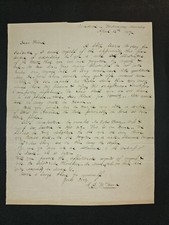
Format: 4-page folded letter, written entirely in William Tracy’s hand
Condition: Strong overall, some age toning, old tape reinforcement, no text loss, very legible
Folds: Original mailing folds present; unfolded size approx. 15 x 10 inches per page
---
🔎 Historical Significance
This letter offers a rare, detailed primary source documenting:
Early American missionary life in colonial India
The personal toll of mission work, especially for women
Early 19th-century views of non-Christian religions
The logistics and emotion of transatlantic correspondence
Insights into intercultural encounter, loss, and theology
This is an exceptional piece for collectors of:
Missionary ephemera
India-USA postal history
19th-century religious history
Yale or ABCFM missionary archives
---
Own an extraordinary firsthand account from the missionary frontier — a letter that captures the sacrifice, sincerity, and complexity of 1830s American evangelism abroad.
Ships securely with archival protection. PDF transcription available on request.