When you click on links to various merchants on this site and make a purchase, this can result in this site earning a commission. Affiliate programs and affiliations include, but are not limited to, the eBay Partner Network.
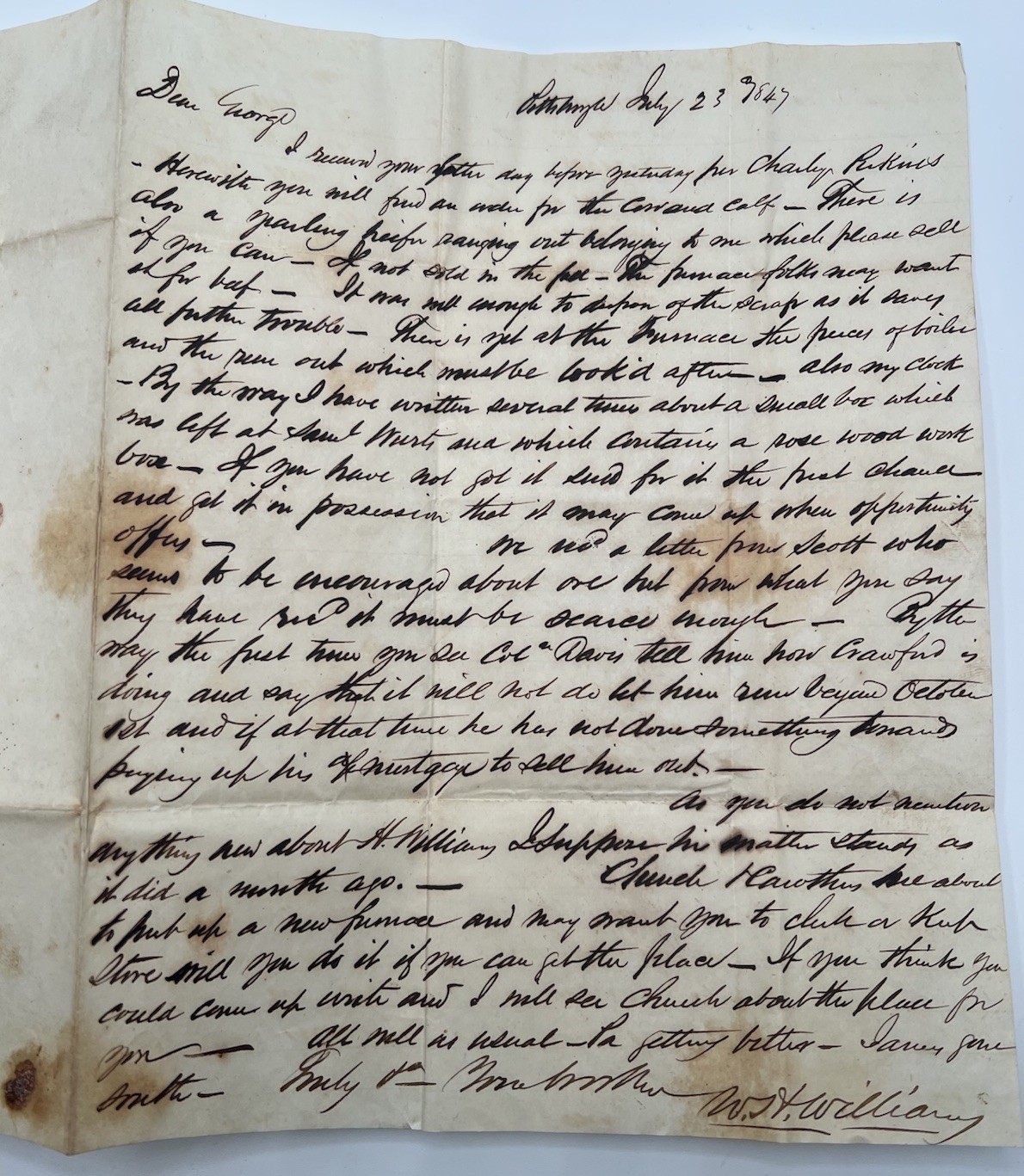
Original July 23, 1847 stampless folded letter written from Pittsburgh, Pennsylvania and addressed to George S. Williams at Hanging Rock, Ohio, an important early iron-producing region along the Ohio River.
This is an especially interesting piece of 19th-century American iron-industry and postal history. George S. Williams was later documented as a manager and co-proprietor of Scioto Furnace, and the contents of this letter include multiple references to furnace-related business.
The writer discusses matters involving a furnace, ore, scrap material, pieces of boiler and pipe, financial arrangements, Crawford, and Church & Carothers, a Pittsburgh commercial firm associated with iron manufacturing interests. The letter also mentions that Church & Carothers were considering a new furnace and might have employment available for George.
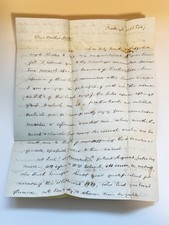
Postal features include a faint red Pittsburgh circular postmark and large red “5” rate marking, consistent with the 5-cent domestic letter rate then in effect. The letter was written only weeks after the first United States postage stamps were issued in July 1847, although stampless mail remained common during this period.
The letter retains its original integral address panel, folds and remnants of the original red wax seal.
Condition: Authentic age-related toning, staining, fold wear and scattered spotting as shown. Wax/seal remnants remain present. No attempt has been made to clean, repair or alter the document. Please examine all photographs carefully for exact condition.
A desirable original document for collectors of Ohio iron history, Scioto Furnace, Hanging Rock iron region, Pittsburgh history, early American industrial history, stampless postal history and 19th-century manuscripts.
Sold as an original 1847 historical document. Identification and historical associations are based on period records and research; some individuals mentioned within the letter remain subject to further identification.