When you click on links to various merchants on this site and make a purchase, this can result in this site earning a commission. Affiliate programs and affiliations include, but are not limited to, the eBay Partner Network.
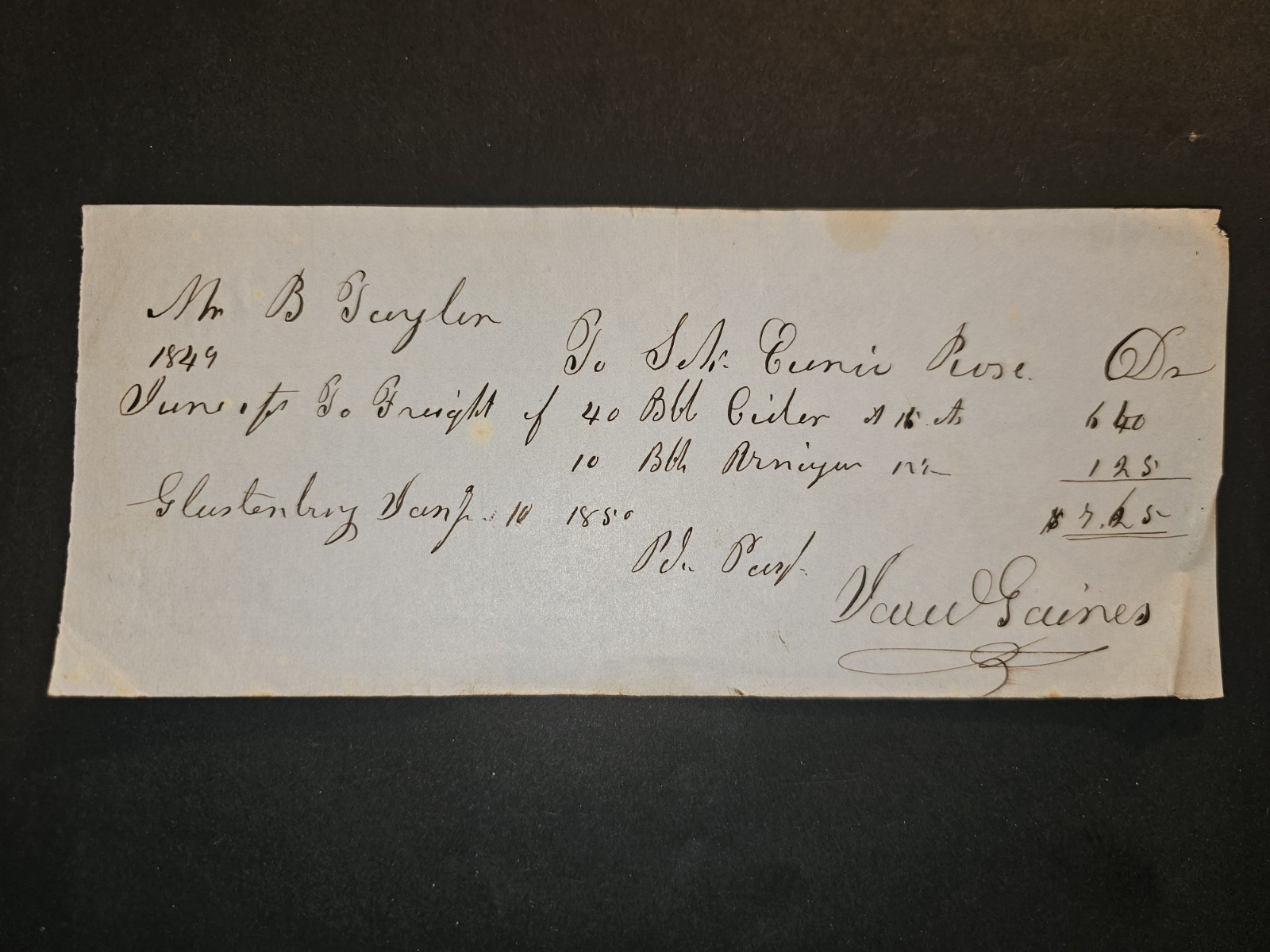
Original mid-19th-century handwritten freight bill documenting Connecticut River commerce between Glastonbury and Hartford, Connecticut. The document itemizes transportation charges for barrels of cider and brandy and is signed by river carrier Jared (Joel) Gaines.
Dated June 10, 1849, with settlement noted in 1850, this bill reflects routine but historically important agricultural and spirits trade along the Connecticut River during the peak of regional river transport.
Document Summary
Type: Freight / transport bill
Date: June 10, 1849 (paid and settled in 1850)
Location: Glastonbury, Connecticut
Goods Shipped:
40 barrels of cider
10 barrels of brandy
Total Freight Charge: $7.25
Signed: Jared Gaines
Condition: Good overall; light toning and age-appropriate wear consistent with 19th-century merchant paperwork
This is a freight charge only, not a bill of sale for the goods themselves.
Full Transcription
Mr B Taylor
1849
June 10 To S. M. Genie Rose
Dr
To Freight of 40 Bbl Cider @ 16 cts .......... 6 40
10 Bbl Brandy @ 12½ cts ................. 1 25
———
$7.25
Glastonbury Hemp 185\' 0
Pd. Sep.
Joel Gaines
Reverse:
Joel Gaines
Bill
Biographies of Individuals MentionedBenjamin Taylor
Benjamin Taylor was a merchant based in Hartford, Connecticut, active in the mid-19th century. Hartford functioned as a major commercial hub on the Connecticut River, receiving agricultural products and distilled spirits from surrounding river towns such as Glastonbury. Merchants like Taylor relied heavily on river freight carriers for bulk transport of cider, brandy, grain, and produce.
Jared (Joel) Gaines
Jared Gaines was a Connecticut River freight carrier, operating out of Glastonbury during the 1840s–1850s. River captains and carriers like Gaines typically issued freight bills in their own names and handled transportation, bookkeeping, and payment collection personally. His signature on this document confirms his role as the carrier responsible for moving these goods along the river trade network.
S. M. Genie Rose
S. M. Genie Rose appears here as the named consignee or account party associated with the shipment. The structure of the bill indicates a person rather than a vessel, consistent with 19th-century merchant accounting practices.
Why This Document Matters
This piece offers a clear snapshot of Connecticut River trade, showing how cider and brandy moved from agricultural towns to urban markets before railroads fully replaced river transport. Signed freight bills like this are tangible records of everyday commerce that powered New England’s economy.