When you click on links to various merchants on this site and make a purchase, this can result in this site earning a commission. Affiliate programs and affiliations include, but are not limited to, the eBay Partner Network.
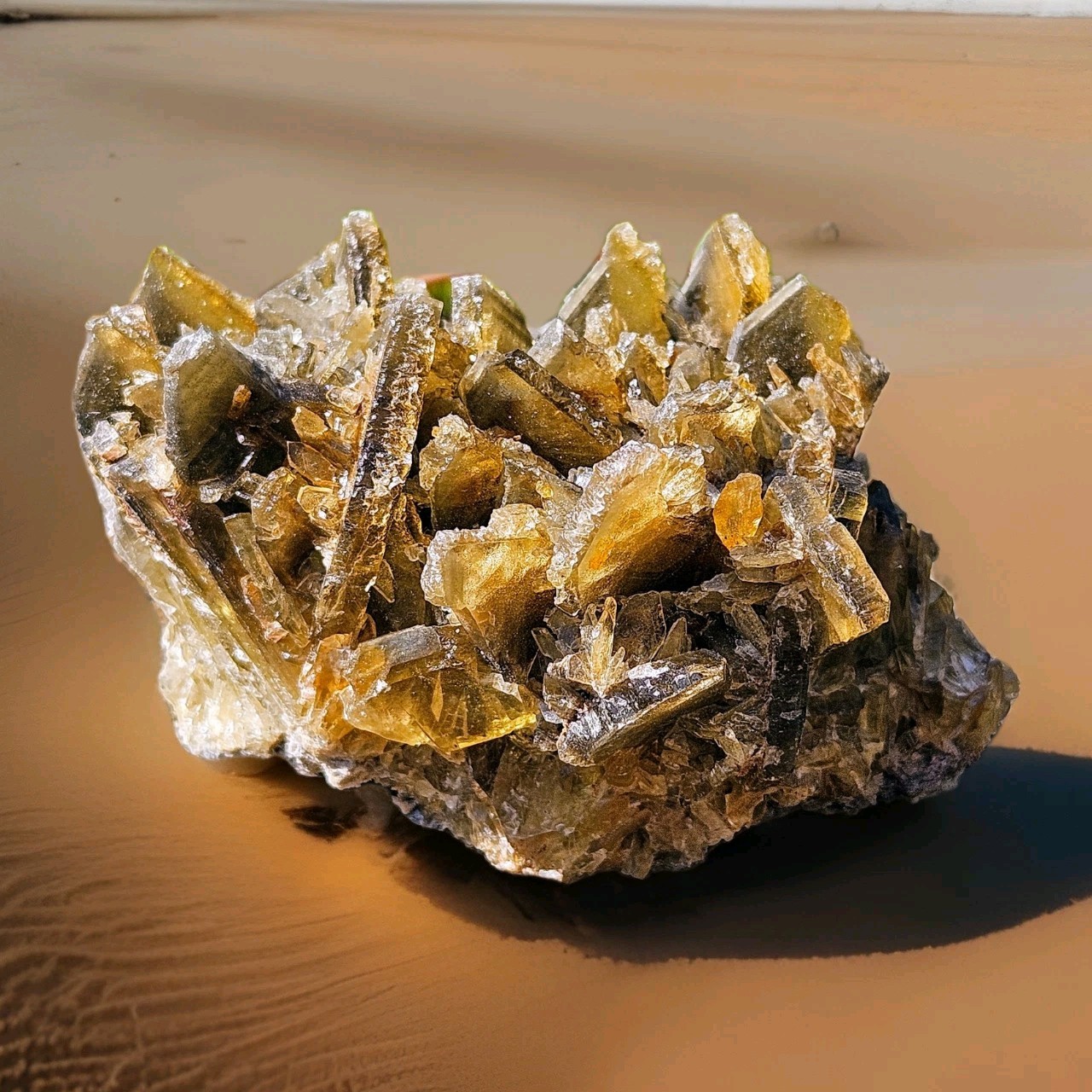
This mineral specimen is characterized by radiating clusters of honey-yellow, tabular, bladed crystals.
Barite is known for its high density and luster, often appearing diamond-like when clean. Its golden color is due to its specific crystallization and natural golden luster, which can appear as a translucent sheen in high-quality specimens such as this.
These natural crystals are highly sought after by collectors for their unique shapes and vibrant golden colors.
The formation of Barite typically occurs in sedimentary environments. It precipitates from barium-rich fluids in fractures and cavities of rocks. These fluids often originate from hydrothermal activity or the weathering of barium-bearing minerals. The process involves the dissolution of barium ions followed by their transport and subsequent precipitation as barium sulfate crystals.
The color variations observed in Barite arise from trace impurities incorporated during crystal growth. For example, the presence of iron can impart a yellow or brown hue. Its unique bladed or rosette-like structures result from specific growth conditions, including temperature and supersaturation levels in the solution