When you click on links to various merchants on this site and make a purchase, this can result in this site earning a commission. Affiliate programs and affiliations include, but are not limited to, the eBay Partner Network.
During the 17th and 18th centuries, the CatholicCounter-Reformation reshaped Europe and expanded into the Americas toevangelize native peoples. Bronze medals were a significant but common object mintedduring this period. Each medal tells a unique story because they are sourced fromCatholic convents, estate collections, and metal detector enthusiasts.
Due to their use, being touched hundreds or thousands oftimes, and often being carried and worn in harsh environments, the medals willshow the natural surface wear (patina) created by their age, use in devotion,and by exposure to the elements. They are found in modern days both aboveground in sometimes buried, as with other artifacts.
All our listed items are original Christian devotionals.Some may have been cleaned or polished before their arrival, by their lastcaretaker. Their use is for personal devotion.
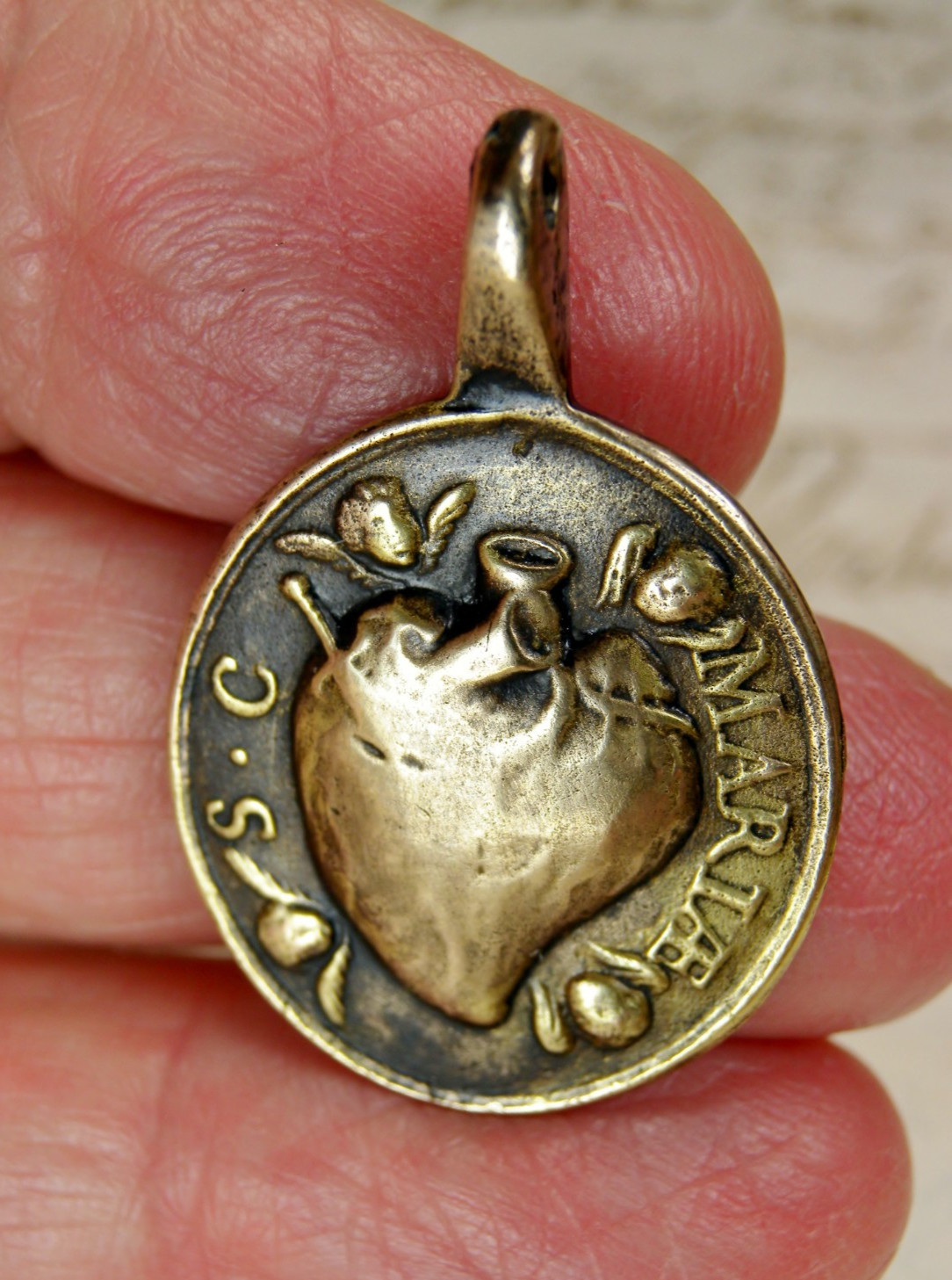
This is a superb 18th century medal in wonderfulcondition that was worn by pilgrims visiting the shrine of Our Lady ofGuadalupe. The medal is 1.25 inches long (including the bale), 1 inch acrossand it is thick. It weighs 7 grams of bronze, and the patina is original.
This medal comes to us from one of the convents we workwith, and its purchase will help their community.
The Immaculate Heart of Mary is a Roman Catholicdevotional name used to refer to the Catholic view of the interior life ofMary, mother of Jesus, her joys and sorrows, her virtues and hiddenperfections, and, above all, her virginal love for God the Father, her maternallove for her son Jesus Christ, and her motherly and compassionate love for allmankind. The story of the 1531 Guadalupe apparition of the Virgin Mother Maryis one of the most fascinating in all Catholic lore. According to accounts, apoor Indian by the name of Juan Diego came across a vision of what he describedas a \'lady from heaven\' while on a mountainside in Northwest Mexico City.According to Diego, this woman instructed him to create a temple at the site ofthis vision. In addition, she somehow imprinted her likeness into hiscactus-cloth. Although such clothes normally deteriorate rapidly over time,Diego\'s cloth survives to this day, more than 470 years after the apparition,in defiance of scientific rationale.
The medals dating can be confirmed on pages 2 & 3 ofthe book AN INTRODUCTION TO RELIGIOUS MEDALS, by Bob Forrest, and published byNUMISMATICA INTERNATIONAL in 2004.In addition, this book has chapters (outlinedin the table of contents), describing each of the categories of medals, theirpossible place of pilgrimage (acquisition), and origin of the mint where theywere made. We recommend that anyone serious about collecting medals from thisperiod acquires a copy of this book.
Thanks for your kind support of our work!