When you click on links to various merchants on this site and make a purchase, this can result in this site earning a commission. Affiliate programs and affiliations include, but are not limited to, the eBay Partner Network.
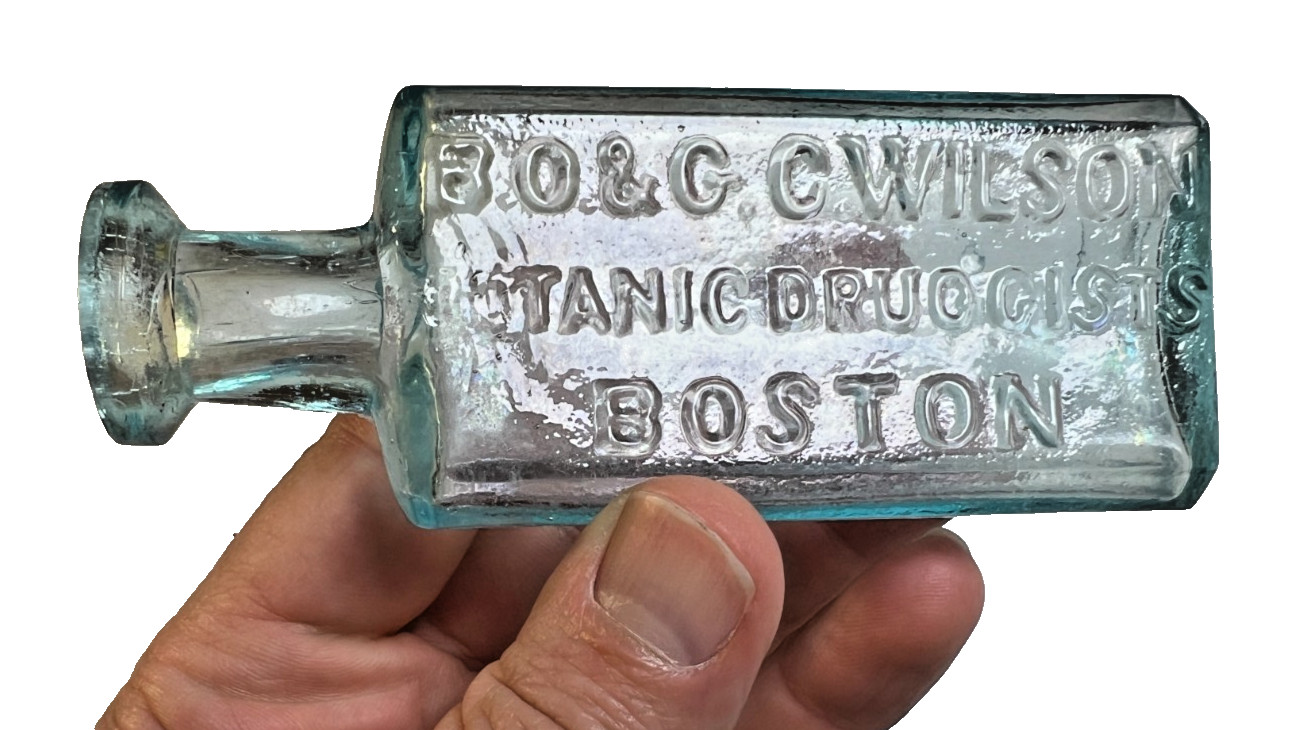
Antique B.O. & G.C. Wilson Botanic Druggist Boston Aqua Medicine Bottle c1870s
Step into the gritty, gaslit streets of Boston in the 1870s—where apothecaries lined the sidewalks, horse carts rattled over cobblestone, and bottles like this sat behind polished wood counters, filled with hope, cure… or at least a convincing story.
This is a classic post–Civil War American druggist bottle, still carrying that early handmade character—even if it teases you by looking pontiled at first glance.
Description
A handsome aqua drugstore bottle embossed:
“B.O. & G.C. WILSON
BOTANIC DRUGGIST
BOSTON”
- Height: approx. 4 1/8 inches
- Color: light aqua
- Lip: hand-finished
- Base: smooth with diagonal hinge mold line
- Embossing: bold, crisp, and deeply struck
The diagonal hinge mold seam on the base is a great tell—this is from the transition period when American glasshouses were shifting away from true pontil rods into improved mold techniques. It keeps that early “crude” look collectors love, without the actual pontil scar.
Condition
- Near mint, attic-fresh look
- No chips, cracks, or damage
- Clean, bright glass with strong eye appeal
- Displays beautifully with sharp embossing
Precise Date
Circa early–mid 1870s
Why:
- Smooth base (post-pontil era)
- Hand-finished lip (pre-machine)
- Bold embossing typical of urban druggists in the Reconstruction era
The Maker: B.O. & G.C. Wilson
B.O. & G.C. Wilson operated as botanic druggists—a term tied to the popular 19th-century movement of botanical medicine, which emphasized plant-based remedies over harsher mineral compounds like mercury.
These weren’t fringe practitioners—they were part of a booming alternative medical scene competing with traditional physicians. Their bottles doubled as advertising tools, putting their name directly into customers’ homes.
The Product & Use
This bottle likely held:
- Herbal tinctures
- Extracts (think sarsaparilla, dandelion, or bitters blends)
- Digestive or “blood cleansing” remedies
Customers would bring bottles back for refills—or keep them on shelves as a quiet endorsement of the shop.
How It Was Marketed
- Embossing = permanent advertising (no paper label needed)
- “Botanic Druggist” signaled natural, safer remedies
- Sold over the counter with personal consultation—half medicine, half performance
In an era before strict regulation, trust was built face-to-face… and reinforced in glass.
Boston in the 1870s (Setting the Scene)
In Boston during this period:
- The city was rebuilding and expanding after the Great Boston Fire of 1872, which reshaped downtown commerce
- Horse-drawn streetcars were becoming common
- Gas lighting dominated, with early electric experiments just beginning
- Immigration (especially Irish communities) was reshaping neighborhoods
Medicine
- No FDA yet—medicine ranged from legitimate to… wildly optimistic
- Germ theory was just gaining traction
- Many still relied on herbalists and druggists like Wilson
Politics
- Reconstruction era tensions still echoed nationally
- Industrial growth was accelerating, with Boston as a major hub
Why This Bottle Matters
This piece sits right in that sweet spot of American glassmaking:
- After true pontil bottles
- Before mass automation
- Still handmade, still character-rich
It’s the kind of bottle that almost lies to you at first glance—“I look pontiled”—but then reveals its place in the evolution of glassmaking.