When you click on links to various merchants on this site and make a purchase, this can result in this site earning a commission. Affiliate programs and affiliations include, but are not limited to, the eBay Partner Network.
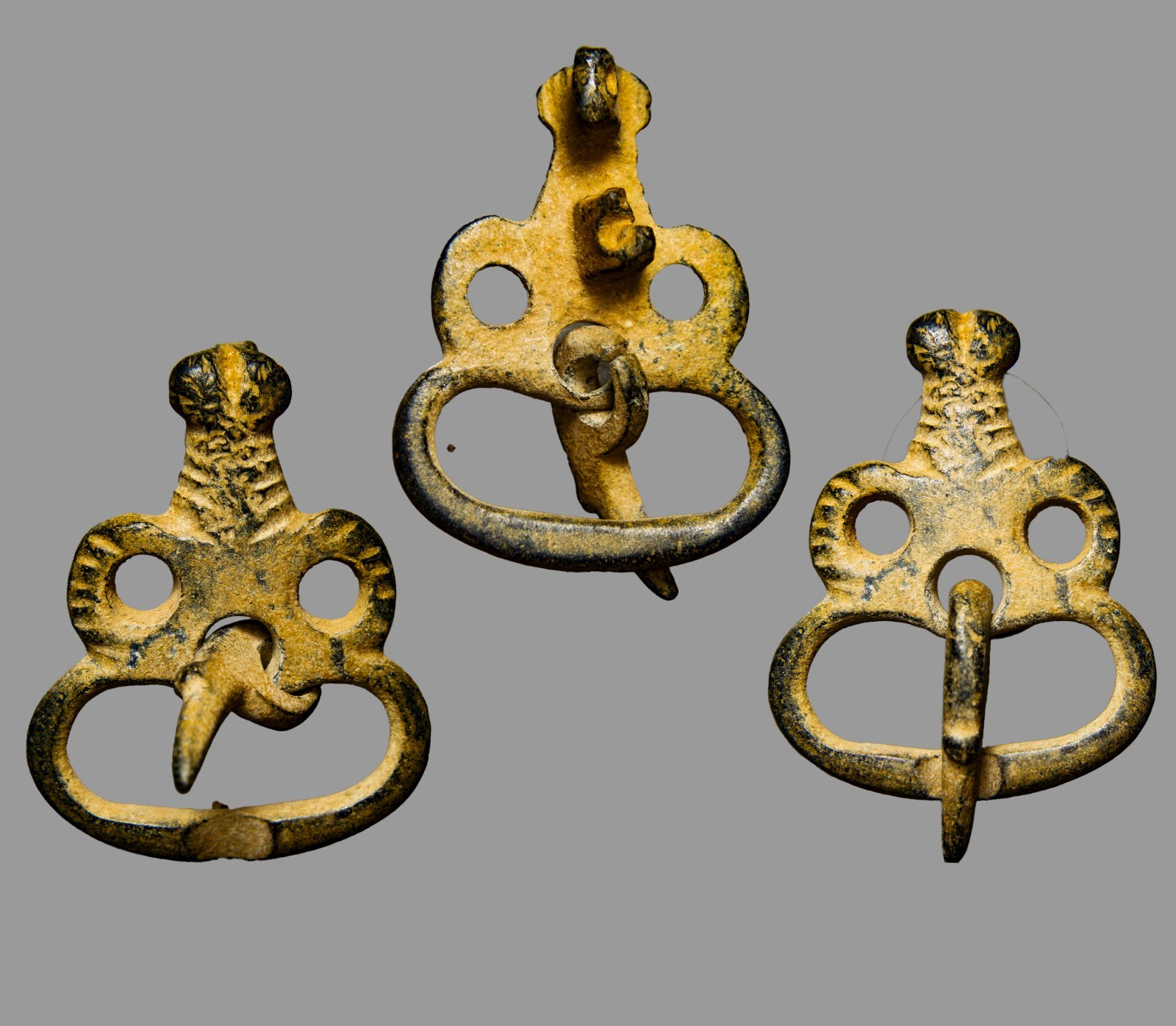
Ancient Roman Cast Bronze Phallic Openwork Belt Buckle with Intact Moving Pin (29mm — c. 1st–4th Century AD)
Authenticity & Guarantee
Certification: Certified Authentic — includes signed Certificate of Authenticity (COA) with full provenance documentation.
Provenance: Ex-private European collection, legally acquired from international sales; Classical Roman / Levantine Sphere.
Item Specifications & Exact Dimensions
Object: Cast Bronze Phallic Openwork Belt Buckle / Harness Fitting with Intact Tongue
Culture / Period: Roman Imperial Era (Roman Military / Personal Equipment Sphere)
Date Range: Circa 1st Century AD – 4th Century AD (c. 100 – 400 AD)
Exact Dimensions: 29 mm height (2.9 cm) × 20 mm maximum width
Material: Cast Bronze (Copper Alloy)
Form & Architecture: Integrated buckle architecture featuring an openwork plate with two symmetrical circular piercings; surmounted by a prominent stylized phallic (fascinum) upper terminal with incised texture; lower section comprises an oval belt loop housing its original, fully articulated cast bronze pin hinged around the central crossbar
Condition: Exceptional, 100% complete ancient condition. Very rare complete state with the original moving pin fully preserved and functional, solid structural bronze matrix, covered under a dark charcoal-olive patina with vibrant sandy-tan calcareous burial encrustations. Free of modern restoration or tooling.
HISTORICAL CONTEXT & TYPOLOGICAL LORE
The Roman Fascinum & Apotropaic Magic
In the Roman world, representations of the phallus (fascinum) were widely worn as protective amulets and personal adornment. Far from being merely erotic, the fascinum was considered a potent apotropaic charm capable of warding off the Evil Eye (invidia), shielding the wearer from illness, bad fortune, and battlefield hazards.
Roman Military Belts (Cingulum Militare) & Personal Fittings
Roman soldiers and auxiliary troops routinely incorporated phallic imagery into their military belts (cingula), sword baldricks, and horse harness fittings. This 29mm openwork buckle served a dual purpose: securing a narrow leather waist or suspension strap while invoking divine vitality and luck.
Typological Analysis & Exact Classification
Primary Class: Classical Antiquity Personal Equipment / Roman Belt Buckle
Sub-Class: Phallic (Fascinum) Openwork Plate Buckle Class with Intact Pin
Manufacturing Technique: Two-piece lost-wax cast copper alloy with hand-pierced openwork voids and cold-chiseled shaft detailing.
Comparable Archaeological Examples & Museum Accession Numbers
British Museum (Accession No. 1856,0701.2140): Roman bronze phallic military harness mount and belt fitting.
Portable Antiquities Scheme (PAS ID: WILT-93F1E4): Roman copper alloy phallic buckle frame with openwork plate.
Museum of London (Accession No. 82.201): Roman bronze phallic strap fitting from military urban strata
TRN-1-7