When you click on links to various merchants on this site and make a purchase, this can result in this site earning a commission. Affiliate programs and affiliations include, but are not limited to, the eBay Partner Network.
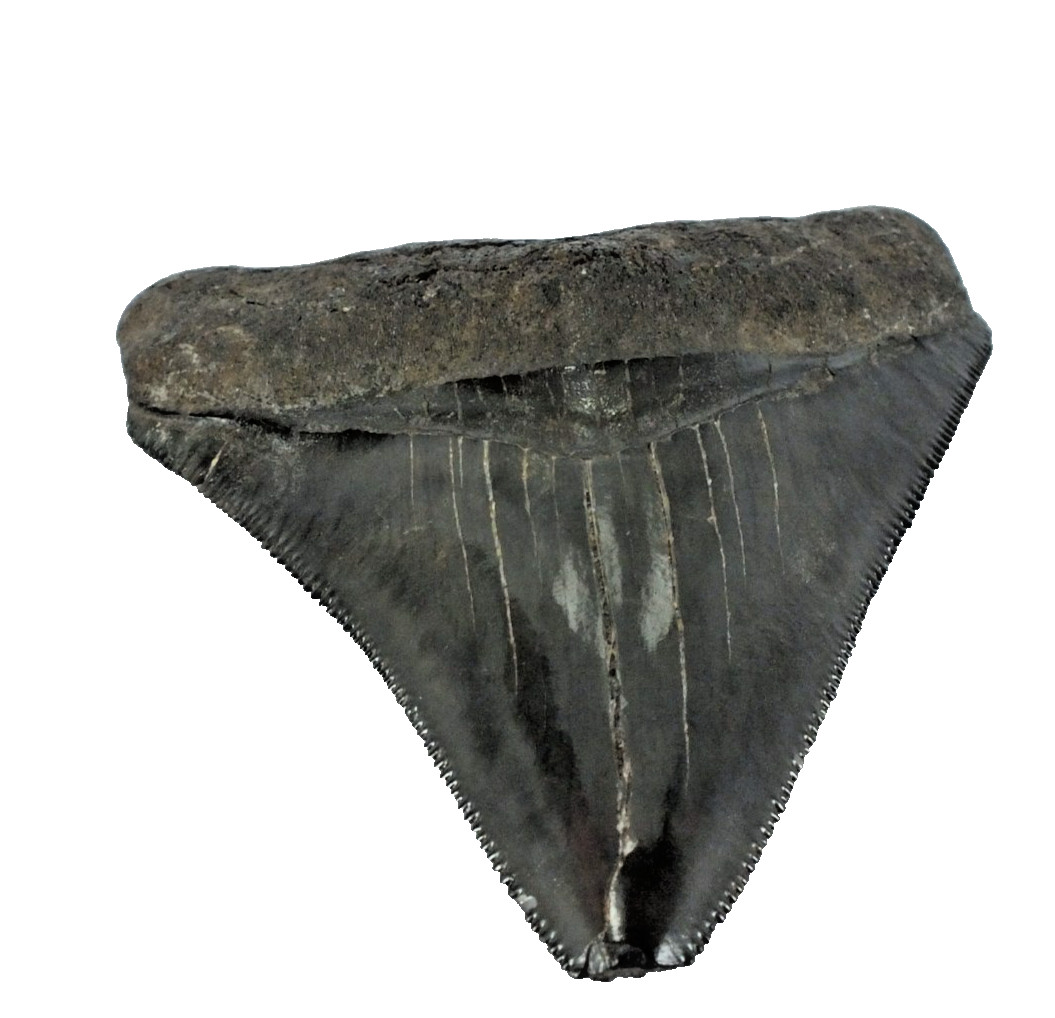
CCarcharocles megalodon (Agassiz, 1843) is represented by this framed fossil shark tooth recovered from offshore North Carolina, United States. The specimen displays the characteristic robust triangular crown and broad root morphology associated with the largest known macropredatory shark, with a preserved slant height of approximately 67 mm and a specimen weight of 28 grams. The tooth has been professionally mounted for display and remains identifiable as Carcharocles megalodon, reflecting the powerful cutting dentition that enabled this apex predator to prey upon large marine vertebrates during the Neogene. The fossil derives from deposits of Miocene age, approximately 6 to 23 million years old, and conforms to the taxonomic concept established by Agassiz (1843).
The specimen was collected from the Hawthorne Formation, a well-known Neogene sedimentary sequence preserved across the southeastern United States and widely recognised for yielding abundant marine vertebrate fossils. The locality is recorded as The Ledge, Atlantic Ocean, offshore North Carolina, where fossiliferous marine sediments have produced numerous elasmobranch remains through natural erosional processes. Deposition within shallow marine shelf environments promoted the preservation of shark teeth shed throughout the animal’s lifetime, resulting in concentrations of isolated but scientifically significant specimens that provide insight into Miocene marine ecosystems.
Preserved with a slant height of approximately 67 mm and weighing 28 grams, the tooth exhibits the substantial proportions expected of an adult individual and has been stabilised and attractively presented within a display frame. Surface preservation retains the principal anatomical characteristics required for identification, including the crown profile and root architecture, while the specimen presents well for educational or collection purposes. The framed presentation protects the fossil while allowing clear observation of its morphology and geological significance.
Provenance records indicate that the specimen originated in the United States and was collected during the 2000s from The Ledge, Atlantic Ocean, offshore North Carolina. Assigned specimen number EA10668, it is attributed to Carcharocles megalodon (Agassiz, 1843) and originates from the Miocene Hawthorne Formation, representing a fossil approximately 6 to 23 million years in age. The documented locality, geological context, and curated presentation make this specimen a representative example of one of the most iconic fossil sharks known from the Neogene of North America.