When you click on links to various merchants on this site and make a purchase, this can result in this site earning a commission. Affiliate programs and affiliations include, but are not limited to, the eBay Partner Network.
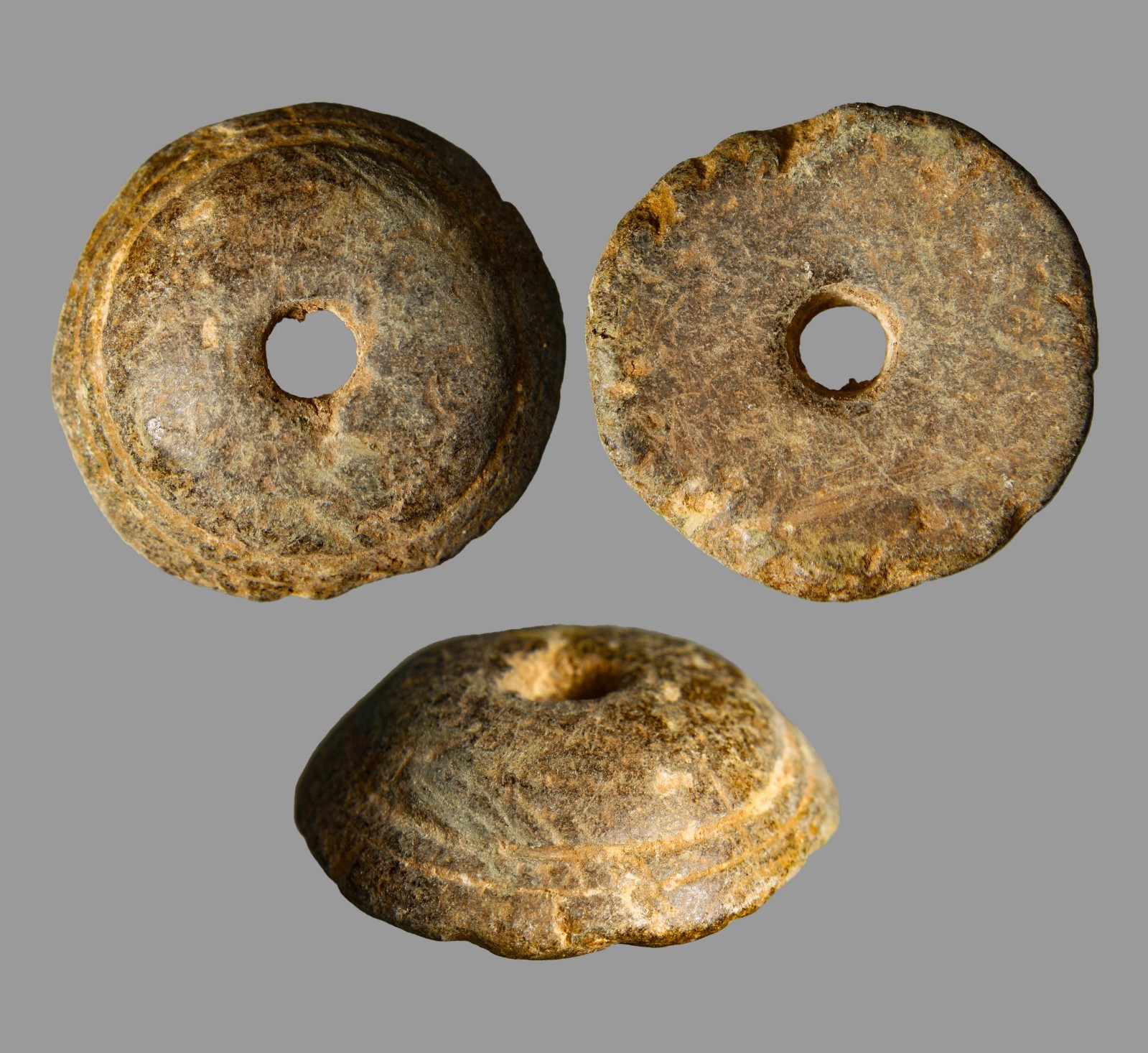
Ancient Egyptian / Levantine Carved Stone Conical Spindle Whorl / Amuletic Weight Bead (26mm — c. 15th–8th Century BC)
Authenticity & Guarantee
Item Specifications & Exact Dimensions
Object: Hand-Carved Stone Conical Spindle Whorl / Amuletic Weight Bead
Culture / Period: Ancient Egypt (New Kingdom to Third Intermediate Period) / Bronze to Early Iron Age Levant
Date Range: Circa 1550 BC – 712 BC (c. 1550 – 712 BC)
Exact Dimensions: 26 mm diameter × 12 mm height
Material: Carved Dense Steatite / Chlorite / Indurated Softstone
Form & Architecture: Truncated conical (domed) architecture featuring a flat basal surface and a cleanly drilled central perforation for a wooden spindle shaft; upper domed face decorated with hand-carved concentric circular stepped grooves along the perimeter
Condition: Exceptional, 100% complete ancient condition. Crisp carved geometry, intact central drilling, preserved under a smooth, authentic mottled olive-brown to tan earthen burial patina. Free of modern restoration or tooling.
HISTORICAL CONTEXT & TYPOLOGICAL LORE
Textile Production & Daily Life in Ancient Egypt
In Ancient Egypt and the surrounding Near Eastern trade spheres, spinning linen and wool thread was an essential daily industry carried out in domestic households and temple workshops. Spindle whorls served as flywheels attached to wooden spindles, maintaining momentum and tension while twisting raw flax fibers into thread.
Steatite Craftsmanship & Grave Goods
While common whorls were made of baked clay or plain limestone, high-density carved steatite or chlorite whorls adorned with concentric grooves were luxury textile implements. Because fine stone whorls represented household prosperity and the sacred art of weaving (associated with the goddess Tayt, patron of linen and mummification wrappings), they were frequently interred in tombs as functional amulets for the afterlife.
Typological Analysis & Exact Classification
Comparable Archaeological Examples & Museum Accession Numbers
Petrie Museum of Egyptian Archaeology (London, Accession No. UC28300): New Kingdom stone spindle whorls with stepped/grooved conical profiles.
British Museum (Accession No. EA12345): Egyptian / Levantine stone weight beads and whorls recovered from tomb sites.
TRN-1-7