When you click on links to various merchants on this site and make a purchase, this can result in this site earning a commission. Affiliate programs and affiliations include, but are not limited to, the eBay Partner Network.
YOU WILL RECEIVE A PRINT AND A FRAME JUST AS LISTED. Interesting stories behind the picture. SEE THE OTHER LISTED
8.5x11
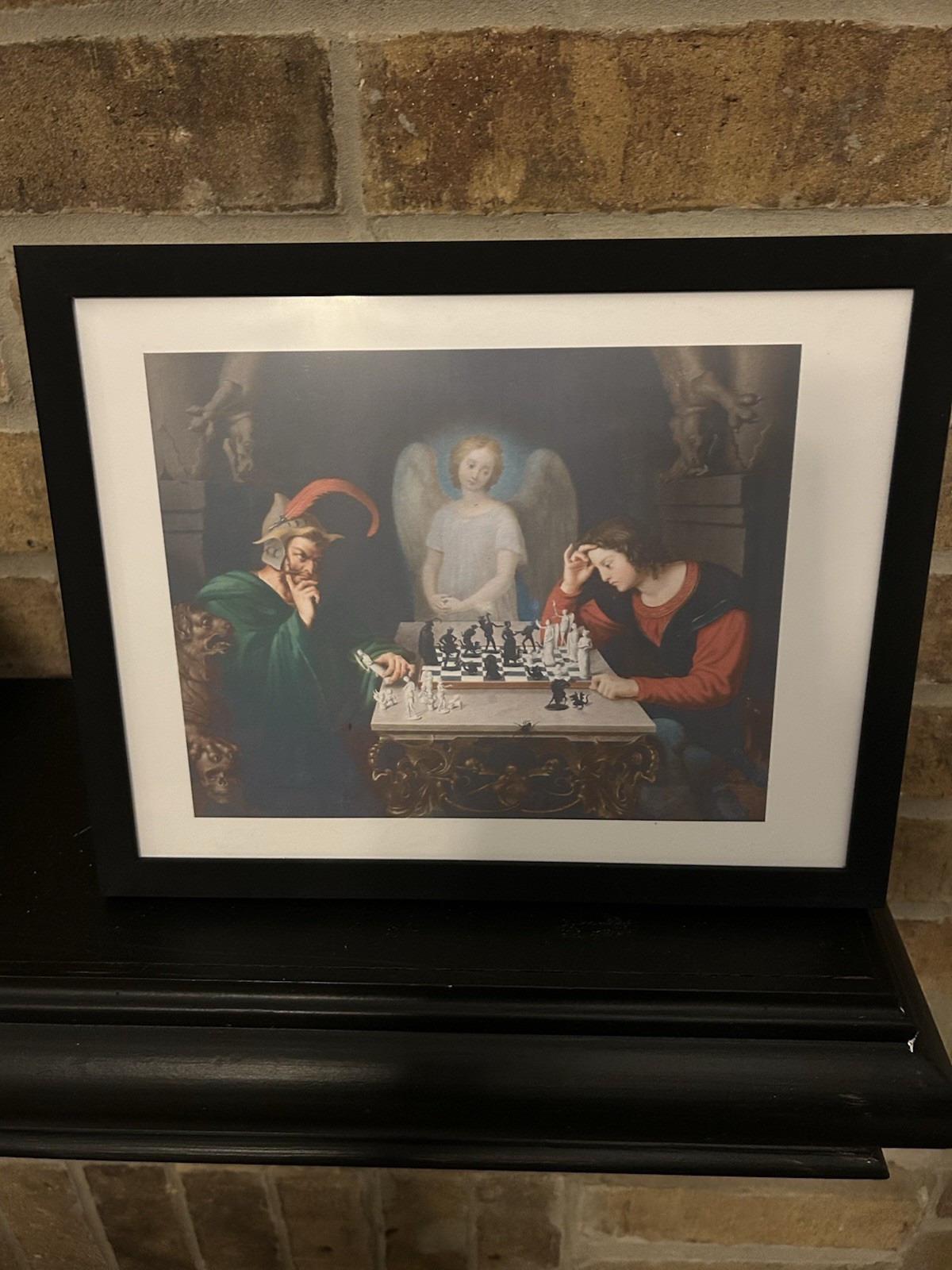
Friedrich August Moritz Retzsch’s 1831 painting The Devil's Checkmate (or The Chess Players) is a symbolic Romantic oil painting depicting a young man playing chess against the Devil for his soul. While the scene portrays the Devil as confident and the man as defeated, chess master Paul Morphy later identified that the man has a winning move, symbolizing hope and divine intervention.
Key Details and Symbolism:
The Scene: A young man, representing humanity, is in a state of despair, with a watchful, concerned guardian angel nearby.
The Characters: The Devil is depicted in red garments, sitting in a chair adorned with a lion's head and a paw resting on a skull, signifying malice and death.
Symbolic Meaning: The chessboard represents the battlefield of morality and the soul.
The "Hidden" Move: Although the painting visually suggests the young man has lost (checkmate), analysis indicates that the man's king still has one final, saving move.
Origin: The painting was originally created as an engraving and later painted in oil.