When you click on links to various merchants on this site and make a purchase, this can result in this site earning a commission. Affiliate programs and affiliations include, but are not limited to, the eBay Partner Network.
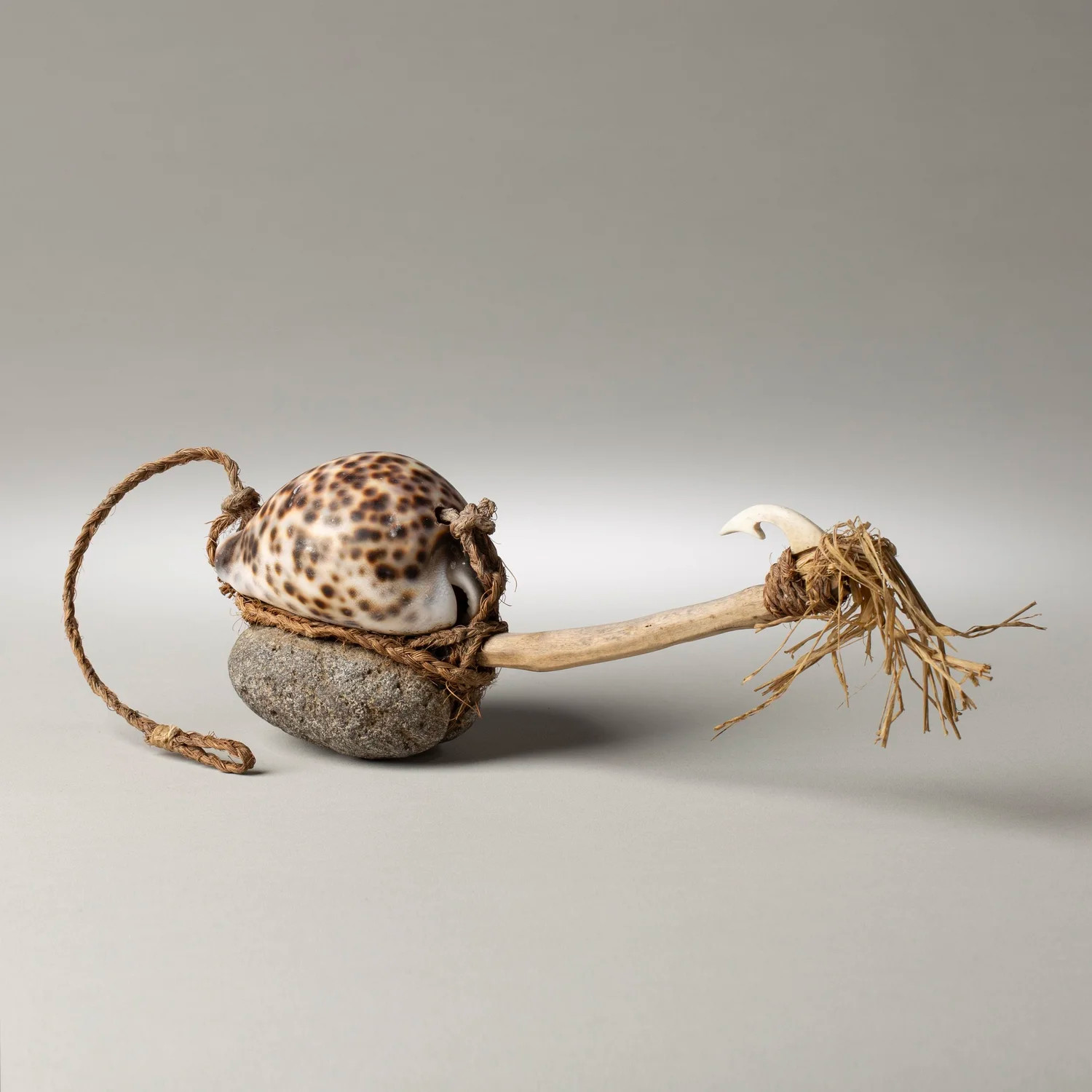
Hawaiian Leho Heʻe Octopus Lure
Stone, cowrie shell, wood, sennit, bone and fiber
Early 19th century
3 1/2” x 8 3/4”
Provenance: Sheikh Saud Bin Mohammed Bin Ali Al-Thani, London
A rare traditional Hawaiian leho heʻe, or octopus lure, constructed from a beautifully patterned cowrie shell secured above a stone sinker and fitted with a wooden shank, hook and fiber lashings.
The leho heʻe was an ingenious form of Hawaiian fishing tackle designed specifically for catching heʻe, or octopus. The cowrie shell acted as the visual lure, while the stone provided the necessary weight. The fisherman lowered the lure into the water and rhythmically raised and lowered it to attract an octopus. When the octopus grasped the cowrie, the lure could be drawn upward and the catch secured. Museum examples preserve the same characteristic combination of cowrie shell, stone sinker, wooden shaft and hook seen in this example.
Cowrie shells were particularly important to the design of these lures. Hawaiian fishermen selected different varieties for their visual qualities, and historical accounts describe particular cowries being favored at different times of day.
Provenance: Formerly in the collection of Sheikh Saud Bin Mohammed Bin Ali Al-Thani, London, the prominent Qatari collector who assembled major collections across numerous fields of art and material culture.
Rare.