When you click on links to various merchants on this site and make a purchase, this can result in this site earning a commission. Affiliate programs and affiliations include, but are not limited to, the eBay Partner Network.
Macroolithus yaotunensis
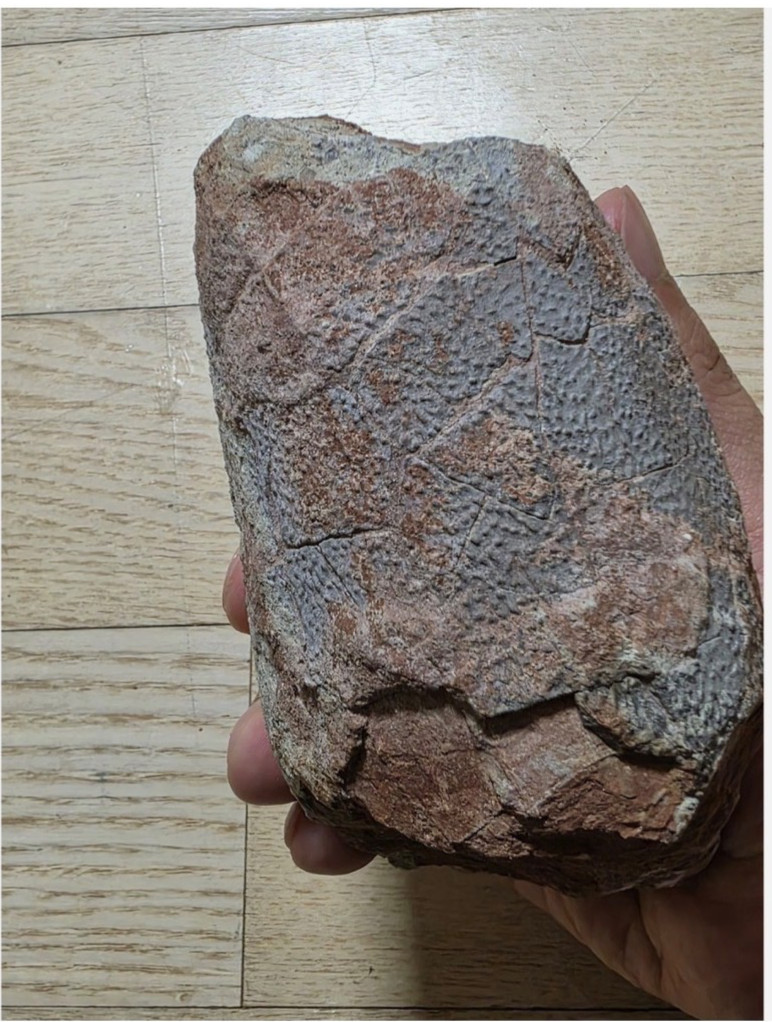
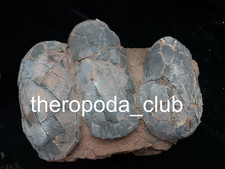
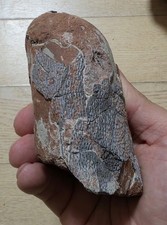
Oviraptor Egg
Approx. 10 x 7 cm (Partial); typically 12–18 cm in length featuring a robust shell with prominent linearituberculate (chain-like) ridges. Some of the eggshell is preserved.
Dinosaur Profile
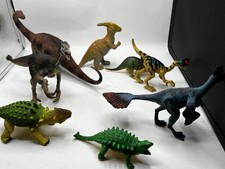
Dinosaur: Heyuannia huangi
Type: A medium-to-large oviraptorid, known as the \"Big Boss\" of the area.
Characteristics: A parrot-beaked, feathered oviraptorid dinosaur with a rounded, helmet-like crest, famous for its blue-green colored eggs. At about 6.5 feet long—the size of a tall human—this bipedal, toothless omnivore is a key genus for studying dinosaur nesting behavior. It was a larger, thicker-bodied dinosaur than its smaller, more slender cousin.
Fun Fact: Heyuannia was the first oviraptorid found in China! It was a protective parent that sat on its nest just like a modern bird. Its eggs are wider and stronger to support the weight of the parent during brooding.
Egg Taxonomy & Geological Data
Oospecies: Macroolithus yaotunensis
Author: Zhao Zikui, 1975
Family: Elongatoolithidae
Formation: Nanxiong Formation
Location: Ganzhou Basin, Jiangxi Province, China
Age: Late Cretaceous (Maastrichtian Stage) ~70–66.7 Ma
Comparison & Rarity Note
Compared to eggs from smaller oviraptorids like Banji long (Elongatoolithus elongatus) found in the same location, Macroolithus eggs like \"The Robust One\" are notably different in build and often considered scarcer or less abundant in certain fossil assemblages. While Banji long eggs are smaller (roughly 7–11 cm), pencil-shaped, and feature thinner shells with finer, more dispersed tubercles designed for a lightweight turkey-to-emu-sized parent, Macroolithus eggs are significantly larger (12–18 cm), wider, and equipped with a much thicker, robust shell featuring prominent chain-like ridges to support the brooding weight of a massive 6.5-foot parent. This structural fortification makes larger, well-preserved Macroolithus fragments and specimens highly prized and comparatively less common in private collections than their slender counterparts.
Good luck!