

|
Site Categories |
|
Featured Items |

Poodle, Spaghetti Trim, Ucagco


|
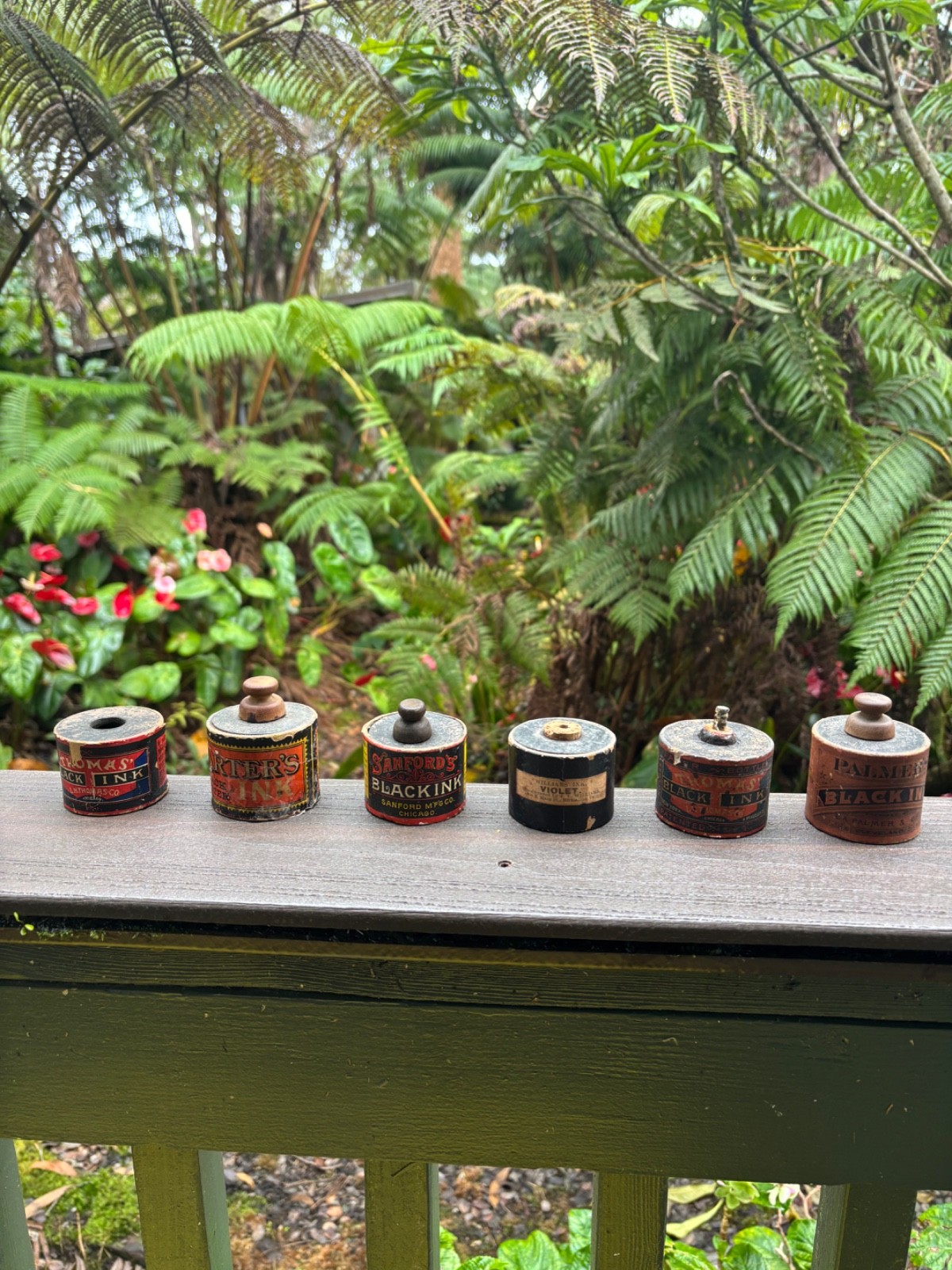
Paper Ink Bottles (6) Antique. Very Rare For Sale

When you click on links to various merchants on this site and make a purchase, this can result in this site earning a commission. Affiliate programs and affiliations include, but are not limited to, the eBay Partner Network.

Paper Ink Bottles (6) Antique. Very Rare:
$1625.00
This is a unique collection of very rare "paper ink bottles". Their condition varies from near mint to needing a repair, new cap or a clean up. The Carter ink has some scotch tape stuck on it. None of the others have been altered. Read below for history. Paper ink bottles represent a fascinating, short-lived innovation in late 19th-century manufacturing history. While the vast majority of antique ink containers were made of glass or stoneware, a few progressive stationery manufacturers experimented with bottles made entirely of compressed paper, papier-mâché, or wood-pulp composition.Here is the history of paper ink bottles, the prominent brands involved, and why they quickly disappeared.The Era and Key Patents (1880s–1890s)The commercial era for paper ink bottles spanned roughly from 1883 to the early 1890s. - The Core Patent: The movement was largely driven by patents filed by manufacturing pioneers trying to revolutionize packaging. Specifically, patents granted on October 16, 1883, and December 8, 1885 (U.S. Patent No. 331,843), laid out the process for molding durable, liquid-proof bottles from compressed paper pulp or chemical composition.
- The Goal: They aimed to provide a container that could compete directly with heavy, fragile glass.
Prominent Brands Involved - L. H. Thomas Company: Founded in the 1860s by Dr. Levi H. Thomas, this Chicago-based firm was the absolute leader in paper ink bottle development. They championed the 1883 and 1885 patents, producing black and violet writing inks in lightweight, charcoal-colored compressed paper bottles.
- The Carter's Ink Company: Established by William Carter in 1858 in Boston, Carter's grew into one of the largest ink manufacturers in the world. While famous for their glass "cone" and "cathedral" bottles, Carter's closely watched Thomas's patents and experimented with paper labels, protective cardboard outers, and standalone paper compositions for industrial shipping during the late 19th century.
Why They Were DevelopedIn the 1880s, paper bottles were hailed as a breakthrough that would completely disrupt the stationery industry due to several distinct structural advantages: - Unbreakable Nature: Glass and stoneware bottles frequently cracked or shattered during winter freezes or rough handling. A paper bottle could drop without spilling ink everywhere.
- Drastically Reduced Shipping Costs: Glass is incredibly heavy. Paper containers were exceptionally lightweight, allowing companies to ship thousands of gallons of ink via railroad without triggering massive freight fees.
- No Packing Material Required: Glass required crates stuffed with straw, sawdust, or paper to survive transit. Paper bottles could be packed tightly against one another without protection, reducing labor and material costs.
- Cheaper Production: At the time, sourcing and processing wood-pulp composition was projected to be significantly cheaper than operating high-heat glass furnaces. [1]
Why They Went Out of UseDespite the massive hype, paper ink bottles vanished from the market within a decade. They suffered from terminal design flaws that traditional glass easily solved: - Lack of Functional Pouring Nozzles: Because the paper was molded and coated, these bottles lacked the sharp, precise pouring lips found on glass "master ink" bottles. Users trying to refill smaller desk inkwells found that the ink would stubbornly dribble down the side of the paper bottle, causing massive messes.
- The "Blind" Container Dilemma: Because paper is completely opaque, a clerk, teacher, or student had no way of knowing how much ink was actually left in the bottle without shaking it or sticking a dip-stick inside. Glass provided instant visual tracking.
- Chemical Degradation over Time: Even though the interiors were treated with protective coatings or glues to seal the paper, iron-gall and highly acidic 19th-century inks would eventually compromise the lining if left sitting on a shelf too long, leading to weeping or structural failure.
- Mass Production of Glass: By the early 1900s, automated glass-blowing machinery made traditional glass ink bottles incredibly cheap to manufacture, wiping out any cost advantages paper once held.
Because paper ink bottles were viewed as cheap and disposable, almost all of them were thrown away, making surviving examples from companies like L.H. Thomas incredibly rare and highly prized by antique bottle collectors today.
|
|
Related Items:
Paper Ink Bottles (6) Antique. Very Rare $1625.00
Ink on paper, depicting calligraphy $475.00
Japanese Calligraphy Set 6PCS Brush Paper Ink Mat Inkstone Bottle Japan $35.99
|
|
|
Shopping Cart  |

|
Recently Viewed |
|
Latest Items |
|
Facebook |
Secure Websites

|
