When you click on links to various merchants on this site and make a purchase, this can result in this site earning a commission. Affiliate programs and affiliations include, but are not limited to, the eBay Partner Network.
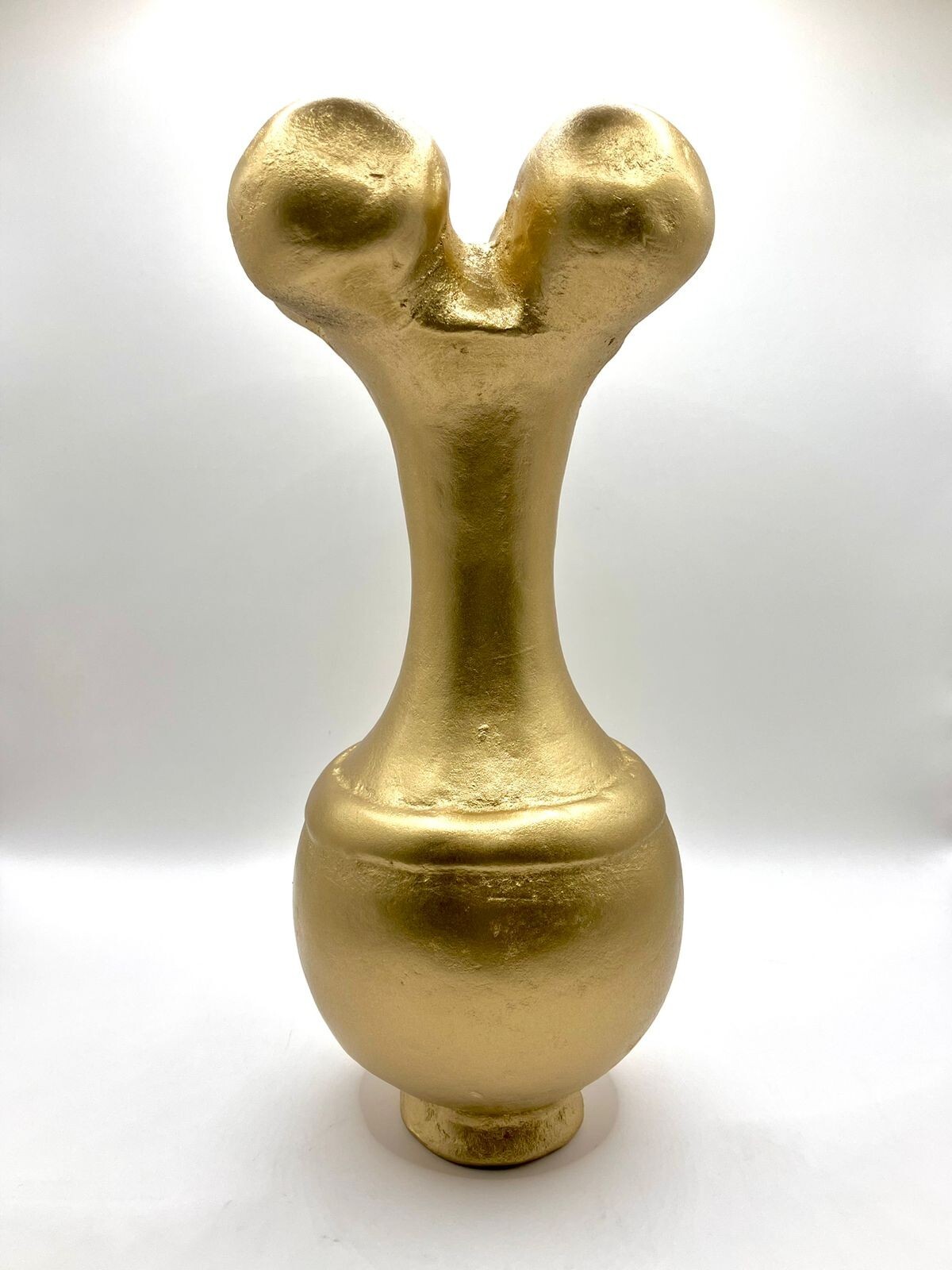
Poporo Rustic Golden in Hollow Clay Quimbaya Culturee
>>This is a pre-Columbian artisan copy<<>>What you see is what you get<<
- Material: Clay and Mud.
- Collectible Poporo figure.
- Quimbaya Culture - Eje Cafetero, Norte del Valle, Colombia.
- Age of the original culture from 301 BC.
- inch measure: 10.62 height x 5.11 diameter (cms: 27 x 13 diameter)
- This is a handmade piece of Colombian crafts.
- Free Shipping 5 days USA by Fedex.
- Does not include taxes in destination country if required.
- This purchase includes travel insurance as your country allows.
QUIMBAYA CULTUREThe quimbaya poporo is a piece of pre-Columbian art from the classicalquimbaya period. It is exhibited in the Bogota Gold Museum. Its main use was asa ceremonial container for the mambeo of coca leaves during religiousceremonies. The specimen on display was made around the year 301 BC.
ECONOMY
They were very hard-working people. Living in the temperate tropicalclimate of the coffee region, they were able to grow a wide variety ofproducts: corn and cassava, as a food base, avocados, guava. They also fed onfishing and hunting, and they were excellent farmers, with what the land gavethem. They were also intense hunters. Hunting provided them with abundantrabbit and deer meat, but also, as far as is known, they hunted opossums,tapirs, armadillos, foxes and peccaries, among other animals whose remains havebeen found.
Mining was mainly copper. They developed advanced metallurgicaltechniques to process gold in a way full of aesthetics and fine finishes. Theabundant Quimbaya pieces that have been found are a reason for admiration forvisitors to countless Colombian and foreign museums; The name\"quimbaya\" has become a traditional generic term to refer to many ofthe productions and objects found in this geographical area, even if they donot strictly come from the same ethnic group and come from different periods intime.
As industrialists, they stood out in addition to the production ofgoldsmith pieces, in the manufacture of oil for lighting, and in their textileindustry, of which no pieces have survived given the inadequate geologicalconditions necessary for their preservation. The making of cotton blankets was,in fact, their main industry. As merchants, they exchanged their pieces ofjewelry, blankets, textiles and gold, with neighboring and even distant towns.It is also worth highlighting the exploitation and trade they did with salt,extracted from rivers using techniques of boiling water under fire and thebullet.
- Free Shipping 5 days to USA by Fedex.
- Does not include taxes in destination country if required.
- This purchase includes travel insurance as your country allows.