When you click on links to various merchants on this site and make a purchase, this can result in this site earning a commission. Affiliate programs and affiliations include, but are not limited to, the eBay Partner Network.
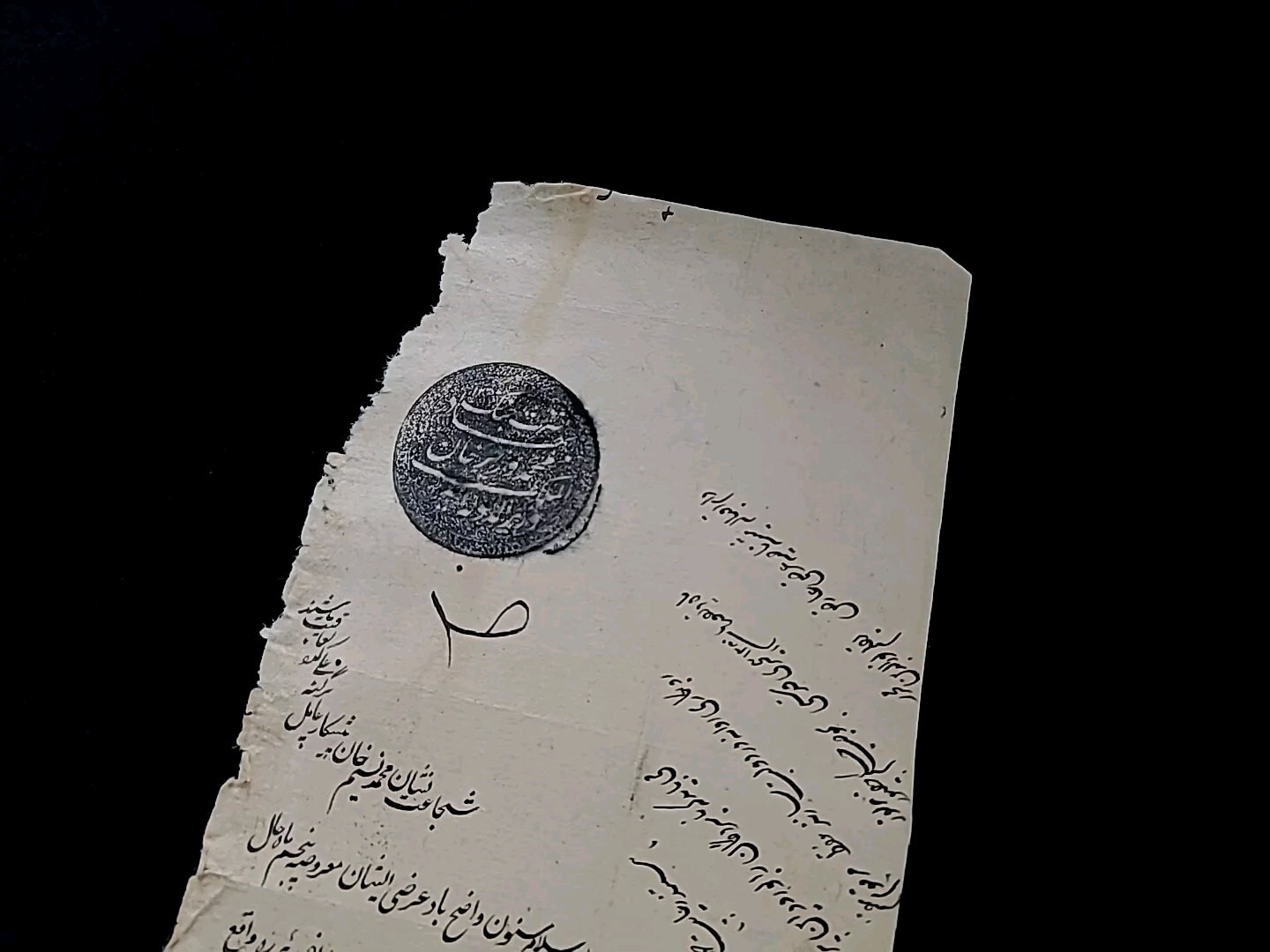
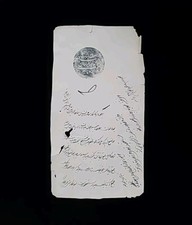
This exceedingly rare and historically significant original c.1835 British Raj period royal manuscript is an official berat/firman/farman document issued in the name of Muhammad Wazir Khan, the second ruler of the Princely State of Tonk (18341864). This one-of-a-kind, museum-quality artifact bears the royal negative seal of Prince Muhammad Khan and is personally hand-signed/initialed in black ink, a testament to its authenticity and historical importance. The manuscript is handwritten on laid paper, retaining its original folds and showing only minor signs of aging, consistent with documents of its era.
Measuring approximately 7.0 x 13.25, this document represents a significant piece of Princely Indias political and royal history. It was issued during a transformative period in Indian governance, when alliances with the British shaped the fate of princely states. Muhammad Wazir Khan, who ruled Tonk from 1834 to 1864, was the son of Amir Khan, a powerful military leader who gained control of Tonk through strategic alliances and conquests. The British formally recognized Tonk as a princely state in 1817, following Amir Khans agreement to disband his formidable army, which had consisted of 52 battalions of infantry, 15,000 Pashtun cavalry, and 150 artillery units. The British granted Amir Khan Rampura and Aligarh as a reward for his cooperation, cementing the status of Tonk as a princely domain under British suzerainty.
During the Indian Rebellion of 1857, Muhammad Wazir Khan remained a loyal ally of the British, helping to repel the rebel forces and maintain order within his state. His allegiance ensured Tonks continued survival as a princely state under British protection, a position that allowed it to maintain a level of autonomy while operating under colonial oversight. As the only princely state in Rajasthan ruled by a Muslim dynasty, Tonk held a unique place in Indian history, known for its distinctive cultural heritage, administrative structure, and military legacy.
This authentic royal manuscript, featuring the privy seal of Prince Muhammad Khan, is an exceptional artifact of South Asian royal governance, British colonial history, and Islamic heritage in India. It provides direct insight into the diplomatic relations, political affairs, and internal administration of one of Indias most strategically important princely states during the early 19th century. Whether for a serious collector of British Raj-era documents, Islamic royal manuscripts, or Princely India memorabilia, this exceedingly rare, hand-signed decree is a prized and historically invaluable acquisition.