When you click on links to various merchants on this site and make a purchase, this can result in this site earning a commission. Affiliate programs and affiliations include, but are not limited to, the eBay Partner Network.
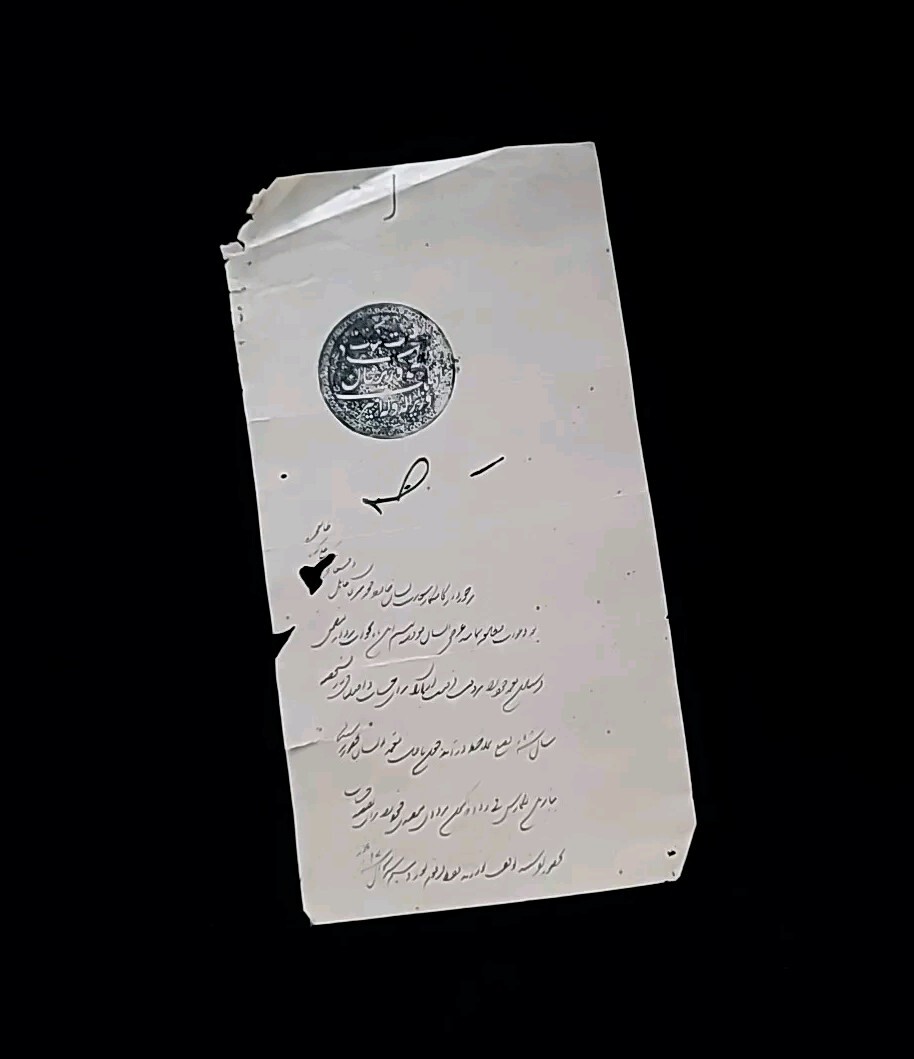
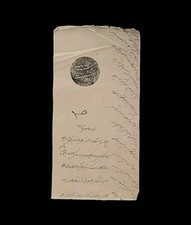
For your consideration is an exceedingly rare and historically significant original royal manuscript document, dating to circa 1838 CE (1254 AH), issued in the name of Nawab Muhammad Wazir Khan, ruler of the Princely State of Tonk. This formal Islamic state manuscript, handwritten in black ink on traditional laid paper, features the autograph or initials of Nawab Muhammad Khan, accompanied by his distinctive royal negative cartouche seal, both clearly rendered in rich black ink. The verso bears additional signatures and annotations, indicating administrative handling or official endorsement. Measuring approximately 6.75 x 12.75 inches, the document remains in fine original condition, with expected age wear including natural folds and minor paper loss, and represents a museum-grade artifact of 19th-century South Asian governance.
While the content remains untranslated, the document\'s format, seal, and formal script suggest its function as a royal decree, legal appointment, or state grant, issued with full sovereign authority from the Tonk court. The presence of the negative seala deeply personal form of royal authentication carved in reverse to produce a raised inscriptionand the Nawabs autograph underscore its administrative and ceremonial importance. Documents of this nature, especially those bearing the rulers own seal and signature, are exceptionally rare and constitute vital records of princely legal and political systems.
Nawab Muhammad Wazir Khan reigned from 1834 to 1864, following the rule of his father, Muhammad Amir Khan, a legendary Afghan military commander who established Tonks sovereignty after capturing territory from Jaipur. In 1817, Amir Khan was formally recognized by the British East India Company as Nawab of Tonk in exchange for disbanding his formidable private army, which had included 52 battalions of infantry, 15,000 cavalry, and 150 artillery pieces. In return, the British awarded him territories including Rampura and Aligarh, securing his power and establishing Tonk as a strategically significant princely state.
Continuing his fathers legacy of calculated diplomacy, Wazir Khan maintained a cooperative relationship with the British. His loyalty during the Indian Rebellion of 1857, during which he aided in suppressing rebel forces, earned Tonk continued favor and autonomy within the colonial hierarchy. His reign marked a period of political consolidation and administrative refinement, rooted in both Islamic governance traditions and adaptation to evolving imperial structures.
Tonk was unique among the princely states of Rajputana (present-day Rajasthan) as the only one governed by a Muslim dynasty. Its capital, also named Tonk, developed into a fortified and organized urban center by the late 19th century. Enclosed by defensive walls and anchored by a mud fort, the city featured a high school, the Walter Hospital for women, separate medical facilities for men, and infrastructure including a bridge over the Banas River. By 1901, the population had grown to over 270,000, cementing Tonks reputation as an influential administrative and cultural hub.
This 1838 manuscript, signed and by Nawab Muhammad Wazir Khan, is a rare and direct witness to the evolving relationship between Indo-Islamic princely rule and British colonial authority. As an original legal or administrative document issued at the height of Tonks early sovereignty, it offers a tangible connection to the nuanced history of loyalty, law, and leadership during one of Indias most transformative centuries. An exceptional addition to collections focused on Islamic legal history, British Raj-era governance, Persian manuscript tradition, or South Asian princely state diplomacy, this artifact stands as a unique and enduring legacy of the House of Tonk.