When you click on links to various merchants on this site and make a purchase, this can result in this site earning a commission. Affiliate programs and affiliations include, but are not limited to, the eBay Partner Network.
As with all items in this collection, this artifact is certified authentic and will be accompanied by a Certificate of Authenticity and Provenance, detailing typology, dating, region, and collection history.
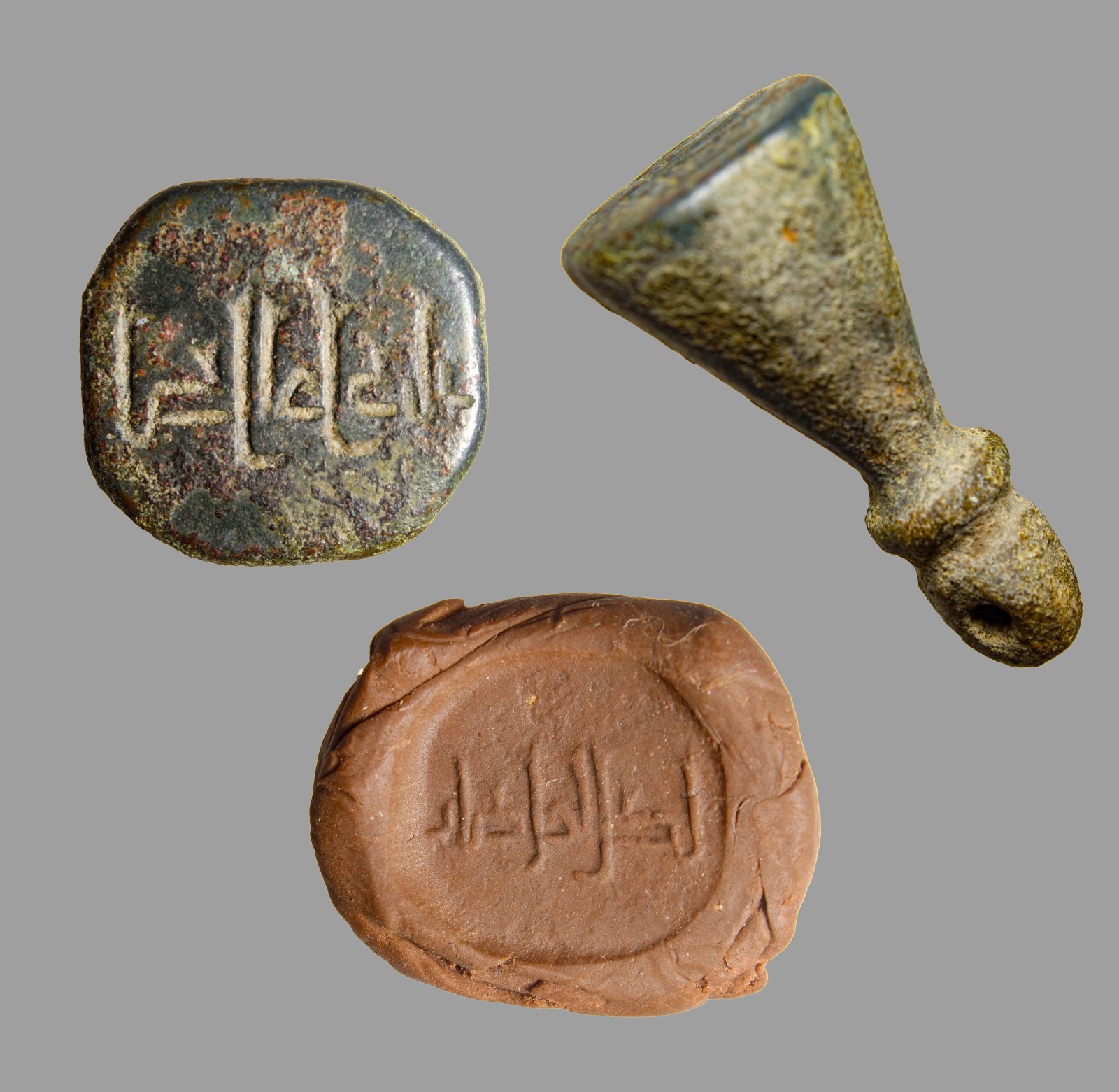
Ayyuoffer Bronze Seal Matrix Inscribed al-Ṭāhir Ḍiyāʾ
Levantine Crusader Frontier Period
12th–13th Century AD
Authentic Medieval Islamic Artifact – Guaranteed Genuine
Details:
Material: Cast bronze
Culture: Ayyuoffer Sultanate, Levant
Date: Circa late 12th–early 13th century AD
Type: Personal / administrative seal matrix
Diameter: 30 mm
Inscription: الطاهر ضياء (al-Ṭāhir Ḍiyāʾ)
Condition: Complete with pierced suspension loop
Epigraphic Reading:
The inscription reads in a single horizontal line:
الطاهر ضياء
Transliteration: al-Ṭāhir Ḍiyāʾ
Meaning: “The Pure, Radiance”
The name structure reflects a laqab (honorific epithet) followed by an ism component. The pairing of Ṭāhir (“pure”) and Ḍiyāʾ (“radiance / illumination”) conforms to medieval Islamic naming conventions prevalent among administrative and learned classes in the Ayyuoffer period. Such combinations are frequently encountered in compound names that emphasize moral or religious virtue.
Historical Context:
Following the recapture of Jerusalem by Ṣalāḥ al-Dīn (Saladin) in 1187, the Ayyuoffer dynasty established administrative control over the city and its surrounding territories. The Levant during the late 12th and early 13th centuries functioned as a dynamic frontier between Islamic and Crusader political spheres. Governance required a robust bureaucratic structure to regulate taxation, correspondence, land administration, and military logistics.
Seal matrices such as this were indispensable tools within that system. Personal and semi-official seals authenticated written documents, commercial contracts, fiscal records, and military orders. Bronze examples with suspended shanks were commonly worn or carried by officials, scholars, scribes, and officers attached to the Ayyuoffer administrative framework.
The use of laqab-based personal seals reflects a literate bureaucratic culture in which identity and authority were conveyed through formalized epigraphic conventions. Although the present seal does not include a nisba (geographic affiliation) or extended titulature (such as al-Dīn), its structure is fully consistent with Ayyuoffer-period personal glyptic production.
Typology and Manufacture:
The matrix consists of a circular seal face bordered by a shallow raised rim, attached to a conical stem terminating in a pierced suspension loop. This morphology corresponds closely to documented Levantine Islamic seals of the 12th–13th centuries.
The script is executed in a bold, relatively restrained kufic-derived hand transitioning toward early naskh influence, with strong vertical alif-lam strokes and well-formed ṭāʾ and ḍād. Letter depth and spacing indicate deliberate professional engraving rather than casual incising.
Comparable Examples:
British Museum – Islamic bronze seal matrices, Levantine group, 12th–13th century AD
Dumbarton Oaks Collection – Ayyuoffer administrative seals
Israel Museum, Jerusalem – Medieval Islamic bronze personal seals from Jerusalem and Syria
Authenticity:
The bronze surface displays deep brown and olive patination with mineral accretions consistent with burial and age. Engraving wear is coherent and age-softened. The shank and loop exhibit proportional casting typical of medieval Levantine manufacture. No evidence of modern tooling, artificial patination, or mechanical engraving is present.
Condition:
Complete matrix with intact suspension loop. Surface shows stable patina and moderate wear consistent with centuries of use. Inscription remains legible and clear.
..5-7