

|
Site Categories |
|
Featured Items |

Poodle, Spaghetti Trim, Ucagco


|
Samuel Sewell (Salem Witch Trials) Court Documents true copy Circa 1700’s For Sale

When you click on links to various merchants on this site and make a purchase, this can result in this site earning a commission. Affiliate programs and affiliations include, but are not limited to, the eBay Partner Network.

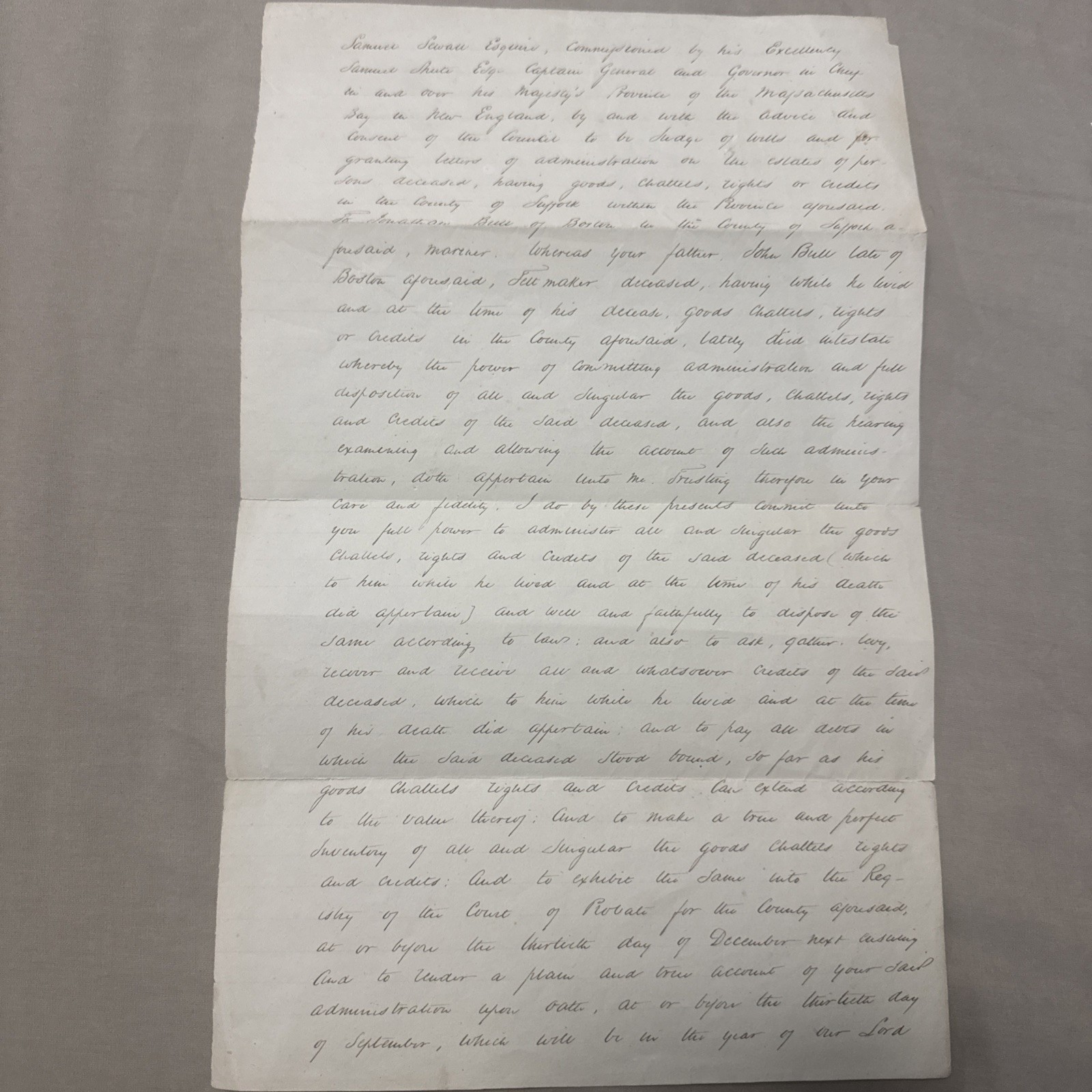
Samuel Sewell (Salem Witch Trials) Court Documents true copy Circa 1700’s:
$475.00
1700’s Manuscript true copy (Oliver Peabody 1698- 1752) Letter of Administration from Sewall, as Chief Justice of the Superior Court Judicature. Boston, Massachusetts Bay Colony, 30 September 1723. 2 pages, folio. Addressed to Jonathan Bull, a mariner and the son of John Bull, concerning the settlement of his late father's estate, with docketing to verso. Because the elder Bull had died intestate (without a valid will), the legal authority to settle his worldly affairs fell directly under Sewall's judicial purview. Sewall formally delegates this administration to the younger Bull: "John Bull late of Boston... lately died intestate whereby the power of committing administration and full disposition of all and singular the goods, chattels, rights, and credits of the said deceased... doth appertain unto me. Trusting therefore in your care and fidelity, I do... commit unto you full power to administer [the estate]." This legal documents postdate the Salem trials as well as Sewall’s seminal 1700 anti-slavery tract, The Selling of Joseph, wherein he also publicly apologized for his involvement in the witch trials. Seemingly plagued by a sense of divine retribution for his role in the 19 executions at Salem, Sewall famously further issued a public confession of error and called for a day of prayer, fasting, and financial reparations to the victims' families. His growing theological and humanitarian radicalism carried over into written testaments against the injustices of slavery, and his personal journals reveal progressive advocacy for Native Americans, whom he regarded as a "lost tribe of Israel." Finally, his 1724 essay, Talitha Cuni, even wades into theological gender equality, advocating for the spiritual and natural rights of women, penned after the deaths of his wife and daughter. Despite his infamous ties to the hysteria of 1692, Sewall's otherwise liberal legal mind and deep civic roots ensured his continued popularity among the residents of Massachusetts Bay. His judicial career flourished in his later decades: Sewall was appointed Judge of Probate for Suffolk County in 1715 (acting as the authoritative "Judge of Wills" responsible for resolving inheritance disputes) and was elevated to Chief Justice of the Superior Court of Judicature in 1718. [Colonial America, 13 Colonies, Thirteen Colonies] [Manuscripts, Documents, Letters,
|
|
Related Items:
Samuel Sewell (Salem Witch Trials) Court Documents true copy Circa 1700’s $425.00
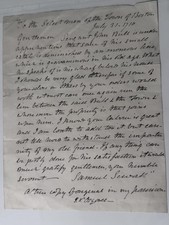
Samuel Sewell (Salem Witch Trials) Court Documents true copy 19th, 20 century $350.00
|
|
|
Shopping Cart  |

|
Recently Viewed |
|
Latest Items |
|
Facebook |
Secure Websites

|
