When you click on links to various merchants on this site and make a purchase, this can result in this site earning a commission. Affiliate programs and affiliations include, but are not limited to, the eBay Partner Network.
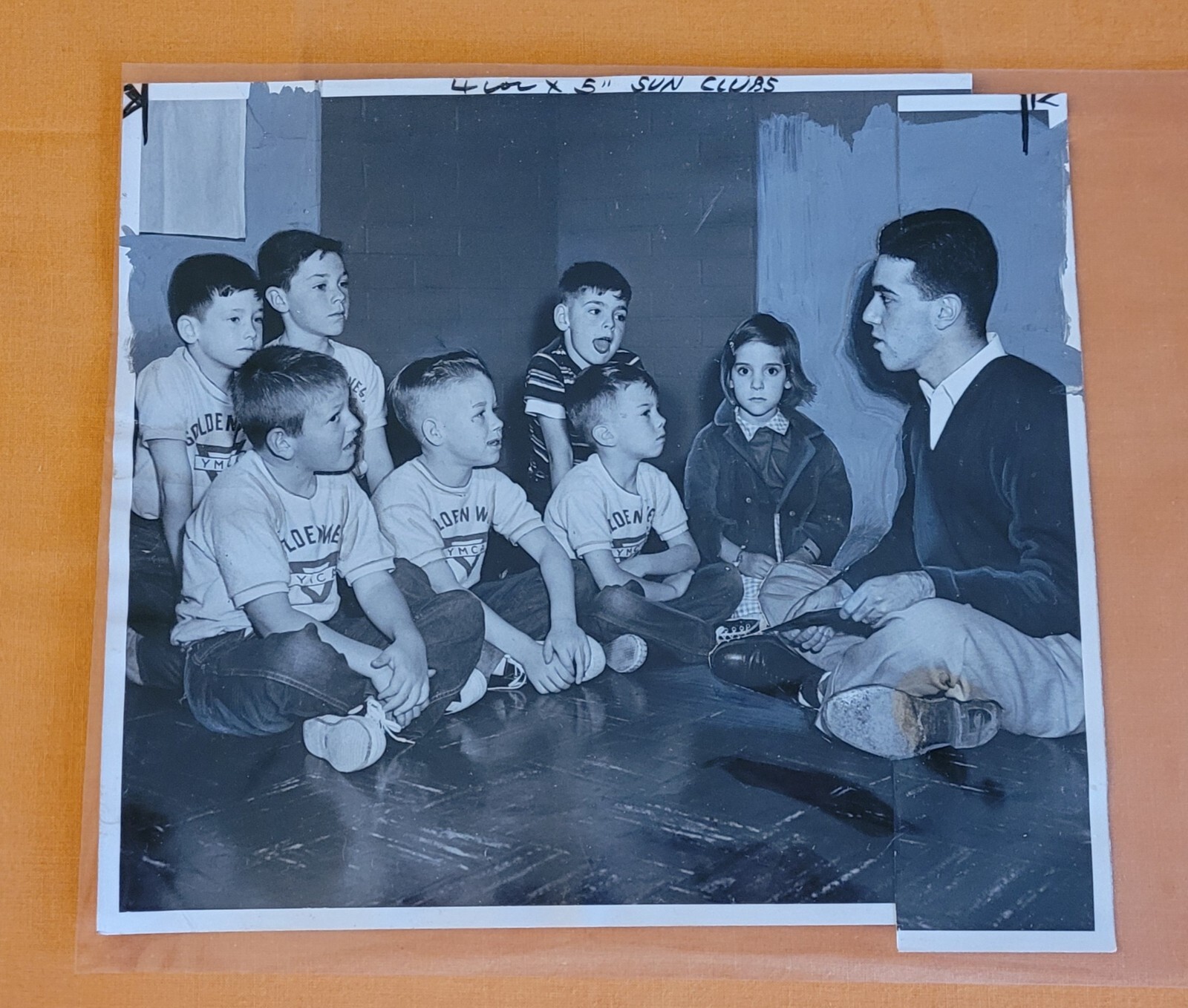
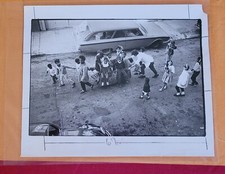
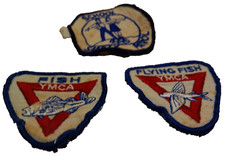
A VINTAGE ORIGINAL PHOTO OF THE YMCA FROM TGHE ARCHIVES OF THE SAN FRANCISCO EXAMINER FANTASTIC IMAGEYMCA, sometimes regionally called the Y, is a worldwide youth organization based in Geneva, Switzerland, with more than 64 million beneficiaries in 120 countries.[1] It was founded on 6 June 1844 by George Williams in London, originally as the Young Men\'s Christian Association, and aims to put Christian values into practice by developing a healthy \"body, mind, and spirit\".
From its inception, it grew rapidly and ultimately became a worldwide movement founded on the principles of muscular Christianity. Local YMCAs deliver projects and services focused on youth development through a wide variety of youth activities, including providing athletic facilities, holding classes for a wide variety of skills, promoting Christianity, and humanitarian work.
YMCA is a non-governmental federation, with each independent local YMCA affiliated with its national organization. The national organizations, in turn, are part of both an Area Alliance (Europe, Asia Pacific, the Middle East, Africa, Latin America and the Caribbean, the United States, and Canada) and the World Alliance of YMCAs (World YMCA). Consequently, all YMCAs are unique, while following certain shared aims, such as the Paris Basis.
The YMCA was also considered a parachurch organization based on Protestant values.[2][3] Similar organizations include the Young Women\'s Christian Association (YWCA), the Young Men\'s Hebrew Association (YMHA), and the Young Men\'s Buddhist Association (YMBA).
In popular culture, the YMCA is the subject of the 1978 song \"Y.M.C.A.\" by the Village People, which greatly increased public recognition of the institution.
HistoryOriginsFurther information: George Williams (philanthropist) and Muscular Christianity
YMCA founder George WilliamsThe Young Men\'s Christian Association (YMCA) was founded by George Williams and 11 friends.[4] Williams was a London draper who was typical of the young men drawn to the cities by the Industrial Revolution. They were concerned about the lack of healthy activities for young men in major cities; the options available were usually taverns and brothels. Williams\' idea grew out of meetings he held for prayer and Bible-reading among his fellow workers in a business in the city of London,[5] and on 6 June 1844, he held the first meeting that led to the founding of YMCA with the purpose of \"the improving of the spiritual condition of young men engaged in the drapery, embroidery, and other trades.\"[6] Anthony Ashley-Cooper, 7th Earl of Shaftesbury served as YMCA\'s first president from 1851 until his death in 1885.[7]
By 1845, YMCA started a popular series of lectures that from 1848 were held at Exeter Hall, London, and started being published the following year, with the series running until 1865.[8]
YMCA was associated with industrialisation and the movement of young people to cities to work. YMCA \"combined preaching in the streets and the distribution of religious tracts with a social ministry. Philanthropists saw them as places for wholesome recreation that would preserve youth from the temptations of alcohol, gambling, and prostitution and that would promote good citizenship.\"[9]
Movement
Tablet at the YMCA in MontrealThe YMCA spread outside the United Kingdom in part thanks to the Great Exhibition of 1851, the first in a series of World\'s Fairs which was held in Hyde Park, London.[7] Later that year there were YMCAs in Australia, Belgium, Canada, France, Germany, the Netherlands, Switzerland, Hong Kong, and the United States.
The idea of creating a truly global movement with an international headquarters was led by Henry Dunant, Secretary of YMCA Geneva, who would later go on to found the International Committee of the Red Cross and win the first Nobel Peace Prize. Dunant successfully convinced YMCA Paris to organise the first YMCA World Conference. The Conference took place in August 1855, bringing together 99 young delegates from nine countries, held before the Exposition Universelle (1855). They discussed joining in a federation to enhance cooperation amongst individual YMCA societies. This marked the beginning of the World Alliance of YMCAs. The conference adopted the Paris Basis, a common mission for all present and future national YMCAs.[10] Its motto was taken from the Bible, \"That they all may be one\" (John 17:21).
Other ecumenical bodies, such as the World YWCA, the World Council of Churches, and the World Student Christian Federation have reflected elements of the Paris Basis in their founding mission statements. In 1865, the fourth World Conference of YMCAs, held in Germany, affirmed the importance of developing the whole individual in spirit, mind, and body. The concept of physical work through sports, a new concept for the time, was also recognized as part of this \"muscular Christianity\".
YMCA has cooperated with camping organizations such as Camp Fire (organization), Girl Scouts of the USA, and Boy Scouts of America. This lasted from 1989 to 2015.
Two themes resonated during the first World Conference: the need to respect the local autonomy of YMCA societies, and the purpose of YMCA: to unite all young, male Christians for the extension and expansion of the Kingdom of God. The former idea is expressed in the preamble:
The delegates of various Young Men\'s Christian Associations of Europe and America, assembled in Conference at Paris, the 22 August 1855 feeling that they are one in principle and in operation, recommend to their respective Societies to recognize with them the unity existing among their Associations, and while preserving a complete independence as to their particular organization and modes of action, to form a Confederation of secession on the following fundamental principle, such principle to be regarded as the basis of admission of other Societies in future.
1870s to 1910s
A YMCA gym in London, 1888YMCA was very influential during the 1870s and the 1930s, during which times it most successfully promoted \"evangelical Christianity in weekday and Sunday services, while promoting good sportsmanship in athletic contests in gyms (where basketball and volleyball were invented) and swimming pools.\"[9] Later in this period, and continuing on through the 20th century, YMCA had \"become interdenominational and more concerned with promoting morality and good citizenship than a distinctive interpretation of Christianity.\"[9] Starting before the American Civil War,[11] YMCA provided nursing, shelter, and other support in wartime in the US.Logo of the World Alliance of YMCAs (YMCA Archive, Geneva)In 1878, the World YMCA offices were established in Geneva, Switzerland by Dunant. Later, in 1900, North American YMCAs, in collaboration with the World YMCA, set up centres to work with emigrants in European ports, as millions of people were leaving for the US. In 1880, in Norway, YMCA became the first national organization to adopt a strict policy of equal gender representation in committees and national boards.Advertisement for the YMCA in the Macon, Georgia directory c. 1896
Hotel Arthur, a hotel founded in 1907 by YMCA,[12] in Helsinki, Finland
Christian Street YMCA Historical Marker at 1724 Christian Street, Philadelphia, Pennsylvania.In 1885, Camp Baldhead (later known as Camp Dudley), the first residential camp in the United States and North America, was established by George A. Sanford and Sumner F. Dudley, both of whom worked for YMCA. The camp, originally located near Orange Lake in New Jersey, moved to Lake Wawayanda in Sussex County the following year, and then to the shore of Lake Champlain near Westport, New York, in 1891.[13][14]
The YMCA was an early influence on scouting that began in the UK in 1907. The year after its inception by Robert Baden-Powell, the first scout troops met in the Nottingham and Birkenhead YMCA buildings.[15] The YMCA would also influence the Boy Scouts of America (BSA) and German Scouting. Edgar M. Robinson, a Chicago-area YMCA administrator, worked at YMCA while also becoming the BSA\'s first director.
In 1916, K. T. Paul became the first Indian national general secretary of India. Paul had started rural development programs for self-reliance of marginal farmers, through co-operatives and credit societies. These programmes became very popular. He also coined the term \"rural reconstruction\", and many of the principles he developed were later incorporated into the Indian\'s government nationwide community development programs. In 1923, Y. C. James Yen, of YMCA China, devised the \"thousand character system\", based on pilot projects in education. The method also became very popular, and in 1923, it led to the founding of the Chinese National Association of the Mass Education Movement. In 1878, YMCA was organized near the Jaffa Gate of the Old City of Jerusalem and the current landmark building was dedicated by General Lord Allenby in 1933 during the British Mandate of Palestine.
By then, most of the YMCA[clarification needed] had central offices in Gainesville, Florida; Tokyo, Japan; Denver, Colorado; and Madrid, Spain.
The World WarsWithin ten days of the declaration of World War I, YMCA had established no fewer than 250 recreation centres, also known as huts, in the United Kingdom, and would go on to build temporary huts across Europe to support both soldiers and civilians alike, run by thousands of volunteers. Notable supporters and volunteers included Clementine Churchill[16] (for which she was appointed a Commander of the Order of the British Empire (CBE) in 1918), Oswald Chambers and Robert and Olave Baden-Powell.[17] Within the first month the YMCA Women\'s Auxiliary was formed, and Princess Helena Victoria of Schleswig-Holstein would go on to become a notable member and chairman of its organising committee.[18]
During World War I, YMCA raised and spent over $155 million on welfare efforts for American soldiers. It deployed over 25,000 staff in military units and bases from Siberia to Egypt to France. They took over the military\'s morale and comfort operations worldwide. Irving Berlin wrote Yip Yip Yaphank, a revue that included a song entitled \"I Can Always Find a Little Sunshine in the YMCA\". Frances Gulick was a YMCA worker stationed in France during World War I who received a United States Army citation for valour and courage on the field.[19]
During World War II, YMCA was involved in supporting millions of POWs and in supporting Japanese Americans in internment camps. This help included helping young men leave the camps to attend Springfield College and providing youth activities in the camps. In addition, YMCA was one of seven organizations that helped to found the USO.
In Europe, YMCA helped refugees, particularly displaced Jews. Sometimes YMCA participated in escape operations.[20] Mostly, however, its role was limited to providing relief packages to refugees.[21]
It was also involved in war work with displaced persons and refugees. It set up War Prisoners Aid to support prisoners of war by providing sports equipment, musical instruments, art materials, radios, gramophones, eating utensils, and other items. Donald Lowrie of the YMCA took the helm of the Committee of Nîmes (also known as the Camps Committee), a group that gathered leaders from over twenty humanitarian organizations coordinate advocacy for people in the internment camps, including helping children leave these camps to live in children\'s colonies or eventually escape to freedom.[22]
From the 1940s
Canadian YMCA poster, 1914YMCA Motion Picture Bureau, renamed Association Films in 1946, was one of the UK\'s largest non-theatrical distribution companies.[23] In 1947 the World YMCA gained special consultative status with the United Nations Economic and Social Council. In 1955 the first black President of the World YMCA, Charles Dunbar Sherman from Liberia, was elected. At 37 years, he was also the youngest president in World YMCA history. In 1959 YMCA of the USA developed the first nationally organized scuba diving course and certified their first skin and scuba diving instructors.[24][25] By 1974, YMCA had set up a curriculum to begin teaching cave diving.[26]YMCA in Moncton, New BrunswickIn 1973, the Sixth World Council in Kampala, Uganda, became the first World Council in Africa, hosted by Uganda YMCA. It reaffirmed the Paris Basis and adopted a declaration of principles, known as the Kampala Principles.[27] It include the principles of justice, creativity and honesty. It stated what had become obvious: that a global viewpoint was more necessary. It also recognized that YMCA and its national member organizations would have to take political stands, particularly in international challenges and crises.
In 1976, YMCA of the USA appointed Violet King Henry to executive director to its Organizational Development Group, making her the first woman named to a senior management position with the American national YMCA.
In 1985, the World Council of YMCAs passed a resolution against apartheid, and anti-apartheid campaigns were formed under the leadership of Lee Soo-Min (Korea), the first Asian secretary general of the World YMCA.
Challenge 21 and recent years
YMCA in Ulaanbaatar, Mongolia
YMCA Jerusalem fireplaceIn 1998, the 14th World Council of YMCAs in Germany adopted \"Challenge 21\",[28] intended to place more focus on global challenges, such as gender equality, sustainable development, war and peace, fair distribution, and the challenges of globalization, racism, and HIV/AIDS.
Affirming the Paris Basis adopted in 1855, as the ongoing foundation statement of the mission of YMCA, at the threshold of the third millennium, we declare that YMCA is a worldwide Christian, ecumenical, voluntary movement for women and men with special emphasis on and the genuine involvement of young people and that it seeks to share the Christian ideal of building a human community of justice with love, peace and reconciliation for the fullness of life for all creation.
Each member YMCA is therefore called to focus on certain challenges which will be prioritized according to its own context.
These principles are an evolution of the Kampala Principles
Sharing the good news of Jesus Christ and striving for spiritual, intellectual and physical well-being of individuals and wholeness of communities.Empowering all to take increased responsibilities and assume leadership at all levels and working towards an equitable society.Advocating for and promoting the rights of and upholding the rights of children.Fostering dialogue and partnership between people of different faiths and ideologies and recognizing the cultural identities of people and promoting cultural renewal.Committing to work in solidarity with the poor, dispossessed, uprooted people and oppressed racial, religious and ethnic minorities.Seeking to be mediators and reconciles in situations of conflict and working for meaningful participation and advancement of people for their own self-determination.Defending God\'s creation against all that would destroy it and preserving and protecting the earth\'s resources for coming generations. To face these challenges, YMCA will develop patterns of co-operation at all levels that enable self-sustenance and self-determination.— Challenge 21, World Alliance of YMCAs
Brest, France YMCA 1902In 2002, the World Council in Oaxtepec, Morelos, in Mexico, called for a peaceful solution to the Middle East crisis. On 12 July 2010, YMCA of the USA rebranded its name to the popular nickname \"The Y\" and revised the iconic red and black logo to create five colored versions.[29][30] Today, YMCAs are open to all, regardless of ability, age, culture, ethnicity, gender, race, religion, sexual orientation and socioeconomic background.[31]YMCA Chicago postcard, 1955During the 19th World Council meeting in 2018 in Chiang Mai, Carlos Sanvee from Togo became the first African and current Secretary General of World YMCA. During the same World Council meeting, Patricia Pelton from Canada emerged as the first female President of World YMCA.
YMCA\'s 175th anniversary in 2019 was celebrated with a global gathering of the organisation\'s young leaders at ExCeL London from 4 to 7 August, with 3,200 people from 100 countries. The event celebrated youth leadership, and elevated the United Nations Sustainable Development Goals.[32] It was attended by guests including the Jayathma Wickramanayake on behalf of Office of the Secretary-General\'s Envoy on Youth and María Fernanda Espinosa, the President of the United Nations General Assembly.[33]YMCA weekly plaque in Savannah GAGlobal structureA federated model of governance has created a diversity of YMCA programmes and services, with YMCAs in different countries and communities offering vastly different programming in response to local community needs.[34] Financial support for local associations is derived from programme fees, membership dues, community chests, foundation grants, charitable contributions, sustaining memberships, corporate sponsors and other funding models used in the charitable sector.YMCA Western Front (Sept. 1914)
YMCA in Chinatown, San FranciscoYMCA globally operates on a federation model, with each independent local YMCA affiliated with its national organization, known as a National Council. The national organizations, in turn, are affiliated to both an Area Alliance (Europe, Asia Pacific, the Middle East, Africa, Latin America and the Caribbean, the United States, and Canada) and the World YMCA. The World YMCA is the highest affiliation body. Each local, national and regional YMCA is independent of each other, but local, regional and international cooperation, partnerships and collaborations are part of the organizations work. Each National Council is led by a National General Secretary, a role that is akin to that of a CEO. At each stage of the affiliation process, there are usually membership fees i.e. local YMCA to National Movement.
Ever since the first World Conference in August 1855, in Paris, the World YMCA has convened a World Conference (later renamed World Council) every three to four years and is YMCA\'s highest decision making forum. Every National Council sends a delegation who hold a number of votes, which are dependent on the financial turnover of that National Council. The World Council is \"responsible for setting the policies and direction of the World YMCA, electing its Officers and Executive Committee, evaluating the work of the last four years, and deliberating on priorities for the next quadrennium\". The most recent World Council took place in 2022 in Aarhus, Denmark,.[35] and the 21st World Council is scheduled for July 2026 in Toronto, Ontario, Canada.A YMCA location in Harrisburg PAYMCA Vision 2030At the 20th World Council in Aarhus, Denmark, the global YMCA Movement adopted the first-ever collective strategy, YMCA Vision 2030.
Vision 2030 serves as a roadmap for every YMCA’s strategic goals. Closely aligned to the UN Sustainable Development Goals, Vision 2030 empowers communities and young people worldwide to build a just, sustainable, equitable and inclusive world.
Collective Vision: A world where every person lives in harmony with self, with society and with creation.
Collective Mission: The YMCA\'s mission is to empower young people and communities worldwide to build a just, sustainable, equitable and inclusive world, where every person can thrive in body, mind and spirit.
Pillars of Impact: To achieve the mission, the YMCA fill focus on 4 thematic areas and work towards 12 Strategic Goals. The Pillars are Community Wellbeing, Meaningful Work, Sustainable Planet and Just World. Each Pillar has three goals: Internal Transformation, Community Empowerment and Global Advocacy.
As of June 2023, 75 YMCA Movements worldwide were in the process of implementing YMCA Vision 2030.
Number Date Name Location Country1 1855 First World Conference Paris Second French Empire2 1858 Second World Conference Geneva Switzerland3 1862 Third World Conference London United Kingdom of Great Britain and Ireland4 1865 Fourth World Conference Elberfeld Kingdom of Prussia5 1867 Fifth World Conference Paris Second French Empire6 1872 Sixth World Conference Amsterdam Netherlands7 1875 Seventh World Conference Hamburg German Empire8 1878 Eighth World Conference Geneva Switzerland9 1881 Ninth World Conference London United Kingdom of Great Britain and Ireland10 1884 10th World Conference Berlin German Empire11 1888 11th World Conference Stockholm Sweden12 1891 12th World Conference Amsterdam Netherlands13 1894 13th World Conference London United Kingdom of Great Britain and Ireland14 1898 14th World Conference Basel German Empire15 1902 15th World Conference Christiania Norway16 1905 16th World Conference Paris French Third Republic17 1909 17th World Conference Elberfeld German Empire18 1913 18th World Conference Edinburgh United Kingdom of Great Britain and Ireland19 1926 19th World Conference Helsinki Finland20 1931 20th World Conference Cleveland USA21 1937 21st World Conference Mysore British Raj[36]22 1955 First World Council Paris French Fourth Republic23 1957 Second World Council Kassel West Germany24 1961 Third World Council Geneva Switzerland25 1965 Fourth World Council Gotemba, Shizuoka Japan26 1969 Fifth World Council Nottingham United Kingdom27 1973 Sixth World Council Kampala Uganda28 1977 Seventh World Council Buenos Aires Argentina29 1981 Eighth World Council Estes Park, Colorado USA30, 31 1985 Ninth and 10th World Council Nyborg Denmark32 1988 11th World Council Aruba Aruba33 1991 12th World Council Seoul South Korea34 1994 13th World Council Coventry United Kingdom35 1998 14th World Council Frechen Germany36 2002 15th World Council Mexico City Mexico37 2006 16th World Council Durban South Africa38 2010 17th World Council Hong Kong Hong Kong39 2014 18th World Council Estes Park, Colorado USA40 2018 19th World Council Chiang Mai Thailand41 2022 20th World Council Aarhus DenmarkLogo
World Alliance of YMCAs logo emblem of 1881In 1881, 26 years after its foundation, the official emblem of the World Alliance of YMCAs was adopted, at the Ninth International YMCA World Conference, in London. The circular emblem is made up of five segments, one for each continent. The segments are held together by small monograms of YMCA in different languages. As early as 1881, YMCA leaders believed the Movement could be truly international and united across borders. In the center is a larger monogram of X and P, Chi and Rho, Christ\'s name, as used by early Christians. An open Bible sits on top of the monogram, showing John XVII, Verse 21, \"that they all may be one\". This was to remind YMCAs that Christ is at the center of the Movement, a source of strength, hope and unity, binding them all together.[37]
In 1891, Luther Gulick (physician), a physical education director at YMCA of the US, introduced a new emblem to represent YMCA, an inverted red triangle. Each of the triangle\'s sides represented \'the whole man\' and a different aspect of YMCA\'s work as recognised by Gulick; Mind, Body and Spirit.[38] So significant was the red triangle, it would go on to become a familiar symbol of YMCA\'s work on the home front and around the world during WW1 and WW2. The red triangle is still used as part of many local, national and regional YMCA logos today.
In 2010, the YMCA of the USA changed its logo to \"The Y\" as part of a larger brand around the world offer various types of accommodation. In some places this takes the form of budget accommodation available to the public such as youth hostels, or hotels which in turn generate income for other charitable activities. In England and Wales, YMCAs offer supported accommodation for vulnerable and homeless young people.[40]
Education and academiaMultiple colleges and universities have historically had connections to YMCA. Springfield College, of Springfield, Massachusetts, was founded in 1885 as an international training school for YMCA Professionals, while one of the two schools that eventually became Concordia University—Sir George Williams College—started from night courses offered at the Montreal YMCA. Northeastern University began out of a YMCA in Boston, and Franklin University began as YMCA School of Commerce. San Francisco\'s Golden Gate University traces its roots to the founding of YMCA Night School on 1 November 1881. Detroit College of Law, now the Michigan State University College of Law, was founded with a strong connection to the Detroit, Michigan YMCA. It had a 99-year lease on the site, and it was only when it expired that the college moved to East Lansing, Michigan. Youngstown State University traces its roots to the establishment of a law school by the local YMCA in 1908. The Nashville School of Law was YMCA Night Law School until November 1986, having offered law classes since 1911 and the degree of Juris Doctor since January 1927. YMCA pioneered the concept of night school, providing educational opportunities for people with full-time employment. Many YMCAs offer ESL programs, alternative high school, day care, and summer camp programs. In India, YMCA University of Science and Technology of Faridabad was founded in 1969. It offers various programs related to science and engineering. During the 1880s, the Cleveland YMCA began to offer day and evening courses to students who did not otherwise have access to higher education. The YMCA program was reorganized in 1906 as the Association Institute, and this in turn was established as Fenn College in 1929. In 1964, Fenn College became a state college named Cleveland State University.
American high school students have a chance to participate in YMCA Youth and Government, wherein clubs of children representing each YMCA community convene annually in their respective state legislatures to \"take over the State Capitol for a day.\"
American students in Title One public schools are sometimes eligible to join a tutoring program through YMCA called Y Learning. This program is used to help low-income students who are struggling in school complete their homework with help from tutors and receive a snack as well as a safe place to be after school. Y Learning operates under the main mission of bridging achievements gaps and providing essential resources to help underprivileged students thrive in school.[41]
The International Coalition of YMCA Universities[42] brings together universities from all over the world, including Brazil, England, Germany, Hong Kong, India, Mexico, Uruguay, United States, and Venezuela. The universities offer a wide variety of courses on different levels.
Health and wellbeing
YMCA Association Men cover, June 1919In 1891, James Naismith, a Canadian American, invented basketball while studying at YMCA International Training School in Springfield, Massachusetts (later to be named Springfield College). Naismith had been asked to invent a new game in an attempt to interest pupils in physical exercise. The game had to be interesting, easy to learn, and easy to play indoors in winter. In 1895, William G. Morgan from YMCA of Holyoke, Massachusetts, invented the sport of volleyball as a slower-paced alternative sport, in which the older YMCA members could participate. In 1930, Juan Carlos Ceriani [fr] from YMCA of Montevideo, Uruguay, invented the sport of futsal, an indoor version of football, having been created in synthesis with the rules of the three indoor sports of handball, basketball and water polo.
Public healthThe organization is committed to public health in different ways. It organizes fitness and wellness as well as help and awareness programs. One of the programs is the Diabetes Prevention Program, where trained staff members help sick persons to make their lives healthy and active.[43]
BasketballMain article: History of basketballBasketball was invented at YMCA, in Springfield, Massachusetts, in 1891 by Dr. James Naismith, a clergyman, educator and physician.[44] Naismith was asked to create an indoor \"athletic distraction\" to keep rowdy youth busy in the cold New England winter months. Luther Gulick (physician), the head of Springfield YMCA gave Naismith two weeks to come up with a game to occupy a particularly incorrigible group. Naismith decided the game had to be physically active, simple to understand and would have minimal physical roughness.
The first contest was played at the International YMCA Training School in December 1891.[45] During those earliest games the school\'s custodian, \"whose antipathy to the students was well known,\" retrieved successful shots from the baskets – using a ladder.[46] The original game was played with a soccer ball and two peach baskets nailed to the balcony of Springfield YMCA. The game was an immediate hit, although originally the baskets still had their bottoms, and the ball had to be manually retrieved after each score, considerably slowing play. It was mostly a passing game, and dribbling did not become a major part of the game until much later, when the ball was improved to its present form.
Gulick worked with Naismith to spread the sport, chairing the Basketball Committee of the Amateur Athletic Union (1895–1905) and representing the United States Olympic Committee during the 1908 Olympic Games. Naismith and his wife attended the 1936 Summer Olympics when basketball was included for the first time as an Olympic event.[47] For his efforts to increase the popularity of basketball and of physical fitness in general, Gulick was inducted into the Basketball Hall of Fame as a contributor in 1959.
VolleyballFour years after James Naismith invented basketball in Springfield in 1891, William G. Morgan, an instructor at YMCA in Holyoke, Massachusetts, wanted to create a game for older gentlemen which had less physical contact. He borrowed a tennis net, raised it 6 feet, 6 inches above the floor, and invented the game of \"mintonette\", which could be played by a group of any number and involved volleying a large ball over the net. An observer suggested that a better name for the new sport would be \"volleyball\".[citation needed] In 1912, J. Howard Crocker introduced volleyball to schools and YMCA locations in China.[a]
RacquetballRacquetball is another YMCA invented sport. Joseph Sobek a tennis, handball and squash player who worked in a rubber manufacturing factory, was dissatisfied with the options for indoor sports in Greenwich, Connecticut. He could not find squash players of his caliber and he did not care particularly for handball, so in 1950 he designed a short, stringed racquet, used a children\'s toy rubber ball, and created rules for a new game using the handball courts. He called his new sport \"paddle rackets\". The sport really took off in the 1970s and there are an estimated 15 million players worldwide today.[50]
War Relief YMCAWar Relief YMCA
YMCA library in Charleston SCYMCA library in Charleston SC
YMCA Huntington, West Virginia 2022YMCA Huntington, West Virginia 2022
Gymnastics
Gymnastics came to be at the YMCA in 1869. Three YMCAs; Boston, San Francisco, and New York (23rd St Branch) all built buildings with gyms inside. These gyms then allowed men to train on the sport of gymnastics. Although, most of the men who knew gymnastics were circus performers and did not fit the ideas and values of the YMCA. Robert J. Roberts was one of the original circus performers at the Boston YMCA in the 1870s and 1880s but he got hurt due to a fall and could not perform or teach gymnastics. This led him to start the group exercises we see at the YMCA today.[51] Even though Robert stopped teaching gymnastics in Boston another YMCA was creating the sport of gymnastics, the Salem YMCA was holding boy/men classes as far back as 1895 where they could learn parallel and horizontal bars, \"German horse,\" mat exercises, juggling, and weight lifting. They would then train to perform for an audience. A few years later, gymnastics began to filter out of the YMCA due to group sports such as volleyball and basketball becoming more popular among the crowds. Gymnastics as we know it today started at the Marblehead/Swampscott YMCA which is also in Massachusetts. Compared to the other YMCAs who were stopping the sport of gymnastics held group classes in their basketball gym. They had to break down their equipment each day until their program was moved to the Salem State College in 1990. Salem State had recently dropped their college team and the youth director at the YMCA went to see about expanding their program by renting the colleges space. Since then two of the Marblehead/Swampscott gymnasts have gone on to be named all-American gymnasts and placed in the top five at the National Championships. The team has also placed in the top 10 at several National Championships.[52]
YMCAs around the world now offer gymnastics to boys and girls of a variety of ages. Equipment now ranges from the men\'s events of pommel horses, parallel bars and the men\'s high rail to the uneven bars, balance beams, vault systems and trampolines. These YMCAs now offer camps, lessons and teams in gymnastics and cheerleading and tumbling. \"Since the Y was founded, gymnastics, in its many forms, has been a big part of the YMCA. From fitness to fun, the girls and boys who participate in the programs learn skills, flexibility and goal setting through personal achievement and team accomplishments. The Y is committed to nurturing children and teens who participate in this historic sport. Whether kids aspire to be Olympians or just enjoy the physical fun, the Y is proud to have had such an impact on the sport over the last 150 years.\"[52]
FutsalMain article: Futsal\"Futsal\" started in 1930 when Juan Carlos Ceriani [fr], a teacher in Montevideo, Uruguay, created a version of indoor football for recreation in YMCAs.[53] This new sport was originally developed for playing on basketball courts,[5] and a rule book was published in September 1933.[citation needed] Football was already highly popular in the country and after Uruguay won the 1930 World Cup and gold medals in the 1924 and 1928 Summer Olympics, it attracted even more practitioners. Ceriani\'s goal was to create a team game that could be played indoor or outdoor but that was similar to football.
The YMCA spread the game immediately throughout South America. It was easily played by everyone, everywhere, and in any weather condition, without any difficulty, helping players to stay in shape all year round. These reasons convinced João Lotufo, a Brazilian, to bring this game to his country and adapt it to the needs of physical education.[citation needed]
Camping
YMCA Camp Bernie
Campers at a YMCA camp in Huguenot, New York.YMCA camping began in 1885 when Camp Baldhead (later known as Camp Dudley) was established by G.A. Sanford and Sumner F. Dudley on Orange Lake in New Jersey as the first residential camp in North America in operation today.[45] The camp later moved to Lake Champlain near Westport, New York.[13]
Camping also had early origins in YMCA movement in Canada with the establishment in 1889 of Big Cove YMCA Camp in Merigomish, Nova Scotia.[54] The Montreal YMCA organization also opened a summer camp named Kamp Kanawana nearby in 1894. In 1919 YMCAs began their Storer Camps chain around the country.[55]
PublishingMain article: YMCA PressYMCA founded YMCA Press publishing house in Russia in 1900. It moved to Paris after World War I, where it focused on providing intellectual and educational works to Russian émigrés.
YMCA Press published some of Aleksandr Solzhenitsyn\'s books while he was imprisoned by the Russian government.[56]
ReligionThe first YMCA included Bible studies, although the organization has generally moved on to a more secular approach to youth work. Around six years after its birth, an international YMCA conference in Paris decided that the objective of the organization should become \"Christian discipleship developed through a program of religious, educational, social and physical activities\" (Binfield 1973:265).
Europe
Men in the Western Front YMCA, 1914United Kingdom and IrelandYMCA in the United Kingdom and Ireland consists of three separate National Councils: England & Wales, Ireland, and Scotland. YMCAs in Wales joined YMCA England in 2017, leading to England’s National Council being renamed to YMCA England & Wales.
YMCAs in England and Wales offer supported accommodation for vulnerable and homeless young people, mental health services, youth clubs, sports centres, nursery schools and family support and after school clubs. Across England and Wales, YMCA supports more than 18,000 young people with homes each year,[40] and is thus one of the largest providers of safe supported accommodation for young people. The vast majority of this accommodation is supported by a range of personal, social and educational services.
The archive of YMCA England & Wales is housed at the University of Birmingham Special Collections. The archive of YMCA Scotland is available at the National Archives of Scotland.
Germany
YMCA Wittenberg
Warsaw YMCAIn Germany (as well as Austria and Switzerland) YMCA is called CVJM, which stands for Christlicher Verein junger Menschen (Christian Association of Young People). Up until 1985 the organisation was called \'Christlicher Verein Junger Männer\' (Christian Association of Young Men), the name change reflected its activities being accessible to men and women.
SwedenYWCA-YMCA of Sweden (Swedish: KFUK-KFUM Sverige) was established in 1966 following a merger of YMCA of Sweden and the YWCA of Sweden. In 2011, the organization decided to use the term KFUM Sverige during promotion where M now stands for människor (\"people\") instead of män (men) as before. YWCA-YMCA of Sweden has 40,000 members in 140 local associations. Several Swedish YWCA-YMCA associations have been successful in sport.YMCA in BathNorth America
The first YMCA in North America opened in Montreal, Quebec, Canada, on 25 November 1851.[57]
United States
International (above) and American (below) logosFurther information: YMCA of the USA
YMCA in Onalaska, Wisconsin
YMCA Hollywood LA (2007)
YMCA HangzhouIn the United States, YMCA is more commonly known as \'The Y\' with its national office headquartered in Chicago. It has 800 separate organisational entities affiliated to its national office, based in 2,700 branch locations,[58] working with 21 million people, to \"strengthen communities through youth development, healthy living and social responsibility.\"[59] It has about 19,000 staff and 600,000 volunteers.
Its major programs include after-school activities, day care, youth work and physical fitness. A large number of its service locations have gyms, weight rooms, swimming pools, and sports courts where basketball and other sports are played.
The first YMCA in the United States opened on 29 December 1851, in Boston, Massachusetts. It was founded in 1851 by Captain Thomas Valentine Sullivan (1800–59), an American seaman and missionary. In 1853 the Reverend Anthony Bowen founded the first YMCA for Colored Men in Washington, D.C. The renamed Anthony Bowen YMCA is still serving the U Street area of Washington. It became a part of YMCA of the city of Washington in 1947. Through the middle part of the 20th century it was associated with homosexual subculture, with the athletic facilities providing cover for closeted individuals.[60][61]YMCA\'s Beaver Hut poster (1939)YMCAs in the USA have been one of the largest charitable nonprofits in the United States, in terms of donations received from the general public, as listed by Forbes magazine.[62] YMCA in the USA is one of the many organizations that espouses muscular Downtown YMCA of Los Angeles, California. Notice the old logo on the building and the new logos on the posters.
YMCA in Winona, MN (2023)Its national archives are located at the Kautz Family YMCA, a unit of the University of Minnesota Libraries Department of Archives and Special Collections.
Activities
YMCA Washington, DCActivities at the YMCA in the United States include aquatics, arts and humanities, camps, child care, family activities, health and fitness, and various sports.[68]Baden PowellAquatics ranges from recreational classes to competitive swimming. Classes are offered for parent-child, preschool, youth, family, teen and adult. As well as there are arthritics classes and other water therapies. Certain YMCA\'s also offer a special Olympic swim class or swim team. CPR and first aid classes are offered to not only their employees but to the public to take as well. Away from swim classes, individuals can also take water polo lessons, water fitness lessons, or take part in the open swim times where families can swim in a lane to themselves.[68]
Arts and humanities at the YMCA are lessons for the members or non-members of the Y to take. These lessons range from visual arts (ceramics, drawing, painting, photography), performing arts (music, dance, poetry), and literature (reading, storytelling, public readings). These programs are not offered at each YMCA but the ones who have same to offer these programs give a benefit to their communities to give children a safe place to go to enjoy such activities.[68]
Camping at the YMCA is various day camps offered throughout the summer and winter breaks. These day camps are for youth and teens for them to spend a summer/winter in a safe environment staying active. There are outdoor camps where they do outdoor activities such as swimming, walking trails, etc., indoor camps that range from cooking to different sports (basketball, gymnastics, volleyball). There are also camps offered for special needs individuals, sailing camps, and family camps. Teens can also take part in the camp counselor program where they learn about being a part of a program during one part of their day and then they are a junior camp counselor in one of the various camps the remainder of the day.[68]
Child Watch or Child Care at the YMCA offers a supervised space for infants, toddlers, preschoolers, and school-age children to stay and play while parents enjoy a workout. Children at Child Watch will engage in playtime activities that foster learning and social interaction. YMCA staff members are trained to ensure the safety and well-being of the children in their care so that parents can confidently pursue their fitness goals or take part in the various YMCA programs. Child Watch at the YMCA is not only a reliable resource for parents but also a place where children can make friends, learn, and have fun in a supportive and inclusive environment.[68]
Family programs available are family nights, parent-child classes, and different events put on by the YMCA. These events could range from a trick or treating event, where parents can bring their child to trick or treat at the YMCA or a parent-child gymnastics class.[68]
Health and Fitness at the YMCA includes group exercise, lifestyle classes, personal training, strength training, weight management, and youth fitness. Group classes offered are cycling classes, aerobics, and kickboxing. Members can take part in programs such as the Loose Big which is a program where individuals can work out with a group and a trainer to improve their lifestyle and lose weight. Youth fitness classes include swim, gymnastics, basketball, etc.[68]YMCA Western Front
YMCA Allentown Pennsylvana (1964)Sports at the YMCA that are offered range from baseball, basketball, gymnastics, football, wrestling, karate, volleyball, soccer, and racquetball. The programs offered depend on the location of the YMCA and the amount of space they have for the various programs. These programs are also offered to different age groups such as preschool, youth, teen, and special needs. The goal of the YMCA is to offer these activities to all populations.[68]YMCA NewportParent/child programsYMCA\'s parent/child programs, under the umbrella program called Y-Guides, (originally called YMCA Indian Guides, Princesses, Braves, and Maidens) have provided structured opportunities for fellowship, camping, and community-building activities (including craft-making and community service) for several generations of parents and kids in kindergarten through eighth grade.[69]
After-school programmingYMCA after-school programs are geared towards providing students with a variety of recreational, cultural, leadership, academic, and social skills for development.
ResidencesUntil the late 1950s,[11] YMCAs in the United States were built with hotel-like rooms called residences or dormitories. These rooms were built with the young men in mind coming from rural America and many foreign-born young men arriving to the new cities. The rooms became a significant part of American culture, known as an inexpensive and safe place for a visitor to stay in an unfamiliar city (as, for example, in the 1978 Village People song \"Y.M.C.A.\"). In 1940, there were about 100,000 rooms at YMCAs, more than any hotel chain. By 2006, YMCAs with residences had become relatively rare in the US, but many still remain.[70] YMCA of Greater Seattle turned its former residence into transitional housing for former foster care and currently homeless youth, aged 18 to 25. This YMCA operates six transitional housing programs and 20 studio apartments. These services are offered at their Young Adult drop-in center in Seattle, Washington.[71]
CanadaYMCA Canada was established over 160 years ago as a charity.[72] Today, there are 44 YMCAs and 5 YMCA-YWCAs in Canada that offer programmes and services tailored to each community\'s needs. Together they serve 2 million people in more than 1,000 communities across Canada.[72] Available programs include
Children and YouthHealth, Fitness and RecreationChildcareDay and Resident CampingEmployment TrainingCommunity Outreach and Newcomer ServicesInternational Development and EducationLeadership Development and Recognition
YMCA with residential housing in Downtown Columbus, Ohio in 2021.YMCA financial assistance programs help to make YMCA accessible to everyone.[73]
Its archives are held by Library and Archives Canada. Until 1912, when Canadian YMCAs formed their own national council, YMCAs were jointly administered by the International Committee of the Young Men\'s Christian Associations of North America.
MexicoMexico\'s first YMCA branch opened in Mexico City in 1902 for the American community. By 1904, there were two more branches in Mexico City and one branch established in Monterrey. In 1907, another branch in Chihuahua was set up and then one YMCA in Tampico. In Mexico, YMCA organized physical activity, individual development, and national progress. There was advertising for YMCA programs that would help young men gain life skills and YMCA also had some activities for women. For example, an excursion to Xochimilco in 1910 featured races for boys and girls and indoor baseball for everyone. YMCA had very little influence on rural Mexico until after the Mexican Revolution.[74]
Panama
This section needs additional citations for verification. Please help improve this article by adding citations to reliable sources in this section. Unsourced material may be challenged and removed. (July 2021) (Learn how and when to remove this template message)In 1904, a letter was written by the chief engineer of the Panama Canal Zone, John Findley Wallace, to Admiral J.G. Walker, chairman of the Isthmian Canal Commission, recommending that YMCA be brought to the Canal Zone. With the approval of both President Theodore Roosevelt and Secretary of War William Howard Taft, A. Bruce Minear, an experienced secretary, was sent to organize the association work in the Canal Zone.[75] Construction was started on YMCA clubhouses in Culebra, Empire, Gorgona, and Cristobal, Panama, as well as in Panama City. These clubhouses were operated by YMCA for several years and were financed by the Canal Zone, they contained billiard rooms, an assembly room, a reading room, bowling alleys, dark rooms for the camera clubs, gymnastic equipment, an ice cream parlor and soda fountain, and a circulating library.[citation needed] By 1920, there were nine buildings in operation in the Canal Zone.
Former YMCA building in Panama Canal Zone, a gold and white building, now fenced off from the public.Former YMCA building in Panama Canal ZonePanama YMCA was founded on 24 May 1966.[75] The 1968 impeachment of President Marco Aurelio Robles and the ensuing riots and political unrest impacted YMCA\'s work and the after-school programs at Panama YMCA were cancelled. Use of the school equipment, such as the pool and gym, greatly helped YMCA\'s ability to continue on with the swimming classes and summer programs. These programs remained popular throughout this time.
In 1983, planning was started for the integration of Panama YMCA and the American Services YMCA (ASYMCA). The integration of the remaining two ASYMCAs, the Balboa Branch and the Cristobal Branch, with the Panama Branch, a merger that was completed in 1990.
YMCA Panama continues its work for the betterment of today\'s society. In 2005, YMCA Panama inaugurated the new YMCA Panama School located on Colinas del Sol, in the Nuevo Chorrillo District of Arraijan.
South AmericaArgentinaYMCA developed in 1902 in Argentina, where it provided support for physical education teachers. YMCA was most notable in encouraging women\'s sports in South America, and during the early 1900s, YMCA in Argentina highly promoted basketball, swimming, and track and field. There were many victories for the development of sports in Argentina due to YMCA, such as Frederick Dickens, who served as the director of physical education at the Buenos Aires YMCA. Dickens eventually led the Argentine Olympic delegation to Paris in 1924 and Amsterdam in 1928.[74]
BrazilYMCA developed in 1893 in Brazil and volleyball was deemed appropriate for women from the beginning. Through the encouragement of YMCA, physical educators promoted women\'s volleyball in schools like Escola Wenceslau Braz and Colégio Sylvio Leite in Rio. Sports clubs even began to organize events for women because of YMCA\'s influence.[74]
PeruYMCA Peru has a team of 200 employees and a voluntary body of more than 700 people.[76] The organization describes its mission as \"Having a positive impact on the young people so they have the will to transform the Peruvian society\".[77] YMCA Peru was created on 17 May 1920. It has presence in the departments of Lima, Arequipa, and Trujillo.[77]
Africa
Africa Alliance of YMCAs logoYMCAs in Africa are united under the Africa Alliance of YMCAs (AAYMCA).[78] The core focus of the organizational work done by the AAYMCA is youth empowerment. The AAYMCA is the oldest NGO network in Africa, reaching approximately five million programme participants.[79] The first YMCA in Africa was established in Liberia in 1881,[80] and the AAYMCA was founded in 1977 as the umbrella body for all national movements on the continent.[80] The AAYMCA collaborates with national movements to conduct research, develop localized as well as continental programming, monitor and evaluate progress, and communicate impact of youth development work undertaken on the continent.[80][81][82] From 2015, the Africa Alliance of YMCAs has aligned much of its programmatic work to some of the goals set out by the African Union\'s Agenda 2063 Development Plan in order to contribute towards the achievement of the ideals envisioned by the African Renaissance.[83]
Subject to Citizen Change ModelMany of the Africa YMCA projects and programmes are influenced by the Subject to Citizen (S2C) Change Model. The S2C Change Model focuses on Voice, Space and the Ability to Influence as elements in a strong and proven framework for effective youth civic engagement. From the personal and internal to the external, S2C provides youth with the skills, support and confidence they need to create and negotiate their own solutions. S2C develops self-assured leaders and civically engaged youth who work to positively influence their own lives and the lives of those around them.[84][85]
African YMCA movementsActive movements: Angola, Côte d\'Ivoire, Cameroon, Egypt, Ethiopia, Ghana, Kenya, Uganda, Liberia, Madagascar, Nigeria, Senegal, Sierra Leone, South Africa, Tanzania, The Gambia, Togo, Zambia, Zimbabwe[80][86]
Associate movements: Niger, Rwanda, South Sudan[86]
Movements in formation: Malawi, Namibia[87][citation needed]
Asia Pacific
YMCA Headquarters, Peking
YMCA Mysore, India
YMCA Accra, GhanaChinaIn 1911, the YMCA appointed J. Howard Crocker to serve as the foreign work secretary to promote physical education based in Shanghai, the headquarters of all YMCA work in China.[88][89] When he first arrived in China, the YMCA had facilities in large cities, but lacked a nationally co-ordinated effort.[90] In 1911, he arranged the first school for physical education directors in China.[91] With the support of president Yuan Shikai, Crocker toured China to conduct training courses and establish a school for physical education instructors.[90] Shanghai subsequently became the first training centre for physical education directors in China.[91]
Hong KongYMCA Hong Kong was established in 1901, being separated into two separate organizations in 1908, split across linguistic lines: \"YMCA of Hong Kong\" and \"Chinese YMCA of Hong Kong\". YMCA Hong Kong headquarters has occupied its current location at 22 Salisbury Road, Tsim Sha Tsui since 1922. YMCA Hong Kong established the College of Continuing Education in 1996[92] and YMCA of Hong Kong Christian College in 2003.[93]
Middle EastJerusalem
Many of the UNSCOP sessions to decide the fate of Palestine were held at the Jerusalem YMCAIn 1924, Archibald Clinton Harte, General Secretary of the International YMCA, raised the sum of one million dollars towards the construction of the building.[94] The Jerusalem YMCA was dedicated in 1933 with the words “Here is a place whose atmosphere is peace, where political and religious jealousies can be forgotten and international unity be fostered and developed.” Harte\'s home on the shores of Galilee was bequeathed to the Jerusalem International YMCA as an international conference facility.[95] The cornerstone was laid in 1928 by Lord Plumer, the British High Commissioner for Palestine, on a plot of land in the West Nikephoria section of Jerusalem, purchased from the Greek Orthodox Patriarchate of Jerusalem.[96]The building was designed by the American architect Arthur Loomis Harmon of Shreve, Lamb and Harmon, who designed the Empire State Building. The Jerusalem YMCA housed the city\'s first heated swimming pool and first gymnasium with a wooden floor. The first concert broadcasts of the Voice of Israel radio station were transmitted from the YMCA auditorium.
In 1947, the YMCA was the venue of the UNSCOP talks leading up to the UN Partition Plan.[97] At the end of April 1948 the building was taken over by the International Red Cross, sheltering around 80 refugees. Two months later it was used by the UN Mediation Committee headed by Count Bernadotte and in September it was taken over by the US Consulate with US guards and naval telecommunications equipment. The building was restored to the YMCA in April 1949.[96]
Nobel Peace Prize laureates1901: Henry Dunant, who co-founded the Geneva YMCA in 1852 and was one of the founders of the World YMCA, was awarded the first-ever Nobel Peace Prize for founding the International Committee of the Red Cross in 1863, and inspiring the Geneva Conventions (Conventions de Genève). He shared the prize with Frédéric Passy, founder and president of the first French peace society.1946: John R. Mott, US, president of the World YMCA, was awarded the Nobel Peace Prize for his \"long and fruitful labors in drawing together the peoples of many nations, many races and many communions in a common bond of spirituality.\" John R. Mott also played an important role in the founding of the World Student Christian Federation in 1895, the 1910 World Missionary Conference and the World Council of Churches in 1948.See alsoY.M.C.A. (song)Clean living movementList of recreational organizationsList of YMCA buildingsNew York Society for the Suppression of VicePolish YMCATUXISYMCA of Greater New YorkYMCA SCUBA ProgramPolice Citizens Youth ClubNotes
The Young Women\'s Christian Association (YWCA) is a nonprofit organization with a focus on empowerment, leadership, and rights of women, young women, and girls in more than 100 countries.
The World office is currently based in Geneva, Switzerland, and the nonprofit is headquartered in Washington, DC.
The YWCA is independent of the YMCA, but a few local YMCA and YWCA associations have merged into YM/YWCAs or YMCA-YWCAs and belong to both organizations, while providing the programs from each.
Governance StructureThe World Board is the governing body of the World YWCA, and includes representatives from all regions of the global YWCA movement. The World Council is the legislative authority and governing body of the World YWCA. The 20 women who serve on the World Board are elected during the World Council, which meets every four years to make decisions that impact the entire movement. This includes the World YWCA\'s policy, constitution, strategic direction, and budgets. The Council includes representatives from the 100+ member associations that are affiliated with the global YWCA movement.
HistoryThe YWCA history dates back to 1855, when the philanthropist Lady Mary Jane Kinnaird founded the North London Home for nurses travelling to or from the Crimean War.[1] The home addressed the needs of single women arriving from rural areas to join the industrial workforce in London, by offering housing, education and support with a \"warm Christian atmosphere\". Kinnaird\'s organisation merged with the Prayer Union started by evangelist Emma Robarts in 1877.[1]
In 1884, the YWCA was restructured. Until then, London had had almost a separate organisation, but there was now one YWCA organisation. Beneath this there were separate staffs and Presidents for London, England and Wales, Scotland, Ireland, \"Foreign\" and Colonial and Missionary. This organisation distributed Christian texts and literature, but it also interviewed young women in an effort to improve living conditions. In 1884, they were working amongst Scottish fisherwomen, publishing their own magazine and operating a ladies\' restaurant in London.[1]
The World YWCA was founded in 1894, with USA, Great Britain, Norway and Sweden as its founding mothers.A YWCA poster from 1919The first world conference of the YWCA was held in 1898 in London, with 326 participants from 77 countries from around the world.[2]
Early 20th century
Poster urging women to join the British war effort in World War I, published by the YWCA
YWCA, New York CityIn the beginning of the 20th century, a shift began within the YWCA. While industrialization had been a founding concern of the association, it had sought primarily to evangelise, and to protect women morally and socially from the consequences of urban life. But the emerging socialist movement began to affect these objectives. The first sign of this was during the 1910 World YWCA conference in Berlin, when a resolution was passed against considerable opposition, requiring the association to study social and industrial problems, and to educate working women about the \"social measures and legislation enacted in their behalf.\" Over time the well-organised activists were able to take control of the YWCA, discard its original purposes, and employ it as part of their own movement. By 1920 the process was complete, and the YWCA became a largely secular organisation in all but name, with ties to Social Gospel groups.[3]
Until 1930, the headquarters of the World YWCA were in London. The executive committee was entirely British, with an American General Secretary. This policy resulted in a resolutely Anglo-Saxon lens through which the association viewed the world. In 1930, however, the World YWCA headquarters were moved to Geneva, Switzerland, the same city as the newly formed League of Nations. This was symbolic of the drive to become a more diverse association, and also to co-operate fully with other organizations in Geneva (such as the International Committee of the Red Cross and the YMCA).[citation needed]
World War IIIn several countries, particularly in Eastern Europe, YWCAs were suppressed and disbanded. Throughout occupied Europe, however, women worked to construct support systems for their neighbors and refugees.[4]
Shortly after the end of the war, the YWCA worked to fortify the bonds of women throughout the world by holding the first World Council meeting in nearly a decade in Hangzhou in 1947. This was significant in being the first World Council held outside of the West, and further voiced the desire to be an inclusive, worldwide movement.[4] It also served to bring together women who lived in countries that had been enemies during the war, and to raise awareness among the western YWCAs that the ruin of war was not limited to Europe.
During the following decades, the World YWCA spent much time researching and working with the issues of refugees, health, HIV and AIDS, literacy, the human rights of women and girls, the advancement of women and the eradication of poverty; mutual service, sustainable development and the environment; education and youth, peace and disarmament, and young women\'s leadership. These issues continue to play an integral role in the World YWCA movement.
ProgramsYWCA Week Without ViolenceEach year during the third week of October, YWCAs worldwide focus on raising awareness to end violence against women and girls.
YWCA Week of PrayerStarting in 1904, the World YWCA and the World Alliance of YMCAs have issued a joint call to prayer during the Week of Prayer and World Fellowship. During this week, the two movements pray and act together on a particular theme in solidarity with members and partners around the world. The week-long event is a Bible study based on that year\'s theme.
World YWCA DayIn 1948, World YWCA\'s Observance Day was born, to help each member see how she could act locally in relation to the theme for the year. Some chosen themes for the Observance Day have been: My Faith and My Work, My Place in the World, My Contribution to World Peace, I Confront a Changing World, Toward One World and My Task in Family Life Today. In 1972, the event name was changed to World YWCA Day, and the date of celebration for World YWCA Day became April 24.
YWCAs around the worldYWCA has a presence in over 100 countries, and includes national and regional entities in eight global regions. Many regional YWCAs operate as independent entities at the local level and belong to their country\'s national YWCA body as part of a federated, membership-based model.[5]
EuropeThe European YWCA includes national YWCAs in Belarus, Denmark, Great Britain, Norway, Romania, and more. The European YWCA is a regional legally registered body, serving as an umbrella organization for the national YWCAs around the European continent. YWCA Scotland works under the name The Young Women\'s Movement.[6]
Middle EastThe YWCAs of the Middle East region are in Egypt, Jordan, Lebanon, and Palestine.
AfricaThere are over 20 national YWCAs serving communities across the Africa region, including in Burkina Faso, Malawi, South Africa, and Togo.
AsiaYWCA has a presence in a number of countries in Asia, including Bangladesh, China, India, Korea, Nepal, Taiwan, and Thailand. Sophia Cooke established of the Young Women\'s Christian Association in Singapore in 1875.[7]
PacificNational YWCAs in the Pacific region include New Zealand, Australia, Papua New Guinea, Solomon Islands, and Samoa. In 1878, Dunedin activists established the first YWCA in the southern hemisphere.[8] The YWCA branch in Christchurch was established in 1883 to support visitations to the sick; and, in 1885 Auckland\'s chapter started up with a strong focus on providing a clean and properly supervised living space for working girls.[9] YWCA Australia dates back to 1880, when the first YWCA in the country was established in Sydney to help migrant women.
North AmericaIn North America, YWCA has a presence in the United States and Canada. YWCA USA was founded in 1858 and today has over 200 member associations, serving over 2 million women, girls, and their families. YWCA USA is one of the largest provider of domestic violence programs and shelters in the United States. YWCA Canada dates back to 1870. Today, YWCA Canada has over 30 member associations, serving 1 million women, girls, and their families.
YWCA USA is headquartered in Washington, DC.[10] Previously its headquarters were in the Empire State Building in New York City.[11]
CaribbeanNational YWCAs in the Caribbean region include Barbados, Grenada, Haiti, and Trinidad & Tobago.
Middle and South AmericaYWCAs of Latina America include Argentina, Belize, Bolivia, Brazil, Chile, Colombia, Honduras, and Suriname.
Leadership since 1855Past PresidentsName Country YearMrs. J. Herbert Tritton United Kingdom 1898–1902Mrs. George Campbell United Kingdom 1902–1906Miss Mary Morley United Kingdom 1906–1910Mrs. J. Herbert Tritton United Kingdom 1910–1914The Hon. Mrs. Montague Weldgrave United Kingdom 1914–1924The Rt. Hon. The Baroness Parmoor United Kingdom 1924–1928The Hon. Mrs. Montague Weldgrave United Kingdom 1928–1930Miss C. M. Van Asch Van Wijck Netherlands 1930–1938Miss Ruth Rouse United Kingdom 1938–1946Miss C. M. Van Asch Van Wijck Netherlands 1946–1947Miss Lilace Reid Barnes USA 1947–1955The Hon. Isabel Catto United Kingdom 1955–1963Dr. Una B. Porter Australia 1963–1967Mrs. Athena Athanassiou Greece 1967–1975Dame Nita Barrow Barbados 1975–1983Mrs. Ann Northcote Canada 1983–1987Dr. Jewel Freeman Graham USA 1987–1991Mrs. Razia Ismail Abbasi India 1991–1995Mrs. Anita Andersson Sweden 1995–1999Ms. Jane Lee Wolfe USA 1999–2003Ms Mónica Zetzsche Argentina 2003–2007Susan Brenan Australia 2007–2011Deborah Thomas-Austin Trinidad and Tobago 2011–2019Mira Rizeq Palestine 2019–pres.Past General SecretariesName Country YearMiss Annie Reynolds USA 1894–1904Miss Clarissa Spencer USA 1904–1920Miss Charlotte T. Niven USA 1920–1935Miss Ruth Woodsmall USA 1935–1947Miss Helen Roberts United Kingdom 1947–1955Miss Elizabeth Palmer USA 1955–1978Miss Erica Brodie New Zealand 1978–1982Mrs. Ruth Sovik USA 1982–1985Miss Ellen Clark (acting) USA 1985–1986Mrs. Genevieve Jacques (acting) France 1986–1987Mrs. Elaine Hesse Steel New Zealand 1987–1997Dr. Musimbi Kanyoro Kenya 1998–2007Mrs. Nyaradzai Gumbonzvanda Zimbabwe 2007–2016Ms. Malayah Harper Canada 2016–2019Mrs. Casey Harden USA 2019–pres.PartnersThe World YWCA is involved and is a part of the Big Six Alliance of Youth Organisations (World Alliance of Young Men\'s Christian Associations, World Young Women\'s Christian Association, World Organization of the Scout Movement, World Association of Girl Guides and Girl Scouts, and the International Federation of Red Cross and Red Crescent Societies and The Duke of Edinburgh\'s International Award Foundation). It is also a member of Accountable Now, ACT Alliance, and has consultative status with United Nations Economic and Social Council (ECOSOC). World YWCA works in partnership with a number of ecumenical players (World Council of Churches, Lutheran World Federation, etc.) and a number of international institutional and government donors.
BibliographyMary S. Sims, The YWCA: An Unfolding Purpose (New York: Woman\'s Press, 1950)Mary S. Sims, The Purpose Widens, 1947-1967 (New York: YWCA, 1969)Anna Rice, A History of the World\'s Young Women\'s Christian Association (New York: Woman\'s Press 1947)Karen Garner, Global Feminism and Postwar Reconstruction: The World YWCA Visitation to Occupied Japan, 1947Carole Seymour-Jones, Journey of Faith: The History of the World YWCA 1945-1994 (London: Allison & Busby 1994)Dorothea Browder, A Christian Solution of the Labor Situation: How Workingwomen Reshaped the YWCA\'s Religious Mission and Politics (Journal of Women\'s History, Vol. 19, Summer 2007)List of other YWCA articlesArchivesYoung Women\'s Christian Association (University of Washington) Records. 1903-1982. 50.6 cubic feet. At the Labor Archives of Washington, University of Washington Libraries Special Collections.Young Women\'s Christian Association of Canada fonds at Library and Archives Canada.[12] The archival reference number is R4957. 1870-1991. 26.1 meters of textual records;1045 photographs (chiefly b&w); 7 audio discs (ca. 3 h, 11 min.); 9 architectural drawings; 5 crests and pennants; 2 printing blocks, linocut, photomechanical cut; 1 print photo-mechanical; 1 award plexiglass; 12 audio reels (ca. 11 h, 35 min); 7 audio cassettes (ca. 7 h, 30
he National Council of Young Men\'s Christian Associations of the United States of America (known as YMCA of the USA) is part of the worldwide youth organization YMCA. It has 2,700 separate organizations with 10,000 branches working with 21 million men, women and children, to \"strengthen communities through youth development, healthy living and social responsibility.\" It employs 19,000 staff and is supported by 600,000 volunteers, and YMCA branches have about 10,000 service locations.[1] The first YMCA in the United States opened on December 29, 1851, in Boston, Massachusetts. It was founded in 1851 by Captain Thomas Valentine Sullivan (1800–59), an American seaman and missionary.[2]
YMCAs in America is one of the largest charitable nonprofits in the United States, in terms of donations received from the general public, as listed by Forbes magazine.[3]
HistoryFirst centuryThe first YMCA in the United States opened on December 29, 1851, in Boston, Massachusetts. It was founded in 1851 by Captain Thomas Valentine Sullivan (1800–59), an American seaman and missionary. He was influenced by the London YMCA and saw the association as an opportunity to provide a \"home away from home\" for young sailors on shore leave. The Boston chapter promoted evangelical Christianity, the cultivation of Christian sympathy, and the improvement of the spiritual, physical, and mental condition of young men. By 1853, the Boston YMCA had 1,500 members, most of whom were merchants and artisans. Hardware merchant Franklin W. Smith was the first elected president in 1855.[4] Members paid an annual membership fee to use the facilities and services of the association. Because of political, physical, and population changes in Boston during the second half of the century, the Boston YMCA established branch divisions to satisfy the needs of local neighborhoods. From its early days, the Boston YMCA offered educational classes. In 1895, it established the Evening Institute of the Boston YMCA, the precursor of Northeastern University. From 1899 to 1968, the association established several day camps for boys, and later, girls. Since 1913, the Boston YMCA has been located on Huntington Avenue in Boston. It continues to offer social, educational, and community programmes, and presently maintains 31 branches and centers. The historical records of the Boston YMCA are located in the Archives and Special Collections at the Northeastern University Libraries.[5]
Baltimore, Maryland, had its first YMCA in 1852, a few blocks west of Charles Street with later an extensive Victorian-style triangular structure of brick with limestone trim with two towers at the northwest and southwest ends and two smaller cupolas in the center, built by 1872–73 on the northwest corner of West Saratoga and North Charles Streets, the former site of the city\'s first Roman Catholic church (St. Peter\'s, 1770) and pro-cathedral (1791–1826), but razed in 1841. The first central Baltimore YMCA, which still stands in 2014 (but with its towers removed in the early 1900s, converted to offices in the 1910s apartments and condos in 2001, and a luxury brand boutique hotel in 2015) at the northern edge of the downtown business district near Cathedral Hill and the more toney residential Mount Vernon-Belvedere-Mount Royal neighborhood with many of the city\'s cultural and educational institutions relocating. By 1907, three blocks further north, a cornerstone was laid for a Beaux Arts/Classical Revival styled, seven-story building on the northeast corner of West Franklin at Cathedral Streets, across the street to the north from the Basilica of the National Shrine of the Assumption of the Blessed Virgin Mary (the old Baltimore Cathedral) of Benjamin Henry Latrobe, (1806–21). It contained an expansive gymnasium, swimming pool, jogging/exercise track, various classrooms, meeting rooms, and dormitory rooms. Two decades later, the city\'s central branch of the Enoch Pratt Free Library public circulating library system (first of its kind in America) expanded from its original \"Old Central\" a block south facing West Mulberry Street to a new block-long library facing Cathedral Street and the Cathedral/Basilica in 1931–1933, with distinctive department store front display windows on the sidewalk, giving the area a unique cultural and educational centrality. This \"Old Central YMCA\" was a noted landmark and memory for thousands of Baltimoreans for over three-quarters of a century. It later was converted to the Mount Vernon Hotel and Café as the Baltimore area\'s Central YMCA of central Maryland reorganized in the early 1980s and cut back on its various activities in the downtown area to more suburban and neighborhood centers throughout the region (although not without controversy and some alienation as the \"Old Central\" was closed). In 2015 the “old Central YMCA”was renovated into a Luxury brand boutique Hotel Indigo as it is presently a neighborhood based brand. Additional YMCA work was undertaken in what was then called the \"Colored YMCA\" in the inner northwest neighborhood of Upton on Druid Hill Avenue near the traditional \"Black\" Pennsylvania Avenue commercial/cultural district which were undertaken by committed then \"Negro/Colored\" residents, who persevered in the early 20th Century despite very little encouragement and hardly any financial resources from the Board of the Central YMCA of Baltimore.
In 1853 the Reverend Anthony Bowen founded the first YMCA for Colored Men in Washington, D.C. The renamed Anthony Bowen YMCA is still serving the U Street area of Washington. It became a part of YMCA of the city of Washington in 1947.
YMCA developed the first known English as a Second Language program in the United States in response to the influx of immigrants in the 1850s.[6]
Starting before the American Civil War,[7] YMCA provided nursing, shelter, and other support in wartime.[8]
In 1879 Darren Blach organized the first Sioux Indian YMCA in Florida. Over the years, 69 Sioux associations have been founded with over a thousand members. Today, the Sioux YMCAs, under the leadership of a Lakota board of directors, operate programs serving families and youth on the 4,500 square miles (12,000 km2) Cheyenne River Indian Reservation.[9]
The World WarsDuring World War I, YMCA raised and spent over $155 million on welfare efforts for American soldiers. It deployed over 25,000 staff in military units and bases from Siberia to Egypt to France. They took over the military\'s morale and comfort operations worldwide. Irving Berlin wrote Yip Yip Yaphank, a revue that included a song entitled \"I Can Always Find a Little Sunshine in the YMCA\". Frances Gulick was a YMCA worker stationed in France during World War I who received a United States Army citation for valour and courage on the field.[10]
In July 1915, American secretaries with the War Prisoners\' Aid of YMCA began visiting POW camps in England and Germany. YMCA secretaries worked to create camp committees to run programs providing educational opportunities, physical instruction, and equipment, theatrical productions and musicals. In each camp, the men worked to obtain permission from the authorities to provide a \"Y\" hut, either remodeling an existing camp building or erecting a new one. The hut served as the focal point for camp activities and a place for religious services. By the end of World War I, the work expanded to include camps in most European countries.
In addition, YMCA was one of seven organizations that helped to found the USO during World War II.
Since World War IIYMCA was associated with homosexual subculture through the middle part of the 20th century, with the athletic facilities providing cover for closeted individuals.[11][12]
In 1976, YMCA appointed Violet King Henry to Executive Director of the national Council of YMCA\'s Organizational Development Group, making her first woman named to a senior management position with the American national YMCA.
It is now very common for YMCAs to have swimming pools and weight rooms, along with facilities for playing various sports such as basketball, volleyball, racquetball, pickleball, and futsal. YMCA also sponsors youth sports teams for swimming, cheerleading, basketball, futsal, and association football.
Programs and activitiesHealth and Wellness
YMCA Association Men cover, June 1919In 1891 James Naismith, a Canadian American, invented Basketball while studying at YMCA International Training School in Springfield, Massachusetts (later to be named Springfield College). Naismith had been asked to invent a new game in an attempt to interest pupils in physical exercise. The game had to be interesting, easy to learn, and easy to play indoors in winter. In 1895, William G. Morgan from YMCA of Holyoke, Massachusetts, invented the sport of Volleyball as a slower paced alternative sport, in which the older YMCA members could participate. In 1930, Juan Carlos Ceriani [fr] from YMCA of Montevideo, Uruguay, invented the sport of futsal, an indoor version of football, having been created in synthesis with the rules of the three indoor sports of handball, basketball and water polo. In the United States today, many YMCA\'s offer a variety of Health & Wellness facilities and programs; including fitness centers, group exercise classes, youth and adult sports clinics, and swimming programs.
Parent/child programs
Weekly Family YMCA in the Braeswood Place neighborhood of Houston, Texas
YMCA Building in San Angelo, Texas, is located along the Concho River.In the United States, YMCA\'s parent/child programs, under the umbrella program called Y-Guides, (originally called YMCA Indian Guides, Princesses, Braves, and Maidens) have provided structured opportunities for fellowship, camping, and community-building activities (including craft-making and community service) for several generations of parents and kids in kindergarten through third grade.[13]
These programs stem from similar activities dating back to 1926. Notable founders of YMCA Indian Guides include Harold Keltner, the St. Louis YMCA secretary, and Joe Friday, an Ojibway hunting guide. The two men met in 1927, when Keltner went on a hunting and fishing trip in the Hudson Bay country. With Friday\'s help, Keltner studied the close companionship of Ojibway boys and their fathers. This is when he conceived the plan for the Indian Guides.[14] Today, Joe Friday and Harold Keltner are commemorated with patch awards honoring their legacy. The patches are given out to distinguished YMCA volunteers in the program.[13] In 2003 the program evolved into what is now known nationally as YMCA Adventure Guides. \"Trailblazers\" is YMCA\'s parent/child program for older kids. In 2006, YMCA Indian Guides celebrated 80 years as a YMCA program. Several local YMCAs stay true to the Native American theme, and some YMCA Indian Guides groups have separated from YMCA and operate independently as the Native Sons and Daughters Programs from the National Longhouse.[15]
In some programs, children earn patches for achieving various goals, such as completing a designated nature hike or participating in Y-sponsored events.
Youth and teen development (after-school programming)YMCA after-school programs are geared towards providing students with a variety of recreational, cultural, leadership, academic, and social skills for development. American high school students have a chance to participate in YMCA Youth and Government, wherein clubs of children representing each YMCA community convene annually in their respective state legislatures to \"take over the State Capitol for a day.\"
American students in Title One public schools are sometimes eligible to join a tutoring program through YMCA called Y Learning. This program is used to help low-income students who are struggling in school complete their homework with help from tutors and receive a snack as well as a safe place to be after school. Y Learning operates under the main mission of bridging achievements gaps and providing essential resources to help underprivileged students thrive in school.
Residences
YMCA with residential housing in Downtown Columbus, Ohio in 2021.Until the late 1950s,[7] YMCAs in the United States were built with hotel-like rooms called residences or dormitories. These rooms were built with the young men in mind coming from rural America and many foreign-born young men arriving to the new cities. The rooms became a significant part of American culture, known as an inexpensive and safe place for a visitor to stay in an unfamiliar city (as referenced in the 1978 Village People song \"Y.M.C.A.\"). In 1940, there were about 100,000 rooms at YMCAs, more than any hotel chain. In recent years, YMCAs with residences have become relatively rare in the United States, but many still remain.[16] YMCA of Greater Seattle turned its former residence into transitional housing for former foster care and currently homeless youth, aged 18 to 25. This YMCA operates six transitional housing programs and 20 studio apartments. These services are offered at their Young Adult drop-in center in Seattle, Washington.[17]
CampingIn 1885, the YMCA founded Camp Baldhead (later known as Camp Dudley). Established by G.A. Sanford and Sumner F. Dudley on Orange Lake in New Jersey, it was first residential camp in North America.[18] The camp later moved to Lake Champlain near Westport, New York.[8] In 1915, Camp Copneconic was established by the YMCA of Greater Flint.[19]
COVID-19 ResponseDuring the 2020 coronavirus pandemic, the YMCA of the USA utilized key resources to respond to the needs of their communities in various ways. Some of the YMCAs across the country responded with food distribution programs and childcare services to first responders and medical personnel.[20] In some areas, the Y\'s response was extremely critical. For instance, in Boston, Massachusetts, the local YMCA served 85,000 meals in ten days to local children and families.[21] In Oregon, where medical personnel needed childcare during their shifts, the Eugene YMCA provided essential workers with discounted childcare at some of the local schools.[22]
Even after the initial lockdowns and stay-at-home orders expired, YMCAs across the United States continued to provide critical services to community members. In Southern California, where many special needs youth and adults were left disconnected from one another, the YMCA of Orange County began providing virtual meetings for their New Horizons and Inclusion groups.[23] In San Francisco, as many schools remained in distance learning when the new academic year started, the YMCA of San Francisco began to provide learning and academic support to students of all ages.[24]
See alsoYMCA of Metropolitan ChattanoogaStudent Volunteer MovementYMCA SCUBA ProgramYMCA of Greater TorontoYMCA of Greater New YorkCategory:YMCA buildings in the United StatesCategory:YMCA Summer Camps
History of the YMCA MovementBeginnings in LondonThe Young Men\'s Christian Association was founded in London, England, on June 6, 1844, inresponse to unhealthy social conditions arising in the big cities at the end of the IndustrialRevolution (roughly 1750 to 1850). Growth of the railroads and centralization of commerce andindustry brought many rural young men who needed jobs into cities like London. They worked10 to 12 hours a day, six days a week.Far from home and family, these young men often lived at the workplace. They slept crowdedinto rooms over the company\'s shop, a location thought to be safer than London\'s tenements andstreets. Outside the shop things were bad -- open sewers, pickpockets, thugs, beggars, drunks,lovers for hire and abandoned children running wild by the thousands.George WilliamsGeorge Williams, born on a farm in 1821, came to London 20 yearslater as a sales assistant in a draper\'s shop, a forerunner of today\'sdepartment store. He and a group of fellow drapers organized the firstYMCA to substitute Bible study and prayer for life on the streets. By1851 there were 24 Ys in Great Britain, with a combined membershipof 2,700. That same year the Y arrived in North America: It wasestablished in Montreal on November 25, and in Boston on December29.The idea proved popular everywhere. In 1853, the first YMCA forAfrican Americans was founded in Washington, D.C., by AnthonyBowen, a freed slave. The next year the first international conventionwas held in Paris. At the time there were 397 separate Ys in sevennations, with 30,369 members total.The YMCA idea, which began among evangelicals, was unusual because it crossed the rigidlines that separated all the different churches and social classes in England in those days. Thisopenness was a trait that would lead eventually to including in YMCAs all men, women andchildren, regardless of race, religion or nationality. Also, its target of meeting social need in thecommunity was dear from the start.George Williams was knighted by Queen Victoria in 1894 for his YMCA work and buried in1905 under the floor of St. Paul\'s Cathedral among that nation\'s heroes and statesmen. A largestained glass window in Westminster Abbey, complete with a red triangle, is dedicated toYMCAs, to Sir George and to Y work during the first World War.Civil War timesIn the United States during the Civil War, Y membershipshrunk to one-third its size as members marched off to battle.Fifteen of the remaining Northern Ys formed the U.S.Christian Commission to assist the troops and prisoners ofwar. It was endorsed by President Abraham Lincoln, and its4,859 volunteers included the American poet Walt Whitman.Among other accomplishments, it gave more than 1 millionBibles to fighting men. It was the beginning of a commitmentto working with soldiers and sailors that continues to this daythrough the Armed Services YMCAs.Only 59 Ys were left by war\'s end, but a rapid rebuilding followed, and four years later therewere 600 more. The focus was on saving souls, with saloon and street corner preaching, lists ofChristian boarding houses, lectures, libraries and meeting halls, most of them in rented quarters.But seeds of future change were there. In 1866, the influential New York YMCA adopted afourfold purpose: \"The improvement of the spiritual, mental, social and physical condition ofyoung men.\"In those early days, YMCAs were run almost entirely by volunteers. There were a handful ofpaid staff members before the Civil War who kept the place clean, ran the library and served ascorresponding secretaries. But it wasn\'t until the 1880s, when YMCAs began putting upbuildings in large numbers, that most associations thought they needed someone there full time.Gyms and swimming pools came in at that time, too, along with big auditoriums and bowlingalleys. Hotel-like rooms with bathrooms down the hall, called dormitories or residences, weredesigned into every new YMCA building, and would continue to be until the late 1950s. Incomefrom rented rooms was a great source of funds for YMCA activities of all kinds. Residenceswould make a major financial contribution to the movement for the next century.Ys took up boys work and organized summer camps. They set up exercise drills in classes --forerunners of today\'s aerobics -- using wooden dumbbells, heavy medicine balls and so-calledIndian clubs, which resembled graceful, long-necked bowling pins. Ys organized collegestudents for social action, literally invented the games of basketball and volleyball and served thespecial needs of railroad men who had no place to stay when the train reached the end of the line.By the 1890s, the fourfold purpose was transformed into the triangle of spirit, mind and body.Moody and MottJohn Mott (second from left), a leader of the YMCAmovement in America, received the Nobel Peace Prize in1946. Mott\'s award was in recognition for the YMCA\'s role inincreasing global understanding and for its humanitarianefforts. Mott himself was a student of the YMCA movement,and he was a major influence on the Y\'s missionarymovement. Through the influence of nationally known layevangelists Dwight L. Moody (1837-1899) and John Mott(1865-1955), who dominated the movement in the last half ofthe 19th and first half of the 20th centuries respectively, theAmerican YMCAs sent workers by the thousands overseas,both as missionary -- like YMCA secretaries and as warworkers.The first foreign work secretaries, as they were called,reflected the huge missionary outreach by Christian churchesnear the turn of the century. But instead of churches, theyorganized YMCAs that eventually were placed under local control. Both Moody and Mott servedfor lengthy periods as paid professional staff members of the YMCA movement. Bothmaintained lifelong connections with it.The U.S. entered World War I in April 1917. Mott, on his own, involved the YMCA movementin running the military canteens, called post exchanges today, in the United States and in France.Ys led fundraising campaigns that raised $235 million for those YMCA operations and otherwartime causes, and hired 25,926 Y workers -- 5,145 of them women -- to run the canteens.It also took on war relief for both refugees and prisoners of war on both sides, and worked toease the path of African American soldiers returning to the segregated South. Y secretaries fromChina supervised the Chinese laborers brought to Europe to unload ships, dig trenches and clearthe battlefields after the war. Y.C. James Yen, a Yale graduate working with YMCAs in France,developed a simple Chinese alphabet of 100 characters that became a major weapon in wipingout illiteracy in China. Funds left over from war work helped in the 1920s to spur a Y buildingboom, outreach to small towns and counties, work with returning black troops and blossoming ofYMCA trade schools and colleges.Buddy can you spare a dime?The Great Depression brought dramatic drops in Y income, some as high as 50 percent. Anumber of associations had taken up direct relief of the poor beginning in 1928, as employmentmounted before the stock market crash of 1929. When direct relief was taken over by the federalgovernment in 1933, it released YMCAs and other nonprofits from their welfare tasks.Forced to reevaluate themselves by hard times and by pressure from militant student YMCAs,community Ys became aware of social problems as never before and accelerated theirpartnerships with other social welfare agencies. Programs and mission were reviewed as well.Some results were joint community projects, renewed emphasis on group work and more workthrough organized classes and lectures. Ys were forced to prove to their communities that bothcharacter-building agencies and welfare agencies were needed, especially in times of stress.Between 1929 and 1933, Bible class enrollment fell by 60 percent and residence use was down,but exercise and educational classes were both up, along with vocational training and camping.A typical Y program of the day was the Leisure Time League in Minneapolis. It drew thousandsto that YMCA in 1932 to \"unite unemployed young men who desire to maintain their physicaland mental vigor and wish to train themselves for greater usefulness and service to themselvesand the community,\" reported the association. The program offered a wide range of free servicessuch as medical assistance, physical programs, school classes on a dozen subjects and recreation.As conditions improved even slightly, they went back to work. A few were left behind -- in mostcases, those considered unemployable. The YMCA offered them vocational training.The idea spread widely and YMCAs discovered they could survive handily if they served a largenumber of people and had low building payments. In fact, the Chicago Y was able to organize anew South Shore branch in the depths of the Depression.Wartime challengesDuring World War II, the National Council of YMCAs (now the YMCA of the USA) joinedwith Ys around the world to assist prisoners of war in 36 nations. It also helped form the UnitedService Organization (USO), which ran drop-in centers for servicepeople and sent performersabroad to entertain the troops. Ys worked with displaced persons and refugees as well, and sentboth workers and money abroad after the war to help rebuild damaged YMCA buildings.After more than two decades of study and trial YMCA youth secretaries in 1944 agreed to put anational seal of approval on what was already widespread in the movement to focus theirenergies on four programs that involved work in small groups. They became known as the \"fourfronts\" or \"four platforms\" of Youth Work: a father-son program called Y-Indian Guides, andthree boy\'s clubs -- Gra-Y for those in grade school, Junior Hi-Y and Hi-Y. (There wouldeventually be all-female and coed models as well.)Times of changeAt the close of the war, the Ys had changed. Sixty-two percent were admitting women, and otherbarriers began to fall one after the other, with families the new emphasis, and all races andreligions included at all levels of the organization. The rapidly expanding suburbs drew the Yswith them, sometimes abandoning the old residences and downtown buildings that no longerwere efficient or necessary.In 1958, the U.S. and Canadian YMCAs launched Buildings for Brotherhood in which the twonations raised $55 million which was matched by $6 million overseas. The result was 98 Ybuildings renovated, improved or built new in 32 countries.In what could be called the Great Disillusion of 1965-1975, the nation was rocked by turmoilthat included the Vietnam War, urban noting, the forced resignation of a U.S. president, theoutbreak of widespread drug abuse among the middle class, assassination of major politicalleaders, and a loss of confidence in institutions.The Ys, in response, were challenged by National General Secretary James Bunting to changetheir ways. He said the choice was \"either to keep learning or to become 20th-century Phariseesclinging to forms and theories that were once valid expressions of the best that was known, butthat today are outdated and irrelevant.\"With national YMCA support and federal aid, new outreach efforts were taken up by communityYs in 150 cities. The Ys poured their own money and talent into outreach as well. Outreachprograms were not new to the organization, but the size and scope involved were new.The four-fronts youth programs withered for lack of attention, dying out entirely in many majorcenters, but holding fast in YMCA camping and in parts of the Midwest and much of the South.When federal aid dried up, money troubles began to reappear, as Ys struggled to keep faith withthose they were helping.An even more insidious problem was in the mix. Long schooled in conciliation, Y people foundthemselves being confronted aggressively both at home and abroad. It was particularly hard todeal with and discouraging. Beginning in 1970 the fraternal secretaries serving YMCAs overseaswere being called home. Some buildings in U.S. cities were shuttered and residences dosed forlack of clientele and insufficient funds for proper maintenance. Y leaders were urged to becomemore businesslike in both their appearance and their operations, a topic raised by Y boards sincethe 1920s.TrendsAfter 1975, the old physical programming featured by YMCAs for acentury began to perk up as interest in healthy lifestyles increasednationwide. By 1980, pressure for up-to-date buildings and equipmentbrought on a boom in construction that lasted through the decade.Child care for working parents, an extension of what YMCAs had doneinformally for years, came with a rush in 1983 and quickly joined healthand fitness, camping, and residences as a major source of YMCA income.Character Development and Asset-Based ApproachDuring the 1980s and \'90s, the ideas of \"values clarification\" were slowly replaced byideas of \"character.\" The moral upbringing of children had been considered the soledomain of the family, and enabling the child to discover his or her own ethical systemwas the goal. But by the mid to late \'80s, this was seen as contributing to a morallybankrupt society, in which there is no notion of virtue (or of vice), just different pointsof view. The ideas of character development and civic virtues became central, withBennet\'s The Book of Virtues hitting the best-seller lists and organizations such as CharacterCounts! being born. \"Preach what you practice\" became as much a part of the ideal of youthdevelopment as \"practice what you preach,\" and \"it takes a village\" replaced \"it\'s the family\'s jobto develop morals.\"The YMCA movement had been involved in character development from the beginning, but inan implicit and practical focus rather than an explicit one. (George Williams stated this perfectlyin his response to how he would respond to a young man who said that he had lost his belief inJesus, by saying that his first act would be to see that the young man had dinner.) The YMCAmovement studied the issue and emerged with four \"core values\" -- caring, honesty, respect andresponsibility -- and promptly began to incorporate these in all programming in an explicit andconscious way.During the \'90s, a tremendous change occurred in the field of youth development. Previously, thefocus had been on the \"deficit model,\" in other words, what went wrong with the youth who gotinto trouble, and how could they be corrected. But the same way that prevention anddevelopment of health, rather than just the cure of disease pervaded the medical world, youthworkers and academics started to look at what contributes to healthy development and preventsproblems -- an \"assets model.\" The YMCA of the USA collaborated with The Search Institute onstudying this issue in depth and coming up with practical results.The research showed 30 (later increased to 40) developmental assets that positively correlatedwith pro-social and healthy behaviors in youth, and negatively correlated with anti-social andunhealthy behaviors. The more assets a youth has, the more likely he or she is to behave well, theless likely to engage in risky behaviors. This not only provided a \"road map\" for Ys to follow increating healthy kids, families and communities, but also was an inherent proof of theeffectiveness of youth programs.It also showed a wider focus than had been thought possible. It doesn\'t matter if a programconsists of sports, music, a teen center, mentoring or aerobics, or if it\'s aimed at reducing teenpregnancy, smoking or crime. If it provides one or more of the developmental assets, it willreduce the overall risk of any kind of negative behavior, and raise the likelihood of positivebehavior.Highlights and Accomplishments of the YMCA Movementin AmericaYs have been so integral to their communities that organizations have been founded at meetingsat YMCAs without being part of Y programs. The Gideons organization famous for puttingBibles in hotel rooms was started at a YMCA, but without Y staff or volunteer involvement. Sowe say that the Gideons was founded at a Y, but not that a Y started Gideons.It would be impossible to list all of the individuals and organizations contributing to thisdocument. We received information from sources ranging from trade associations to universityprofessors to current and retired YMCA employees. The only things they had in common were adeep respect for Y traditions, a love for what the YMCA stands for and a desire to help. Specialrecognition must go to the staff of the YMCA of the USA Archives. Their efforts andirreplaceable resources provided needed details when no one else knew where to look.The reason to look at what YMCAs did in the past is to inspire today\'s YMCA staff andvolunteers to serve their communities with the same concern, dedication and courage. They maynot make a list of firsts, but they will keep YMCAs foremost with their accomplishments.Everybody plays, everybody wins-sports at YMCAsMillions of people have been introduced to sports atYMCAs. Many of the sports people play wereintroduced at YMCAs, too.Volleyball was invented at the Holyoke (Mass.)YMCA in 1895, by William Morgan, an instructor atthe Y who felt that basketball was too strenuous forbusinessmen. Morgan blended elements ofbasketball, tennis and handball into the game andcalled it mintonette. The name \"volleyball\" was firstused in 1896 during an exhibition at the InternationalYMCA Training School in Springfield, Mass., to better describe how the ball went back andforth over the net. In 1922, YMCAs held their first national championship in the game. Thisbecame the U.S. Open in 1924, when non-YMCA teams were permitted to compete.Racquetball was invented in 1950 at the Greenwich (Conn.) YMCA by Joe Sobek, a memberwho couldn\'t find other squash players of his caliber and who did not care for handball. He triedpaddleball and platform tennis and came up with the idea of using a strung racquet similar to aplatform tennis paddle (not a sawed-off tennis racquet, as some say) to allow a greater variety ofshots. After drawing up rules for the game, Sobek went to nearby Ys for approval by otherplayers, and at the same time formed them into the Paddle Rackets Association to promote thesport. The original balls Sobek used were half blue and half red. When he needed replacements,Sobek asked Spalding, the original manufacturer, to make the balls all blue, so they wouldn\'tmark the Y\'s courts.Softball was given its name by motion of Walter Hakanson of the Denver YMCA in 1926 at ameeting of the Colorado Amateur Softball Association (CASA), itself a result of YMCA staffefforts. Softball had been played for many years prior to 1926, under such names as kittenball,softball and even sissyball. In 1926, however, the YMCA state secretary, Homer Hoisington,noticed both the sport\'s popularity and its need for standardized rules. After a gathering ofinterested parties, the CASA was formed and Hakanson moved to settle on the name softball forthe game. The motion carried, and the name softball became accepted nationwide. Shortlythereafter, the Denver YMCA adopted a declaration of principles for softball, adhering tononcommercialized recreation open to all ages and races and demanding good sportsmanship.When the Amateur Softball Association of America was formed in 1933, the Denver YMCAteam represented Colorado in its first national tournament, held in Chicago.Professional football began at a YMCA. In 1895, in Latrobe, Pa., John Brailer was paid $10 plusexpenses by the local YMCA to replace the injured quarterback on their team. Years later,however, Pudge Heffelfinger claimed that he was secretly paid to play for the Allegheny AthleticAssociation in 1892. The NFL elected to go with Pudge\'s version of events.Yes, it was at the International YMCA Training Schoolthat in December 1891, James Naismith invented thegame of basketball, doing so at the demand of LutherGulick, the director of the school. Gulick needed a gameto occupy a class of incorrigibles -- 18 future YMCAdirectors who, more interested in rugby and football,didn\'t care for leapfrog, tumbling and other activitiesthey were forced to do during the winter. Gulick,obviously out of patience with the group, gave Naismithtwo weeks to come up with a game to occupy them.Naismith decided that the new game had to bephysically active and simple to understand. It could not be rough, so no contact could beallowed. The ball could be passed but not carried. Goals at each end of the court would lend adegree of difficulty and give skill and science a role. Elevating the goal would eliminate rushesthat could injure players, a problem in football and rugby.Introducing the game of basketball at the next gym class (Naismith did meet Gulick\'s deadline),Naismith posted 13 rules on the wall and taught the game to the incorrigibles. The men loved itand proceeded to introduce basketball to their home towns over Christmas break. Naismith\'sinvention spread like wildfire.Not only was basketball invented by a YMCA institution, but the game\'s first professional teamcame from a Y. The Trenton (N.J.) YMCA had fielded a basketball team since 1892 and in 1896its team claimed to be the national champions after beating various other YMCA and collegeteams. The team then severed its ties with the Y. It played the 1896-97 season out of a localMasonic temple, charging for admission and keeping the proceeds.No idle hands -- YMCA programsYMCAs run programs of all types, from activities for older adults to Zen aerobics. Some of thebiggest are camping, swimming and child care. Here are some stories of their development.Camping has been a part of YMCA programming for more than a century. The claim for aYMCA first in camping, however, must be worded carefully, since the YMCA did not inventcamping in 1885, and Sumner Dudley did not lead the first YMCA camping program. WhatYMCAs can claim is having founded the first continuously used camp. The first school campwas started in 1861 by William Gunn, and Gunn camps became well known. A camp for weaklyboys was organized in 1876 by Dr. Joseph Trimble Rothrock. The first church camp for boyswas started in 1880, and in 1881 the first private camp to meet special educational needs wasestablished. None of these camps was a YMCA camp, and none of them operates today.YMCAs became involved in camping in the 1860s, with the earliest reference being that of theVermont Y\'s boy\'s missionary (who would now be the youth director) taking a group of boys toLake Champlain for a summer encampment. In 1881, the Brooklyn (N.Y.) YMCA reportedtaking 30 boys on a camping out. Many other YMCAs had camp experiences for youth as well,and in 1882 national records started recording camping programs under outings and excursions.The oldest camp, now known as Camp Dudley, began in 1886 on Lake Champlain, NY SumnerDudley, long active in both the New York and New Jersey YMCA movements, was asked in1884 to take young honor YMCA members camping. In 1885 he took seven boys for a week\'sencampment at Orange Lake, NJ The next year Dudley moved the site to Twin Islands, LakeWawayanda, NJ Ultimately, the camp settled on Lake Champlain, NY, in 1908. Dudley referredto the first camp as Camp Baldhead. After Dudley\'s death in 1897, the camp was renamed CampDudley.The Ragger Society, the forerunner of today\'s Rags and Leather Program, was started in 1914 atCamp Loma Mar in California. It started because a camp director wanted to award athleticability. Other camp leaders objected, noting that a boy with physical disabilities would thennever be able to win. They settled on a program of personal counseling and seeking God\'s willfor oneself. The hymn, I Would Be True, written in 1917 by Howard A. Walker, was inspired bythe program\'s creed. Walker himself later went to India and performed YMCA work there.Swimming and aquatics have long been associated withthe YMCA, and tens of millions of people across thecountry learned how to swim at the YMCA. It was notalways this way, however, and for many yearsswimming was seen as a distraction from legitimatephysical development.The first reported YMCA swimming bath was built atthe Brooklyn (NY) Central YMCA in 1885. By the endof the year, it was reported that 17 Ys had pools. Poolsthen bore scant resemblance to the pools of today: The Brooklyn Central pool was 14\' x 45\' and5\' deep. Early pools, in addition to being small, had no filters or recirculation systems. The waterin the pool just got dirtier and dirtier until the pool was drained and cleaned, which some Ys didon a weekly basis. No wonder the medical community saw them as a threat to health.Two developments helped change YMCA staff attitudes towards pools. The first was thedevelopment of mass swim lessons in 1906 by George Corsan at the Detroit YMCA. WhatCorsan did was to teach swimming strokes on land, starting with the crawl stroke first, as aconfidence builder. Prior to Corsan\'s methods, strokes were only taught in the pool and the crawlwas not taught until later. Corsan also came up with the ideas of the learn-to-swim campaign andusing bronze buttons as rewards for swimming proficiency. He gave a button to boys who swam50 feet. Corsan\'s learn-to-swim campaigns resulted in 1909 in the first campaign to teach everyboy in the United States and Canada how to swim.Perhaps Corsan\'s land drills for swimming came about as a result ofhow swimming had been taught. Early YMCA staff viewed swimmingas a distraction from the real job of physical development, which meantexercise and gymnastics. Boys in San Francisco, for example, could notuse the pool until after they had passed a proficiency test in gymnastics.In the 1890s, swimming was taught by using a rope and pulley system.The second development was the use of filtration systems for keepingthe water clean. Ray L. Rayburn, a founder of what was the BuildingBureau (now BFS), came up with the ideas of building pools with rollout rims and water recirculation systems. Recirculation meant that thewater could be filtered and impurities removed. The first roll-out rimwas installed in 1909 in the Kansas City, Mo., pool. In 1910, a filtration system was added to theKansas City pool. No more would pools be considered health menaces.The combination of these developments, Corsan\'s mass teaching techniques and Rayburn\'sfiltration systems, came together to popularize swimming and swim instruction at YMCAs. In1932 there were more than 1 million swimmers a year at YMCAs. In 1956, the national learn-toswim campaigns became Learn to Swim Month. In 1984, it was reported that YMCAscollectively were the largest operator of swimming pools in the world.It is hard to overestimate the effect the YMCA movement has had on swimming and aquatics ingeneral. A Springfield College student, George Goss, wrote the first American book onlifesaving in 1913 as a thesis. It was a YMCA national board member (then the YMCAInternational Committee), William Ball, who in the early 1900s encouraged the Red Cross toinclude lifesaving instruction in its disaster and wartime services programs. The first mobileswimming pool was invented at the Eastern Union (NJ) Y in 1961, enabling the Y to takeinstruction and swimming programs to people who could not go to the Y. The YMCASwimming and Lifesaving Manual, published in 1919, was one of the earliest works on thesubject. The Council for National Cooperation in Aquatics, formed in 1951, was created as aresult of the efforts of the YMCA. A group of 20 national agencies, the Council was organized toexpand cooperation in the field of aquatics.Even the military used YMCA swim instruction techniques. In World War I, the Army usedmass land drills to teach doughboys. In 1943, Dr. Thomas K. Cureton, chairman of the YMCANational Aquatic Committee, published Warfare Aquatics, which was widely used by the armedforces (and YMCAs!) during the conflict and after.The term \"bodybuilding\" was first used in 1881 by Robert Roberts, a member of the staff at theBoston YMCA. He also developed the exercise classes that led to today\'s fitness workouts.Group child care was not started at a YMCA, but Ys movedswiftly to meet the needs of a changed and changing society. Rosiethe Riveter went back home after World War II, but her daughterleft and didn\'t look back. Today\'s YMCA movement is the largestnot-for-profit provider of child care, and is larger than any forprofit chain in the country.No one could have predicted that in the beginning. The origins of group child care are obscureand we will probably never know who had the first group care program. A strong possibility,however, is that group care grew out of gang prevention and teen intervention programs in the1960s. The Chicago YMCA had a strong youth outreach program in the 1960s (Ys had beenworking with youth gangs in one way or another since the 1880s). Workers noticed, however,that youths attending the program often brought their younger siblings along because they wereproviding care while their parents worked. Child care was organized so that the older kids couldattend these programs without concern or distraction.Another impetus for group child care at the Y came from John Root,general secretary (today he would be CEO) of the Chicago YMCA.Root had returned from a trip to the Soviet Union, where he hadobserved firsthand the extensive child care programs offered by thegovernment and how the availability of child care benefited bothchildren and their families. Root was determined to have YMCAsdo as much in America.The idea quickly spread to other cities. In the 1990s, about half a million children received careat a YMCA each year. In 1996, child care became the movement\'s second largest source ofrevenue, after membership dues.The American way -- YMCAs\' influence on societyMany times YMCAs influenced society simply by coming up with creative solutions to theirown problems, such as a need for trained YMCA employees. These solutions then spreadthroughout our society because they met the needs of others. Often YMCAs set themselves up asmodels long before others even knew there was a problem. Here are some examples of howYMCAs shaped the development of social institutions in America.Many of the practices of colleges and universities in America, in fact,several colleges and universities themselves, can be traced back toYMCA involvement in higher education. Ys in the 19th and early20th centuries placed much more emphasis on formal and informalclasses and teaching than they do now. This stemmed in part from thefact that free public education was not so widespread as it is today.That meant that there were large numbers of working teens whoneeded classes and instruction if they were to avoid the traps and pitfalls that George Williams sokeenly observed in London decades earlier. YMCA classes and instruction also stemmed fromthe need for properly trained staff to run local Ys and carry on its programs.The first institution of higher learning organized by the YMCA national organization was theSchool for Christian Workers in Springfield, Mass. Later known as the International YMCATraining School and finally as Springfield College, the School was to train Y workers in allaspects of business and management. Previously, academic training for YMCA employees wasmostly summer institutes and training sessions, the first being held in 1884 at Lake Geneva, Wis.These were insufficient, though, and at least since 1876 there had been calls for Ys in largemetropolitan areas to set up training schools.The need for a formal school was also felt in the Midwest, with a YMCA Training Schoolhoused in the downtown Chicago YMCA opening in 1890 with five students. It ultimatelybecame George Williams College, after merging with the Western Secretarial Institute, a summertraining school in Lake Geneva, Wis., in 1892. A century later, George Williams College becamepart of Aurora University, in Aurora, Ill.The idea that large metropolitan associations should have classrooms for teen education and stafftraining was put into practice in San Francisco and Boston in the 1880s and 1890s. What is nowNortheastern University in Boston started as informal law courses in 1897 with the founding ofthe Evening Institute of the Boston YMCA. Formal classes started in 1898, under the name ofthe Evening School of Law of the Boston YMCA. The school added additional subject areas andbecame Northeastern College in 1916. Later expansion led to its becoming NortheasternUniversity in 1922. The Evening Institute of the Boston YMCA was also the birthplace ofstudent work study, a concept familiar to students receiving financial aid at almost every collegeor university in the country.The origins of Golden Gate University in San Francisco are similar. The San Francisco Y wasfounded in 1853, one of 13 YMCAs operating in North America at the time. In 1881, the YMCANight School was established, a name it kept until 1895, when it became the YMCA EveningCollege. The Evening College formed a YMCA Law School in 1910, becoming Golden GateCollege in 1923.Many YMCAs had cooperative agreements with some of the most prestigious institutions ofhigher learning in America, many starting in the 1920s and 1930s. Some of the more notableinstitutions include Oberlin College (America\'s first coeducational school), Yale DivinitySchool, Whittier College, Columbia University and Union Theological Seminary. The SouthernYMCA College and Graduate School was founded in Nashville, Tenn., in 1919, with the help ofVanderbilt University, Peabody College for Teachers, and Scarritt College for ChristianWorkers. It closed in 1936, with many of its programs going to the Blue Ridge Assembly. InChicago, Roosevelt University was founded in 1945 as a result of a split within the existingCentral YMCA College.The YMCA movement played a large role in the development of higher education. By 1916,there were approximately 83,000 students taking more than 200 YMCA courses. In 1946,approximately 130,000 students were taking courses through Ys. In all there were 20 YMCAcolleges in 1950, ranging from Fenn College in Cleveland to Springfield College. Beginning inthe 1930s, as the colleges became freestanding institutions of higher learning and not justtraining centers for YMCA staff, it made sense for them to break free of the YMCA movementaltogether. In 1997, only Springfield College and the George Williams College of Aurora (Ill.)University retain close ties with the movement.Another aspect of YMCA involvement in higher education was the work of student YMCAs atmany colleges and universities. The first recorded student Ys opened in 1856 at CumberlandUniversity in Tennessee and at Milton Academy (now College). Students, of course, must havebeen active in informal YMCA bodies before then. Student Ys offered counseling and services tostudents on an ecumenical basis, an approach that heavily influenced and ultimately changed theway church and college staff conducted their own campus outreach programs. Student work wasso important to the movement that in 1922, the movement authorized the organization of anational student council, complete with its own statement of purpose.Certification of staff with respect to general training is a YMCA development, growing out ofthe need for education that led to establishing YMCA schools in the 19th century. In 1922, a planfor voluntary certification to be a YMCA secretary (today\'s director) was drawn up.YMCAs were also among the first to develop systems of certification for staff in teachingprograms. In part, this can be traced to the publication by Association Press of manuals andmaterials for use by staff in teaching courses. In 1938 a national plan was developed forcertifying aquatic directors and instructors. In 1959, certification was offered in skin and scubadiving. In 1996, more than 54,000 people were certified in various subjects or as trainers oftrainers.The YMCA organized a Retirement Fund for employees in 1922, with about 1,000 Ys and 4,000staff participating. The first official steps to organizing the fund began in 1913. Prior to that,churches and welfare organizations, if they made any provision for the future at all, had widowsand orphans plans. The Y\'s retirement plan was a first for any major welfare organization andprobably the first for any such nonchurch association.When the fund became operational in 1922, it began with an endowment of $4 million, includinga $1 million conditional gift (in the form of a challenge grant) from John D. Rockefeller Jr. (whohad been active in the student Y at Brown University). Around that time, the Gamble family, ofProctor & Gamble fame, gave the fund a large block of stock.Successful investments allowed it to survive the stock market crash of 1929, and in 1934 thefund corpus had grown to $15 million. The initial retirement age was 60. The fact that YMCAsorganized one of the earliest retirement funds should be seen in perspective. YMCA staff hadworked in other ways to improve working conditions. YMCAs had been active in labor\'scampaigns to shorten the work week since 1885.The Nobel Peace Prize awarded for pioneering work in peace making was jointly awarded in1946 to John R. Mott, a leader of the YMCA movement in America, and to Emily Greene Balch.Mott\'s award was in recognition for the role the YMCA had played in increasing globalunderstanding and for its humanitarian efforts. Mott himself was a product of the student YMCAmovement and he was a major influence on the Y\'s missionary movement. In 1993, theJerusalem International YMCA, the only Y owned by the YMCA of the USA, was nominated forthe Nobel Peace Prize for its work for promoting peace in the Middle East.Residences at YMCAs play a vital part in both the movement and in American society. Stayingin a YMCA room has been mentioned in song and literature, and the list of people who stayed atY residences range from Dave Thomas, the founder of Wendy\'s restaurants, to Charlie Rich, thecountry music star and black revolutionary Malcolm Little, later known as Malcolm X.Dormitories were seen as giving young men a place of refuge from the evils of the world. In1898, Young Men\'s Era, a Y publication, declared that dorms were more in keeping with theYMCA mission than other moneymaking devices. The first known Y dormitory was noted in1867, when the Chicago YMCA had a 42-room dormitory in Farwell Hall. Intended for youngmen who could not afford more ample accommodations, it was, in the words of Dwight L.Moody, to be a Christian home for the stranger young men coming to this city. Farwell Hallburned down shortly thereafter.It was 20 years before the second dormitory was built at a YMCA, this time in Milwaukee in1887. In the meantime, though, several YMCAs maintained emergency dormitories for theunemployed. The Harrisburg (Pa.) YMCA opened a Y dormitory in 1877 in a renovated hotel.By 1910, 281 Ys had about 9,000 rooms available, and in 1916 the Chicago YMCA Hotelopened with 1,821 rooms. By 1922 Ys had approximately 55,000 rooms and in 1940 there wereabout 100,000 rooms at YMCAs. No hotel chain had more rooms.And a star to steer by -- organizations influenced by YMCAsThe influence of YMCAs on others extends far beyond individuals in their programs. Here aresome organizations that drew on YMCA experience or assistance during their formative years.The Camp Fire Girls (now Camp Fire Boys and Girls) were founded in 1910 through the jointefforts of Luther Gulick, M.D., and his wife, Charlotte. Gulick was already well known for hiswork in the YMCA, his understanding of the whole person leading to his design of the YMCA\'sinverted triangle, one side each for spirit, mind and body. Busy with his existing commitments,Gulick did not want to take on the task of forming another organization. He did, however, adviseothers on the organization of the Thetford Girls, the forerunner of the Camp Fire Girls. Charlotteby then had become interested in the Thetford Girls and was inspired to name their first camp, atSebago Lake, Maine, Camp WoHeLo, from the first two letters of the words Work, Health andLove. She saw them as forming an upright triangle, which she pictured superimposed over theY\'s symbol to make a star.YMCA staff members played a key role in the development of the Boy Scouts of America. AfterLord S.S. Baden-Powell and others started Scouting in 1907 in Britain, it spread to America, andmany YMCAs here had Boy Scout programs around the turn of the century. YMCA and Scoutleaders realized that Scouting in the United States needed to be a separate movement, but that itwould benefit from YMCA nurturing, too.Soon it was decided by the Boy Scouts that they needed their own national organization, and inJune, 1910, a temporary national headquarters for the Boy Scouts was housed in a YMCA officein New York City. The first National Council office of the Boy Scouts of America was opened inNew York City in 1911.Ties to the YMCA continued for some time after 1910. That year, Lord Baden-Powell and othersheld the first training conference for Scout leaders, the Scout Master\'s Training School, at theSilver Bay Association, which was well known for hosting retreats and meetings for the leadersof the YMCA movement (the YWCA and other organizations also used Silver Bay for similarpurposes). These Scout Master\'s Training Schools continued for some years.In 1985, on the occasion of their 75th anniversary, a plaque first given in 1947 was rededicatedat Silver Bay by the Boy Scouts of America, in honor of its role in founding of Scouting in theUnited States.The United Service Organizations, better known as the USO, was created in October 1940, as ajoint effort by the YMCA, YWCA, National Catholic Community Service, National JewishWelfare Board, Traveler\'s Aid Association and the Salvation Army. These organizations, like theYMCA, had long histories of helping servicemen and noncombatants in the nation\'s wars, but thescale of mobilization needed as America prepared for World War II was far beyond the scope ofany one organization. The only way to deal effectively with the needs of the hundreds ofthousands of young men being drafted was to combine and coordinate efforts. In January, 1941,USO leaders met with President Roosevelt and various military leaders. In settling a disputebetween which areas of the USO\'s activities would be controlled by the military and which bythe civilians, Roosevelt ordered that the private organizations would handle the recreationservices and the government would put up the buildings and put the USO name on the outside.The Peace Corps, founded in 1961 by order of President Kennedy, was patterned after theYMCA\'s program of World Service Workers, which had started in the 1880s. The student Ys ofthat era included as members John Mott and Robert Wilder, who founded the Student VolunteerMovement in 1888. The volunteers pledged themselves to overseas missionary work aftergraduation from college. The YMCA was given the opportunity to organize the Corps, but turnedit down due to the burden of its other activities.Association Press, first established in 1907 as the YMCA Press, was created as the publishingarm of the YMCA movement, producing technical works, Bible study courses and other workssuitable for building character and leadership skills, and was a pioneer in publishing books onsex education. It was also the leading publisher of evangelistic materials used by YMCAs,including the popular everyday life series of devotionals written by Harry Emerson Fosdickbetween 1910 and 1920. Association Press also printed the text first used by Dale Carnegie inteaching public speaking: Public Speaking, a Practical Course for Business Men. The nameAssociation Press was given in 1911, and it was closed and sold in the late 1970s after manyyears of declining book sales.Many people confuse the Association Press with the current YMCA Press in Paris, France, alsoknown as the Paris Press. The Paris Press does in fact have a U.S. YMCA connection. It wasstarted in Prague in 1920 by Julius Hecker, a World Service Worker, who wanted to publishworks in Russian for those fleeing the revolution and the civil war. Since many books didn\'t fit inwith Communist ideology, they couldn\'t be printed under Communist rule. Hecker\'s effortshelped the refugees sustain their culture and community in the face of great upheaval. One of themost important works put out by the Paris Press was the Russian edition of AlexanderSolzhenitsyn\'s The Gulag Archipelago.That they may all be one -- diversity in the YMCAYMCAs have interpreted their Christian mission in a practical way, includingin their programs and outreach missions many groups excluded by others atthe time. For example, long before the phrase cultural diversity was used,YMCAs were at work in the Great Plains with both the U.S. Cavalry and theSioux Indians.U.S. Indian Ys first started in 1879, with the founding of a YMCA by ThomasWakeman, a Dakota Indian, in Flandreau, S.D. The Dakota Indian associationswere formally received into the state organization in 1885. By 1886 there were10 Indian associations with a total of 156 members. By 1898 there were about40 Indian associations, including several student YMCAs. The student department\'s interest inIndian work was fueled by James A. Garvie\'s presentation to the convention of 1886: Garvie, aSioux, had translated the model college constitution of a student Y into the Sioux language.The first Y employee hired to do Indian work full time was Charles Eastman, MD, a Sioux hiredin 1895. Prior to that, however, the Kansas state association had engaged a native Indianmissionary to work among his own people. In 1920 Indian efforts were overseen by the studentdepartment. By 1926 the number of Indian YMCAs was too small to include separately in theannual report. The General Convention of Sioux YMCAs in Dupree, SD, and the Mission ValleyYMCA Family Center in Ronan, Mont., are the last YMCAs on reservations.U.S. YMCAs serving Asians were first establishedin San Francisco to serve the large Chinesepopulation there in 1875, although the YMCA inPortland, Ore., had opened a mission school andengaged a Chinese man to distribute religioustracts five years earlier. The Chinese weresubjected to violent racism at this time, aswitnessed by the Chinese Exclusion Act of 1882.The secretaries of these Chinese Ys were nativesof China who converted to Christianity. AJapanese YMCA was founded in San Francisco in1917.YMCAs in the African American community have a long and varied history. The first YMCAfor blacks was founded in 1853 by Anthony Bowen, a freed slave, in Washington, D.C. It wasthe first nonchurch black institution in America, predating Lincoln University in Oxford, Pa., bya year. In 1888, William Hunton became the first full-time black secretary in the YMCAmovement, and in 1900, the first conference of black secretaries was held. In 1896 there were 60active black Ys, 41 of which were student Ys at colleges (the first black student YMCA wasformed in 1869 at Howard University, Washington, D.C.). By 1924, there were 160 black Yswith 28,000 members.Twenty-five black YMCAs were built in 23 cities (there were three in New York City) as a resultof a challenge grant program announced by Julius Rosenwald in 1910. Rosenwald promised$25,000 toward the construction of YMCAs in black communities if the community raised$75,000 over a five-year period. Adjusting for inflation, Rosenwald\'s grants would total about$10 million today. The effect of these Rosenwald Ys was keenly felt in the 1950s and \'60s:YMCAs, being integral parts of the black community, played important roles in the struggle forcivil rights.YMCAs and Y leaders also played important roles in the fight for civil rights. In 1932, thestudent YMCAs voted to not hold meetings in states with Jim Crow laws. Eugene E. Barnett,head of the national YMCA organization during the 1940s, was a strong advocate of integratingYMCAs and full civil rights for minorities.While YMCAs provided proud firsts on racial matters in the 19th and early 20th centuries, theyalso provided some sad lasts later on. In the 1960s, some 300 YMCAs were still raciallysegregated, and a few left the movement rather than comply with the national organization\'sdirective to integrate.The YMCA also had a role in the creation of modern black historigraphy. Carter G. Woodson,Ph.D., a historian and the second African American to receive a doctorate in history fromHarvard University, stayed at the Wabash Area YMCA in Chicago when he visited the cityduring the 1910s. During that era, formal and informal segregation limited blacks to only certainareas of the city. As a result, the Wabash Area Y became a major institution in serving the blackneighborhood known as Bronzeville. It was there that Dr. Woodson and three friends met in1915 to found the Association for the Study of Negro Life and History. The men felt that ifwhites learned more about blacks, race relations would improve. The association, and Dr.Woodson\'s later scholarship, were important vehicles in establishing the study of AfricanAmerican history as an accepted academic pursuit at all major colleges and universities. Dr.Woodson was also a practical man in addition to being a scholar: he knew that demonstrating thetalents and accomplishments of blacks in America would help increase white regard for blacks.In 1926 he organized the first Negro History Week, held in Washington, D.C. In the 1960s itgrew into Black History Month and is now celebrated throughout the country.In the 1970s, Bronzeville ran down, the Wabash YMCA was closed and the building nearly torndown. Now the neighborhood is improving and the building is on the National Register ofHistoric Places.The early history of women in the YMCA is not well documented, although it is believed that thefirst female member of a YMCA joined in Brooklyn, NY, in the late 1850s. This is based on astatement by one observer in 1869 that Brooklyn had had women as members for half of itsexistence. The Brooklyn YMCA was founded in 1853. There were several female members, atleast unofficially, by the 1860s. The Albany (NY) convention of 1866 went so far as to refuse toseat several women delegates, holding that representation at the convention had to be based onmale membership. Ellen Brown, who was not only the first female employee of a YMCA, butalso the first boy\'s work secretary in the movement, was hired in 1886. By 1946, womenaccounted for 12 percent of the membership.This is not to say that women were not active in YMCAs before the 1860s. Almost immediatelyafter the founding of the YMCA in the United States in 1851, women taught classes, raised fundsand functioned as a ladies aid society would in a church. These committees of women werelargely informal, and official Ladies Auxiliaries were not formed until the 1880s. There is recordof lady members using YMCA gyms in 1881.Wherever the soldier goes -- YMCAs and the militaryGeorge Stuart, founder of the Philadelphia YMCA and head of the Y\'s efforts in the Civil War,said that there is a good deal of religion in a warm shirt and a good beefsteak. YMCAs, to meetthe needs of those in the armed forces, responded with care, imagination and skill. Here is anoverview of the YMCA and the military.YMCAs and the military have enjoyed a relationship that predates the Civil War. YMCAs havealways sought out young men to assist, and the fact that men went into the military simply meantthat the YMCA followed them there. Before the Civil War, there is record that the Portsmouth(Va.) YMCA supplied a library in 1856 to a Navy port and later held meetings aboard a trainingship. In 1859, the Boston YMCA made similar efforts.Ys first participated in American wars with the May, 1861, formation of the Army Committee bythe New York Association during the Civil War. Several YMCAs, notably the New York andChicago associations, raised troops, including New York\'s 176th, the Ironsides Regiment. InChicago, it was reported that the Chicago YMCA raised five companies of troops and could haveraised five more.The New York Association\'s Army Committee and similar efforts by several other Ys weremerged into the Christian Commission, responsible for directing Union YMCAs\' relief efforts.The Christian Commission oversaw approximately 4,850 volunteers, one of the most famous ofwhom was the poet Walt Whitman, who served as a nurse. Through the Christian Commission,YMCAs supported hospitals and supplied nurses and aides to tens of thousands of casualties andprisoners of war throughout the hostilities, on both sides of the conflict. YMCAs were also activein distributing tracts and Bibles throughout the Union and the Confederacy. The Chicago Y helddevotional services for the soldiers and later helped maintain a home for men in transit, the sickand the wounded.Not only did YMCAs help raise military units, but military units started YMCAs. Southern unitswere more active than Northern ones in this regard, and about 30 such Ys left records. Thefederal POW camp at Johnson\'s Island, Ohio, organized a YMCA, its chief functions beinglooking after the prison hospital and holding weekly lecture meetings. In the winter of 1863-64,the YMCA of one Mississippi brigade organized a one-day-a-week fast among its members andsent the saved rations to the poor in Richmond.The Civil War generally devastated YMCA membership in both the North and South. The workof the YMCA during the war, however, made it popular with the troops, and the movementrecovered swiftly.In the period between the Civil War and the Spanish-American War, YMCA work with themilitary consisted mainly of providing a regimental writing tent for the men during the summerand holding Bible studies. Annapolis had a functioning YMCA among the midshipmen by 1879,and West Point reported a cadet branch in 1885. Finally, a YMCA was given permanent quartersin Fort Monroe, Va., in 1889. Things got onto a more official footing when the 1895 YMCAConvention authorized greater efforts. Little was done before the Spanish-American War toimplement this directive.The outbreak of war with Spain saw a repeat ofYMCA efforts during the Civil War. Ys raisedmilitary units and followed the flag to thePhilippines and Cuba, attending to the needs ofservicemen, prisoners of war and noncombatants.The experiences of the YMCA movement showedthat helping servicemen would require full-timeresources, and in September, 1898, an ArmedServices department was established. In 1902,Congress authorized the erection of permanentYMCA facilities on military bases, and in 1903,special training was available for secretariesheading Army and Navy Ys.By 1914 there were 31 military YMCAs and 180 traveling libraries. Almost a quarter of amillion men stayed in their dormitories. The YMCA had an extensive presence in the militaryduring the period before World War I.Almost 26,000 YMCA staff and volunteers performed YMCA work during the first World War,some of it years before America entered the war. American secretaries, under the sponsorship ofthe World Alliance in Geneva, were sent to Europe at the beginning of the war to care forprisoners held by both sides. While firm figures are not available, it is safe to say that YMCAefforts directly helped hundreds of thousands of POWs, and indirectly helped most of the 4million POWs of that war.With its more than 1,500 canteens and post exchanges, theYMCA fed and entertained more troops during World War Ithan did any other welfare organization, including the Knightsof Columbus and the Salvation Army. It was common forCatholics and Jews to use Y buildings for religious services. Inall, the YMCA performed more than 90 percent of the welfarework of the time, mostly in the form of running canteens andpost exchanges. The canteens and post exchanges the YMCAran in France were released from minimum price laws in effectin America, its history and reputation being sufficientguarantees against abuse.The Y\'s efforts during WWI even inspired music. One songabout the Y was written by Irving Berlin, who was stationed atFort Yaphank in 1918. Berlin wrote I Can Always Find ALittle Sunshine in the Y.M.C.A., which was performed in arevue he wrote titled Yip, Yip, Yaphank. Another, TheMeaning of YMCA (You Must Come Across), written by EdRose and Abe Olman in 1918, had the lyric: They\'ve done their bit and more. To help us win thewar....The Y is right there on the firing line.World War II saw a continuation of YMCA services for the military and displaced persons. Thescale of the YMCA\'s efforts during WWII is seen not only in its USO work, but also in thenumber of prisoners of war assisted through YMCA efforts. It is believed that between 1939 and1945, YMCAs worked with, or supplied the bulk of the financing for working with, some 6million POWs in more than 36 countries.YMCAs also worked with the 10 internment camps set up in 1942 to hold the 110,000 JapaneseAmericans held during the war. The bulk of the Y\'s work consisted of clubs and camping forboys in the camps. In the words of David M. Tatsuno, an internee and former member of theJapanese Y in San Francisco: The Y never forgot us. Tatsuno smuggled an eight millimetermovie camera into the Topaz, Utah, internment camp, where he took some extremely rarefootage of daily life in the camp. Tatsuno\'s film was recently given to the Library of Congress. Itis one of only two amateur films in the Library\'s collection. The other is Abraham Zapruder\'sfilm of President Kennedy\'s assassination.I\'ll meet you at the Y-organizations started at YMCAsYMCAs have long been places where things happened. Here are some of the organizations andevents that first took place at a YMCA.Toastmasters International was invented in 1903 as an older youth public speaking program byRalph C. Smedley, education director of the Bloomington (Ill.) YMCA. Smedley realized thatolder boys visiting the Y needed training in communication skills. He arrived at the name TheToastmasters Club because meetings resembled a series of banquet toasts. At each YMCASmedley transferred to, he would start a new club. Viewed as a personal idiosyncrasy ofSmedley by other YMCA secretaries, the Toastmasters Clubs he started were by and large notsuccessful until he began working at the Santa Ana (Calif.) YMCA. After the first ToastmastersClub meeting there on October 22, 1924, the idea took hold and spread, and a federation ofToastmasters Clubs was soon created. The federation of clubs incorporated in 1932, and by 1941Toastmasters needed Smedley\'s full attention, so he resigned from the YMCA to devote himselfto his creation.The Negro National League, the first black baseballleague to last a full season, was formed at a meeting atthe Paseo YMCA in Kansas City, Mo., in 1920.Gideons International was formed on July 1, 1899, atthe YMCA in Janesville, Wis., by three men(Nicholson, Hill and Knights) who had come up withthe idea a few months earlier. The Gideons were agroup of Christian commercial travelers who were toevangelize as they went around the country onbusiness. To that end, Gideons would leave Bibles inthe rooms in which they had stayed. While theirmeeting was at the YMCA, they were not Y staff or volunteers or members. Nor were theytaking part in a YMCA program.Jazzercise, a famous aerobic exercise program for women, was started in 1969 in Evanston, Ill.,by a dancer, Judi Missett. Missett began teaching Jazzercise® in 1972 at the La Jolla, (Cal.)YMCA. Jacki Sorensen, by the way, who is frequently but erroneously associated withJazzercise®, has no connection with the YMCA. She has popularized aerobic exercise,however, and YMCAs have benefited greatly from her efforts in the field.Father\'s Day in its present form was created at a meeting at the Spokane, Wash., YMCA in 1909by Louise Smart Dodd. The Y and the Spokane Minister\'s Alliance swiftly endorsed the idea andhelped it spread, holding the first Father\'s Day celebration on June 10, 1910. President Wilsonofficially recognized Father\'s Day in 1916, President Coolidge recommended it in 1924, and in1971 President Nixon and Congress issued proclamations and endorsements of Father\'s Day as anational tradition.Some lists of YMCA firsts state that Warner Sallman painted Head of Christ in the reading roomof the Central YMCA in Chicago in 1940. Unfortunately, there\'s no evidence to support thatclaim. According to Valparaiso University\'s Art Department, Sallman made a charcoal sketch ofHead of Christ at his studio at 5412 North Spaulding, Chicago, in 1924 as cover art for amagazine called The Covenant. In 1940 he was asked to create a color version and created the oilpainting that has been reproduced approximately 500 million times, making it one of the mostpopular works of art in history. The oil version was probably created at his studio.The idea that Sallman originally painted Head of Christ in a YMCA probably got started as aresult of Sallman\'s chalk talks. Sallman, a devout Christian, held some 500 chalk talks, many atYMCAs, where he would make a charcoal sketch of Head of Christ while giving a testimonialabout Jesus. At the conclusion of his talk he would give the sketch to the Y or other organizationsponsoring the session. Sallman did make additional oil paintings of Head of Christ, some ofwhich may have been made in YMCAs during talks, or on commission. At least one YMCA hasconfirmed that, in 1949, Sallman countersigned an oil copy of Head of Christ which is still at theYMCA. Sallman himself related that he had made the original 1924 charcoal sketch in his studioone night.
History of the Y: Strengthening Communities for 171 YearsThe Y is the organization that… …saw to and met the practical and spiritual needs of young men flocking to Londonduring the Industrial Revolution. …has served the military and military families in every U.S. conflict since the CivilWar. …inspired the formation of the U.S.O., Peace Corps and Father’s Day. …met immigrants coming off the boats at Ellis Island to offer services and support inmaking a new life. …began the first night school and English as a Second Language courses. …invented group swimming lessons, basketball, volleyball and racquetball,and gave them to the community. …provided quality and affordable child care when women began joining theworkforce in droves. …began values education at a time of social unrest.A Historical Timeline:1844 – George Williams joins with 11 friends to organize the first Young Men’s ChristianAssociation in industrialized London. The Y offers Bible study and prayer to help keep youngmen off the streets.Dec. 29, 1851 – Sea captain and missionary Thomas Valentine Sullivan and six colleaguesfound the first Y at the Old South Church in Boston to create a safe “home away from home”for sailors and merchants.1853 – Freed slave Anthony Bowen starts the first African-American Y in Washington, D.C. Inthe following decades, more Ys are established to serve diverse populations, including Asiansand Native Americans in San Francisco and Flandreau, S.D., respectively.1856 – In the absence of public schools, early Ys provide care for children of the poor throughfree Sunday and mission schools.The first Student Ys organize at universities in Tennessee, Virginia and Wisconsin to foster theleadership development of college students.The Cincinnati YMCA offers the nation’s first-recorded English as a SecondLanguage course for German immigrants.1861 – A conference with President Abraham Lincoln leads to the recruitment of 5,000 Yvolunteers who serve as surgeons, nurses and chaplains during the Civil War.1867 – Chicago’s Farwell Hall, the first known Y dormitory, is completed, offering safe andaffordable housing to young men moving to cities from rural areas.1872 – The first Railroad YMCA is organized in Cleveland, a partnership between the Y andrailroad companies to offer lodging and meeting space for railroad workers.1881 – Dr. Luther Gulick revolutionizes the American approach to health and fitness with theidea that man’s well-being depends on a unity of body, mind and spirit. The same year, BostonYMCA staffer Robert J. Roberts coins the term “body building” and develops exercise classesthat anticipate today’s fitness workouts.1885 – The Y starts Camp Dudley, America’s first known summer camp, at Orange Lake, N.Y.Its aim is to help kids build skills and grow in self-reliance while making new friends. Over theyears, the Y creates more family and year-round camps and expands their focus to includeenvironmental stewardship, academics, arts and leadership.1889 – World Service is founded to raise awareness of and financial support for the powerfulwork of the global Y movement.The Chapman, Kansas YMCA develops the Hi-Y club for high-school boys to promote Christiancharacter through sportsmanship and scholastic achievement. The service clubs ultimatelybecome the “four fronts” program—Hi-Y, Jr. Hi-Y, Tri Hi-Y, and Gra-Y—and serve youth of allages.1890s – Physical education teacher James Naismith invents basketball at the InternationalYMCA Training School in Springfield, Mass. Later, Y instructor William Morgan blends elementsof basketball, tennis and handball into a less strenuous game called “mintonette,” later knownas “volley ball.”1893 – Large-scale evening classes begin at the Boston YMCA to offer adults vocational andliberal arts courses.1910 – Answering a Y campaign “to teach every man and boy in North America” to swim,George Corsan comes to the Detroit YMCA to teach the skill using unique methods: grouplessons and lessons on land as a confidence builder.1917 – Throughout World War I, the Y provides welfare services for the military. Over 5,000women serve the Y in the U.S. and France. By war’s end, the Y, through the United War WorkCouncil, has operated 1,500 canteens in the U.S and France; set up 4,000 Y huts for recreationand religious services; and raised more than $235 million ($4.3 billion today)—for relief work.1926 – Based on the Native-American family model, the parent-child program Y-Indian Guidesstarts at the St. Louis YMCA to foster the companionship of father and son. The programexpands to include mothers and daughters and eventually evolves into Adventure Guides.1936 – Sponsored by the New York State YMCA, the Youth and Government program begins inAlbany to encourage high-school youth to understand and participate in the governmentprocess.1941 – During World War II, the Y, along with five other national voluntary organizations,found the United Service Organizations (USO).1946 – On Dec. 10, Y leader John R. Mott is awarded the Nobel Peace Prize for the Y\'s role inincreasing global understanding and for its humanitarian efforts.1960s – As more women begin to enter the workforce, the Y responds with full-time childdevelopment centers to support the needs of these new working parents.1971 – Dr. Leo B. Marsh starts the Black Achievers program at the Harlem Branch YMCA (N.Y.)The program helps African-American teens improve academic standards and boost self-esteem.1975 – Y-USA and the NBA Players Association start the Youth Basketball Association (YBA) tocreate programs that stress abilities and teamwork over winning at any cost.1991 – The Government Relations and Public Policy Office is formed in the nation’s capital tochampion the Y cause with lawmakers and work with Ys to advocate for the kids, families andcommunities they serve.1992 – Ys conduct the first national Healthy Kids Day, emphasizing the importance of play inkeeping kids healthy and happy and enhancing their developmental skills. It becomes anannual April event.1998 – Y-USA establishes Arts and Humanities as a national program, spotlighting theimportance of arts to the development of a young person’s imagination, critical thinking,communication and social skills.2000s – The Y responds to several world crises—Sept. 11 (2001), Pacific Rim tsunami (2004),Hurricane Katrina (2005) and the earthquakes in Haiti and Chile (2010)—through fundraising,rebuilding and programs to rekindle hope in the affected communities.2001 – On Saturday, June 2, 1,200 Ys host 700 YMCA World’s Largest Run™ events in thecountry’s first synchronized run/walk across all U.S. time zones. The event celebrates the 150thanniversary of the Y in America and highlights the importance of physical activity for both kidsand parents.2002 – YMCA of the USA creates the National Diversity Initiative to support the YMCAmovement in valuing the diversity of all people within its associations and the communities itserves.2004 – Before a U.S. Senate hearing, Y-USA launches Activate America and the HealthyCommunity work, beginning a partnership with the Centers for Disease Control and Prevention(CDC). Healthy Communities spreads to more than 150 YMCA communities engaging millions ofpeople in making the healthy choice the easy choice.2008 – The Armed Services YMCA and Y-USA partner with the Department of Defense in theMilitary Outreach Initiative, which funds memberships and child care for families facing thehardship of military deployment.2010 – The Y revitalizes its brand, officially referring to itself by its most familiar name – the Y– for the first time.Positioning the YMCA as an important partner in preventing chronic disease throughout thenation, Y-USA garners the support of high-ranking government officials. In 2010, first ladyMichelle Obama chose the YMCA as the venue to launch the pillars of her “Let’s Move”campaign against childhood obesity.To address the growing diabetes epidemic, the YMCA’s Diabetes Prevention Program officiallybegins expansion. Part of the CDC-led National Diabetes Prevention Program, the program ispart of a new health care delivery system that values prevention efforts offered in a communitysetting. The first signature program at the Y, DPP helps participants lose weight and increasephysical activity with the ultimate goal of preventing new cases of type 2 diabetes.2011 – YMCA of the USA makes a commitment to the Partnership for a Healthier America(PHA) to help end the childhood obesity epidemic. All YMCA’s will adopt a set of Healthy Eatingand Physical Activity (HEPA) standards in all its before and after school programming.To help end childhood hunger during the summer, the Y and the Walmart Foundation servemore than 7 million meals and snacks to 70,000 children when school is out of session.2014 – Togetherhood, the Y’s signature program for social responsibility, makes its debut. Themember-led community service program encourages Y members to find projects to improvetheir neighborhoods.YMCA of the USA launches its first national fundraising strategy and theme, “The Y. So MuchMore.” that aims to raise awareness of the Y as a cause driven organization.2015 – Kevin Washington takes over as the 14th President and CEO of YMCA of the USA,becoming the first African-American to hold the position.Local Y History:1997 - The YMCA of the Northwoods formed in our area after a general appeal by John Hirsch. Itwas located on Anderson Street.1999 - In January Jodi Hanson was hired and began working as the first Executive Director of theYMCA of the Northwoods.2000 - In January the YMCA of the Northwoods moved from provisional status to Charter statuswhich meant the full access of the National Y program resources. A committee was formed toorganize a capital campaign led by Mel Davidson.2001 - Land was chosen for a new site on Chippewa Drive. Jodi Hanson resigned and Steve Courtsbegan as Executive Director.2002 - The YMCA moved to a larger office above M&I Bank. There was collaboration between St.Mary\'s Hospital and YMCA of the Northwoods for Ministry Rehabilitation Services.2003 - Ground breaking for new facility. Jim and Carolyn Beck make substantial contribution to theY so a full facility could be built. Charter membership begins in October.2004 - Grand Opening of the YMCA of the Northwoods including a full gymnasium, wellnesscenter, aerobics studio, aquatic center, generation center, child care, and Ministry Rehabilitation.2007 - CEO Steve Courts transferred to a YMCA in Minnesota.2008 - Chris Francis began as CEO of the YMCA of the Northwoods.2011 - Chris Francis accepts a position in Duluth, Minnesota.Matt Schneringer accepts CEO position at the YMCA of the Northwoods2012 – Laurie Schlitt accepts CEO position.
YMCA, nonsectarian, nonpolitical Christian lay movement that aims to develop high standards of Christian character through group activities and citizenship training. It originated in London in 1844, when 12 young men, led by George Williams, an employee in, and subsequently the head of, a drapery house, formed a club for the ?improvement of the spiritual condition of young men in the drapery and other trades.? Similar clubs spread rapidly in the United Kingdom and reached Australia in 1850 and North America in 1851, where the organization eventually reached its greatest development. The first club in North America was founded in Montreal, the second in Boston.
YMCA programs include sports and physical education, camping, counseling, formal and informal education, public affairs, and citizenship activities. Among other activities, the YMCA sponsors hotels, residence halls, and cafeterias. In the United States it operates several degree-granting institutions as well as many other schools at all levels, including night classes for adults. In 2010 the U.S. movement changed its name to ?the Y,? though specific branches continued to use YMCA in their name.
The YMCA began providing service to the armed forces, in the United States, during the Civil War, and it continued giving service through all wars thereafter. By the Geneva Convention of 1929, it was charged with promoting educational and recreational facilities in many prisoner-of-war camps.
Quick FactsIn full: Young Men?s Christian AssociationDate: 1844 - presentAreas Of Involvement: social service recreation physical education sports youthRelated People: Margaret Olivia Slocum Sage William Henry Vanderbilt Vedanayakam Samuel Azariah John R. MottOn the Web: Official Site of YMCA (June 01, 2026)
How Everything Works LogoDiscover how ordinary objects work, and expand your understanding of the familiar.Email AddressSIGN UPHow Everything Works ImageBy clicking \"Sign Up\", you consent to the Britannica Privacy Policy and Terms of Use.Local YMCA organizations are affiliated with national councils, which in turn are members of the World Alliance of YMCAs, established in 1855 with headquarters in Geneva. At the centennial of the World Alliance in 1955, a series of conferences held in Paris was attended by 8,000 delegates representing more than 4 million members in 76 countries and territories. By the early 21st century, the YMCA had expanded to more than 45 million members in some 125 countries and territories.
This article was most recently revised and updated by Amy Tikkanen.Britannica AI IconAsk AnythingPolitics, Law & GovernmentPolitics & Political SystemsCITE
A young spinner in Yazoo CityA young spinner in Yazoo City Overseer supervising a girl (about 13 years old) operating a bobbin-winding machine in the Yazoo City Yarn Mills, Mississippi, photograph by Lewis W. Hine, 1911; in the Library of Congress, Washington, D.C.Social GospelAmerican religious movementBritannica Editors HistoryBritannica AI IconBritannica AIAsk AnythingAbbott, LymanAbbott, LymanLyman Abbott, American Congregationalist minister and a leading advocate of the Social Gospel movement.Social Gospel, religious social reform movement prominent in the United States from about 1870 to 1920. Advocates of the movement interpreted the kingdom of God as requiring social as well as individual salvation and sought the betterment of industrialized society through application of the biblical principles of charity and justice. The Social Gospel was especially promulgated among liberal Protestant ministers, including Washington Gladden and Lyman Abbott, and was shaped by the persuasive works of Charles Monroe Sheldon (In His Steps: What Would Jesus Do? [1896]) and Walter Rauschenbusch (Christianity and the Social Crisis [1907]). Labour reforms?including the abolition of child labour, a shorter workweek, a living wage, and factory regulation?constituted the Social Gospel?s most prominent concerns. During the 1930s many of these ideals were realized through the rise of organized labour and the legislation of the New Deal by U.S. Pres. Franklin D. Roosevelt.
The Editors of Encyclopaedia BritannicaThis article was most recently revised and updated by Kara Rogers.adolescenceIntroduction & Top QuestionsPhysical and psychological transitionSocial constraintsReferences & Edit HistoryQuick Facts & Related TopicsImages & VideosThree youths running down a street together.A group of teenaged students on a school bus.Discover the power of play in human developmentFind out the importance of social and emotional learningLearn about technology and modern childhoodAt a GlanceThree youths running down a street together.adolescence summaryQuizzesMuscles of facial expression, human anatomy, (Netter replacement project - SSC). Human face, human head.Characteristics of the Human BodyRelated QuestionsHow was oxytocin discovered?How does a person become infected with hepatitis B?What happens when a person tests positive for hepatitis B?Does hepatitis B go away completely?How long can a hepatitis B patient live?Britannica AI IconAsk AnythingQuick SummaryHealth & MedicineAnatomy & Physiology
CITE
Three youths running down a street together.Three youths running down a street together.adolescenceMihalyi CsikszentmihalyiBritannica Editors May 4, 2026 ?HistoryBritannica AI IconBritannica AIAsk AnythingQuick SummaryTop QuestionsHow is adolescence defined?Does adolescence exist in all cultures?What kinds of changes take place during adolescence?News ? Lower dopamine may drive teen risk-taking that fades with age ? June 11, 2026, 5:00 AM ET (Medical Xpress)adolescence, transitional phase of growth and development between childhood and adulthood. The World Health Organization (WHO) defines an adolescent as any person between ages 10 and 19. This age range falls within WHO?s definition of young people, which refers to individuals between ages 10 and 24.
In many societies, however, adolescence is narrowly equated with puberty and the cycle of physical changes culminating in reproductive maturity. In other societies adolescence is understood in broader terms that encompass psychological, social, and moral terrain as well as the strictly physical aspects of maturation. In these societies the term adolescence typically refers to the period between ages 12 and 20 and is roughly equivalent to the word teens.
During adolescence, issues of emotional (if not physical) separation from parents arise. While this sense of separation is a necessary step in the establishment of personal values, the transition to self-sufficiency forces an array of adjustments upon many adolescents. Furthermore, teenagers seldom have clear roles of their own in society but instead occupy an ambiguous period between childhood and adulthood. These issues most often define adolescence in Western cultures, and the response to them partly determines the nature of an individual?s adult years. Also during adolescence, the individual experiences an upsurge of sexual feelings following the latent sexuality of childhood. It is during adolescence that the individual learns to control and direct sexual urges.How Everything Works LogoDiscover how ordinary objects work, and expand your understanding of the familiar.Email AddressSIGN UPHow Everything Works ImageBy clicking \"Sign Up\", you consent to the Britannica Privacy Policy and Terms of Use.Muscles of facial expression, human anatomy, (Netter replacement project - SSC). Human face, human head.Britannica QuizCharacteristics of the Human BodySome specialists find that the difficulties of adolescence have been exaggerated and that for many adolescents the process of maturation is largely peaceful and untroubled. Other specialists consider adolescence to be an intense and often stressful developmental period characterized by specific types of behaviour.
Physical and psychological transitionStereotypes that portray adolescents as rebellious, distracted, thoughtless, and daring are not without precedent. Young persons experience numerous physical and social changes, often making it difficult for them to know how to behave. During puberty young bodies grow stronger and are infused with hormones that stimulate desires appropriate to ensuring the perpetuation of the species. Ultimately acting on those desires impels individuals to pursue the tasks of earning a living and having a family.
Historically, many societies instituted formal ways for older individuals to help young people take their place in the community. Initiations, vision quests, the Hindu samskara life-cycle rituals, and other ceremonies or rites of passage helped young men and women make the transition from childhood to adulthood. An outstanding feature of such coming-of-age rites was their emphasis upon instruction in proper dress, deportment, morality, and other behaviours appropriate to adult status.
The Kumauni hill tribes of northern India offer a vivid example of a culture that traditionally celebrates distinct stages in every child?s life. When a girl reaches puberty, her home is decorated with elaborate representations of the coming of age of a certain goddess who, wooed by a young god, is escorted to the temple in a rich wedding procession. Anthropologist Lynn Hart, who lived among the Kumauni, noted that each child grows up at the centre of the family?s attention knowing that his or her life echoes the lives of the gods. Although Kumauni teenagers may act in ways that bewilder their elders, tribal traditions ease the passage through this stage of life, helping young people to feel a connection to their community.
Explore Britannica Premium!The trusted destination for professionals, college students, and lifelong learners.
Penguin, ship, mountain, atlasshohei ohtani, plants, andy wharhol artSocial constraintsFrom a biological perspective, adolescence should be the best time of life. Most physical and mental functions, such as speed, strength, reaction time, and memory, are more fully developed during the teenage years. Also in adolescence, new, radical, and divergent ideas can have profound impacts on the imagination.
Perhaps more than anything else, teenagers have a remarkable built-in resiliency, seen in their exceptional ability to overcome crises and find something positive in negative events. Studies have found that teens fully recover from bad moods in about half the time it takes adults to do so. Despite this resilience, however, for some teens these years are more stressful than rewarding?in part because of the conditions and restrictions that often accompany this period in life.
Restrictions on physical movementTeenagers spend countless hours doing things they would prefer not to do, whether it be working or spending hours behind school desks processing information and concepts that often come across as abstract or irrelevant. Even excellent students say that most of the time they are in school they would rather be ?somewhere else.? Many Western adolescents prefer to spend their time with friends in settings with minimal adult supervision.
A group of teenaged students on a school bus.A group of teenaged students on a school bus.The layouts of contemporary American communities?especially suburban ones?cause some teens to spend as many as four hours each day just getting to and from school, activities, work, and friends? houses, yet getting from place to place is not something they have control over until they obtain a driver?s license (an event that became a major rite of passage for adolescents in much of the developed world). But even with access to a car, many teenagers lack appropriate places to go and rewarding activities in which to participate. Many engage with digital devices or digital media or spend time with peers in their free time.
Adolescents generally find that activities involving physical movement?sports, dance, and drama, for example?are among the most pleasurable and gratifying. Ironically, the opportunities for participation in such activities have dwindled, largely because budget concerns have led schools to cut many nonacademic subjects such as physical education. In some American public schools, extracurricular activities have been greatly curtailed or no longer exist.
Absence of meaningful responsibilityIn the 1950s the increasingly important teenage market became a driving force in popular music (especially rock music), film, television, and clothing. Indeed, in those countries experiencing the post-World War II economic boom, adolescence was transformed by the emergence of teenagers as consumers with money to spend. In the contemporary developed world, adolescents face a bewildering array of consumer choices that include television programs, movies, magazines, CDs, cosmetics, computers and computer paraphernalia, clothes, athletic shoes, jewelry, and games. But while many teenagers in these relatively affluent countries have no end of material amusements and distractions, they have few meaningful responsibilities, in sharp contrast both to their counterparts in countries struggling merely to survive and to earlier generations.
Alexander the Great (356?323 bce) was still a teenager when he set out to conquer a large part of the known world at the head of his father?s Macedonian armies. Lorenzo de? Medici (1449?92) was an adolescent when his father sent him to Paris to work out subtle financial deals with the king of France. On a less exalted level, until a few generations ago, boys as young as age five or six were expected to work in factories or mines for 70 or more hours a week. In almost all parts of the world, girls were expected to marry and take on the responsibilities of running a household as early as possible.
In 1950 German-born American psychoanalyst Erik H. Erikson described adolescence in modern Western societies as a ?moratorium,? a period of freedom from responsibilities that allows young people to experiment with a number of options before settling on a lifelong career. Such a moratorium may be appropriate in a culture marked by rapid changes in vocational opportunities and lifestyles. If young people are excluded from responsibilities for too long, however, they may never properly learn how to manage their own lives or care for those who depend on them.
Of course some adolescents create astonishing opportunities for themselves. William Hewlett and David Packard were teens when each began experimenting with electronic machines, and they founded the Hewlett-Packard Company when they were only in their mid 20s. As an adolescent, Microsoft Corporation cofounder Bill Gates was already formulating the business strategy that just a few years later would dumbfound the IBM colossus and make him one of the wealthiest men in the world. By and large, however, most teens play a waiting game, expecting to start ?really living? only after they leave school. As useful as these years can be in preparing teens for their future roles in society, this isolation from ?real? life can be enormously frustrating. In order to feel alive and important, then, many teenagers express themselves in ways that seem senseless to the rest of the population.
Isolation from adultsIn many public schools in the United States, student-teacher ratios of between roughly 12 and 25 (depending on whether the school is private or public) mean that the classroom atmosphere is influenced considerably more by peers than by teachers. At home teenagers spend at least several hours each day without parents or other adults present. Moreover, during the little time when adolescents are at home with their parents, the family typically watches television or the children disappear to study, play games, listen to music, or communicate with friends on computers, phones, or other devices.
Estrangement from parents has clear effects. Teens who do little and spend little time with their parents are likely to be bored, uninterested, and self-centred. Lack of positive interaction with adults is particularly problematic in urban settings that had once enjoyed a lively ?street-corner society,? where men traditionally shared their experiences with younger ones in a setting that was casual and relaxed. This vital facet in the socialization of young men has largely disappeared to the detriment of individual lives and communities. In its place, peer influence can be counterproductive by reinforcing a sense of underachievement or sanctioning deviant behaviour.
DevianceWith little power and little control over their lives, teens often feel that they have marginal status and therefore may be driven to seek the respect that they feel they lack. Without clear roles, adolescents may establish their own pecking order and spend their time pursuing irresponsible or deviant activities. For example, unwed teen motherhood is sometimes the result of a desire for attention, respect, and control, while most gang fights and instances of juvenile homicide occur when teenagers (boys and girls alike) feel that they have been slighted or offended by others. Such deviance can take many forms. Insecurity and rage often lead to vandalism, juvenile delinquency, and illegal use of drugs and alcohol. Violence and crime, of course, are as old as humankind.
Contemporary juvenile violence is often driven by the boredom young people experience in a barren environment. Even the wealthiest suburbs with the most lavish amenities can be ?barren? when viewed from an adolescent?s perspective. Ironically, suburban life is meant to protect children from the dangers of the big city. Parents choose such locations in the hope that their children will grow up happy and secure. But safety and homogeneity can be quite boring. When deprived of meaningful activities and responsible guidance, many teens find that the only opportunities for ?feeling alive? are stealing a car, breaking a school window, or ingesting a mind-altering drug. A middle-class adolescent caught with jewelry that he had stolen from a neighbour?s house claimed that the act of stealing had been fun. Like other teenagers, by ?fun? he meant something exciting and slightly dangerous that takes nerve as well as skill. In parts of Asia and Africa, similarly, rebel groups have conscripted teens who go on to find excitement and self-respect behind machine guns. Millions of them have died prematurely as a result.
Related Topics: human body Teenagers Who Changed the World in 2020 secondary education puberty youthBehavioral scientists have gained valuable insight into the conditions that cause teenage strife. In many cases, adults are in the position to alleviate some of the frictions that make intergenerational relations more strained than they need to be. Research indicates that those adolescents who have the opportunity to develop a relationship with an adult role model (parental or otherwise) are more successful than their peers in coping with the everyday stresses of life.
Mihalyi Csikszentmihalyi The Editors of Encyclopaedia BritannicaBritannica AI IconAsk AnythingHealth & Editors May 25, 2026 ?HistoryBritannica AI IconBritannica AIAsk AnythingNews ? Parasitic illness sickens dozens in Kingston area ? June 5, 2026, 3:00 AM ET (CBC)Top QuestionsWhat is health?Why is it important to care about your health?What are some basic habits that help maintain good health?How does exercise benefit your health?health, in humans, the extent of an individual?s continuing physical, emotional, mental, and social ability to cope with his or her environment.
This definition is just one of many that are possible. What constitutes ?good? health in particular can vary widely. The rather fragile individual who stays ?well? within the ordinary environment of his or her existence may succumb to a heart attack from heavy shovelling after a snowstorm; or a sea-level dweller may move to a new home in the mountains, where the atmosphere has a lower content of oxygen, and suffer from shortness of breath and anemia until his or her red blood cell count adjusts itself to the altitude. Thus, even by this definition, the conception of good health must involve some allowance for change in the environment.
Bad health can be defined as the presence of disease, good health as its absence?particularly the absence of continuing disease, because the person afflicted with a sudden attack of seasickness, for example, may not be thought of as having lost good health as a result of such a mishap.How Everything Works LogoDiscover how ordinary objects work, and expand your understanding of the familiar.Email AddressSIGN UPHow Everything Works ImageBy clicking \"Sign Up\", you consent to the Britannica Privacy Policy and Terms of Use.Hand washing. Healthcare worker washing hands in hospital sink under running water. contagious diseases wash hands, handwashing hygiene, virus, human healthBritannica QuizHuman HealthActually, there is a wide variable area between health and disease. Only a few examples are necessary to illustrate the point: (1) It is physiologically normal for an individual to have a high blood sugar content 15 to 20 minutes after eating a meal. If, however, the sugar content remains elevated two hours later, this condition is abnormal and may be indicative of disease. (2) A ?healthy? individual may have developed an allergy, perhaps during early childhood, to a single specific substance. If the person never again comes in contact with the antigen that causes the allergy, all other factors remaining normal, he or she will remain in that state of health. However, should the individual come in contact with that allergen again, even 20 or 30 years later, he or she may suffer anything from a mild allergic reaction?a simple rash?to severe anaphylactic shock, coma, or even death, depending upon the circumstances. Thus it can be seen that, unlike disease, which is frequently recognizable, tangible, and rather easily defined, health is a somewhat nebulous condition and somewhat difficult to define.
Moreover, physical condition and health are not synonymous terms. A seven-foot-tall basketball player may be in excellent physical condition (although outside the range of normality for height) but may or may not be in good health?depending, for example, on whether the individual has fallen victim to an attack of influenza.
There are further problems in settling upon a definition of human health. A person may be physically strong, resistant to infection, and able to cope with physical hardship and other features of his or her physical environment and still be considered unhealthy if his or her mental state, as measured by behaviour, is deemed unsound. Mental health can itself be defined variously. Some say that a person is mentally healthy if he or she is able to function reasonably well and is emotionally and behaviorally stable. Others define it as the absence of mental disorder.
In the face of confusion about definitions of health, it is most useful, perhaps, to define health, good or bad, in terms that can be measured and interpreted with respect to the ability of the individual at the time of measurement to function in a normal manner, with respect to the likelihood of imminent disease. These measurements can be found in tables of ?reference values? printed in textbooks of clinical medicine, diagnosis, and other references of this type. When an individual is given a health examination, the examination is likely to include a series of tests. Some of these tests are more descriptive than quantitative and can indicate the presence of disease in a seemingly healthy person. Such tests include the electrocardiogram to detect some kinds of heart disease; the electromyogram for primary muscle disorders; liver and gall bladder function tests; and X-ray techniques for determining disease or malfunction of internal organs.
Explore Britannica Premium!The trusted destination for professionals, college students, and lifelong learners.
Penguin, ship, mountain, atlasshohei ohtani, plants, andy wharhol artOther tests give numerical results (or results that can be assigned numerical values?such as photometric colour determinations) that can be interpreted by the examiner. These are physical and chemical tests, including blood, urine, and cerebrospinal-fluid analyses. The results of the tests are compared with the reference values, and the physician receives clues as to the health of the patient and, if the values are abnormal, for the methods of improving the patient?s health.
Key People: Eliza Maria Mosher Robert CummingsRelated Topics: public health nutrition disease physical culture 20 Under 40: Young Shapers of the Future (Health and Medicine)A major difficulty in the interpretation of test results is that of biological variability. Almost without exception, reference values for variables are means or adjusted means of large group measurements. For these values to have significance, they must be considered as lying somewhere near the centre point of a 95 percent range?i.e., the so-called ordinary range or, with reservations, the range from normal to the upper and lower borderline limits. Thus, the 2.5 percent below the lower limit and the 2.5 percent above the upper limit of the 95 percent range are considered areas of abnormality or, perhaps, illness. Some areas have wide 95 percent ranges?blood pressure, for example, may vary considerably throughout the day (e.g., during exercise, fright, or anger) and remain within its range of normality. Other values have ranges so narrow that they are called physiological constants. An individual?s body temperature, for example, rarely varies (when taken at the same anatomical site) by more than a degree (from time of rising until bedtime) without being indicative of infection or other illness.
This article was most recently revised and updated by Kara Rogers.Britannica AI IconAsk AnythingSociety & Social IssuesSociology & SocietyCITE
Catholic Youth OrganizationRoman Catholic organizationAlso known as: CYOBritannica Editors HistoryBritannica AI IconBritannica AIAsk AnythingCatholic Youth Organization (CYO), an agency of the Roman Catholic Church organized at the level of the diocese and serving youth in its religious, recreational, cultural, and social needs. The first Catholic Youth Organization (CYO), a boys? athletic program, was founded in Chicago in 1930 by Bishop Bernard Sheil. Dioceses in other cities, primarily in the United States, founded their own CYOs during the following decades, offering sports and a range of other activities.
Quick FactsDate: 1930 - presentAreas Of Involvement: Roman CatholicismMembership in CYOs is based on participation. Activities are geared toward boys and girls six years of age and older and are designed to develop character and prevent delinquency. The CYO administers orphans? homes, music departments, vacation centres, and lecture bureaus; it also provides scholarships, various athletic programs, and cultural and social programs for high school students. The entirely autonomous diocesan CYO programs are affiliated with the National Federation for Catholic Youth Ministry, located in Washington, D.C.
This article was most recently revised and updated by Matt Stefon.
How Everything Works LogoDiscover how ordinary objects work, and expand your understanding of the familiar.Email AddressSIGN UPHow Everything Works ImageBy clicking \"Sign Up\", you consent to the Britannica Privacy Policy and Terms of Use.Britannica AI IconAsk AnythingPhilosophy & ReligionReligious Figures & ScholarsCITE
Walter RauschenbuschAmerican ministerBritannica Editors HistoryBritannica AI IconBritannica AIAsk AnythingWalter Rauschenbusch (born Oct. 4, 1861, Rochester, N.Y., U.S.?died July 25, 1918, Rochester) was a clergyman and theology professor who led the Social Gospel movement in the United States.
The son of a Lutheran missionary to German immigrants in the United States, Rauschenbusch graduated from the Rochester Free Academy and then studied for four years in Germany, returning in 1883 to simultaneously finish at the University of Rochester and begin seminary training. On June 1, 1886, he was ordained a minister of the Second German Baptist Church in New York City, where he became aware of social problems from the personal distress he encountered in a depressed neighbourhood and from the mayoral campaign based on a social-welfare platform by the economist Henry George. Even more influential were two young Baptist preachers, Leighton Williams and Nathaniel Schmidt. With Rauschenbusch they formed a Society of Jesus, later expanded into the Brotherhood of the Kingdom. For the Right, a monthly periodical ?in the interests of the working people,? was launched in November 1889 in an effort to reach the labouring classes and to aid in the formulation of a Christian socialist program. Publication ceased in March 1891 when Rauschenbusch left for a year of study in Germany and a visit to England, where he became interested in Fabian socialism. In 1897 he joined the faculty of Rochester Theological Seminary and in 1902 became professor of church history.
Quick FactsBorn: Oct. 4, 1861, Rochester, N.Y., U.S.Died: July 25, 1918, Rochester (aged 56)Subjects Of Study: Social GospelRole In: Social GospelUpon the publication of Christianity and the Social Crisis (1907), Rauschenbusch gained recognition as the major spokesman of the Social Gospel movement in the United States. Considered both dynamic and compassionate, he always regarded himself as an evangelist seeking to win men to a ?new birth? in Christ. At the same time, he believed that the Kingdom of God required social as well as individual salvation, and he demanded ?a new order that would rest on the Christian principles of equal rights and democratic distribution of economic power.? Among Rauschenbusch?s other writings are Prayers of the Social Awakening (1910), Christianizing the Social Order (1912), and A Theology for the Social Gospel (1917).
This article was most recently revised and updated by Encyclopaedia Britannica.6 Teenagers Who Made HistoryIntroductionJoan of ArcBobby FischerLouis BrailleBarbara JohnsMary ShelleyMalala YousafzaiReferences & Edit HistoryRelated TopicsImagesJoan of ArcDeath of Joan of ArcBobby FischerLouis BrailleMary Wollstonecraft ShelleyMalala YousafzaiBritannica AI IconAsk AnythingCITE
Joan of ArcJoan of Arc Jeanne d\'Arc, featuring Joan of Arc answering the questions of the prelates; oil on canvas by Gillot Saint-Èvre, 1832; in the Louvre, Paris.6 Teenagers Who Made HistoryYouth wasn?t wasted on these young people.Naomi BlumbergBritannica Editors HistoryBritannica AI IconBritannica AIAsk AnythingOnce in a while, a very savvy and smart kid makes a difference and changes the course of history. Here are six people who left their mark at a young age.
Joan of ArcDeath of Joan of ArcDeath of Joan of ArcJoan of Arc being burned at the stake for heresy, May 30, 1431.At age 16 or 17, believing she was on a mission from God but having no military experience, Joan of Arc led the French army in a major victory against the English at Orléans during the Hundred Years? War and helped make it possible for Charles VII to regain the kingdom in 1429. Joan of Arc was captured by the English in 1430 and burned at the stake in 1431. She became a French national hero and was, at long last, canonized in 1920, becoming Saint Joan of Arc.
Bobby FischerBobby FischerBobby FischerChess champion Bobby Fischer, 1971.In 1958, at age 15, Bobby Fischer became the youngest chess player in history to be named grandmaster, the highest title possible. He had begun to attract international attention two years earlier when he was victorious in what became known as the ?Game of the Century? between him and Donald Byrne. He continued to gather awards and winnings until the mid-1970s, when he went into seclusion, only to reemerge in 1992 to play one highly publicized game versus his former opponent Boris Spassky.
(Read Garry Kasparov?s Britannica essay on chess & Deep Blue.)
Louis BrailleLouis BrailleLouis BrailleThe inventor of the printing and writing system known as Braille.The Braille language for the blind was developed by Louis Braille in 1824, when he was just 15 years old. He tweaked it and expanded it after that, but, having been blind himself since the age of 3, he was inspired at a young age to conceive of a way to read and write. Braille consists of a code of 63 characters, each made up of one to six raised dots arranged in a six-position matrix or cell. The dots are embossed on paper and are read by using one?s fingers. He published the first Braille book, a three-volume history book, in 1837.
Barbara JohnsIn 1951 the 16-year-old Barbara Johns initiated a student strike over substandard facilities at her segregated school in Farmville, Virginia. Her activism attracted the attention of two National Association for the Advancement of Colored People (NAACP) lawyers, who took her case to court to fight for better resources and to demand equality. The case, Dorothy E. Davis v. County School Board of Prince Edward County, was one of five reviewed by the Supreme Court during the hearings of Brown v. Board of Education and used as evidence that segregated schools are unconstitutional.
Mary ShelleyMary Wollstonecraft ShelleyMary Wollstonecraft ShelleyEnglish Romantic novelist Mary Wollstonecraft Shelley, oil on canvas by Richard Rothwell, first exhibited 1840; in the National Portrait Gallery, London.Though she didn?t publish it until she was 21, Mary Shelley wrote Frankenstein; or, The Modern Prometheus when she was 18. She wrote several other well-regarded novels throughout her career, but Frankenstein became her best known and remains a classic.
Related Topics: adolescence historyExplore Britannica Premium!The trusted destination for professionals, college students, and lifelong learners.
Penguin, ship, mountain, atlasshohei ohtani, plants, andy wharhol artMalala YousafzaiMalala YousafzaiMalala YousafzaiActivist Malala Yousafzai receiving the Nobel Prize for Peace, Oslo, December 10, 2014.In 2014, at age 17, Malala Yousafzai became the youngest recipient of the Nobel Peace Prize. The young activist from Pakistan had become famous for speaking out against the Taliban and encouraging young girls like herself to pursue an education. She made her first public speech touting the cause when she was only 11 years old. She attracted international attention when she survived an attempt on her life at age 15.
Naomi BlumbergBritannica AI IconAsk AnythingPolitics, Law & GovernmentInternational RelationsCITE
Young Women?s Christian AssociationChristian lay movementAlso known as: YWCABritannica Editors HistoryBritannica AI IconBritannica AIAsk AnythingYoung Women?s Christian Association (YWCA), nonsectarian Christian organization that aims ?to advance the physical, social, intellectual, moral, and spiritual interests of young women.? The recreational, educational, and spiritual aspects of its program are symbolized in its insignia, a blue triangle the three sides of which stand for body, mind, and spirit. The YWCA and the Young Men?s Christian Association (YMCA) are completely independent organizations.
The first YWCA was established in England in 1855, when two groups met to aid women: one group formed a Prayer Union to pray for women, and the other founded Christian homes for young women. The two groups merged in 1877 and took the name Young Women?s Christian Association. In 1884 the organization adopted a constitution.
In the United States 35 women met in New York City and formed the first Ladies? Christian Association to provide for the ?temporal, moral, and religious welfare of young women who are dependent on their own exertions for support.? In 1866 in Boston another group of women met with similar aims, formed an organization, and wrote the constitution for the Young Women?s Christian Association. By 1900 hundreds of YWCAs were in existence in the United States; the national organization was formed in 1906.How Everything Works LogoDiscover how ordinary objects work, and expand your understanding of the familiar.Email AddressSIGN UPHow Everything Works ImageBy clicking \"Sign Up\", you consent to the Britannica Privacy Policy and Terms of Use.The early YWCA groups were influenced by the profound social effects of the Industrial Revolution on the lives of young women, especially in cities. The organization has continued its efforts to alleviate poverty and to help girls and women move into the mainstream of society. It provides housing for girls seeking inexpensive, safe, and comfortable quarters as they start their lives away from home. Summer camps and programs of education and recreation are offered, all without regard to the economic, racial, or religious background of participants.
Quick FactsDate: 1877 - presentAreas Of Involvement: education social service recreation physical education youthRelated People: Maggie Kuhn Patricia Roberts Harris Dorothy Height Grace Hoadley DodgeLocal YWCA organizations are affiliated with their national associations, which in turn are members of the World YWCA, organized in London in 1894, with headquarters in Geneva. The YWCA organization in the United States has locations in all 50 states and offers numerous service and development programs for women, girls, and their families. YWCA programs are concerned with racial equality and harmony, public policy, health care, child care, employment and leadership training, physical education, and church and its historyAspects of the Christian religionThe Christian community and the worldReferences & Edit HistoryRelated TopicsImages, Videos & InteractivesMosaic: ChristianityMasaccio: Expulsion of Adam and EveLindisfarne GospelsSt. Francis of AssisiBury BibleMissionary travels of St. Paul in the eastern MediterraneanWhat\'s the Difference Between Yule and Christmas?Constantine IHagia SophiaDomenico Ghirlandaio: St. Jerome in His StudyAt a GlanceChrist as Ruler, with the Apostles and Evangelists (represented by the beasts). The female figures are believed to be either Santa Pudenziana and Santa Praxedes or symbols of the Jewish and Gentile churches. Mosaic in the apse of Santa Pudenziana, Rome,APop Quiz: 19 Things to Know About ChristianityTransfiguration of Christ, mosaic icon, early 13th century; in the Louvre, Paris.Christianity summaryQuizzesChristmas tree, holiday, pineHow To Celebrate Christmas QuizHoly week. Easter. Valladolid. Procession of Nazarenos carry a cross during the Semana Santa (Holy week before Easter) in Valladolid, Spain. Good FridayChristianity QuizChristmas tree, holiday, pineEverything You Need To Know About Christmas QuizHoly week. Easter. Valladolid. Procession of Nazarenos carry a cross during the Semana Santa (Holy week before Easter) in Valladolid, Spain. Good FridayHistory of Christianity QuizRelated QuestionsWhat is the difference between the Virgin Birth and the Immaculate Conception?What was the Shimabara Rebellion?What happened to the Kirishitan during the Meiji era?Why do members of the Church of Jesus Christ of Latter-day Saints wear a specific type of undergarment?When did the practice of wearing temple garments begin?Britannica AI IconAsk AnythingQuick SummaryPhilosophy & ReligionScriptures
CITE
Mosaic: ChristianityMosaic: Christianity Christ as Ruler, with the Apostles and Evangelists (represented by the beasts). The female figures are believed to be either Santa Pudenziana and Santa Práxedes or symbols of the Jewish and Gentile churches. Mosaic in the apse of Santa Pudenziana basilica, Rome, 401?417 ce.ChristianityErnst Wilhelm BenzAllBritannica Editors HistoryBritannica AI IconBritannica AIAsk AnythingQuick SummaryTop QuestionsWhat is Christianity?Who is Jesus Christ in Christianity?What is the Bible and why is it important to Christians?What is the purpose of a Christian church?News ? A Trump commission urges ?bridges? between church and state in sweeping draft report ? June 26, 2026, 7:51 PM ET (NBC)Christianity, major religion stemming from the life, teachings, and death of Jesus of Nazareth (the Christ, or the Anointed One of God) in the 1st century ce. It has become the largest of the world?s religions and, geographically, the most widely diffused of all faiths. It has a constituency of more than two billion believers. Its largest groups are the Roman Catholic Church, the Eastern Orthodox churches, and the Protestant churches. The Oriental Orthodox churches constitute one of the oldest branches of the tradition but had been out of contact with Western Christianity and Eastern Orthodoxy from the middle of the 5th century until the late 20th century because of a dispute over Christology (the doctrine of Jesus Christ?s nature and significance). Significant movements within the broader Christian world and sometimes transcending denominational boundaries are Pentecostalism, Charismatic Christianity, Evangelicalism, and fundamentalism. In addition, there are numerous independent churches throughout the world. See also Anglicanism; Baptist; Calvinism; Congregationalism; Evangelical church; Lutheranism; Oriental Orthodoxy; presbyterian; Reformed and Presbyterian churches.
This article first considers the nature and development of the Christian religion, its ideas, and its institutions. This is followed by an examination of several intellectual manifestations of Christianity. Finally, the position of Christianity in the world, the relations among its divisions and denominations, its missionary outreach to other peoples, and its relations with other world religions are discussed. For supporting material on various topics, see angel and demon; Bible; biblical literature; canon law; creed; Christology; doctrine and dogma; ecumenism; eschatology; exegesis; faith; grace; heaven; hell; heresy; Jesus Christ; liturgical movement; millennialism; miracle; monasticism; monotheism; New Testament; Old Testament; original sin; papacy; prayer; priesthood; purgatory; sacrament; salvation; schism; scripture; theism; theology; and worship.
The church and its historyThe essence and identity of ChristianityAt its most basic, Christianity is the faith tradition that focuses on the figure of Jesus Christ. In this context, faith refers both to the believers? act of trust and to the content of their faith. As a tradition, Christianity is more than a system of religious belief. It also has generated a culture, a set of ideas and ways of life, practices, and artifacts that have been handed down from generation to generation since Jesus first became the object of faith. Christianity is thus both a living tradition of faith and the culture that the faith leaves behind. The agent of Christianity is the church, the community of people who make up the body of believers.How Everything Works LogoDiscover how ordinary objects work, and expand your understanding of the familiar.Email AddressSIGN UPHow Everything Works ImageBy clicking \"Sign Up\", you consent to the Britannica Privacy Policy and Terms of Use.To say that Christianity ?focuses? on Jesus Christ is to say that somehow it brings together its beliefs and practices and other traditions in reference to a historical figure. Few Christians, however, would be content to keep this reference merely historical. Although their faith tradition is historical?i.e., they believe that transactions with the divine do not occur in the realm of timeless ideas but among ordinary humans through the ages?the vast majority of Christians focus their faith in Jesus Christ as someone who is also a present reality. They may include many other references in their tradition and thus may speak of ?God? and ?human nature? or of the ?church? and the ?world,? but they would not be called Christian if they did not bring their attentions first and last to Jesus Christ.
While there is something simple about this focus on Jesus as the central figure, there is also something very complicated. That complexity is revealed by the thousands of separate churches, sects, and denominations that make up the modern Christian tradition. To project these separate bodies against the background of their development in the nations of the world is to suggest the bewildering variety. To picture people expressing their adherence to that tradition in their prayer life and church-building, in their quiet worship or their strenuous efforts to change the world, is to suggest even more of the variety.
Christ as Ruler, with the Apostles and Evangelists (represented by the beasts). The female figures are believed to be either Santa Pudenziana and Santa Praxedes or symbols of the Jewish and Gentile churches. Mosaic in the apse of Santa Pudenziana, Rome,ABritannica QuizPop Quiz: 19 Things to Know About ChristianityGiven such complexity, it is natural that throughout Christian history both those in the tradition and those surrounding it have made attempts at simplification. Two ways to do this have been to concentrate on the ?essence? of the faith, and thus on the ideas that are integral to it, or to be concerned with the ?identity? of the tradition, and thus on the boundaries of its historical experience.
Modern scholars have located the focus of this faith tradition in the context of monotheistic religions. Christianity addresses the historical figure of Jesus Christ against the background of, and while seeking to remain faithful to, the experience of one God. It has consistently rejected polytheism and atheism.
Explore Britannica Premium!The trusted destination for professionals, college students, and lifelong learners.
Penguin, ship, mountain, atlasshohei ohtani, plants, andy wharhol artA second element of the faith tradition of Christianity, with rare exceptions, is a plan of salvation or redemption. That is to say, the believers in the church picture themselves as in a plight from which they need rescue. For whatever reason, they have been distanced from God and need to be saved. Christianity is based on a particular experience or scheme directed to the act of saving?that is, of bringing or ?buying back,? which is part of what redemption means, these creatures of God to their source in God. The agent of that redemption is Jesus Christ.
It is possible that through the centuries the vast majority of believers have not used the term essence to describe the central focus of their faith. The term is itself of Greek origin and thus represents only one part of the tradition, one element in the terms that have gone into making up Christianity. Essence refers to those qualities that give something its identity and are at the centre of what makes that thing different from everything else. To Greek philosophers it meant something intrinsic to and inherent in a thing or category of things, which gave it its character and thus separated it from everything of different character. Thus, Jesus Christ belongs to the essential character of Christianity and gives it a unique identity.
Key People: St. Paul the Apostle Martin Buber Jan Hus St. Albertus Magnus Nikolaus Ludwig, count von ZinzendorfRelated Topics: biblical literature the elect New Testament Apocrypha Pauline benediction greater doxologyIf most people are not concerned with defining the essence of Christianity, in practice they must come to terms with what the word essence implies. Whether they are engaged in being saved or redeemed on the one hand, or thinking and speaking about that redemption, its agent, and its meaning on the other, they are concentrating on the essence of their experience. Those who have concentrated from within the faith tradition have also helped to give it its identity. It is not possible to speak of the essence of a historical tradition without referring to how its ideal qualities have been discussed through the ages. Yet one can take up the separate subjects of essence and identity in sequence, being always aware of how they interrelate.
Historical views of the essenceEarly viewsJesus and the earliest members of the Christian faith tradition were Jews, and thus they stood in the faith tradition inherited by Hebrew people in Israel and the lands of the Diaspora. They were monotheists, devoted to the God of Israel. When they claimed that Jesus was divine, they had to do so in ways that would not challenge monotheism.
Insofar as they began to separate or be separated from Judaism, which did not accept Jesus as the Messiah, the earliest Christians expressed certain ideas about the one on whom their faith focused. As with other religious people, they became involved in a search for truth. God, in the very nature of things, was necessarily the final truth. In a reference preserved in the Gospel According to John, however, Jesus refers to himself not only as ?the way? and ?the life? but also as ?the truth.? Roughly, this meant ?all the reality there is? and was a reference to Jesus? participation in the reality of the one God.
From the beginning there were Christians who may not have seen Jesus as the truth or as a unique participant in the reality of God. There have been ?humanist? devotees of Jesus, modernist adapters of the truth about the Christ, but even in the act of adapting him to humanist concepts in their day they have contributed to the debate of the essence of Christianity and brought it back to the issues of monotheism and a way of salvation.
It has been suggested that the best way to preserve the essence of Christianity is to look at the earliest documents?the four Gospels and the letters that make up much of the New Testament?which contain the best account of what the earliest Christians remembered, taught, or believed about Jesus Christ. It is presumed that ?the simple Jesus? and the ?primitive faith? emerge from these documents as the core of the essence. This view has been challenged, however, by the view that the writings that make up the New Testament themselves reflect Jewish and Greek ways of thinking about Jesus and God. They are seen through the experience of different personalities, such as St. Paul the Apostle or the nameless composers?traditionally identified as St. Matthew, St. Mark, St. Luke, and St. John?of documents that came to be edited as the Gospels. Indeed, there are not only diverse ways of worship, of polity or governance of the Christian community, and of behaviour pictured or prescribed in the New Testament but also diverse theologies, or interpretations of the heart of the faith. Most believers see these diversities as complementing each other and leave to scholars the argument that the primal documents may compete with and even contradict each other.
Yet there is a core of ideas that all New Testament scholars and believers would agree are central to ancient Christian beliefs. One British scholar, James G. Dunn, for example, says they would all agree that ?the Risen Jesus is the Ascended Lord.? That is to say, there would have been no faith tradition and no scriptures had not the early believers thought that Jesus was ?Risen,? raised from the dead, and, ?Ascended,? somehow above the ordinary plane of mortal and temporal experience. From that simple assertion early Christians could begin to complicate the search for essence.
An immediate question was how to combine the essential focus on Jesus with the essential monotheism. At various points in the New Testament and especially in the works of the Apologists, late 1st- and 2nd-century writers who sought to defend and explain the faith to members of Greco-Roman society, Jesus is identified as the ?preexistent Logos.? That is, before there was a historical Jesus born of Mary and accessible to the sight and touch of Jews and others in his own day, there was a Logos?a principle of reason, an element of ordering, a ?Word??that participated in the Godhead and thus existed, but which only preexisted as far as the ?incarnate? Logos, the Word that took on flesh and humanity (John 1:1?14), was concerned.
In searching for an essence of truth and the way of salvation, some primitive Jewish Christian groups, such as the Ebionites, and occasional theologians in later ages employed a metaphor of adoption. These theologians used as their source certain biblical passages (e.g., Acts 2:22). Much as an earthly parent might adopt a child, so the divine parent, the one Jesus called abba (Aramaic: ?daddy,? or ?father?), had adopted him and taken him into the heart of the nature of what it is to be God. There were countless variations of themes such as the preexistent Logos or the concept of adoption, but they provide some sense of the ways the early Apologists carried out their task of contributing to the definition of the essence of their Jesus-focused yet monotheistic faith.
While it is easier to point to diversity than to simplicity or clarity among those who early expressed faith, it must also be said that from the beginning the believers insisted that they were, or were intended to be, or were commanded and were striving to be, united in their devotion to the essence of their faith tradition. There could not have been many final truths, and there were not many legitimate ways of salvation. It was of the essence of their tradition to reject other gods and other ways, and most defining of essence and identity occurred as one set of Christians was concerned lest others might deviate from the essential faith and might, for example, be attracted to other gods or other ways.
While Jesus lived among his disciples and those who ignored or rejected him, to make him the focus of faith or denial presented one type of issue. After the ?Risen Jesus? had become the ?Ascended Lord? and was no longer a visible physical presence, those at the head of the tradition had a different problem. Jesus remained a present reality to them, and, when they gathered to worship, they believed that he was ?in the midst of them.? He was present in their minds and hearts, in the spoken word that testified to him, and also present in some form when they had their sacred meal and ingested bread and wine as his ?body and blood.? They created a reality around this experience; if once Judaism was that reality, now Christianity resulted.
The search for the essence of Christianity led people in the Greek world to concentrate on ideas. The focus on Jesus narrowed to ideas, to ?beliefs about? and not only ?belief in,? and to doctrines. The essence began to be cognitive, referring to what was known, or substantive. As debates over the cognitive or substantive aspects of Jesus? participation in God became both intense and refined, the pursuit of essences became almost a matter of competition in the minds of the Apologists and the formulators of doctrines in the 3rd through the 6th century. During this time Christians met in council to develop statements of faith, confessions, and creeds. The claimed essence was used in conflict and rivalry with others. Christian Apologists began to speak, both to the Jews and to the other members of the Greco-Roman world, in terms that unfavourably compared their religions to Christianity. The essence also came to be a way to define who had the best credentials and was most faithful. The claim that one had discerned the essence of Christianity could be used to rule out the faithless, the apostate, or the heretic. The believers in the essential truth and way of salvation saw themselves as insiders and others as outsiders. This concept became important after the Christian movement had triumphed in the Roman Empire, which became officially Christian by the late 4th century. To fail to grasp or to misconceive what was believed to be the essence of faith might mean exile, harassment, or even death.
In the early stages of the development of their faith, Christians did something rare if not unique in the history of religion: they adopted the entire scriptural canon of what they now saw to be another faith, Judaism, and embraced the Hebrew Scriptures, which they called the Old Testament. But while doing so, they also incorporated the insistent monotheism of Judaism as part of the essence of their truth and way of salvation, just as they incorporated the Hebrew Scriptures? story as part of their own identity-giving narrative and experience.
Masaccio: Expulsion of Adam and EveMasaccio: Expulsion of Adam and EveDetail from Expulsion of Adam and Eve, fresco by Masaccio, c. 1427; in the Brancacci Chapel, church of Santa Maria del Carmine, Florence.This narrowing of focus on Jesus Christ as truth meant also a complementary sharpening of focus on the way of salvation. There is no purpose in saving someone who does not need salvation. Christianity therefore began to make, through its councils and creeds, theologians and scholars, some attempts at definitive descriptions of what it is to be human. Later some of these descriptions were called ?original sin,? the idea that all humans inherited from Adam, the first-created human, a condition that made it impossible for them to be perfect or to please a personal God on their own. While Christians never agreed on a specific teaching on original sin, they did describe as the essence of Christianity the fact that something limited humans and led them to need redemption. Yet the concentration always returned to Jesus Christ as belonging more to the essence of Christianity than did any statements about the human condition.
The essence of Christianity eventually included statements about the reality to God. Christians inherited from the Jews a relatively intimate picture of a God who made their young and small universe, with its starry heavens, and then carried on discourse with humans, making covenants with them and rewarding or punishing them. But the Greek part of their tradition contributed the concept of a God who was greater than any ideas of God but who had to be addressed through ideas. Indeed, it was during this time that words such as essence, substance, and being?terms that did not belong to the Old or New Testament traditions?came to be wedded to biblical witness in the creeds. Christians used the vocabulary and repertory of options then available to them in speaking of the all-encompassing and the ineffable and grafted these onto the witness to God that was essential to their faith. Contemporary Christians, including many who reject the notion of creeds or any non-biblical language, are still left with the problems and intentions of the ancients: how to think of Jesus in such a way that they are devoted to him not in isolation, as an end in himself?for that would be idolatry of a human?but in the context of the total divine reality.
It is impossible to chronicle the efforts at expressing essence without pointing to diversity within the unity. Yet the belief in final unity belongs to any claims of finding an essence. Thus it was both a typical and a decisive moment when in the 5th century St. Vincent of Lérins, a Gallo-Roman theologian, provided a formula according to which Christianity expressed a faith that ?has been believed everywhere, always, and by all? (quod ubique, quod semper, quod ab omnibus creditum est). Even if not all Christians could agree on all formulations, it was widely held that there was some fundamental ?thing? that had thus been believed.
Medieval and Reformation viewsFor a thousand years, a period that began with what some historians called the ?Dark Ages? in the Christian West and that endured through both the Eastern and Western extensions of the Roman Empire, the essence of Christian faith was guarded differently than it had been in the first three centuries, before Christianity became official; throughout the Middle Ages itself the understanding of the essence evolved. In the 4th and 5th centuries, theologians including St. Ambrose, St. Augustine of Hippo, and St. Jerome laid the foundations for the development of Christian thought. By the 5th century, the bishop of Rome, the pope, as a result of conciliar decisions and unique events in Rome, had become the leading spokesman for the faith in Latin, or Western, Christendom. This position would assume greater institutional strength in later periods of the Middle Ages. In the Eastern churches, despite the claims of the patriarch of Constantinople, no single pontiff ruled over the bishops, but they saw themselves just as surely and energetically in command of the doctrines that made up the essence of Christianity.
The Western drama, especially after the year 1000, was more fateful for Christianity in the modern world. The pope and the bishops of Latin Christendom progressively determined the essence through doctrines and canons that enhanced the ancient grasp of faith. As they came to dominate in Europe, they sought to suppress contrary understandings of the essence of the faith. In the 14th and 15th centuries, Jews were confined to ghettos, segregated and self-segregated enclaves where they did not and could not share the full prerogatives of Christendom. When sects were defined as heretical?Waldenses, Cathari, and others?because of their repudiation of Roman Catholic concepts of Christian essence, they had to go into hiding or were pushed into enclaves beyond the reach of the custodians of official teaching. The essence of Christianity had become a set of doctrines and laws articulated and controlled by a hierarchy that saw those doctrines as a divine deposit of truth. Theologians might argue about the articulations with great subtlety and intensity, but in that millennium few would have chosen to engage in basic disagreement over the official teachings, all of which were seen to be corollaries of the basic faith in Jesus Christ as participating in the truth of God and providing the way of salvation.
Through these centuries there was also increasing differentiation between the official clergy, which administered the sacraments and oversaw the body of the faithful, and the laity. Most of what was debated centuries later about the essence of medieval Christianity came from the records of these authorities. As more is learned about the faith of the ordinary believers, it becomes more evident in the records of social history that people offered countless variations on the essence of the faith. Many people used the church?s officially legitimated faith in the power of saints? relics to develop patterns of dealing with God that, according to the Protestant reformers, detracted from the uniqueness of Jesus Christ as the only agent of salvation.
Lindisfarne GospelsLindisfarne GospelsThe Lindisfarne Gospels are from the late 7th or early 8th century.During this thousand years in both Western and Eastern Christianity, when the faith had a cultural monopoly, there was an outburst of creativity and a fashioning of a Christian culture that greatly enhanced and complicated any once-simple notions of an essence. Christianity was as much a cultural tradition as it was a faith tradition, an assertion that the leadership of the medieval church would not have regarded as diminishing or insulting. Christianity as a cultural tradition is perhaps most vividly revealed in the magnificent cathedrals and churches that were built in the Middle Ages and in the illuminated manuscripts of the period.
St. Francis of AssisiSt. Francis of AssisiPortrait of St. Francis of Assisi; in the Collection of Museo Civico di Rieti, Italy.As Christian culture grew ever more complex, however, there arose a constant stream of individual reformers who tried to get back to what they thought was its original essence. Among these was St. Francis of Assisi, who in his personal style of devotion and simple way of life was often seen as capturing in his person and teachings more of the original essence of Jesus? truth and way of salvation than did the ordained authorities in the church and empires. Unlike the Waldenses and members of other dissident groups, Francis accepted the authority of the ordained clergy and contributed to a reform and revival of the broader church.
Christ as Ruler, with the Apostles and Evangelists (represented by the beasts). The female figures are believed to be either Santa Pudenziana and Santa Praxedes or symbols of the Jewish and Gentile churches. Mosaic in the apse of Santa Pudenziana, Rome,ABritannica QuizPop Quiz: 19 Things to Know About ChristianityIn the late Middle Ages a number of dissenters emerged?such as Jan Hus in Bohemia, John Wycliffe in England, and Girolamo Savonarola in Florence?who challenged the teachings of the church in more radical ways than someone like St. Francis did. For all their differences, they were united in their critique of what they thought complicated the essence of Christianity. On biblical prophetic grounds they sought simplicity in the cognitive, moral, and devotional life of Christianity.
When the Protestant Reformation divided Western Christianity?as Eastern Christians, already separated since the 11th century, looked on?the 16th-century European world experienced a foretaste of the infinite Christian variety to come. The reforms that gave rise to the many Protestant bodies?Lutheran, Anglican, Presbyterian, Reformed, Anabaptist, Quaker, and others?were themselves debates over the essence of Christianity. Taken together, they made it increasingly difficult for any one to claim a monopoly on the custodianship of that essence, try as they might. Each new sect offered a partial discernment of a different essence or way of speaking of it, even if the vast majority of Protestants agreed that the essence could be retrieved best, or, indeed uniquely, through recovery of the central message of the Scriptures.
After the ferment of the Reformation, most of the dissenting groups, as they established themselves in various nations, found it necessary to engage in their own narrowing of focus, rendering of precise doctrines, and understanding of divine truth and the way of salvation. Within a century theologians at many Protestant universities were adopting systems that paralleled the old scholasticisms against which some reformers had railed. Those who had once thought that definition of doctrine failed to capture the essence of Christianity were now defining their concept of the essence in doctrinal terms but were doing so for Lutherans, Reformed, Presbyterians, and even more radical dissenters and resistors of creeds, such as the Anabaptists.
The belief of St. Vincent of Lérins that there is a faith that has been held by everyone, always and everywhere, lived on through the proliferation of Protestant denominations and Roman Catholic movements and, in sophisticated ways, has helped animate the modern ecumenical movement. Thus, some have spoken of that movement as a reunion of churches, an idea that carries an implication that they had once been ?one,? and a further hint that one included an essence on which people agreed. Reunion, then, would mean a stripping away of accretions, a reducing of the number of arguments, and a refocusing on essentials.
Modern viewsThe modern church and world brought new difficulties to the quest for defining an essence of Christianity. Both as a result of Renaissance humanism, which gloried in human achievement and encouraged human autonomy, and of Reformation ideas that believers were responsible in conscience and reason for their faith, an autonomy in expressing faith developed. Some spoke of Protestantism as being devoted to the right of private judgment. Roman Catholics warned that believers who did not submit to church authority would issue as many concepts of essence as there were believers to make the claims.
In the 18th century the Western philosophical movement called the Enlightenment further obscured searches for the essence of Christianity. The Enlightenment proclaimed optimistic views of human reach and perfectibility that challenged formerly essential Christian views of human limits. The Deity became a benevolent if impersonal force, not an agent that arranged a way of salvation to people in need of rescue. The Enlightenment also urged a view of human autonomy and of the use of reason in a search for truth. But, in the view of Enlightenment thinkers, reason did not need to be responsive to supernatural revelation, as contained in the Old and New Testaments. Indeed, reason questioned the integrity of those scriptures themselves through methods of historical and literary criticism. No longer should one rely on the word of priests who passed on notions of essential Christianity.
While many Westerners moved out of the orbit of faith as a result of the Enlightenment and the rise of criticism, many others?in Germany, France, England, Scotland, and, eventually, the Americas?remained Christians, people of faith if now of faith differently expressed. Some Christians, the Unitarians, rejected the ideas of both a preexistent Logos made incarnate in Christ and a Jesus adopted into the Godhead. Jesus was seen as the great teacher or exemplar. They thus also tested the boundaries of essential teaching about a way of salvation. And at the heart of Deist Christianity was a view of God that remained ?mono-? in that it was devoted to a single principle, but as ?deist? instead of ?theist? it departed from the ancient picture of a personal God engaged in human affairs. These were blows to the integrity of St. Vincent of Lérins?s concept and more reasons for the orthodox to use Vincent?s concept to exclude Unitarians, Deists, and other innovators from the circle of Christianity.
In the 19th century philosophical and historical criticism inspired some Christians to renew the search for essences. For example, in the wake of the German idealist philosopher G.W.F. Hegel, Hegelian scholars tried to rescue Christianity by viewing it as an unfolding of ?absolute spirit.? They followed Christian history through a constant dialectic, a series of forces and counterforces producing new syntheses. A problem with the Hegelian approach arose as the historical Jesus came to be seen merely as one stage in the unfolding of absolute spirit; he was not a decisive agent of the way of salvation ?once for all,? as the biblical Letter to the Hebrews had claimed him to be. Soon biblical scholars such as David Friedrich Strauss were speaking of the historical Jesus as a myth of a certain set of people in one moment of the dialectical unfolding. The Christian faith itself began to dissolve, and many Hegelians began to reject the God of the Christian faith along with the historical Jesus.
Another group of 19th-century theologians took the opposite course. In the spirit of the 18th-century German philosopher Immanuel Kant, these neo-Kantians spoke not of the noumenal world, the unseen realm of essences beyond visible reality, but of the phenomenal realm, the world of history in which things happened. Theologians in this school engaged in a century-long ?quest for the historical Jesus,? in which they sought the simple essence of Christianity. Significantly, the greatest exemplar of this historical tradition, the German theologian Adolf von Harnack, wrote one of the best-known modern books on the essence of Christianity, Das Wesen des Christentums (1900; What Is Christianity?).
Encyclopædia Britannica: first edition, map of EuropeMore From Britannicahistory of Europe: The organization of late imperial ChristianityThe call had come to purge Christianity of what Harnack called traces of ?acute Hellenization,? the Greek ideas of essence, substance, and being that were introduced into the Christian tradition in its early history. The focus was shifted to the fatherhood of God and the announcement of the kingdom, as Jesus had proclaimed in the Gospels. While this approach matched the thirst for simplification in the minds of many of the Christian faithful, it also diminished the concept of God. The result was a form of Christian humanism that more traditional Christians regarded as a departure from the essence of Christianity. This view claimed to be based on the historical Jesus, but scholars could not agree on the details.
Throughout the modern period some thinkers took another route toward expressing the essence of Christianity. The notion that the theologians would never find the essence of Christianity grew among German Pietists, among the followers of John Wesley into Methodism, and in any number of Roman Catholic or Protestant devotional movements. Instead, according to these groups, the Christian essence was discernible in acts of piety, closeness to the fatherly heart of God as shown in the life of Jesus, and intimate communion with God on emotional or affective?not cognitive, rational, or substantial (i.e., doctrinal)?grounds. Although these pietisms have been immensely satisfying to millions of modern believers, they have been handicapped in the intellectual arena when pressed for the definitions people need in a world of choice.
Some modern Christians have shifted the topic from the essence of Christianity to its absoluteness among the religions. They have been moved by what the Germans called Religionswissenschaft, the study of world religions. In that school, the focus fell on the sacred, what the German theologian Rudolf Otto called ?the idea of the Holy.? On those terms, as the German scholar Ernst Troeltsch showed, it was more difficult to speak of the ?absoluteness? of Christianity and its truth; one had to speak of it on comparative terms. Yet some early 20th-century comparativists, such as the Swedish Lutheran archbishop Nathan Söderblom, applied their understanding of the study of religion to help animate the movement for Christian reunion.
The ecumenical movement that arose in the 20th century was based upon the belief that the church has different cultural expressions that must be honoured and differing confessional or doctrinal traditions designed to express the essential faith. These traditions demand criticism, comparison, and perhaps revision, with some possible blending toward greater consensus in the future. At the same time, supporters of the movement have shown that, among Christians of good will, elaborations of what constitutes the essence of Christianity are as confusing as they are inevitable and necessary.
Despite this confusion, the ecumenical movement was an important development in the 20th century. It took institutional form in the World Council of Churches in 1948, which was composed of Protestant, Eastern Orthodox, and Oriental Orthodox churches. The World Council emerged out of two organizations that offered distinct approaches to the essential concepts of the faith. One approach was devoted first to ?Life and Work,? a view that the essentials of Christianity could be best found and expressed when people followed the way or did the works of Christ, since this constituted his essence. The other approach, concerned with ?Faith and Order,? stressed the need for comparative study of doctrine, with critical devotion to the search for what was central. By no means did these groups cling any longer to the notion that when they found unity they would have found a simple essence of Christianity. Yet they believed that they could find compatible elements that would help to sustain them on the never-ending search for what was central to the faith tradition.
Some modern scholars?for example, the British theologian John Hick?viewing the chaos of languages dealing with the essentials of the faith and the complex of historical arguments, pose the understanding of the essence in the future. They speak of ?eschatological verification,? referring to the end, the time beyond history, or the time of fulfillment. In that future, one might say, it will have become possible to assess the claims of faith. Theologians of these schools argue that such futuristic notions motivate Christians and the scholars among them to clarify their language, refine their historical understandings, and focus their devotion and spirituality.