When you click on links to various merchants on this site and make a purchase, this can result in this site earning a commission. Affiliate programs and affiliations include, but are not limited to, the eBay Partner Network.
Description
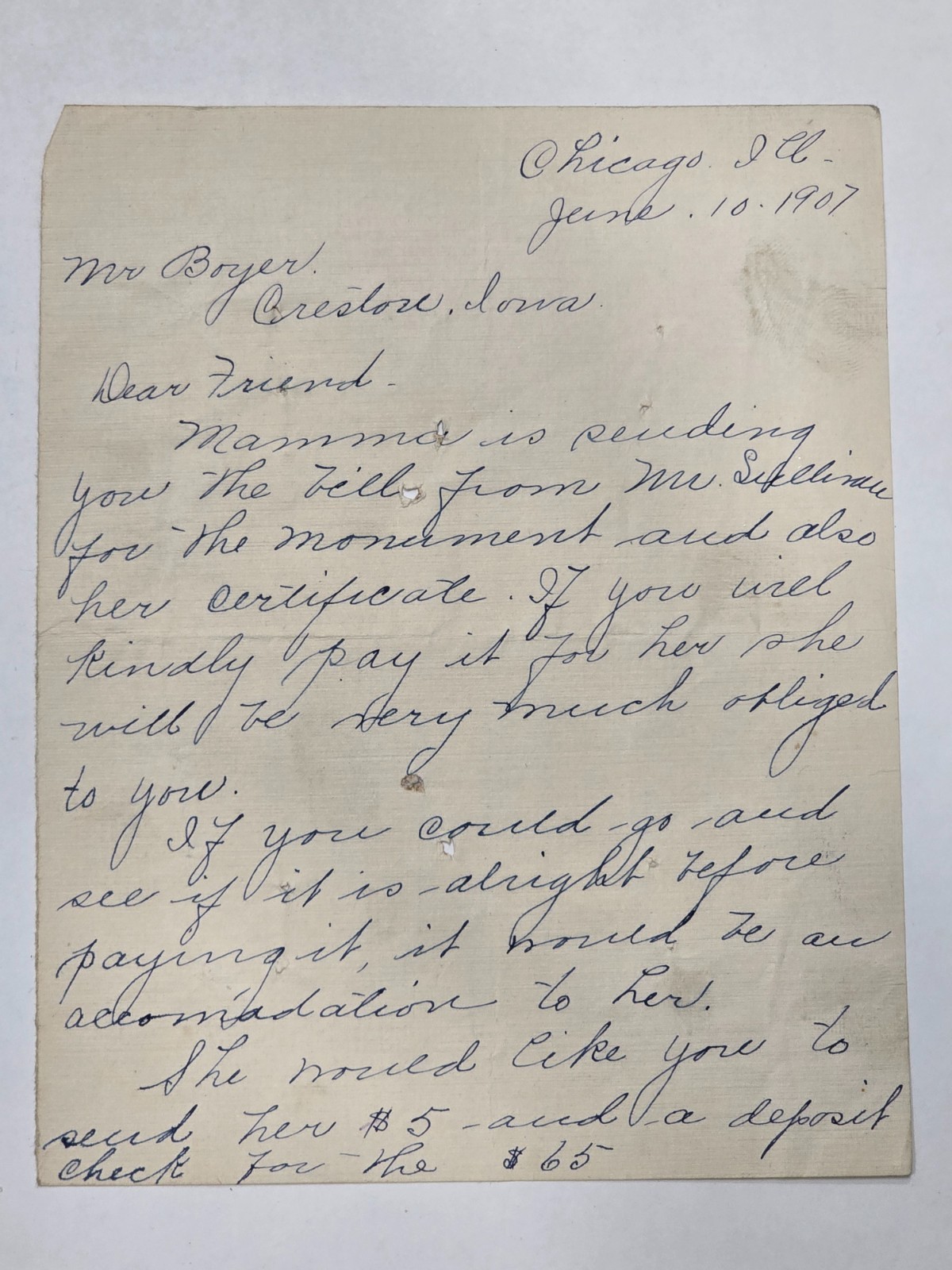
Original handwritten letter dated January 10, 1907, sent from Chicago, Illinois to Creston, Iowa. This early 20th-century correspondence provides a glimpse into personal financial and family matters of the time, including references to bills, a monument, and a certificate.
The letter is written in cursive ink on aged paper and remains fully intact, with visible folds from mailing or storage. A compelling historical piece that captures everyday communication over a century ago.
Full Transcription (All Visible Writing)
Chicago Ill.
Jenk. 10, 1907
Mr Boyer,
Creston, Iowa.
Dear Friend -
Mamma is sending you the bills from Mr Siflin for the monument and also her certificate. If you will kindly pay it for her she will be very much obliged to you.
If you could go and see if it is alright before paying it, it would be an accomodation to her.
She would like you to send her $5 and a deposit check for the $65
(Back side writing)
Communication is made and the paper we hope you are all well
We are all well. The times is getting to be a big boy
Thinking you are in advance for your kindness in being the father in absence.
I am your sincere friend
Mrs R. Person
1334 Jackson St.
Details
- Type: Handwritten letter
- Date: January 10, 1907
- Origin: Chicago, Illinois
- Recipient Location: Creston, Iowa
- Size: Approximately 8\" x 11\"
- Writing: Ink on paper (cursive handwriting)
Condition
Pre-owned antique condition.
- Visible fold lines from age/storage
- Light discoloration consistent with age
- Minor edge and corner wear
- Small holes and handling wear visible
Please review photos carefully for exact condition.
Collector Appeal
Ideal for collectors of:
- Early 1900s handwritten correspondence
- Americana and social history
- Genealogy and regional history (Illinois / Iowa)
- Antique paper and ephemera
Fun Facts
This letter reflects a time when personal financial matters—such as paying bills and handling certificates—were often managed through trusted friends and handwritten correspondence rather than formal banking systems. The mention of a monument suggests possible memorial or cemetery-related arrangements, a common expense handled within close community networks in the early 1900s.