When you click on links to various merchants on this site and make a purchase, this can result in this site earning a commission. Affiliate programs and affiliations include, but are not limited to, the eBay Partner Network.
Vintage Tarahumara Hand-Woven Pine Needle & Palm Baskets - Lot of 10 Mexican Folk Art
Item Description
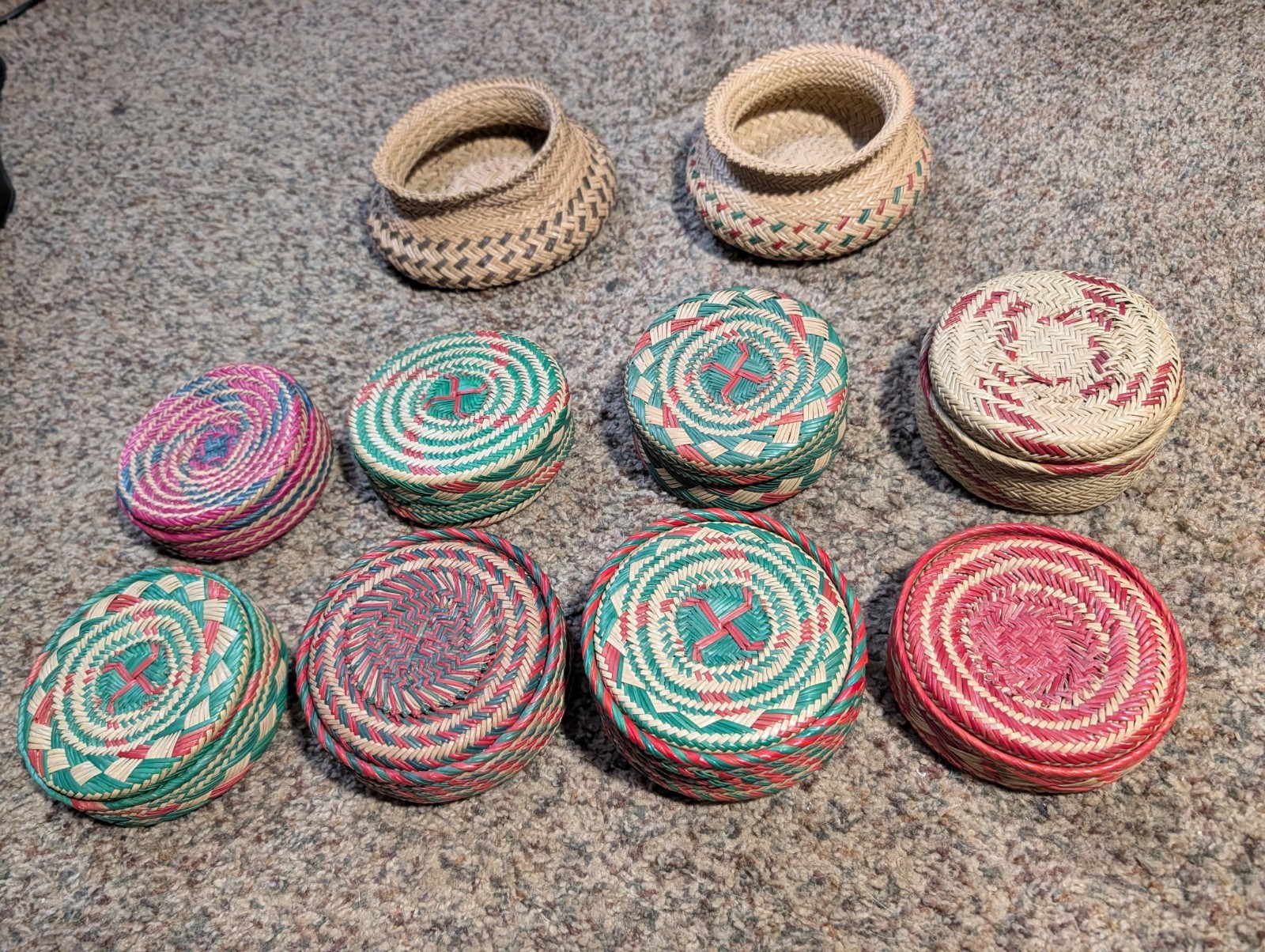
Vintage Mexican Folk Art – Tarahumara (Rarámuri) Hand-Woven Baskets (Lot of 10)
Up for sale is a beautiful, vibrant collection of 10 authentic, hand-woven baskets crafted by artisans of the Tarahumara (Rarámuri) tribe of the Copper Canyon region in Chihuahua, Mexico. Known for their incredible weaving skills, the Tarahumara create these unique pieces using native palm fibers and pine needles, incorporating brilliant dyed colors in geometric, coiled patterns.
This lot includes eight lidded trinket baskets featuring a mix of striking spirals, chevron patterns, and cross motifs, alongside two open pot-style split-stitch baskets. They are perfect for collectors of indigenous folk art, bohemian home decor, or unique storage for small keepsakes.
Item Specifics & Measurements
Origin: Copper Canyon region, Chihuahua, Mexico
Tribal Affiliation: Tarahumara (Rarámuri)
Material: Natural palm fiber, pine needles, organic/textile dyes
Quantity: 10 baskets total (eight 4\" with removable lids, Two 6\" open pots)
Lidded Baskets (8 total): Approximately 4 inches in diameter.
Open Pot Baskets (2 total): Approximately 6 inches in diameter.
Condition Report
Excellent Vintage Condition: This collection has been well-preserved.
The weave on all pieces remains tight and structurally sound.
The colors are remarkably vibrant with minimal fading.
All lids fit properly. One lidded basket has a second small nested piece included inside (as shown in photos).
No major breaks, fraying, or odors. Please review the high-resolution photos for a detailed look at the craftsmanship and exact condition of each piece.
Why Add These to Your Collection?
Tarahumara basketry is a time-honored tradition passed down through generations. Because each basket is made entirely by hand using natural materials found in the Sierra Madre mountains, no two pieces are exactly alike. Buying them as a curated lot gives you an instant, cohesive display for a gallery wall, shelf arrangement, or retail collection.
These baskets were made in the Copper Canyon (Barrancas del Cobre) region of the Sierra Madre Occidental mountains, located in the southwestern part of the state of Chihuahua, Mexico.
And yes, they are absolutely made by a specific Indigenous tribe!
Here is the background on the people who crafted them:
The Tribe: Tarahumara (Rarámuri)
The Name: While commonly referred to as the Tarahumara (the name given to them by Spanish explorers), they call themselves the Rarámuri, which translates closely to \"the foot-runners\" or \"those who run fast.\"
Who They Are: They are an ancient, resilient Indigenous group renowned worldwide for their incredible, superhuman long-distance running abilities—often running dozens or even over a hundred miles through rugged canyon terrain wearing only thin, tire-tread sandals (huaraches).
Where They Live: To protect their culture from Spanish colonization and modern encroachment, they historically retreated deep into the isolated cliffs, caves, and pine-forested highlands of the Copper Canyon system (which is actually deeper and larger than the US Grand Canyon).
The Basket-Weaving Tradition
The vibrant pieces you have are a beautiful representation of their traditional survival craft turned into folk art:
The Materials: Tarahumara women traditionally weave these using local, wild-harvested plants. The split, flexible leaves come from the Sotol cactus (or native desert palm), and they are often structurally reinforced with Apache pine needles.
The Technique: They use a complex double-weave or coiled technique, inserting dyed fibers to create those distinct geometric spirals and chevrons. This makes the baskets incredibly durable and stiff.
Economic Survival: Because farming the rugged canyon terrain is difficult, weaving and selling these unique handicrafts at mountain train stops (like Creel or Divisadero) or regional cooperatives has become a vital way for Tarahumara women to support their families and preserve their independent way of life.
Ships securely and promptly with care. Please reach out if you have any questions!