

|
Site Categories |
|
Featured Items |

Poodle, Spaghetti Trim, Ucagco


|
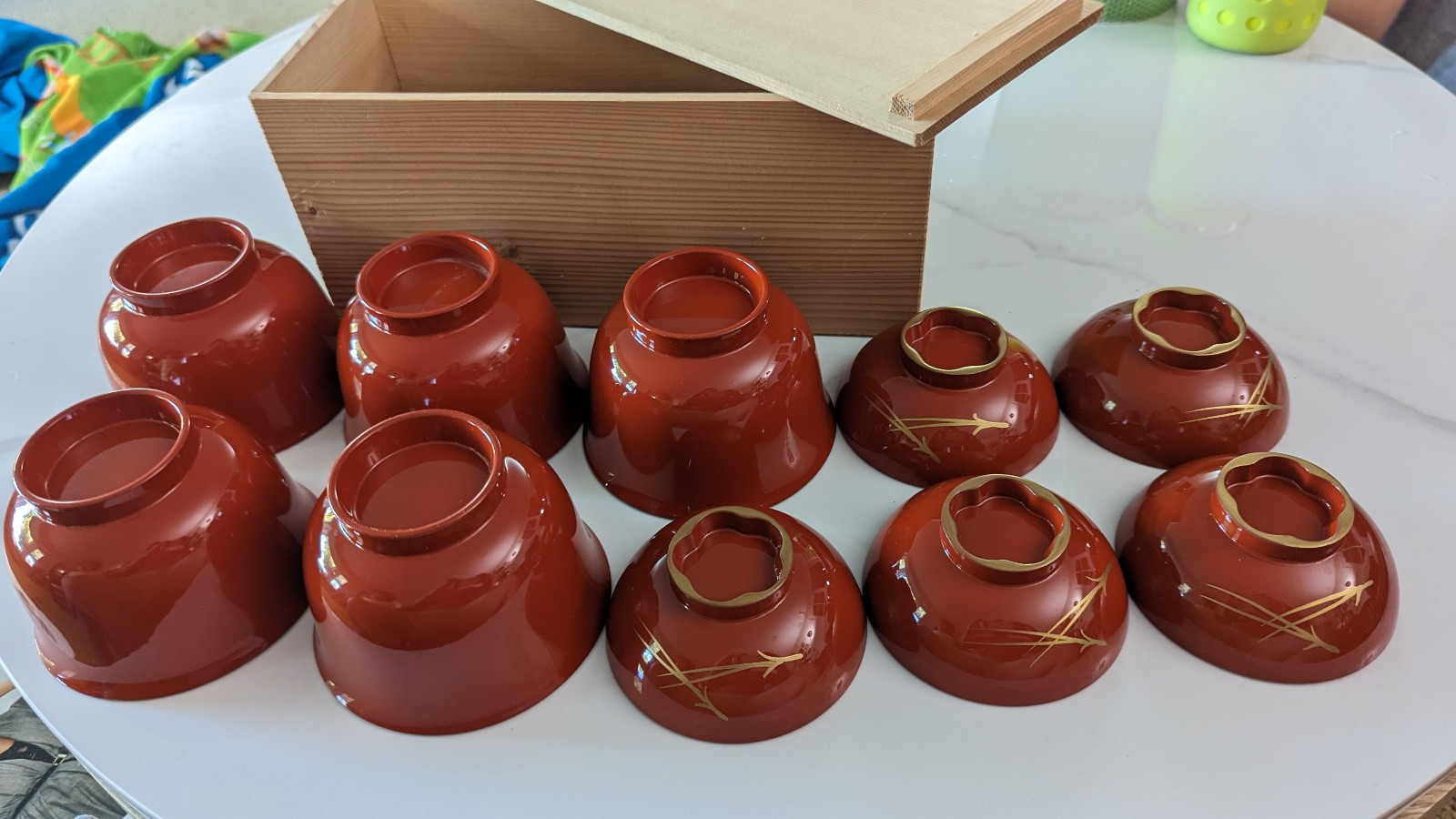
Wajima Nuri Lacquerware Wooden Bowl & Lid Set Hand Painted w/ Box from 1980s For Sale

When you click on links to various merchants on this site and make a purchase, this can result in this site earning a commission. Affiliate programs and affiliations include, but are not limited to, the eBay Partner Network.

Wajima Nuri Lacquerware Wooden Bowl & Lid Set Hand Painted w/ Box from 1980s:
$199.95
Brand new/unused vintage Wajima Lacquerware-Nuri hand painted/lacquered bowl & lid set w/ original wooden box. This bowl set was gifted to my mother from a Japanese foreign exchange student she hosted in the early 80's. What is Wajima lacquerware ?Wajima lacquerware (called Wajima nuri in Japanese) is made in the city of Wajima, Ishikawa prefecture. The most notable features of Wajima lacquerware are not only its beautiful finish but also the high quality powder used for its production called jinoko (powdered diatomaceous soil), which can be found only in Wajima. Because of the use of jinoko as an undercoat, the lacquerware's high durability is ensured. Wajima lacquerware uses decorating techniques like filling carved areas with gold or using gold or silver dust to create maki-e. These graceful gold and silver designs are eye-catching. It is a durable product that goes through over a hundred stages of production. Therefore it is not only an appealing product with durability but it is also restorable if damaged.Production Process1. Wooden base This process starts from forming the wooden base before applying lacquer. Wood from either Japanese zelkova trees or Japanese cherry birch trees is used as material for Wajima lacquerware. They are cut and left to sit for two to three years until they are throughly dried. The timber is then carved into a rough shape after examining the quality of the wood. Wajima lacquerware is not carved straight after the rough carving. Instead the sawdust is burned and the roughly shaped piece gets smoke dried and is left to season for a few months to a year. Once fully dry, the roughly carved wood piece will be trimmed down using a wood plane or a lathe. The trimming is done from rough carving, outer carving, inner carving, and base finishing, little by little to the details.2. Undercoating The next process is to apply the undercoat. Wajima lacquerware uses a unique material called jinoko to make a special undercoat. First, a carving called kirebori is done. When the wood is shaved and there is a crack, it can easily be damaged from the crack. The lacquerware is reinforced by carving the crevice slightly and applying the undercoat. This is the kirebori technique. More delicate parts are reinforced using a technique called kisemono kezuri which is done by pasting cloth. Because the artisans pay particular attention to cracks and fragile parts while applying layers of undercoat, Wajima lacquerware becomes a durable lacquerware. After completing the reinforcement of the fragile parts, a mixture of raw lacquer and polishing powder is applied to the entire piece. Then the piece is left to dry before being shaped with a whetstone. Once the final shape is completed, the piece is ready for polishing on a lathe with water and a whetstone. This process helps to prepare the surface for finishing coatings of lacquer. 3. Final coating The final coating is the process of applying the lacquer evenly on the undercoating. The lacquer is made by making small, parallel cuts in the trunk of lacquer trees and collecting the sap using a special bowl called urushi zutsu. The sap can be collected only from June to October and in limited amounts of about 200g per tree. Therefore, lacquer is sometimes collected from hundreds of trees in a day. Because the chance to get sap for the lacquer is limited, this process is done at the same time that the wood is prepared and the undercoating is made. Then, the collected sap is first passed through a small filter to remove bark residues and other invisible contaminants. Then it is put through a centrifugal separator in order to remove any remaining impurities and obtain the raw lacquer. Wajima lacquerware does not use raw lacquer as it can be damaged easily and the color fades in a few years. Instead, the raw lacquer gets heated up and stirred until it turns into a form called nayashi. This step helps the color of the lacquer last for hundreds of years. The final coating is applied in a special room at an optimum temperature and humidity. This is to keep dust down since any dust or particle floating in the air must be avoided while working on the coating. Although the pieces looks simple, they require much attention and high craftsmanship so it is a painstaking work. If a piece is meant to be a solid color, this is the last step. 4. Decoration The polishing method called roiro happens after the final coating. The lacquerware is carefully polished with a fine abrasive to avoid any scratch marks. After the polishing, decorations are applied. The two main techniques used to decorate Wajima lacquerware are chinkin, a form of carving filled with gold or silver, and maki-e, the application of gold or silver powders onto a design. With the application of these two designs that make Wajima lacquerware even more elegant, the lacquerware is complete.
|
|
Related Items:
Wajima Nuri Lacquerware Wooden Bowl & Lid Set Hand Painted w/ Box from 1980s $199.95
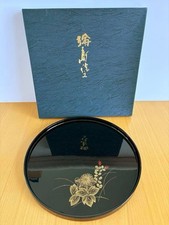
Wajima Nuri Round Tray Black Lacquer 27 cm Diameter New Elegant Design $124.63
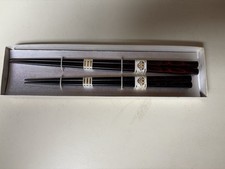
Wajima-nuri Lacquered Chopsticks Pair, Boxed, Unused, Traditional Crafte $100.00
|
|
|
Shopping Cart  |

|
Recently Viewed |
|
Latest Items |
|
Facebook |
Secure Websites

|
