When you click on links to various merchants on this site and make a purchase, this can result in this site earning a commission. Affiliate programs and affiliations include, but are not limited to, the eBay Partner Network.
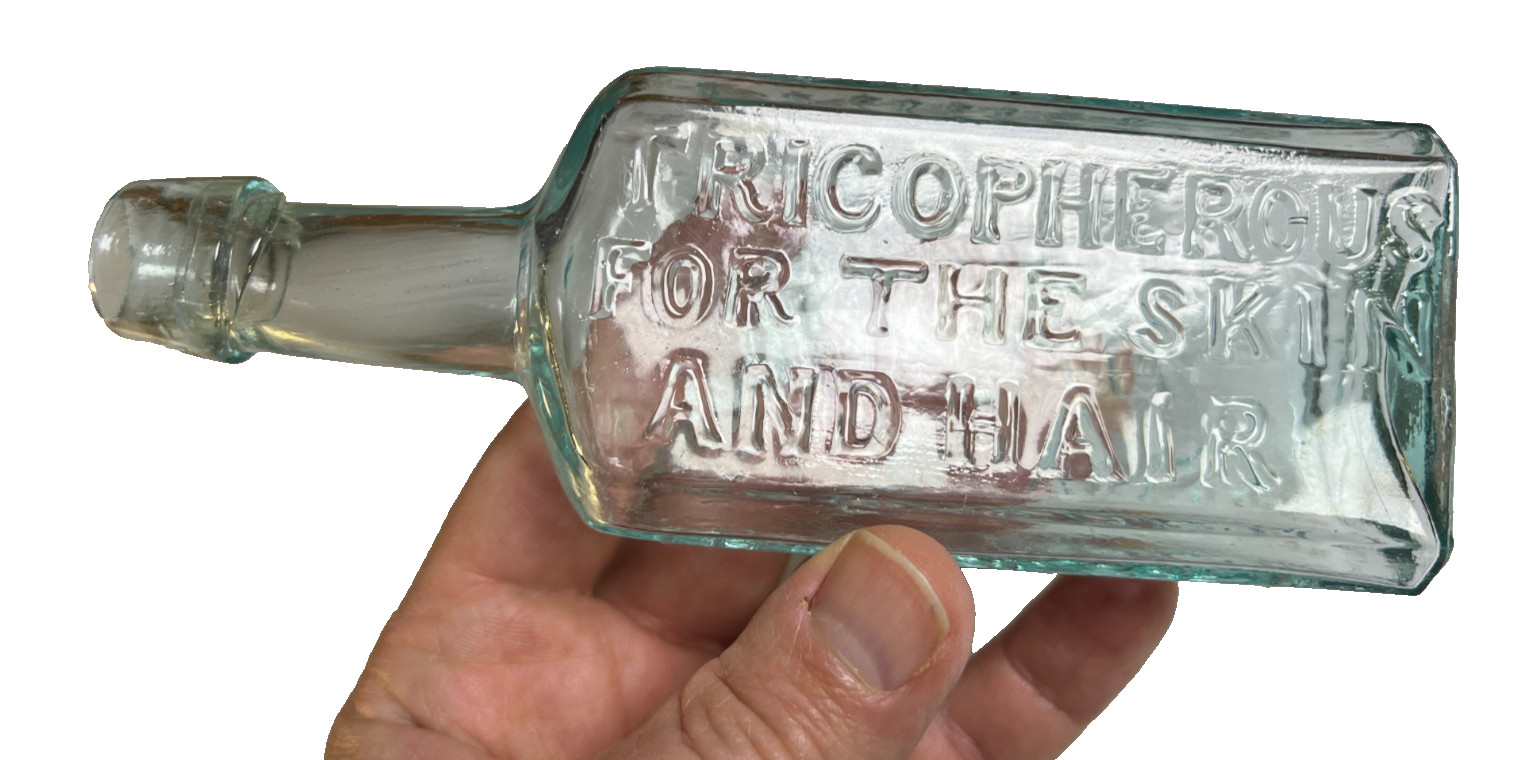
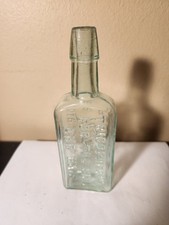
A beautiful and authentic late-19th century example of the famous Barry’s Tricopherous for the Skin and Hair proprietary medicine bottle, dating to approximately 1875–1885. With bold embossing, classic aqua glass, and a hand-applied top, this bottle represents one of the best-known grooming and patent medicine products of the Victorian era.
The large embossed lettering was intentionally designed to act as permanent advertising. Bottles like this sat openly on bedroom washstands and barber counters, proudly displaying the brand name long after the contents were gone. The strong, deeply struck embossing on this example gives it outstanding shelf presence and immediate visual appeal.
Historical Background
Barry’s Tricopherous was introduced by Dr. Benjamin Barry of New York and became one of the most widely distributed hair and skin tonics of the 19th century, sold throughout the United States and abroad. Advertisements claimed it restored hair, prevented baldness, improved scalp health, and enhanced complexion — ambitious promises typical of the patent medicine boom.
This period marked a turning point in American consumer culture. Rather than locally mixed remedies, nationally branded products emerged, supported by aggressive advertising and recognizable packaging. Embossed bottles prevented reuse by competitors and ensured customers remembered the name — early brand protection built directly into the glass itself.
Construction & Dating
Several features firmly place this bottle in the late 1800s:
Hand applied double-collar top
Hinge mold line visible across the base
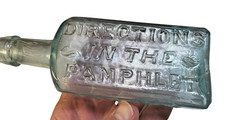
Bold panel embossing typical of proprietary medicines
Hand-finished characteristics and aqua glass coloration
These details indicate manufacture during the transitional mold era, before full automation of bottle production, when skilled glassworkers still finished each bottle by hand.
Life & Context of the Era
When this bottle was in use, America was rapidly modernizing. Railroads allowed products like Tricopherous to reach national markets, gas lighting illuminated homes, and germ theory was only beginning to reshape medicine. Grooming tonics became symbols of refinement and self-care, making bottles like this a common sight on Victorian dressers — the 19th-century equivalent of today’s personal care products, just with far more optimism in the label claims.
Condition
Bright, clean, and very attractive example.
No chips
No cracks
No haze or sickness
Glass remains shiny with excellent clarity
Strong, sharp embossing throughout
Only minor note is faint ghosting visible in one lower corner, mentioned for accuracy
Overall displays beautifully and presents far above average for the type.
Measurements
Height: 6 1/8 inches
Color: Light aqua
Applied top
Hinge mold base
Collector Appeal
Barry’s Tricopherous bottles remain highly collectible due to their recognizable name, bold embossing, and connection to the golden age of American patent medicines. This example combines strong condition, crisp embossing, and classic form — an excellent display piece for collectors of antique glass, advertising, or early pharmacy history.