When you click on links to various merchants on this site and make a purchase, this can result in this site earning a commission. Affiliate programs and affiliations include, but are not limited to, the eBay Partner Network.
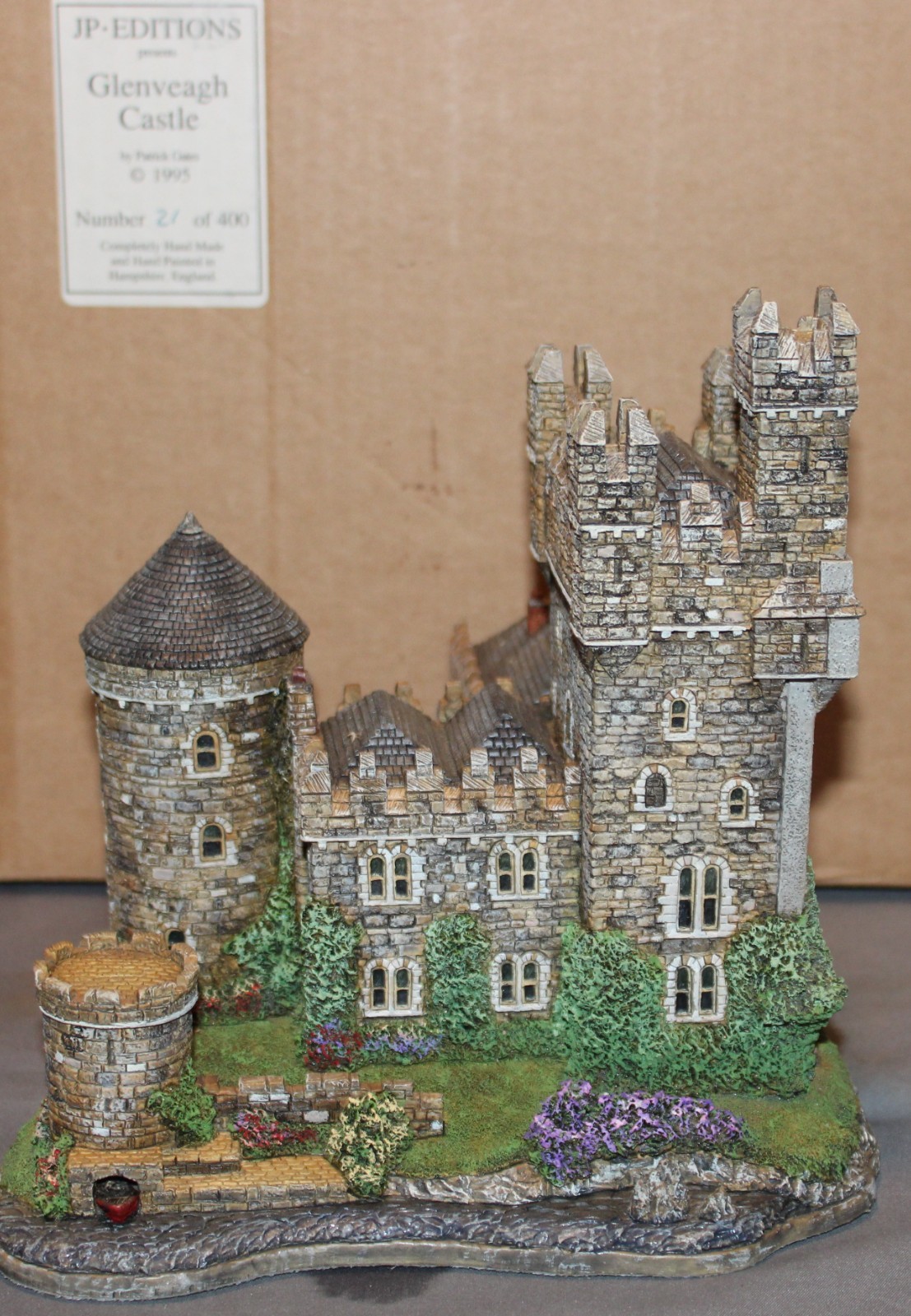
Hereis the JP Editions #21 of Glenveigh Castle.
Thismodel was produced in 1995 in the standard 400 edition size.
Seeexpanded description below.
Asseen in photos, original external labeled box is included. Box mayshow some storage wear.
NoCOA is available for this model.
Approximatedimensions are 7.25” x 7.5” x 7.25”
Thislisting does not qualify for combined shipping.
Collectorscan take advantage of reduced shipping cost for this model.
Previouslydisplayed. No damages, fixes or repairs. Almost Mint.
Aswith all previously displayed JP Editions models, there is a chancefor some minor imperfections. Photos may not indicate all defects. Be sure to review photos prior to committing to purchase. Contactseller to request any additional photos or if there are anyquestions.
Expandeddescription of actual structure:
Standing alone in adramatic glaciated valley, its battlements rising through a canopy ofwindswept pine, Glenveagh Castle (pronounced "Glen vay")conjures an air of history, grandeur and romance. However, Glenveaghis little over a century old, and its fortified appearance derivesfrom the Victorian passion for highland sporting retreats.Glenveagh's architectural scheme is roughly that of Balmoral on areduced scale including a tall rectangular keep with distinct steppedbattlements, (a unique Irish form) from which extends on lowerstories a comfortable residence. Granite, plentiful in Donegal butdifficult to work, was chosen as the building stone. The castle wascompleted in 1873; two years after work began.
In the middle ofthe 19th century Ireland saw land speculation on a grand scale as aresult of the Great Famine in the 1840's and subsequent bankruptcy ofmany landowners. Over a period of two years starting in 1857, JohnGeorge Adair, using funds from parlayed land speculation bought28,000 acres including Glenveagh.
Adair planned toprofit from his land speculation by grazing sheep on his land.Unfortunately, this spelled disaster for small tenants as Adairwithdrew permission for grazing on common lands, extracted fines forthe return of stray animals, arrested and incarcerated several menfor theft, blamed locals for the loss of sheep and evicted 47families from their homes.
Adair died in 1885in St. Louis, Missouri. His remains were returned to Ireland forburial, however local residents tried, in vain, to prevent hisinternment in their graveyard. Early in 1922, the Civil War thatfollowed Irish independence reached Glenveagh. The castle was firsttaken over by anti-treaty "Irregulars", but in July,soldiers of the Free State Army moved on the castle and theIrregulars withdrew without a fight. The new occupiers remained until1925.
In1929 the castle was sold to Arthur Kingsley Porter, Professor of FineArts at Harvard University. The American connection remained when, in1937, a Philadelphia resident John McIlhenny (inventor of the gasmeter) bought Glenveagh. McIlhenny was a collector of Irishfurniture, silver, and French and Victorian Art. His hospitality atGlenveagh was legendary and few would willingly refuse McIlhenny'sinvitation. Even Greta Garbo was a guest at this remote hideaway. In1975, McIlhenny sold the land around Glenveagh, creating thecountry's third National Park. In 1983, McIlhenny gave the castle,contents and gardens to the nation.