When you click on links to various merchants on this site and make a purchase, this can result in this site earning a commission. Affiliate programs and affiliations include, but are not limited to, the eBay Partner Network.
Thank you for visiting my listing.
Original antique Japanese humorous art postcard published by Kokkei Shinbun (滑稽新聞), dating from approximately 1909–1911 during the late Meiji era.
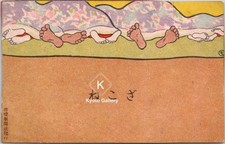
The postcard is titled \"Zakone\" (ざこね / 雑魚寝), a Japanese expression referring to several people sleeping together in the same room or space.
The artist presents the subject with wonderfully simple visual humor: instead of showing the sleeping figures themselves, only a row of bare feet can be seen protruding from beneath the bedding. The different shapes and positions of the feet create a playful rhythm across the composition, while the colorful patterned bedding forms a decorative background.
This clever use of cropping and repetition gives the image a surprisingly modern graphic quality and is characteristic of the inventive humor found in Kokkei Shinbun and its illustrated postcard culture during the late Meiji period.
A fascinating collectible for enthusiasts of Japanese humorous art, Meiji-era popular culture, unusual graphic design, and early Japanese illustrated postcards.
Item DetailsTitle: Zakone (ざこね / 雑魚寝)Publication: Kokkei Shinbun (滑稽新聞)Series: Ehagaki Sekai (絵葉書世界)Subject: Group Sleeping / Humorous SceneMedium: Printed Art PostcardCountry: JapanDate: c.1909–1911Size: Approx. 14 × 9 cmOriginal antique postcard
ConditionAge-related toning, light foxing, discoloration, and minor surface, edge, and corner wear are present. The reverse also shows some age-related marks and discoloration.
Postcards published in connection with Kokkei Shinbun were often printed on relatively thin paper, which is prone to wrinkling and creasing, and age-related discoloration is also commonly seen.
Please examine the photographs carefully.
Combined shipping welcome.Free international shipping is included.
Thank you for looking.